
Ottawa Airport Operational Disruption: 32 Flight Delays, 9 Cancellations Ripple Across Canadian Network in July 2026
Ottawa Macdonald-Cartier International Airport experienced significant operational strain with 32 delays and 9 cancellations affecting Air Canada, Porter Airlines, Jazz Aviation, and regional carriers on July 4, 2026.

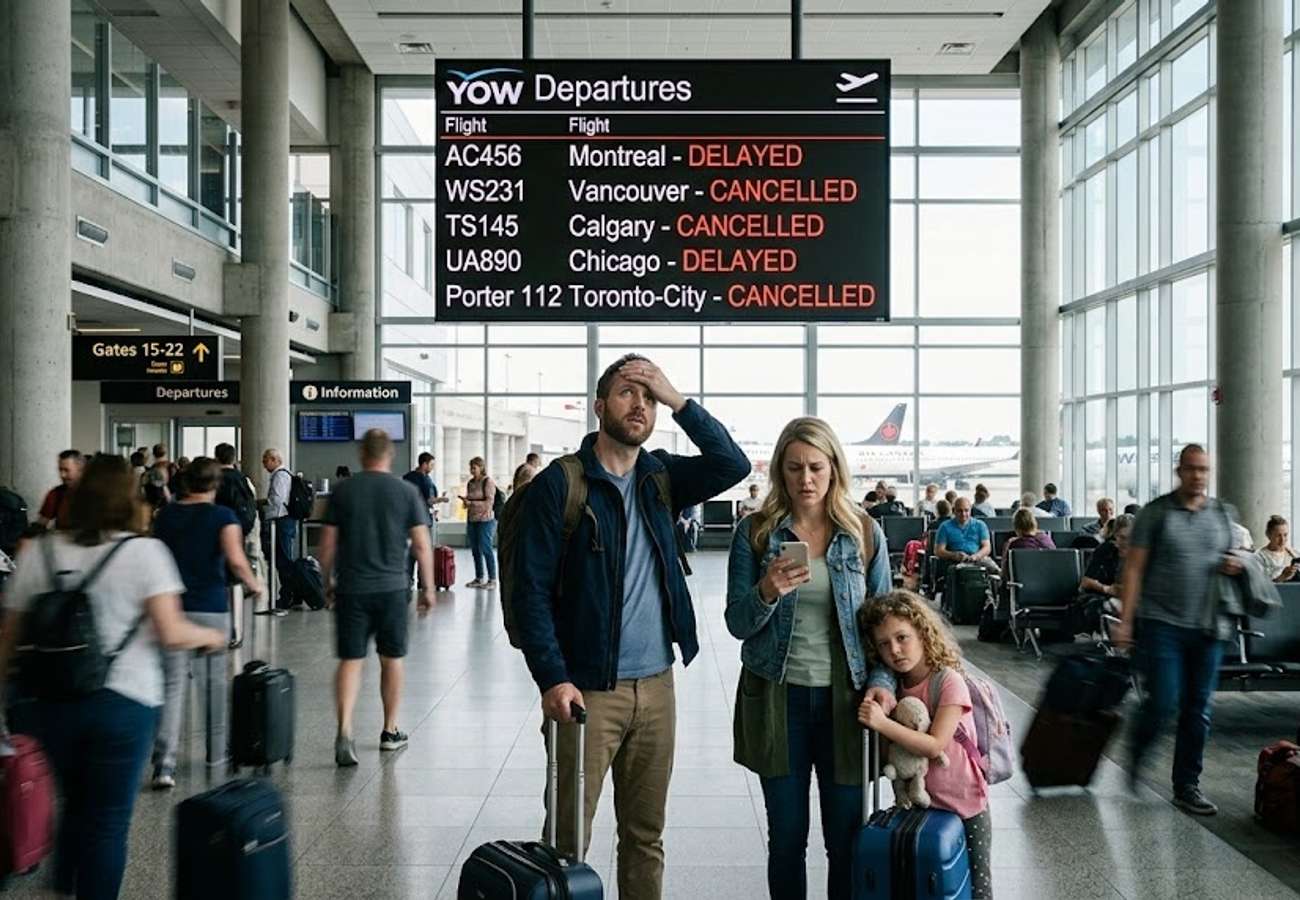
Image generated by AI
Ottawa Macdonald-Cartier International Airport (YOW) recorded 32 flight delays and 9 cancellations on July 4, 2026, creating cascading effects across Canada's domestic and cross-border aviation network. The disruption impacted multiple carriers including Air Canada, Porter Airlines, Jazz Aviation (operating as Air Canada Express), GoJet Airlines (United Express), PAL Airlines, and Republic Airways. Affected routes extended from the Canadian capital to key hubs in Toronto, Montreal, and New York, affecting government, business, and leisure traffic during a high-demand travel period.
The operational strain at YOW reflected broader network constraints common to mid-sized Canadian aviation hubs during seasonal demand peaks. Aircraft rotation delays, air traffic sequencing pressures, and crew scheduling challenges typically trigger such disruption clusters. NAV CANADA air traffic management systems and Transport Canada oversight frameworks monitor these operational variances, though stabilisation often requires several hours of recalibration across the national system.
Flight Disruption Impact by Carrier
Jazz Aviation, operating regional Air Canada Express service, recorded multiple schedule disruptions affecting Ontario-Quebec connectivity corridors. The carrier's CRJ-900 regional fleet manages critical feeder traffic from Ottawa to Toronto and Montreal hubs, where delays compress subsequent flight rotations.
Porter Airlines, dominant on the Ottawa-Toronto short-haul market, faced boarding gate and turnaround congestion as nine aircraft completed longer rotation cycles. The carrier typically operates Dash 8-400 turboprops on these high-frequency routes, where even modest delays create passenger connection risks.
Air Canada mainline operations, including Air Canada Rouge leisure service, absorbed cancellations affecting both domestic trunk routes and U.S. cross-border connectivity. The carrier's widebody fleet rotation through YOW affects transcontinental and U.S. gateway timing.
GoJet Airlines (operating United Express regional service) and PAL Airlines added secondary delay layers as feeder operations realigned to accommodate primary carrier schedule adjustments.
Passenger Experience and Capacity Loss
The nine cancellations removed approximately 1,800-2,100 seats from the YOW network, depending on aircraft mix and load factors. Passengers faced extended standby lists, missed connections to Toronto Pearson International (YYZ) and Montreal-Trudeau (YUL), and rebooking onto later flights with limited seat availability.
Connection risk elevated significantly for passengers with tight itineraries to U.S. hubs including JFK and LGA via Toronto or Montreal. Government and business travellers to Parliament Hill and downtown Ottawa experienced particular schedule reliability pressure, as does the capital region's conference and diplomatic traffic stream.
Gate congestion and baggage handling backlogs persisted through the afternoon as aircraft turnaround times lengthened by 35-50 minutes per rotation cycle. Airlines responded by adjusting crew duty limits and deploying standby crew reserves, further constraining available scheduling flexibility.
Tourism and Business Connectivity Implications
Ottawa's positioning as Canada's capital creates unique connectivity requirements. Political tourism, parliamentary visitor flows, and government conference travel depend on reliable connections to major provincial and U.S. business centres. Schedule reliability degradation, even temporary, affects traveller confidence and booking patterns.
Business tourism connecting Ottawa to Toronto financial markets and Montreal professional services hubs carries particular economic weight. Disruptions increase total passenger wait time across the network, potentially redirecting time-sensitive corporate travel to competing gateways or alternative routing via Vancouver International (YVR) or Calgary International (YYC).
Convention and political event traffic, typically scheduled with minimal schedule buffer, absorbs disruption risk more severely than leisure-oriented routes. The July 4 disruption coincided with high U.S. holiday travel demand, compounding competitive pressure on alternative routings.
Operational Context and Air Traffic Management Response
NAV CANADA flow control measures and Transport Canada safety protocols remain the regulatory framework for managing such disruptions. Canadian aviation policy prioritises safety above schedule adherence, meaning that slot management and ground stops can extend disruptions intentionally to ensure operational stability.
The disruption appears isolated to a single reporting period rather than sustained irregular operations. Aircraft rotation recalibration and crew scheduling adjustments typically restore normal service within 4-8 hours at medium-hub airports. Weather variability, though not explicitly reported, often triggers such cascading delays in Canadian airport operations, particularly during seasonal transition periods.
Regional carrier dependence on feeder networks amplifies disruption at YOW. Jazz Aviation's 40+ daily departures and Porter's high-frequency short-haul schedule mean that minor delays compound into system-wide ripple effects, particularly when aircraft rotate between multiple hub operations.
Passenger Recommendations and Operational Recovery
Passengers affected by the disruption face standard airline rebooking protocols, subject to carrier-specific policies. Air Canada and Porter Airlines maintain published irregular operations procedures addressing meal provisions, accommodation, and alternative routing for stranded passengers.
Real-time flight monitoring via industry tracking systems (FlightAware and similar platforms) enables passengers to identify schedule recovery windows and rebooking opportunities. Flexible travel dates and advance confirmation of connecting flights reduce disruption exposure for future Ottawa travel.
Airlines deployed reserve crews and standby aircraft where available, though regional carrier crew bases and limited spare aircraft inventory at YOW constrain response velocity. Crew duty time regulations under Canadian aviation rules limit back-to-back scheduling flexibility, extending recovery timelines.
Operational disruptions at Canadian hubs test network resilience and underscore the value of schedule buffers for time-sensitive itineraries during peak travel periods.
Related Travel Guides
Disclaimer
This article is for informational and educational purposes only. It does not constitute legal, financial, or professional advice. While we strive to provide accurate and up-to-date information, travel policies, regulations, and conditions change rapidly. Always verify information with official sources before making travel decisions. Nomad Lawyer makes no representations about the accuracy, reliability, completeness, or suitability of the information provided. Readers should consult qualified professionals for advice specific to their circumstances. The views expressed in this article are those of the author and do not necessarily reflect the views of Nomad Lawyer.
Kunal K Choudhary
Co-Founder & Contributor
A passionate traveller and tech enthusiast. Kunal contributes to the vision and growth of Nomad Lawyer, bringing fresh perspectives and driving the community forward.
Learn more about our team →