
Orlando International Airport Flight Delays and Cancellations Cripple Florida Travel as FAA Monitors National Airspace Disruptions Affecting Major Carriers: New Travel Alert
Orlando International Airport reports 193 flight delays and 13 cancellations, disrupting American, Delta, Southwest, United, and other major carriers.

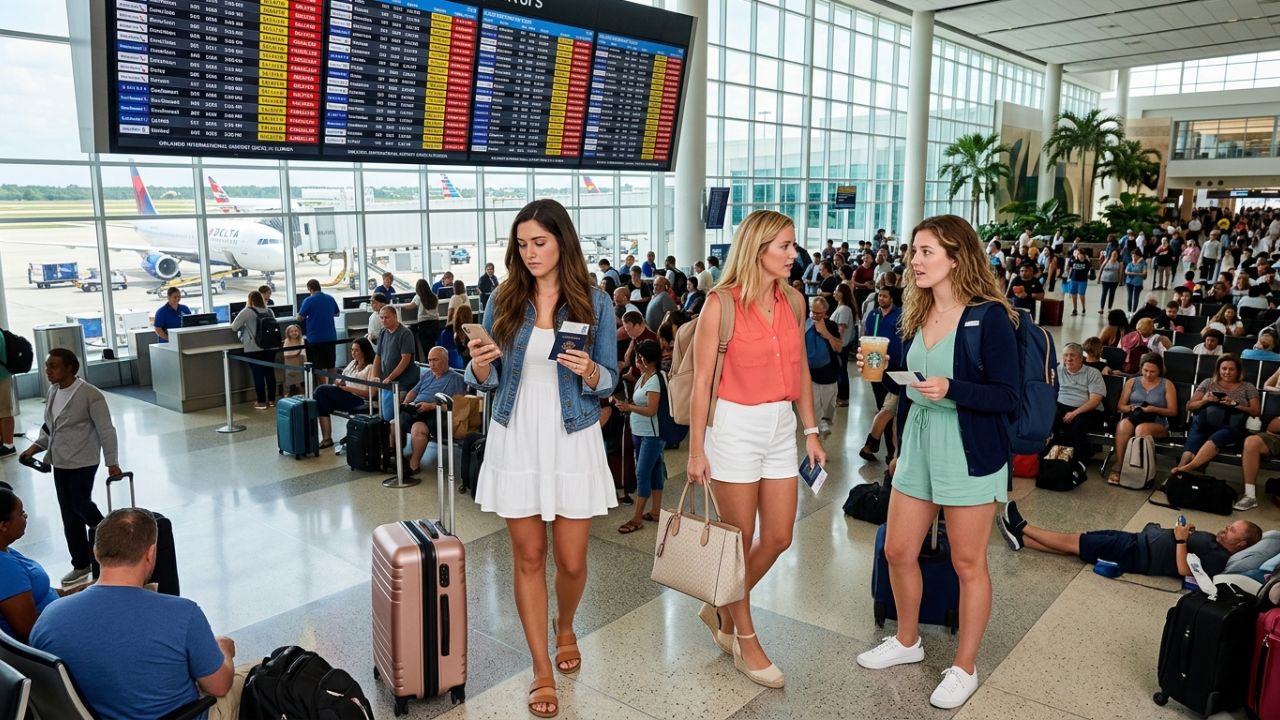
Image generated by AI
Published on June 20, 2026
On June 20, 2026, Orlando International Airport flight delays surged alongside multiple cancellations, leaving hundreds of travelers stranded at the major Florida gateway. Operational data revealed that 193 flights were delayed and 13 cancellations occurred, disrupting schedules for passengers flying on American Airlines, Delta Air Lines, Southwest Airlines, United Airlines, JetBlue, Spirit Airlines, Frontier Airlines, Air Canada, and several other carriers. In response to these conditions, aviation authorities are urging passengers to check their flight status and coordinate closely with their airlines before traveling.
Quick Summary
- Widespread Delays: Orlando International Airport reported 193 flight delays and 13 cancellations on June 20, 2026.
- Major Carriers Impacted: The disruptions affected multiple airlines, including American Airlines, Delta, Southwest, United, JetBlue, Spirit, Frontier, and Air Canada.
- FAA Monitoring: The Federal Aviation Administration is actively tracking airspace congestion and operational constraints.
- System-Wide Ripples: Interconnected schedules mean scheduling bottlenecks in Orlando are creating secondary delays across the United States.
- Precautionary Safety First: Aviation officials emphasize that security protocols remain the top priority during ongoing flight adjustments.
The operational bottleneck occurred during a busy travel window, placing significant pressure on terminal services and airport infrastructure. While minor flight delays are common, the volume of schedule disruptions today has caused widespread travel planning adjustments. Officials from the Federal Aviation Administration (FAA) continue to monitor airspace flow to coordinate traffic safely amid system-wide constraints.
Context and Background: Understanding Flight Safety Decisions
Orlando International Airport serves as a vital tourism and commercial gateway in the United States, connecting Central Florida to destinations worldwide. Its significance increases during peak holiday and event seasons, when millions of visitors arrive to visit regional attractions and convention venues. Consequently, when operations encounter operational bottlenecks, the impact is felt far beyond the local airspace.
Disruptions across the National Airspace System can occur due to a combination of factors, including adverse weather, air traffic volume, equipment maintenance, and staffing constraints. Because airline flight crews and aircraft operate on interconnected routings, scheduling delays at a key airport like Orlando often cause secondary delays elsewhere in the country. Safety protocols dictate that operations must prioritize safe separation and conditions over arrival punctuality.
Event and Incident Details: Flight Disruptions Hit Orlando International Airport
On June 20, 2026, operations at Orlando International Airport (MCO) faced notable scheduling challenges as carriers logged 193 flight delays and 13 cancellations. The disruptions impacted a diverse range of domestic and international airlines, leaving terminal lobbies and check-in areas heavily congested with waiting passengers.
The FAA's Daily Air Traffic Report tracked potential bottlenecks across the region, while the National Airspace Status system implemented traffic management measures. Ground stops and delay programs were monitored throughout the day to adjust flight arrivals and departures based on changing conditions.
| Flight Metric | Total Impacted Flights | Affected Carriers | Primary Location |
|---|---|---|---|
| Delayed departures/arrivals | 193 | American, Delta, Southwest, United, JetBlue, Spirit, Frontier, Air Canada, etc. | Orlando International Airport (MCO) |
| Cancelled departures/arrivals | 13 | Major domestic and international airlines | Orlando International Airport (MCO) |
Although flights continued to arrive and depart, passenger itineraries faced sudden gate adjustments, rebookings, and extended wait times. Ground crews, air traffic controllers, and airline operations teams worked throughout the day to stabilize flight schedules and manage aircraft movements.
Risk and Impact: How the Orlando International Airport Flight Delays Affect Travelers
The Orlando International Airport flight delays and cancellations present multiple challenges for travelers navigating the air network:
- Missed Connecting Flights: Delays on initial legs leave passengers with insufficient time to make their scheduled connections at subsequent hubs.
- Terminal Congestion: Flight cancellations force passengers to wait in check-in lobbies, ticketing counters, and security checkpoints, increasing stress levels.
- Weather Disruptions: Summer weather patterns in Florida can shift rapidly, bringing severe thunderstorms, heavy rain, and visibility issues that temporarily slow airport traffic.
- Logistical Backlogs: Baggage handling systems and ground transport options experience delays as large numbers of displaced passengers attempt to retrieve bags or adjust transit.
These risks highlight the importance of remaining proactive and monitoring digital channels during periods of high-volume air travel.
What Authorities and Airlines Are Saying
The FAA is tracking airspace conditions continuously to minimize delays while ensuring safety standards are maintained. According to the FAA National Airspace Status report, delays are frequently caused by adverse weather systems, air traffic volume, and air traffic control requirements. The agency emphasizes that general airport status reports reflect overall operating conditions and do not guarantee the status of individual flights.
Southwest Airlines, Delta, American, and other major carriers are advising passengers to stay connected via mobile applications to receive real-time notifications. Airline customer service representatives are assisting affected travelers with rebooking options and coordinating replacement crews where required to prevent further disruptions.
Practical Traveler Advice: Steps to Take During Flight Cancellations and Delays
Encountering flight delays can be challenging, but following structured steps can help you manage travel adjustments smoothly:
- Verify Flight Status Frequently: Check your airline's app or website regularly before departing for the airport, as schedules can change within minutes.
- Arrive at the Terminal Early: Give yourself extra time to navigate security screening and baggage drop, as terminal areas are busier than usual.
- Keep Mobile Applications Active: Enable push notifications on carrier apps to receive immediate alerts on gate changes, delays, or rebooking windows.
- Understand Airline Rebooking Policies: Many carriers offer flexible rebooking policies during significant operational disruptions, allowing you to select alternate flights without extra fees.
- Prepare for Weather Changes: If traveling during volatile weather seasons, keep essential items, chargers, and medications in your carry-on baggage in case of unexpected overnight stays.
Relying on official communication channels helps travelers avoid incorrect information and manage scheduling updates efficiently.
Broader Context: MCO's Critical Role in Florida's Economy
Orlando International Airport is a primary driver of Central Florida's economy, serving as the main entry point for millions of tourists heading to major theme parks, hotels, and convention centers. The airport's extensive network of domestic and international routes means that any local bottleneck has a substantial regional impact.
Because MCO handles hundreds of flights daily across major US and international airlines, operational efficiency is critical for maintaining scheduling reliability across the broader aviation network. Precautionary traffic management measures implemented by the FAA are designed to distribute traffic loads safely, avoiding over-congestion in regional flight paths.
What to Expect Next / Looking Ahead
Airline crews and airport ground personnel will continue working to clear the passenger backlog and normalize flight schedules as conditions stabilize. Technicians will complete scheduled maintenance checks on affected aircraft, and airlines will reposition equipment to ensure subsequent flights can depart on time.
Passengers whose flights have been cancelled should contact their airline directly to check rebooking availability or request refunds where applicable. Aviation analysts will continue monitoring the FAA's daily reports to assess the stability of summer travel schedules.
Conclusion
While flight disruptions at Orlando International Airport present challenges for travelers, they reflect the ongoing coordination required to manage a busy airspace safely. By staying informed, verifying details through official carrier portals, and planning ahead, passengers can navigate operational adjustments effectively. Patience and flexibility remain essential as aviation teams work to transport every traveler to their destination under safe conditions.
Related Travel Guides
- Southwest Airlines Flight WN2445 From Lubbock to Dallas Diverts to Houston Hobby Airport, Prompting Precautionary Safety Measures and Schedule Disruptions for Texas Passengers: New Travel Alert
- United States Air Grid Strained: Dallas Love Field Airport Travel Disruptions Erupt as Southwest Airlines Cancels Flights and Logs Numerous Delays: New Travel Alert
- 10 Best Travel Tips for Navigating Orlando Airport, According To Reddit
FAQ
How many flights were delayed and cancelled at Orlando International Airport?
On June 20, 2026, Orlando International Airport (MCO) reported 193 flight delays and 13 cancellations, impacting multiple domestic and international airlines.
Which airlines were affected by the Orlando Airport flight disruptions?
The flight delays and cancellations affected multiple carriers, including American Airlines, Delta, Southwest, United, JetBlue, Spirit, Frontier, and Air Canada.
What caused the flight delays at Orlando International Airport (MCO)?
According to the Federal Aviation Administration (FAA), flight disruptions can be caused by adverse weather conditions, air traffic volume, equipment maintenance, air traffic control requirements, and airline operational constraints.
What should passengers do if their flight from Orlando is delayed or cancelled?
Passengers should check their flight status frequently via their airline's mobile app, arrive early at the airport, enable text notifications, and review the carrier's rebooking and passenger support policies.
Disclaimer
This article is for informational and educational purposes only. It does not constitute legal, financial, or professional advice. While we strive to provide accurate and up-to-date information, travel policies, regulations, and conditions change rapidly. Always verify information with official sources before making travel decisions. Nomad Lawyer makes no representations about the accuracy, reliability, completeness, or suitability of the information provided. Readers should consult qualified professionals for advice specific to their circumstances. The views expressed in this article are those of the author and do not necessarily reflect the views of Nomad Lawyer.
Raushan Kumar
Founder & Lead Developer
Full-stack developer with 11+ years of experience and a passionate traveller. Raushan built Nomad Lawyer from the ground up with a vision to create the best travel and law experience on the web.
Learn more about our team →