
Orlando Converges with Tokyo and Global Tourism Capitals as Mega-Attractions Redefine Visitor Economies
Orlando Converges with Tokyo and Global Tourism Capitals as Mega-Attractions Redefine Visitor Economies

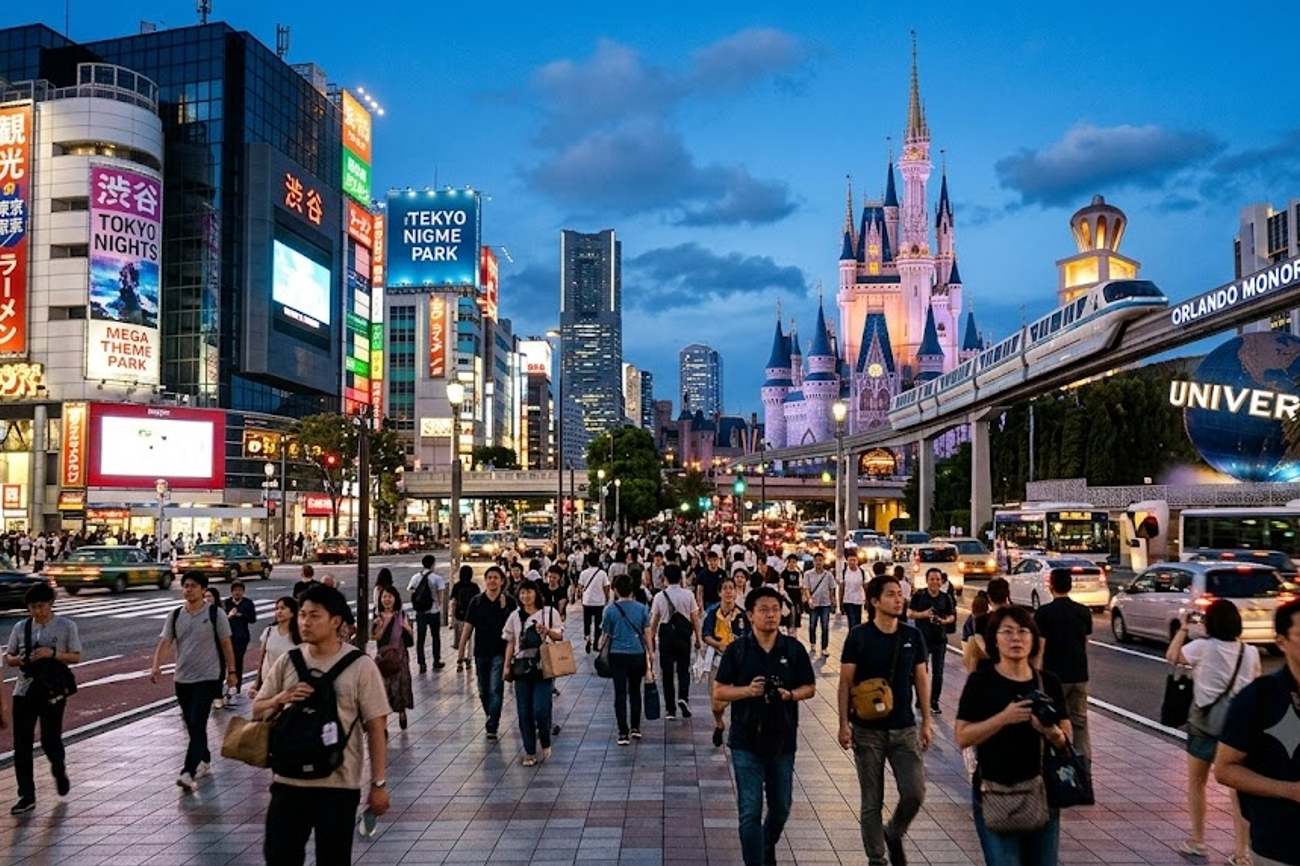
Image generated by AI
Japan's international arrivals surged to 36.87 million in 2024, a 15.6% increase over 2019 levels, signaling a shift toward integrated visitor ecosystems that mirror the high-density models seen in Orlando and Dubai. This trajectory indicates that the modern travel economy is moving away from isolated "sightseeing" toward "anchor-based" itineraries, where a single major attraction triggers a cascade of spending across aviation, hospitality, and retail sectors.
The Integrated Visitor Economy in Numbers
The data from 2024 reveals a stark divergence in how global hubs convert interest into physical visitation. While traditional tourism focuses on headcounts, the emerging "visitor economy" model focuses on the interconnectedness of infrastructure.
In Orlando, the attraction cluster effect is quantifiable. The city recorded 75,333,800 visitors in 2024, representing a 1.8% year-over-year growth. However, the real story lies in the international segment, which climbed 5.9% to reach 6.5 million arrivals. This growth is not an isolated victory for theme parks but a systemic win for the region; direct visitor spending in Central Florida hit $59.9 billion, while the total economic impact—including indirect and induced effects—reached $94.5 billion.
Tokyo provides a different data set, illustrating the power of urban integration. The city welcomed 24.79 million foreign visitors in 2024, a massive 26.9% increase from the prior year and a 63.3% jump compared to 2019. More telling is the spending velocity: foreign visitor expenditure reached approximately ¥3.96 trillion, marking a 43.6% annual increase and more than triple the spending recorded in 2019. This suggests that visitors are not just visiting more often, but are spending significantly more per capita as they move through the city's integrated entertainment and retail zones.
Comparative Infrastructure Benchmarks
When analyzing these destinations, the correlation between aviation capacity and visitor volume becomes evident. The ability of a destination to scale depends entirely on its "aviation indicator," as seen in the following breakdown of 2024 performance metrics.
| Destination | 2024 Visitor Volume | Accommodation Capacity | Aviation Throughput |
|---|---|---|---|
| Spain | 93.8m (Intl) | Extensive National Network | 309.3m (Aena) |
| Orlando | 75.33m (Total) | Large Resort Ecosystem | 57m+ (MCO) |
| Greater Paris | 36.3m (Total) | 132,430 Hotel Rooms | 100m+ (Paris Airports) |
| Tokyo | 24.79m (Foreign) | Major Metro Base | Major Intl Gateway |
| Dubai | 18.72m (Intl) | 154,016 Rooms | 92.3m (DXB) |
This data highlights that while Spain leads in raw volume due to its national scale, hubs like Dubai and Paris maintain a higher ratio of hotel rooms to visitors, allowing for more controlled, high-yield stays. According to data from the World Tourism Organization (UNWTO), the ability to synchronize these three pillars—attractions, beds, and flights—is what separates a seasonal destination from a permanent economic engine.
Practical Traveler Advisory and Strategic Insights
The transition to integrated visitor ecosystems changes the logic of trip planning. Because destinations are now designed as "clusters," the cost and availability of services are no longer independent variables.
1. The "Anchor" Booking Strategy In markets like Orlando and Tokyo, the "anchor" (the theme park or major museum) now dictates the availability of the entire ecosystem. If you are planning a trip to Central Florida, booking your accommodation within the resort cluster is now more critical than ever, as the 1.8% growth in total visitors is concentrated in these high-density zones.
2. Leveraging Connectivity for Cost Savings Orlando's growth is directly tied to air connectivity. For international travelers, the data shows a strong pipeline from Canada (1.29 million visitors), the UK (907,900), and Brazil (697,200). Travelers from these regions should monitor carrier-specific capacity increases, as expanded flight paths often lead to temporary pricing volatility before stabilizing.
3. Navigating Urban Concentration in Japan With foreign guest nights in Japan reaching 160 million in 2024 (up from 110 million in 2019), Tokyo is experiencing extreme concentration. To avoid peak pricing and overcrowding, travelers should utilize the "cross-prefecture" movement trend. Japan's 2024 FF-Data indicates that movement between prefectures is 1.2 times higher than in 2019. Using Tokyo as a gateway and moving toward secondary cities via rail is the most efficient way to experience the country without paying the "metropolitan premium."
Orlando's tourism industry is experiencing significant growth, with a record number of visitors in recent years, and the city is now converging with other global tourism capitals like Tokyo to redefine visitor economies. According to the U.S. Travel Association, the travel industry generates billions of dollars in economic output each year, supporting millions of jobs nationwide. As a result, Orlando is investing heavily in new infrastructure and attractions to accommodate the increasing number of visitors.
Projecting the Gateway Network Model
The trajectory of the travel industry is moving toward the "Gateway Network" model, as evidenced by the 2024 Paris Olympic data. The event generated 11.2 million visitors, including 1.6 million international tourists, while the Paralympics added another 3.4 million. This proves that temporary, high-intensity attractions can act as catalysts for permanent infrastructure utilization.
We can expect a shift where cities no longer compete on the basis of a single landmark, but on the efficiency of their "visitor flow." The International Air Transport Association (IATA) data suggests that destinations that can seamlessly link airport arrivals to hotel check-ins and attraction ticketing will capture a larger share of the high-spending international market.
In Japan, the government's focus on flow data suggests a future where "overtourism" in Tokyo is mitigated by digitally steered traffic to lesser-known prefectures. Similarly, the Orlando model suggests that the future of the "resort city" is one where the boundaries between the hotel, the theme park, and the shopping district disappear entirely, creating a closed-loop spending environment.
FAQ: Integrated Tourism Trends 2024
Will hotel prices in Tokyo continue to rise? Yes. With foreign visitor spending more than triple 2019 levels and guest nights increasing from 110 million to 160 million, demand is outstripping supply in metropolitan hubs. Booking 4-6 months in advance is now recommended for Tokyo.
Is Orlando becoming too crowded for casual visitors? While visitors rose to 75.33 million, the growth is managed through expanded infrastructure. To avoid peaks, target the domestic travel troughs, as domestic visitors (68.84 million) drive the primary volatility in pricing.
Which destinations are best for "culture-led" travel? Paris is the current benchmark, welcoming 36.3 million tourists in 2024. Its model proves that museums and gastronomic districts can generate the same "cluster effect" as theme parks, supporting a massive base of 132,430 hotel rooms.
How does air connectivity affect my ticket price? As seen in Orlando, expanded connectivity from the UK and Brazil correlates with growth. When a destination aggressively expands its "aviation indicator," you often see a short-term dip in fares to fill new capacity.
The era of the standalone attraction is over; we have entered the age of the destination ecosystem.
Related Travel Guides
- Portugal Aligns With Spain and France as Europe’s Dark Sky Destinations Redefine Night Tourism Experiences: All You Need to Know
- Canada Launches Powerful Tourism Vision To Unite Peace Parks Climate Goals And Future Generations
- Vietnam’s Sun PhuQuoc Airways Unlocks New Tourism Growth With Asia’s Best Leisure Airline Award
Disclaimer
This article is for informational and educational purposes only. It does not constitute legal, financial, or professional advice. While we strive to provide accurate and up-to-date information, travel policies, regulations, and conditions change rapidly. Always verify information with official sources before making travel decisions. Nomad Lawyer makes no representations about the accuracy, reliability, completeness, or suitability of the information provided. Readers should consult qualified professionals for advice specific to their circumstances. The views expressed in this article are those of the author and do not necessarily reflect the views of Nomad Lawyer.
Preeti Gunjan
Contributor & Community Manager
A passionate traveller and community builder. Preeti helps grow the Nomad Lawyer community, fostering engagement and bringing the reader experience to life.
Learn more about our team →