
Qantas' US Network Struggles: Carrier Reveals Severely Underutilized Routes as Capacity Questions Mount
Breaking airline news and aviation industry updates for 2026.

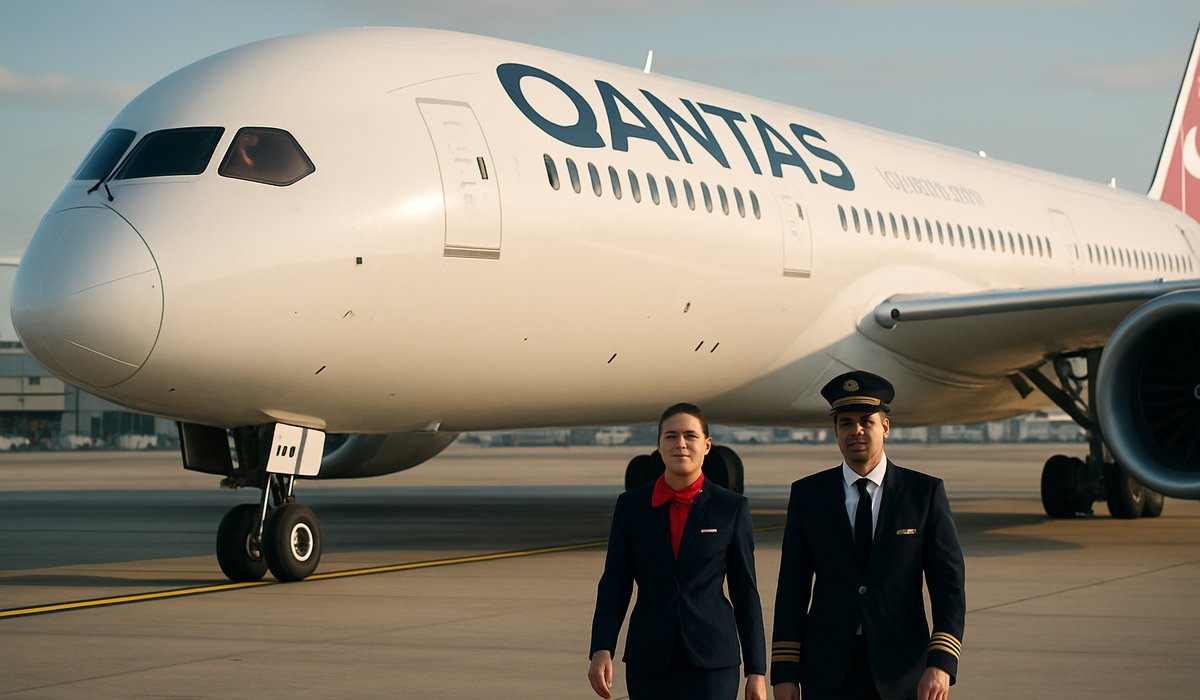
Image generated by AI
Qantas' US Network Struggles: Carrier Reveals Severely Underutilized Routes as Capacity Questions Mount
Australian flag carrier's transatlantic operations face occupancy crisis, raising concerns about route viability and airline fee sustainability
Qantas Grapples with Low Load Factors on Ten Key US Routes
Qantas Airways is confronting a significant operational challenge across its United States network, with analysis revealing that ten critical routes are operating at substantially reduced capacity levels, averaging just 67% seat occupancy. The disclosure raises critical questions about route profitability and the airline's ability to maintain premium service standards while managing operational costs in an increasingly competitive long-haul aviation market.
The Australian carrier transported 973,000 passengers between the US and its home market during the most recent reporting period, positioning it as the country's 34th-largest foreign operator overall, though it commands a stronger position as the 25th-ranked carrier for dedicated long-haul services. Within the oneworld alliance framework, Qantas controls approximately 29% of all passenger traffic flowing between the United States and Australia-New Zealand corridors—a substantial market share that underscores the strategic importance of these underperforming routes.
Industry Context: Fuel Costs and Fee Pressures Compound Route Challenges
The revelation emerges as global aviation faces mounting structural pressures. Volatile jet fuel prices continue to squeeze airline margins, forcing carriers worldwide to recalibrate route strategies and implement ancillary aviation fees—including baggage charges, seat selection, and fuel surcharges—to offset operating expenses. For a long-haul operator like Qantas, which relies heavily on premium cabin revenues and ancillary income streams, routes operating significantly below optimal capacity threaten profitability calculations.
The low load factors suggest Qantas may need to reassess pricing strategies, capacity deployment, or service frequency on these routes. Airlines typically target 85-90% occupancy on long-haul services to achieve acceptable unit economics, making the 67% average particularly concerning for route sustainability.
Market Position and Strategic Implications
Despite these challenges, Qantas maintains a dominant position within the US-Australasian market through its oneworld partnership, which provides access to American Airlines' extensive domestic network. However, the underutilized routes highlight broader competitive pressures from Asian carriers and other global operators increasingly targeting this lucrative intercontinental corridor.
Industry observers note that load factor deterioration often precedes either capacity reductions, route suspensions, or aggressive pricing tactics—all of which could reshape competitive dynamics in transatlantic and transpacific aviation markets where fuel costs remain a critical variable.
FAQ: Understanding Qantas' US Route Challenges
Why do airlines report load factors and what does 67% occupancy mean? Load factor represents the percentage of available seats filled by paying passengers. The 67% figure indicates Qantas is flying these routes with roughly one-third of capacity empty, well below industry profitability thresholds.
How do jet fuel prices impact airline fees and route decisions? Rising aviation fuel costs directly compress margins, forcing carriers to introduce or increase baggage charges, seat selection fees, and fuel surcharges to maintain profitability on marginally performing routes.
What percentage of US-Australia traffic does Qantas control? Qantas carries approximately 29% of all passengers traveling between the US and Australia-New Zealand markets, primarily through oneworld partnerships.
Could low load factors force Qantas to suspend routes? Sustained low occupancy rates typically trigger either capacity reductions, route suspensions, or strategic pricing adjustments to improve demand and route viability.
How does Qantas rank among foreign carriers operating in the US? The airline ranks as the 34th-largest foreign operator by total US passenger volume, though it places 25th specifically for long-haul services, reflecting the importance of these intercontinental routes to its strategy.
Related Travel Guides
Flight Delay Compensation Guide 2026
Understanding Airline Route Changes
Airport Security Process Updated (2026)
External Resources
Disclaimer
This article is for informational and educational purposes only. It does not constitute legal, financial, or professional advice. While we strive to provide accurate and up-to-date information, travel policies, regulations, and conditions change rapidly. Always verify information with official sources before making travel decisions. Nomad Lawyer makes no representations about the accuracy, reliability, completeness, or suitability of the information provided. Readers should consult qualified professionals for advice specific to their circumstances. The views expressed in this article are those of the author and do not necessarily reflect the views of Nomad Lawyer.
Preeti Gunjan
Contributor & Community Manager
A passionate traveller and community builder. Preeti helps grow the Nomad Lawyer community, fostering engagement and bringing the reader experience to life.
Learn more about our team →