
Oman's Al Jabal Al Akhdar Festival 2026 Attracts 300,000 Visitors to Green Mountain
The 45-day Al Jabal Al Akhdar Festival 2026 successfully hosted over 300,000 visitors, showcasing Oman's high-altitude agriculture and sustainable mountain tourism in the A’Dakhiliyah Governorate.

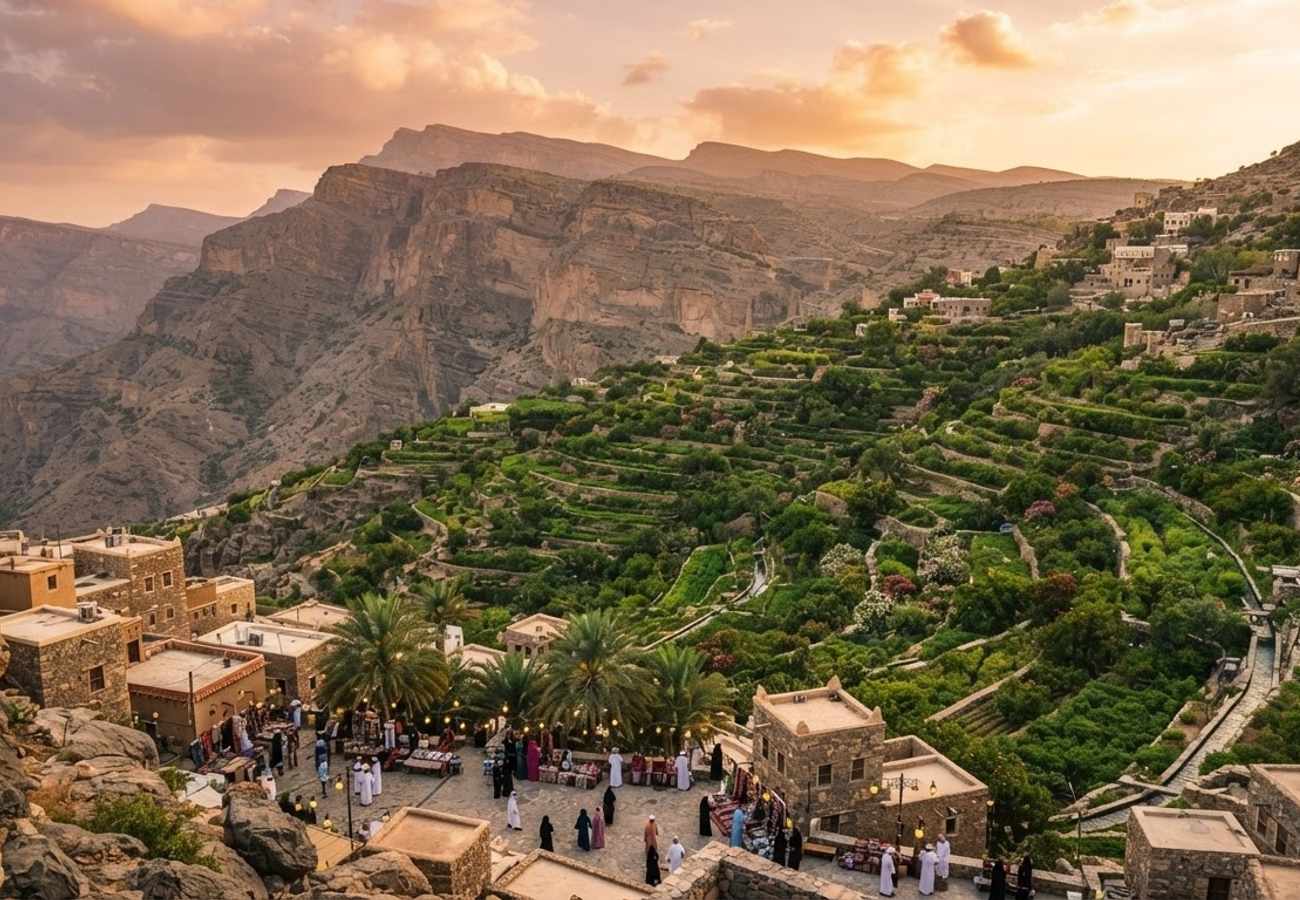
Image generated by AI
Over 300,000 visitors descended upon the A’Dakhiliyah Governorate for the 45-day Al Jabal Al Akhdar Festival 2026. This surge in tourism marks a pivotal shift toward high-altitude, sustainable exploration in the Sultanate of Oman.
The 2026 edition of the Al Jabal Al Akhdar Festival has redefined the intersection of cultural heritage and ecological preservation. By strategically distributing crowds across various high-altitude locations, the event proved that large-scale tourism can coexist with the fragile ecosystems of the "Green Mountain." The festival focused on the region's agricultural identity, specifically highlighting the production of Damask roses, walnuts, and pomegranates.
The Shift Toward Decentralized Tourism
Rather than concentrating visitors in a single hub, regional authorities implemented a decentralized model. Events were spread across historic villages and terraced farms throughout the Wilayat of Al Jabal Al Akhdar. This approach prevented the congestion of narrow mountain passes and reduced the environmental footprint on sensitive sites.
Key locations that anchored the 2026 experience included:
- Al Aqur: Known for its dramatic cliffside pathways.
- Saiq: Featuring the region's iconic terraced agricultural slopes.
- Cultural Plazas: Specialized zones designed for nightly heritage displays and traditional performances.
For the visitor, the real impact was a more intimate encounter with Omani mountain life. Instead of crowded plazas, travelers experienced the authentic rhythm of the highlands, moving from handicraft showcases to open-air culinary exhibitions.
Cultural and Environmental Value
Rising 2,000 metres above sea level in the Al Hajar Mountains, Al Jabal Al Akhdar offers a Mediterranean-style climate that is a rarity in the Arabian Peninsula. The region is defined by its falaj network—ancient irrigation systems that are central to the area's survival and cultural identity.
The Ministry of Heritage and Tourism utilized the 2026 festival to move beyond simple sightseeing. By integrating community-led markets, the event ensured that financial gains flowed directly to local families and small business owners. Environmental safeguards were paramount, with the implementation of energy-efficient lighting and strict waste management protocols to protect the limestone cliffs and orchards.
To manage the influx of 300,000 people, planners introduced designated park-and-ride hubs. This was particularly vital for preserving the silence and structural integrity of ancient hamlets like Wadi Bani Habib, ensuring that the increase in foot traffic did not result in permanent degradation.
Visitor Insider Tips
For those planning a visit to the Green Mountain outside the primary festival window, consider these local insights:
- The Golden Window: While the festival is a highlight, visiting during the rose harvest (typically spring) offers a more serene experience of the Damask rose fragrance filling the air.
- Vehicle Requirements: Access to Al Jabal Al Akhdar strictly requires a 4WD vehicle. Local checkpoints often verify this for safety due to the steep ascent.
- Cultural Etiquette: When visiting terraced farms, always ask for permission before entering private agricultural plots. The falaj systems are active working sites; avoid walking directly in the water channels.
- Dining Specialty: Seek out local pomegranate molasses and rose-water infused sweets, which are the hallmarks of the A’Dakhiliyah region.
Tourism Outlook
The 2026 festival has fundamentally changed the visitor profile for the region. Data indicates a move away from day-tripping, with international tourists now opting for extended stays of three to five days. This shift allows for a deeper immersion in the A’Dakhiliyah region and provides a more stable economic base for the local community.
Looking forward, the Sultanate is expanding its mountain tourism infrastructure. Initiatives include the development of new eco-trails and the creation of certified mountain-guiding courses for local youth. These projects aim to transform Al Jabal Al Akhdar into a year-round sanctuary for trekking, geological study, and luxury eco-tourism.
The Green Mountain stands as a blueprint for how heritage can be celebrated without being consumed.
Related Travel Guides
Disclaimer
This article is for informational and educational purposes only. It does not constitute legal, financial, or professional advice. While we strive to provide accurate and up-to-date information, travel policies, regulations, and conditions change rapidly. Always verify information with official sources before making travel decisions. Nomad Lawyer makes no representations about the accuracy, reliability, completeness, or suitability of the information provided. Readers should consult qualified professionals for advice specific to their circumstances. The views expressed in this article are those of the author and do not necessarily reflect the views of Nomad Lawyer.
Kunal K Choudhary
Co-Founder & Contributor
A passionate traveller and tech enthusiast. Kunal contributes to the vision and growth of Nomad Lawyer, bringing fresh perspectives and driving the community forward.
Learn more about our team →