
Breeze Airways Extends Embraer E190 Operations Through Summer 2026 Amid Fleet Transition Strategy
Breaking airline news and aviation industry updates for 2026.

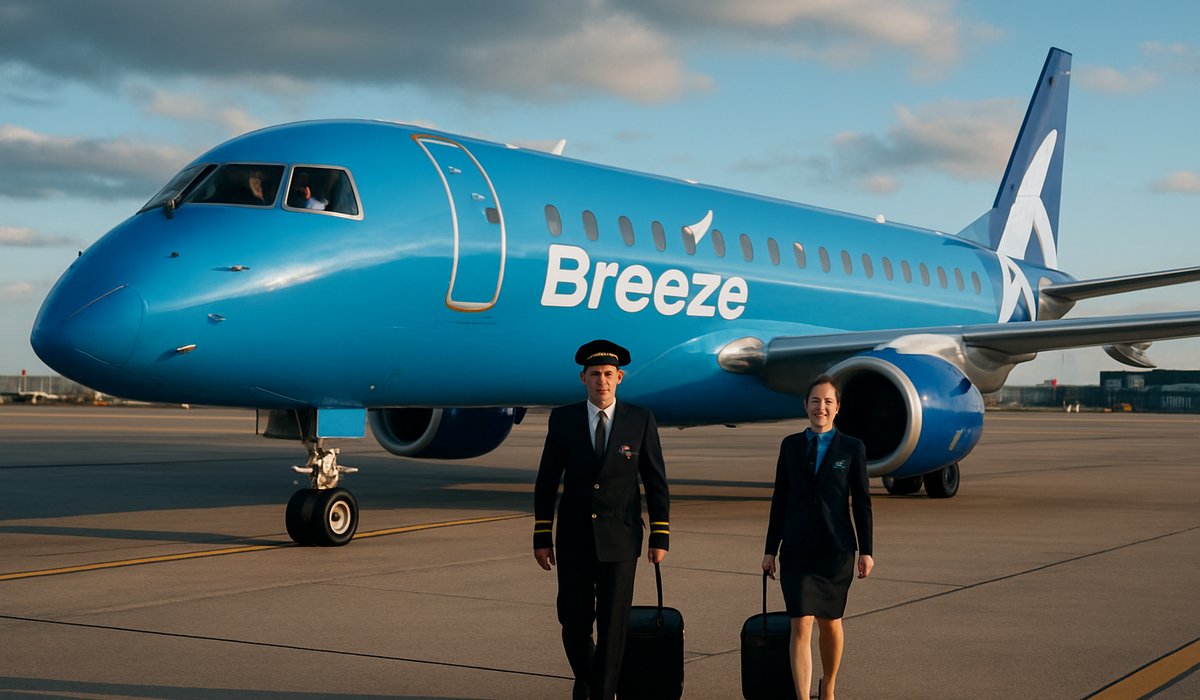
Image generated by AI
Breeze Airways Extends Embraer E190 Operations Through Summer 2026 Amid Fleet Transition Strategy
Regional carrier maintains aging turboprops on nine routes as Airbus A220-300 rollout continues
Unexpected Timeline Extension Signals Fleet Modernization Delays
Breeze Airways is prolonging its reliance on Embraer E190 regional jets beyond previously announced retirement targets, with the carrier now scheduling the 108-seat aircraft across nine domestic routes through early September 2026. The development suggests the budget airline's transition toward next-generation narrowbody aircraft is progressing more gradually than initially projected.
According to operational data compiled by aviation scheduling firm AeroRoutes, the carrier intends to deploy E190s on multiple routes during a critical summer travel period spanning July through early September 2026—a period typically marked by peak domestic demand and elevated ticket prices across the aviation industry.
Competing Modernization Pressures in Budget Segment
The extended E190 deployment underscores mounting pressures facing ultra-low-cost carriers (ULCCs) as they navigate fleet modernization cycles. While Breeze Airways pursues its long-term strategic pivot toward the Airbus A220-300—a fuel-efficient, 130-160 seat aircraft designed to reduce operating costs and environmental impact—operational realities are forcing a more measured transition timeline.
This phased approach reflects industry-wide challenges in aircraft delivery schedules and the financial complexities of maintaining legacy fleets during technological shifts. The E190, which entered service in the early 2000s, remains marginally profitable for regional operations despite higher fuel consumption compared to modern alternatives.
Route Diversification Strategy Continues
The nine confirmed routes represent Breeze Airways' continued expansion into secondary and tertiary markets across the United States. By maintaining E190 capacity on these segments, the airline can sustain frequency and load factors while awaiting additional A220-300 deliveries from Airbus—a supply chain dependent on global manufacturing capacity and geopolitical supply chain stability.
Industry observers note that budget carriers increasingly employ mixed-fleet strategies during transition periods, optimizing aircraft deployment based on route demand, passenger volumes, and seasonal fluctuations.
Broader Implications for Low-Cost Aviation
The E190 extension demonstrates how fleet modernization timelines inevitably stretch beyond original projections, particularly for smaller carriers lacking the capital reserves of legacy competitors. As jet fuel prices remain volatile and labor costs accelerate across the aviation sector, carriers must carefully balance investments in newer aircraft against near-term profitability pressures.
Breeze Airways' measured approach reflects pragmatic operational decision-making amid an industry simultaneously managing post-pandemic capacity expansion, inflationary pressures, and regulatory compliance costs.
FAQ: Airline Fleet Transitions and Budget Carrier Operations
What is the Embraer E190 and why are airlines phasing it out? The Embraer E190 is a 108-seat regional turbofan jet that entered service in the 2000s. Airlines are retiring these aircraft in favor of newer, fuel-efficient models like the Airbus A220-300, which reduce operating costs by 15-25% and lower emissions.
How does fleet modernization affect airline ticket prices and baggage fees? Newer aircraft reduce per-seat operating costs, potentially lowering base fares. However, budget carriers often maintain aggressive ancillary revenue strategies (baggage fees, seat selection charges) regardless of fleet age, as these fees fund route expansion and fuel hedging.
Why do regional carriers struggle with aircraft delivery schedules? Global aircraft manufacturing capacity is constrained, and geopolitical supply chain disruptions affect components sourcing. Budget carriers typically have lower order priority than legacy carriers, extending delivery timelines by 2-5 years.
What is the Airbus A220-300 and why is it strategically important? The A220-300 is a next-generation narrowbody aircraft offering 130-160 seats with 20-25% lower fuel consumption than comparable regional jets, making it ideal for ultra-low-cost carriers targeting cost-per-available-seat-mile optimization.
How do volatile jet fuel prices impact fleet retirement decisions? When fuel prices spike, older, less-efficient aircraft become unprofitable faster, accelerating retirement timelines. Conversely, during fuel price declines, carriers often extend legacy fleet utilization to defer expensive aircraft acquisition financing.
Related Travel Guides
External Resources
Disclaimer
This article is for informational and educational purposes only. It does not constitute legal, financial, or professional advice. While we strive to provide accurate and up-to-date information, travel policies, regulations, and conditions change rapidly. Always verify information with official sources before making travel decisions. Nomad Lawyer makes no representations about the accuracy, reliability, completeness, or suitability of the information provided. Readers should consult qualified professionals for advice specific to their circumstances. The views expressed in this article are those of the author and do not necessarily reflect the views of Nomad Lawyer.
Raushan Kumar
Founder & Lead Developer
Full-stack developer with 11+ years of experience and a passionate traveller. Raushan built Nomad Lawyer from the ground up with a vision to create the best travel and law experience on the web.
Learn more about our team →