
British Airways Flight Delayed Six Hours After New Cabin Crew Member Accidentally Deploys Emergency Slide on Boeing 777
Breaking airline news and aviation industry updates for 2026.

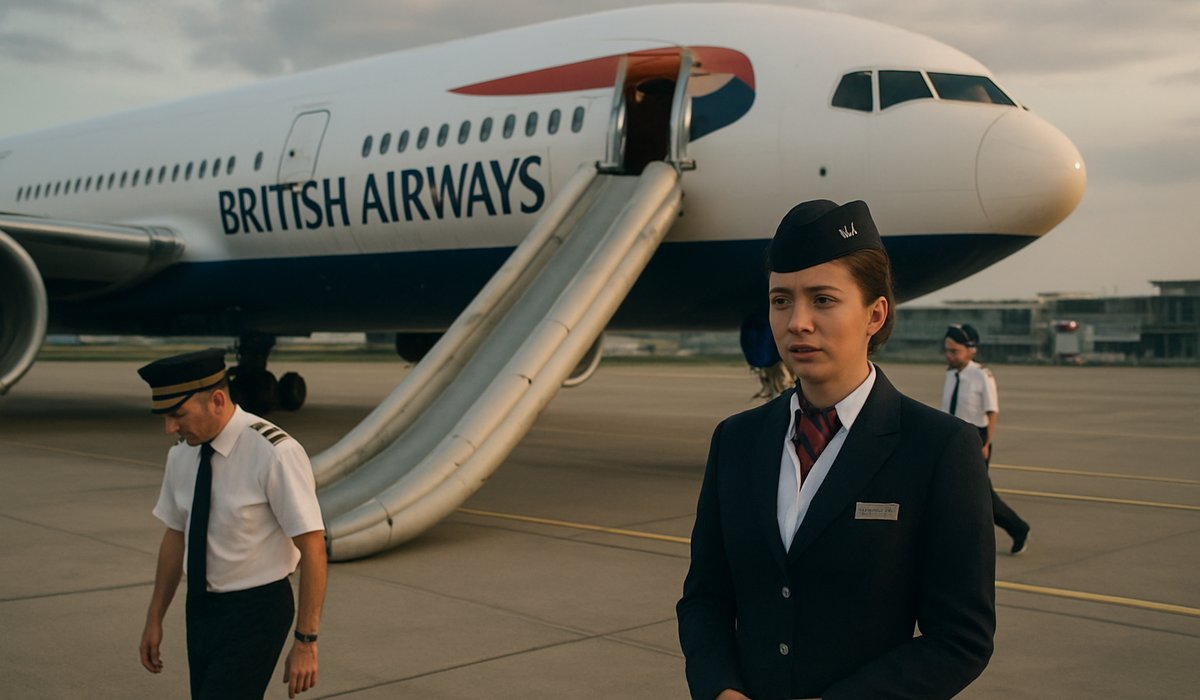
Image generated by AI
British Airways Flight Delayed Six Hours After New Cabin Crew Member Accidentally Deploys Emergency Slide on Boeing 777
Accidental slide activation at London Heathrow triggers emergency response, costly aircraft downtime, and renewed focus on staff training protocols in aviation industry
Incident Forces Major Operational Disruption at Heathrow
A British Airways Boeing 777 bound for Washington Dulles faced an unexpected six-hour delay on Saturday after a cabin crew member on only their second day of employment inadvertently activated an emergency evacuation slide during aircraft pushback from the gate at London Heathrow Airport.
The incident, which unfolded as the wide-body aircraft was preparing to depart, prompted an immediate emergency response from airport authorities. The premature slide deployment forced British Airways to halt departure procedures, requiring ground crews to inspect, deflate, and ultimately replace the activated slide before the aircraft could resume its transatlantic service to Dulles International Airport.
Operational and Financial Fallout
The accident came at considerable cost to the carrier. Preliminary reports indicate the incident generated over $100,000 in direct expenses, encompassing emergency slide replacement, extended ground handling, fuel surcharges from the prolonged turnaround, and cascading crew scheduling complications. For passengers aboard the flight, the six-hour ground delay created significant disruptions to their onward travel plans and connections.
A spokesperson for British Airways acknowledged the occurrence, emphasizing that safety protocols functioned as designed. "The safety of our customers and crew remains our paramount priority," the airline stated, noting that emergency procedures operated effectively throughout the incident.
Training and Oversight Questions Emerge
The accident raises critical questions about cabin crew training and supervision standards within the aviation industry. New flight attendants typically undergo comprehensive safety certification before independent duty assignments, yet operational errors during early employment remain a documented concern across global carriers.
Industry observers note this incident reflects broader staffing challenges facing major airlines as they rapidly scale operations following pandemic-related capacity reductions. The pressure to deploy newly trained personnel quickly can occasionally create gaps between theoretical knowledge and practical application in high-stress operational environments.
Broader Industry Context
Emergency slide deployments, while rare among experienced crew members, represent one of aviation's most expensive single-incident costs. Boeing 777 evacuation slides alone exceed $50,000 per unit, before accounting for additional operational expenses. This incident underscores why rigorous oversight protocols and extended supervised flights remain essential components of aviation safety culture.
British Airways did not provide details regarding disciplinary measures or additional training requirements for the involved staff member, emphasizing instead that the incident was isolated and did not reflect systemic training deficiencies.
Frequently Asked Questions
What causes emergency slide deployments during normal operations? Emergency slides are typically activated through accidental contact with deployment handles by crew members unfamiliar with cockpit or cabin layouts, particularly during training phases.
How much do aircraft emergency slides cost to replace? Boeing 777 emergency evacuation slides range from $50,000 to $70,000 per unit, excluding labor, inspection, and regulatory compliance costs that can nearly double total expenses.
What training do new British Airways flight attendants receive? BA cabin crew undergo comprehensive safety certification, including evacuation procedures, emergency equipment operation, and supervised flights before independent duty assignments—though specific duration varies by role.
Can airlines recover costs from employees who cause accidental slide deployments? Airlines generally absorb these costs as occupational incidents, though repeated violations may trigger disciplinary action; seeking employee reimbursement remains exceptionally rare in aviation.
How common are emergency slide deployments by new crew members? While exact statistics remain proprietary, industry sources confirm such incidents occur periodically across global carriers, particularly during high-volume recruitment and training periods.
Related Travel Guides
Flight Delay Compensation Guide 2026
Understanding Airline Route Changes
Airport Security Process Updated (2026)
External Resources
Disclaimer
This article is for informational and educational purposes only. It does not constitute legal, financial, or professional advice. While we strive to provide accurate and up-to-date information, travel policies, regulations, and conditions change rapidly. Always verify information with official sources before making travel decisions. Nomad Lawyer makes no representations about the accuracy, reliability, completeness, or suitability of the information provided. Readers should consult qualified professionals for advice specific to their circumstances. The views expressed in this article are those of the author and do not necessarily reflect the views of Nomad Lawyer.
Kunal K Choudhary
Co-Founder & Contributor
A passionate traveller and tech enthusiast. Kunal contributes to the vision and growth of Nomad Lawyer, bringing fresh perspectives and driving the community forward.
Learn more about our team →