
Northern Opens All UK Trains to Mobility Scooters: The Essential Guide to Accessible Rail Travel in Northern England
Northern authorizes mobility scooters across all fleet trains under a free permit system, opening scenic rail routes across Yorkshire, Cumbria, and the North East.

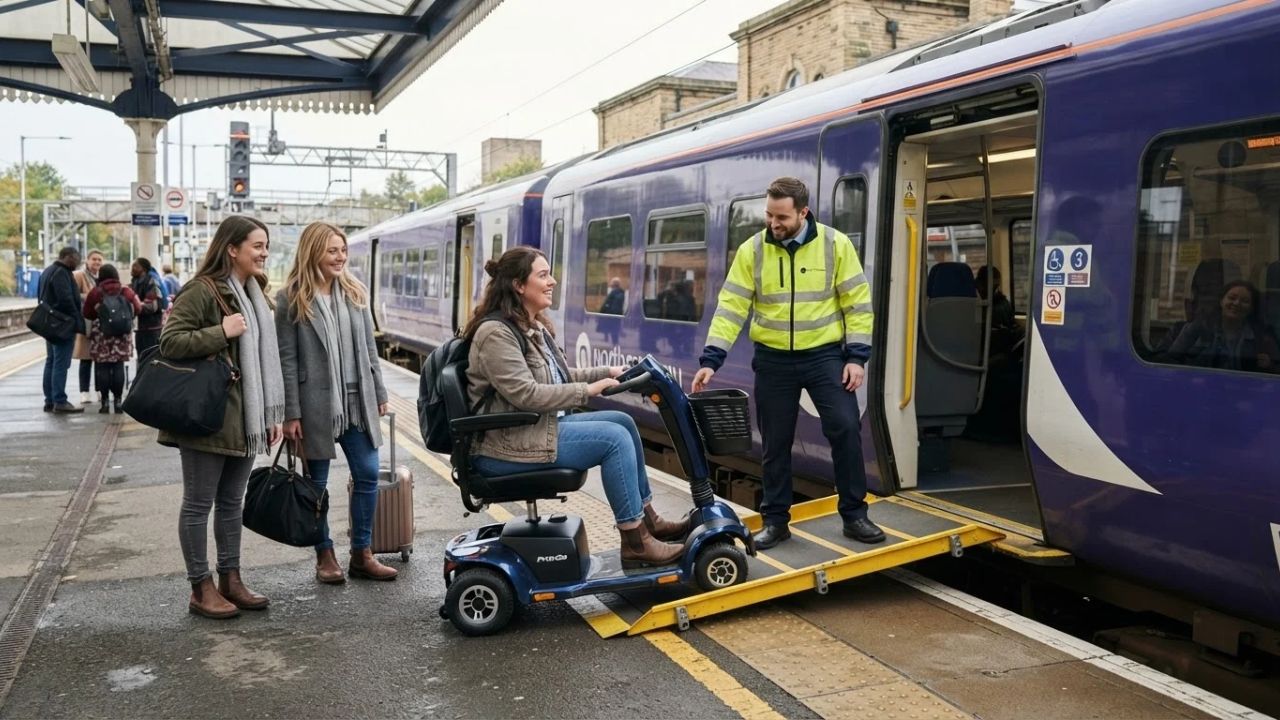
Image generated by AI
For decades, exploring the limestone dales, heather-clad moors, and windswept coastal villages of Northern England by train was a frustrating obstacle course for travelers using personal mobility scooters, who frequently found their journeys blocked because older regional diesel carriages featured vestibules too narrow or turning radii too tight to permit their devices onboard. That long-standing barrier was officially dismantled on September 15, 2026, when passenger rail operator Northern introduced a landmark network-wide policy update: travelers utilizing mobility scooters are now authorized to board every single train type across the entire Northern fleet. Governed by a streamlined, completely free permit framework—including a newly created permit tier engineered specifically for historically challenging rolling stock—the rule change replaces fragmented exclusions with universal network utility. By introducing standardized length, width, and weight parameters for both three-wheel and four-wheel models, the initiative opens hundreds of rural, market town, and coastal destinations across Yorkshire, Cumbria, Lancashire, and the North East for passengers with reduced mobility.
The Free Permit Framework: How Northern Opened Its Entire Fleet
The operational shift implemented by Northern marks a fundamental departure from legacy railway regulations. Historically, rolling stock diversity across the UK rail network created significant accessibility barriers. Older regional diesel multiple units, engineered decades ago with compartmentalized passenger saloons and constricted entryway vestibules, were routinely deemed incompatible with modern personal mobility vehicles. Passengers were often forced to rely on station-provided manual transit chairs or abandon rail travel altogether, severely limiting spontaneous independent exploration.
To reconcile passenger independence with stringent railway safety standards, Northern developed a structured, two-tier free permit system. Under this policy, standard permits cover modern trains featuring spacious priority bays, while a newly established permit tier authorizes compact scooters on older, more challenging train layouts. Travelers submit their scooter’s exact physical measurements—including overall length, width, turning circle, and total combined weight capped at standardized safety thresholds—through official customer service channels for evaluation. Once approved, travelers receive an official permit that provides unambiguous confirmation of onboard compatibility.
Station and onboard protocols have been carefully standardized to ensure passenger safety and dignity. Before departure, travelers verify that their origin and destination stations feature step-free access. On the station platform, passengers remain safely behind the painted yellow safety lines until the train comes to a complete halt, at which point trained station staff deploy a dedicated boarding ramp. Once inside the carriage, the mobility device must be parked in designated priority wheelchair bays, completely powered down, and have its parking brakes firmly applied, with passengers encouraged to transfer to standard passenger seating whenever feasible. Travelers can also schedule boarding support in advance through the National Rail Passenger Assist booking service.
What Makes Exploring Northern England by Rail Different: From Victorian Viaducts to Market Towns
Riding the rails through Northern England offers an authentic connection to Britain's industrial and natural heritage that automobile travel simply cannot match. The Northern network encompasses some of the most celebrated railway engineering achievements on earth, including the legendary Settle-Carlisle line, which sweeps across the 24 soaring limestone arches of the Ribblehead Viaduct against the dramatic backdrop of the Yorkshire Three Peaks.
Unlike generic highway corridors, northern rail routes deposit travelers directly into the heart of historic stone-built market towns. Passengers can step off the train in Skipton to explore one of England’s most complete medieval castles and watch narrowboats glide along the Leeds-Liverpool Canal, or disembark at Knaresborough, where colorful rowboats drift along the River Nidd beneath a dramatic railway viaduct. On the Cumbrian Coast line, diesel trains trace the Irish Sea shore mere yards from the water, offering panoramic coastal views extending toward the Isle of Man.
The sensory details of these journeys are unforgettable: the smell of coal smoke and damp moorland grass drifting across heritage wooden platforms, historic station canopies painted in traditional railway liveries, and cozy station waiting rooms with crackling coal fires. In market towns along the lines, travelers can savor regional delicacies, from warm crumbly Yorkshire curd tarts and gingerbread parkin to savory Cumberland sausages served in historic station buffets. Official tourism strategies guided by VisitBritain spotlight how opening these lines to all travelers transforms the English countryside into an inclusive cultural resource.
Visitor Insider Tips: Navigating Northern Rail with a Mobility Device
Experiencing Northern England’s countryside via accessible rail requires practical transit planning, advance verification, and localized knowledge:
Securing the Free Permit Ahead of Travel: Apply for Northern's free mobility scooter permit online at least two to three weeks before your trip. Keep your scooter’s manufacturer manual handy to input exact manufacturer dimensions and weight ratings. Once approved, save the digital permit to your smartphone wallet and keep a laminated physical copy tucked into your scooter's seat pocket to present to train conductors without delay.
Checking Station Infrastructure and Platforms: While every Northern train now accommodates permitted scooters, Victorian station infrastructure varies widely across rural England. Use the National Rail "Stations Made Easy" online database to verify step-free access at your specific destination. Avoid unstaffed rural halts that rely exclusively on historic pedestrian footbridges between platforms (such as certain rural stops on the Bentham or Calder Valley lines) unless you have confirmed level crossing assistance.
Leveraging Passenger Assist Technology: Download the National Rail Passenger Assist mobile app to book dedicated boarding ramps and staff support. While Northern's staff will assist spontaneous "turn-up-and-go" travelers whenever resources allow, booking assistance at least two hours prior to travel ensures station personnel are waiting on the platform with the ramp ready upon your train's arrival.
Accessible Countryside Excursions: Take advantage of established step-free rural paths situated right beside rail stations. From Windermere station in the Lake District, travelers can easily reach paved, accessible "Miles Without Stiles" routes along the lake shore. In the Yorkshire Dales, take the train to Ilkley to enjoy level paved walking paths along the scenic River Wharfe before visiting the step-free tearoom at Betty’s Café.
Base Cities with Full Accessibility: For the most seamless regional excursions, base yourself in major transport hubs featuring complete step-free access, accessible taxi ranks, and modern transit infrastructure, such as Leeds, Manchester Victoria, York, or Newcastle Central.
Cultural and Environmental Context: Sustainable Inclusivity Across Heritage Railways
Expanding public transport access across Northern England intersects directly with environmental preservation and rural economic vitality. The national parks of Northern England—including the Lake District, recognized as a global cultural treasure by the UNESCO World Heritage Centre, and the Yorkshire Dales—face persistent traffic congestion and vehicle emissions along narrow, stone-walled country lanes. Enabling travelers with mobility aids to choose electrified and regional rail over private automobiles helps preserve fragile fellside ecosystems and reduce vehicular pollution in historic villages.
At the same time, the policy overhaul fosters social inclusion within rural communities. Many remote towns across northern valleys have experienced declining bus services in recent years, leaving mobility-impaired residents and travelers vulnerable to isolation. Universal train access ensures that visitors can patronize independent village bakeries, community-owned pubs, and local heritage craft workshops, funneling economic benefits directly into rural communities.
Preserving Victorian rail architecture while integrating twenty-first-century accessibility represents a masterclass in living heritage. Station upgrades across the North prove that historic preservation and universal accessibility are not mutually exclusive, ensuring that Britain’s pioneering railway legacy remains vibrant and accessible to every traveler.
FAQ: Exploring Northern England by Accessible Rail in 2026
How does Northern's new mobility scooter permit system work? Northern allows mobility scooters on all fleet trains with a free permit. Passengers submit their scooter's dimensions and weight online for verification, receiving a digital or physical permit granting network-wide travel.
Do both three-wheel and four-wheel scooters qualify under the policy? Yes. Both three-wheel and four-wheel mobility scooters are accepted, provided they comply with Northern's maximum length, width, and weight parameters to fit designated priority carriage spaces safely.
Do passengers need to book station boarding ramps in advance? Booking via the Passenger Assist app at least two hours before departure is strongly recommended to guarantee ramp deployment, although station staff will assist spontaneous travelers whenever operational resources allow.
Which scenic northern rail routes are accessible for scooter users? Spectacular lines including the Settle-Carlisle railway, the Hope Valley line, and the Cumbrian Coast route are fully accessible, featuring level access and staff boarding assistance at key stations.
When iron tracks remove the barriers of the past, the wild dales and coastal headlands of the North welcome every traveler with open arms.
Related Travel Guides
- Birmingham to Manchester Airport Direct Rail Link to Launch in 2027 Connecting 17 Stations
- Halton Visitor Economy Reaches £225 Million in 2025 as Heritage and Waterways Draw Millions to Northern England
- The Accessible Rail Guide to the Yorkshire Dales and Lake District: Step-Free Stations and Scenic Lines
Disclaimer
This article is for informational and educational purposes only. It does not constitute legal, financial, or professional advice. While we strive to provide accurate and up-to-date information, travel policies, regulations, and conditions change rapidly. Always verify information with official sources before making travel decisions. Nomad Lawyer makes no representations about the accuracy, reliability, completeness, or suitability of the information provided. Readers should consult qualified professionals for advice specific to their circumstances. The views expressed in this article are those of the author and do not necessarily reflect the views of Nomad Lawyer.
Naina Thakur
Contributor & Travel Specialist
Travel enthusiast and legal writer covering visa regulations, responsible tourism, and cultural journeys across global destinations.
Learn more about our team →