
Norse Atlantic Boeing 787-9 Aborts Take-Off at London Gatwick, Triggering Runway Closure and Flight Diversions
Norse Atlantic flight Z0701 aborted take-off at 120 knots on Gatwick's runway 26L, forcing a temporary shutdown, easyJet diversions, and widespread schedule delays.

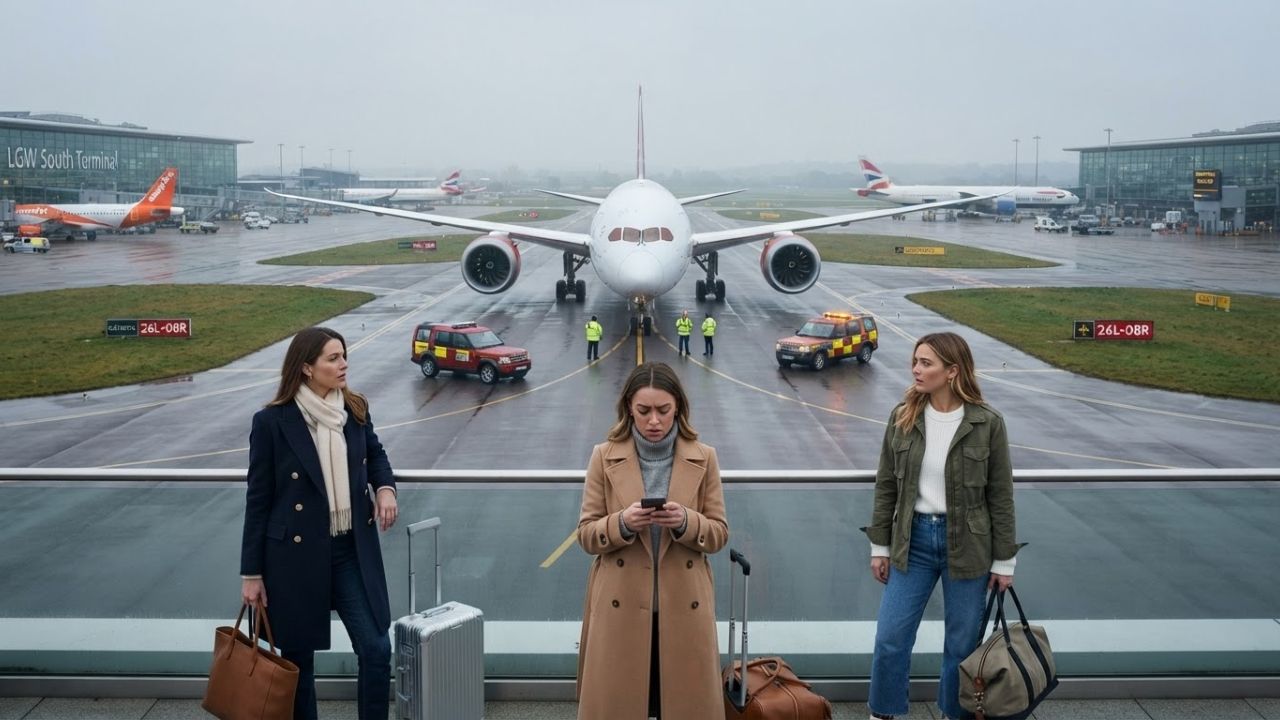
Image generated by AI
A Norse Atlantic Airways Boeing 787-9 bound for New York aborted its take-off roll at 120 knots on London Gatwick’s runway 26L, triggering emergency responses, a complete runway closure, and widespread flight diversions across the United Kingdom.
The high-speed rejected take-off brought commercial operations at the world’s busiest single-use runway airport to an immediate standstill. Operating as flight Z0701 from London Gatwick (LGW) to New York John F. Kennedy International Airport (JFK), the widebody Dreamliner, registered as G-CKOF, was forced to abandon its acceleration roll after flight crew received a technical alert involving the aircraft’s nose landing gear. While airport emergency services responded swiftly and prevented any injuries, the temporary closure of Gatwick’s solitary main strip caused compounding holding patterns, widespread passenger delays, and aircraft diversions across southeastern England.
The Local Trend Revealed: Single-Runway Vulnerability at Gatwick
London Gatwick relies almost exclusively on a single active runway—designated runway 26L/08R—to handle more than 800 aircraft movements per day during peak periods. When a widebody aircraft experiences a rejected take-off (RTO) and comes to a halt on the centerline, the entire aerodrome must cease operations immediately.
According to technical reports logged by The Aviation Herald, flight Z0701 was accelerating toward its rotation velocity when the crew rejected the take-off at approximately 120 knots. The cockpit team cited an indication problem associated with the aircraft’s nose landing gear assembly.
Following established aviation safety protocols, specialized airport fire and rescue appliances deployed to inspect the Dreamliner on the tarmac:
- Tarmac Inspection & Brake Cooling: Fire crews surrounded the aircraft to assess wheel assembly temperatures and verify that no hydraulic fluid leaks or tire failures had occurred during high-energy braking.
- Runway Clearance (14:30 BST): At approximately 14:30 BST, after thorough safety inspections, the Boeing 787-9 taxied under its own power away from the active runway to a remote parking stand at Gatwick.
- FOD Inspection & Reopening (14:36 BST): Airport ground operations performed a comprehensive Foreign Object Debris (FOD) inspection of the runway surface to check for tire rubber deposits or mechanical debris. Gatwick confirmed the full reopening of runway 26L for flight operations at 14:36 BST.
Technical Incident Profile: Norse Atlantic Flight Z0701
| Flight Parameter | Operational Detail | Technical Significance |
|---|---|---|
| Operating Carrier | Norse Atlantic Airways | Low-cost transatlantic long-haul specialist |
| Flight Number & Route | Flight Z0701 (London Gatwick LGW ➔ New York JFK) | High-volume transatlantic trunk service |
| Aircraft Model & Registration | Boeing 787-9 Dreamliner (Registration: G-CKOF) | Twin-engine widebody commercial jetliner |
| Aborted Speed & Location | Approximately 120 knots on Runway 26L | High-speed rejected take-off prior to V1 decision speed |
| Suspected Mechanical Cause | Nose landing gear indication anomaly | Under review by airline engineering and safety teams |
| Casualties & Damage | Zero injuries; no structural airframe damage reported | Crew execution successfully mitigated risk |
| Operational Timeline | Aircraft cleared to remote stand at 14:30 BST; Runway reopened at 14:36 BST | Fast 36-minute multi-agency operational response |
Cascading Knock-On Effects: easyJet Diversions and Terminal Saturation
Although the physical obstruction of runway 26L lasted less than an hour, the resulting schedule dislocation rippled across regional airspace throughout Friday evening. Because Gatwick schedules arrivals and departures in synchronized 90-second blocks, a 30-to-40-minute runway freeze instantly displaces dozens of flights:
- Regional Diversions: Inbound commercial flights that entered extended holding patterns over Sussex and the English Channel faced fuel reserve limits. Multiple incoming easyJet flights were forced to divert to London Luton Airport (LTN) and London Stansted Airport (STN).
- Ground Holding at Outstations: Aircraft scheduled to depart from European destinations bound for Gatwick were placed under Air Traffic Flow Management (ATFM) ground stops at their origin airports.
- Crew Duty Timeout Challenges: As arrival delays mounted, flight crews reached maximum permitted legal duty limits, forcing airlines to scramble standby personnel or cancel evening return legs.
Cultural & Environmental Value: Balancing Efficiency and Decarbonization
The incident at Gatwick brings renewed attention to the environmental and operational dynamics of runway utilization in the United Kingdom. When commercial jetliners are held in airborne holding patterns over Kent, Sussex, and Surrey, auxiliary fuel burn and carbon emissions rise sharply.
Under Gatwick Airport’s Decade of Change sustainability initiative and oversight by the UK Civil Aviation Authority (CAA), airport authorities are continually testing runway rapid-clearance protocols and collaborative decision-making software to minimize idle emissions during unplanned closures.
For passengers, choosing lower-carbon surface transit options mitigates overall environmental footprints while offering an escape hatch during airport delays:
- Rail Infrastructure Over Motorways: Gatwick features direct, seamless integration with the UK rail network at its South Terminal railway station. Utilizing electric Thameslink or Southern rail trains reduces road congestion along the heavily traveled M23 and M25 motorways when flights are delayed.
Visitor Insider Tips: Navigating Gatwick Runway Irregularities
If your journey through London Gatwick is disrupted by runway incidents or weather holds, use these practical traveler strategies:
- Thameslink vs. Gatwick Express Transit Hack: If your flight is diverted or canceled and you need to reach central London, skip the expensive Gatwick Express. Board the Thameslink train from the South Terminal station. It runs directly through London Bridge, Blackfriars, City Thameslink, Farringdon (connecting to the Elizabeth Line), and St Pancras International (for Eurostar) in 32 to 38 minutes for less than half the fare of express shuttles.
- Understand UK261 Passenger Protections: Under retained UK Regulation (EC) No 261/2004, if your flight is diverted to another airport (such as Luton or Stansted), the operating airline is legally responsible for arranging and paying for onward transportation to Gatwick or your final destination. If your flight is delayed beyond two hours, airlines must provide food and drink vouchers, and provide complimentary hotel accommodation if delayed overnight.
- Inter-Terminal Shuttle: Gatwick has two main terminals: North Terminal and South Terminal. Norse Atlantic operates out of the South Terminal, while easyJet and British Airways operate across both. The automated inter-terminal monorail is free, runs 24/7 every few minutes, and takes just two minutes.
- Quiet Spaces & Work Zones: If stuck in the South Terminal during flight recovery, bypass noisy central duty-free seating. Head to the upper mezzanine near the entrance to the Clubrooms and No1 Lounge, or use the quieter gate corridors near Gates 10–28.
- Live Flight Tracking Tools: Download Flightradar24 or the FlightAware app to monitor your inbound aircraft’s registration and active flight path. In single-runway delays, checking where your physical plane is holding in airspace will alert you to departure delays up to two hours before the terminal display boards update.
Tourism Outlook: The Case for Gatwick's Second Runway
The Norse Atlantic rejected take-off serves as a clear case study in modern aviation vulnerability. London Gatwick remains one of the premier international gateways to the United Kingdom, welcoming tens of millions of tourists, business travelers, and cruise passengers visiting London and southern England.
The disruption caused by a single widebody mechanical anomaly underscores Gatwick Airport Limited's (GAL) ongoing planning application to bring its northern emergency standby runway into regular dual-runway commercial use. As long-haul leisure carriers like Norse Atlantic expand budget transatlantic service, enhanced runway redundancy will be essential to ensure that a single isolated incident does not compromise the travel plans of thousands of international visitors.
Related Travel Guides
Disclaimer
This article is for informational and educational purposes only. It does not constitute legal, financial, or professional advice. While we strive to provide accurate and up-to-date information, travel policies, regulations, and conditions change rapidly. Always verify information with official sources before making travel decisions. Nomad Lawyer makes no representations about the accuracy, reliability, completeness, or suitability of the information provided. Readers should consult qualified professionals for advice specific to their circumstances. The views expressed in this article are those of the author and do not necessarily reflect the views of Nomad Lawyer.
Kunal K Choudhary
Co-Founder & Contributor
A passionate traveller and tech enthusiast. Kunal contributes to the vision and growth of Nomad Lawyer, bringing fresh perspectives and driving the community forward.
Learn more about our team →