
New Zealand Unveils Short-Term Graduate Work Visa Opening November 16, 2026
Immigration New Zealand introduces a new Short-Term Graduate Work Visa opening November 16, 2026, creating a six-month bridge for international alumni.

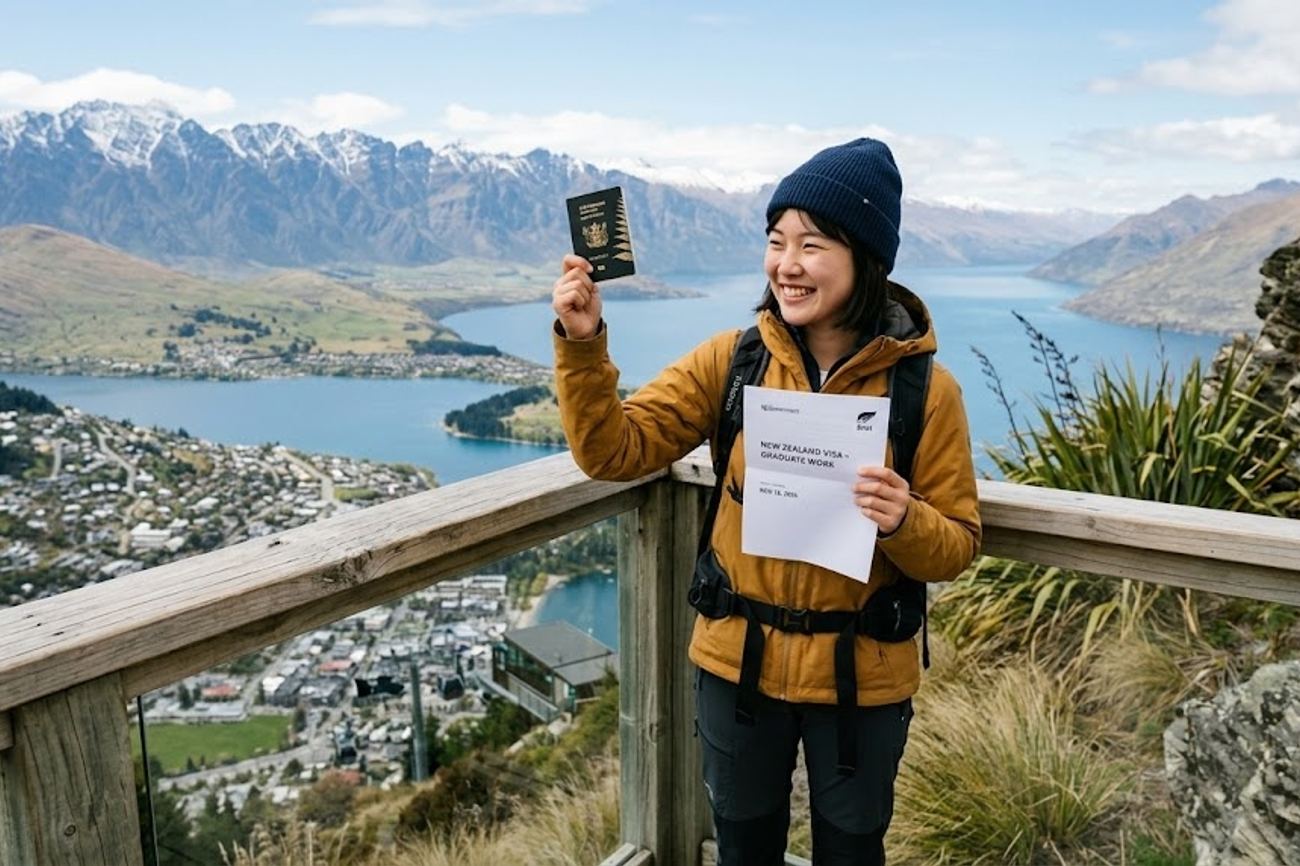
Image generated by AI
More than 80% of international scholars arriving in New Zealand rarely venture beyond Auckland's commercial core or Wellington's civic corridors, yet the nation's economic vitality increasingly depends on skilled talent putting down roots in provincial centers. On September 10, 2026, Immigration New Zealand formally introduced a regulatory shift designed to reshape how international graduates step into the domestic economy, unveiling the new Short-Term Graduate Work Visa. Applications officially open on November 16, 2026, offering a direct, temporary gateway for international alumni who complete eligible credentials but fall outside traditional multi-year programs. For anyone who has navigated drafty student flats in Dunedin's North Valley or cycled past rebuild projects in Christchurch, this policy creates a six-month window to turn academic training into meaningful regional employment.
Living as an international student or recent arrival in Aotearoa New Zealand means adjusting to an isolated island society operating on quiet trust and localized relationships. The era of treating post-study work permits as automatic residency tickets has drawn to a close. Policymakers are steering talent toward specific economic needs while ensuring that temporary visa holders possess the resources to sustain themselves. For travelers and scholars dreaming of extended stays across South Island alpine valleys or North Island coastal towns, mastering this November policy is essential for turning a study journey into a sustained professional adventure.
The November 16 Work Visa Pivot and the Shift in Graduate Mobility
The newly designated Short-Term Graduate Work Visa addresses an ongoing challenge in New Zealand's immigration system. Historically, international alumni completing vocational certificates or diplomas faced an administrative bottleneck, forced to depart immediately upon graduation or scramble for rigid employer-tied sponsorship. Under settings announced on September 10, 2026, eligible candidates can secure up to six months of open employment authorization starting November 16, 2026. This permits individuals to accept job placements across diverse sectors without needing a pre-arranged corporate sponsor at application.
The qualifying criteria establish clear boundaries. Candidates must have completed eligible NZQCF Level 5, 6, or 7 credentials studied full-time for a minimum of 24 weeks within New Zealand. Shorter bridging curricula, foundational diplomas, and English-language courses are strictly excluded. Candidates must submit their visa filings within three months following the expiration date of their preceding student visa. Every applicant must satisfy standard health and character verifications and demonstrate liquid financial reserves of at least NZD $5,000 to cover living expenses during their job search.
Global immigration specialists, including legal analysts at Fragomen, highlight that this scheme operates strictly as a transitional bridge rather than a multi-year residency springboard. Immigration New Zealand enforces a single-lifetime issuance cap on the six-month permit, meaning individuals cannot renew the status once it lapses. Operational rules also prohibit permit holders from business ownership or running independent commercial ventures; participants are legally restricted to formal employment agreements or valid service contracts.
Simultaneously, Immigration New Zealand expanded the established Post-Study Work Visa framework. This update permits holders of NZQCF Level 7 Graduate Diplomas who concurrently possess an undergraduate degree to access extended work stays of up to three years with family sponsorship privileges. In contrast, the six-month short-term tier completely disallows dependent inclusion; partners and children must independently secure separate visitor permits, work visas, or student authorizations. Those utilizing the six-month bridge wishing to return to study later must pursue bachelor-level or higher qualifications leading to standard post-study work rights. Detailed criteria and application portals can be reviewed through Immigration New Zealand. When transitioning beyond this temporary bridge, graduates often pursue longer pathways like the Accredited Employer Work Visa regime to remain in regional sectors.
What Makes New Zealand Different: Regional Enclaves and Island Rhythms
Understanding New Zealand as a temporary resident requires recognizing how distinct its student communities are from those in continental nations. The country does not have massive mega-cities. Even Auckland, home to roughly 1.7 million residents, feels like an interconnected collection of coastal villages draped across dormant volcanic cones. In suburbs like Grafton, Kingsland, and Mount Eden, flatting communities share vintage wooden villas, drying laundry on back verandas in humid sea air while discussing tech startups and environmental science.
Head south across Cook Strait into the South Island, and the social rhythm shifts. In Christchurch, the rebuild following historical earthquakes has produced a modern hub centered on agritech research, seismic engineering, and cycle corridors flanking the Otakaro Avon River. Further south in Dunedin, the nation's oldest university town houses students within Victorian brick quarters where winter temperatures drop sharply and bagpipes echo across the Octagon. The local student community, known colloquially as scarfies, preserves a distinct tradition of communal self-reliance, thrift-store living, and outdoor exploration along the wild beaches of the Otago Peninsula.
What sets New Zealand apart is the immediate accessibility of nature alongside urban life. In Wellington, the nation's creative capital, dense native bush climbs the hills behind parliament, and sea lions occasionally haul out onto coastal roads along the Miramar Peninsula. An international graduate working on a short-term contract in Wellington can leave an office on Lambton Quay at five in the evening and be tramping along ridgeline trails in the Makara hills before sunset. Travelers planning journeys across these distinct regions can discover local itineraries through Tourism New Zealand.
Visitor Insider Tips: Navigating Daily Life, Transport, and Work
Living successfully in New Zealand during a six-month work period requires adjusting to local social conventions and practical logistics. Kiwis value understated communication; loud self-promotion during interviews is often seen as a negative trait, whereas humility, reliability, and practical initiative are prized.
Timing and Seasonal Housing Avoid searching for accommodation between late January and early March, when university terms begin and domestic rental markets face intense competition. The ideal window to secure regional housing or sublets is during the autumn shoulder period from April through June, or early spring in September and October. In tourism hubs like Queenstown, Wanaka, and Blenheim, secure housing before accepting seasonal employment, as bed shortages can be severe.
Local Etiquette and Flatting Culture New Zealand shared housing, known as flatting, runs on communal etiquette. Flatmates divide expenses using online bank transfers, take turns cleaning, and respect quiet hours during weekdays. When invited to a neighborhood dinner or barbecue, always bring a small contribution, such as craft soda, local beverage, or bakery treats. Tipping is not customary; hospitality staff receive statutory wages, so a genuine thank you as you depart is standard courtesy.
Regional Food Specialties Do not limit your meals to generic supermarket groceries. Seek out morning cheese scones at independent cafes, toasted with butter. Sample savory meat pies from neighborhood bakeries, particularly mince and cheese or pepper steak. Along provincial roads in the Bay of Plenty and Hawke's Bay, keep small cash coins handy for honesty-box stalls selling seasonal avocados, fresh feijoas, and stone fruit straight from orchard gates.
Transport Hacks Public transit systems require regional contactless smart cards: the AT HOP card in Auckland and the Snapper card in Wellington. InterCity bus routes link provincial centers, but reaching remote trailheads requires renting a vehicle or booking regional shuttles. For inter-island travel between Wellington and Picton, the ferry journey across Cook Strait via the Bluebridge or Interislander service provides dramatic views of the Marlborough Sounds, acting as an affordable scenic cruise between island hubs.
Cultural and Environmental Context: Living Kaitiakitanga and Manaakitanga
To live and work in New Zealand, even on a temporary six-month basis, is to participate in a social contract rooted in indigenous Maori values. Central to this worldview is kaitiakitanga, the duty of guardianship and environmental stewardship over land, water, and living things. Mountains, rivers, and forests are recognized ancestral entities with legal and spiritual standing, exemplified by the legal personhood granted to the Whanganui River.
Visitors and temporary residents must uphold this ethos through practical action. The Department of Conservation manages roughly a third of New Zealand's land area, maintaining thousands of kilometers of tracks, remote backcountry huts, and marine reserves. When utilizing backcountry facilities, travelers must follow strict bio-security protocols, including scrubbing footwear with disinfectant at trailhead stations to halt the spread of kauri dieback disease in northern forests.
Equally foundational is manaakitanga, the principle of extending hospitality, kindness, and reciprocal care to guests and community members. In regional towns across Northland, the East Coast, and Southland, newcomers who volunteer for stream restoration, community gardens, or predator-free trapping projects earn immediate goodwill. By treating the land with reverence and supporting local enterprise, temporary workers ensure that skilled immigration bolsters regional communities rather than depleting their resources.
FAQ: Visiting New Zealand 2026
When does the Short-Term Graduate Work Visa open for applications? Applications officially open on November 16, 2026, following the September 10 announcement by Immigration New Zealand. Candidates must apply within three months of their student visa expiring.
Can I sponsor my partner or family on the six-month visa? No. Dependent sponsorship is disallowed under this temporary tier. Partners and children must apply independently for separate visitor, work, or student permits.
What is the minimum money required in savings to apply? Applicants must demonstrate at least NZD $5,000 in liquid funds, satisfy character and health requirements, and hold eligible qualifications studied full-time for 24 weeks.
What is the best time of year to visit New Zealand? The shoulder months of March to May and September to November offer pleasant weather, lower accommodation rates, and uncrowded tracks across both islands.
From wind-swept southern harbors to quiet regional university towns, living in New Zealand requires balancing ambitious career plans with a deep respect for local communities and protected natural spaces.
Related Travel Guides
Disclaimer
This article is for informational and educational purposes only. It does not constitute legal, financial, or professional advice. While we strive to provide accurate and up-to-date information, travel policies, regulations, and conditions change rapidly. Always verify information with official sources before making travel decisions. Nomad Lawyer makes no representations about the accuracy, reliability, completeness, or suitability of the information provided. Readers should consult qualified professionals for advice specific to their circumstances. The views expressed in this article are those of the author and do not necessarily reflect the views of Nomad Lawyer.
Raushan Kumar
Founder & Lead Developer
Full-stack developer with 11+ years of experience and a passionate traveller. Raushan built Nomad Lawyer from the ground up with a vision to create the best travel and law experience on the web.
Learn more about our team →