
STARLUX Airlines Expands Phoenix Route with Flagship A350-1000 Aircraft, Signaling Major U.S. Market Push
Breaking airline news and aviation industry updates for 2026.

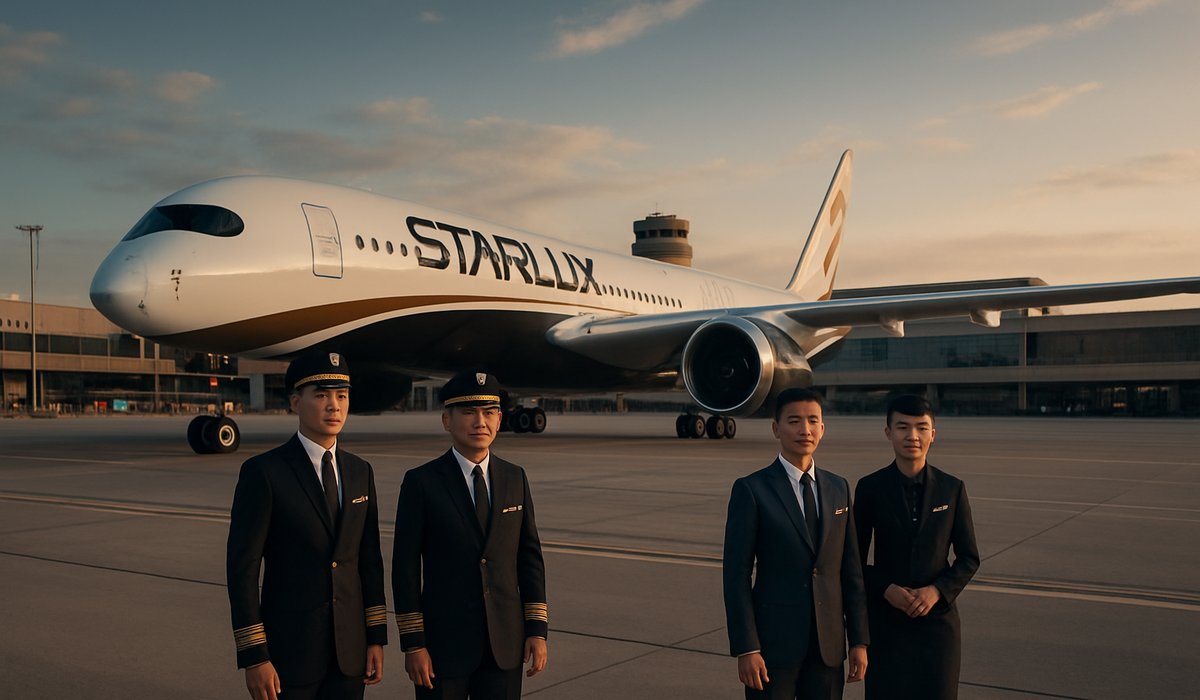
Image generated by AI
STARLUX Airlines Expands Phoenix Route with Flagship A350-1000 Aircraft, Signaling Major U.S. Market Push
Taiwanese carrier upgrades Taipei-Phoenix service with larger, more efficient wide-body jet in strategic North American expansion move
Taiwanese Carrier Makes Strategic Aircraft Upgrade
STARLUX Airlines, Taiwan's leading full-service carrier, is significantly expanding its long-haul capabilities by deploying its flagship Airbus A350-1000 aircraft on the Taipei Taoyuan International Airport (TPE) to Phoenix Sky Harbor International Airport (PHX) route. The carrier will replace its current Airbus A350-900 operations with the larger -1000 variant, marking the first deployment of this advanced aircraft model on any of STARLUX's long-haul international services.
This strategic move underscores the airline's confidence in the growing demand for trans-Pacific connectivity while positioning the carrier to compete more aggressively in the lucrative North American travel market.
Fleet Modernization Reflects Capacity Demands
The Airbus A350-1000 represents a significant step forward in STARLUX's operational strategy. The -1000 variant offers increased seating capacity and improved fuel efficiency compared to its -900 predecessor, allowing the airline to maximize revenue potential on this critical American gateway route. Phoenix's emergence as a primary U.S. destination for STARLUX reflects broader industry trends toward secondary metropolitan hubs that offer strong leisure and business travel demand with less congestion than major gateway airports.
The aircraft upgrade carries implications for airline fees and travel costs on this route. Enhanced capacity typically enables carriers to manage pricing competitively while maintaining healthy margins, particularly on fuel-intensive long-haul services where jet fuel prices remain a critical operational variable.
Industry Context: Aviation's Recovery and Competition
STARLUX's decision reflects the aviation industry's post-pandemic trajectory, characterized by robust trans-Pacific travel recovery and intensifying competition among Asian carriers for American passenger traffic. By introducing its most advanced wide-body aircraft on this route, STARLUX signals aggressive expansion intentions while modernizing its fleet efficiency metrics—a crucial consideration as baggage charges, seat selection fees, and ancillary revenue streams remain central to airline profitability strategies.
The deployment also highlights Taiwan's strategic positioning in global aviation networks, with STARLUX joining competitors in leveraging fuel-efficient aircraft to optimize long-haul route economics during a period of volatile energy markets.
What This Means for Travelers
Passengers on the Taipei-Phoenix corridor can expect enhanced onboard amenities and cabin experiences characteristic of STARLUX's premium service positioning, alongside potential competitive pricing as the airline leverages its expanded capacity advantage.
Frequently Asked Questions
What is the difference between the Airbus A350-900 and A350-1000? The A350-1000 is a stretched variant offering approximately 40 additional passenger seats and improved fuel efficiency, making it ideal for high-demand long-haul routes requiring greater capacity.
How do airline fuel costs impact passenger ticket prices? Volatile jet fuel prices directly influence airline operating expenses, often resulting in fuel surcharges or base fare adjustments that consumers see reflected in ticket pricing across all major carriers.
Why do airlines deploy newer aircraft on specific routes? Airlines strategically assign modern aircraft to profitable routes where increased capacity, efficiency, and passenger demand justify the deployment investment, maximizing revenue and competitive positioning.
What are typical baggage charges and fees on international long-haul flights? Long-haul carriers typically charge $25-$50 USD for first checked baggage and $35-$75 for additional bags, with full-service carriers like STARLUX often including checked baggage in premium fare classes.
How does aircraft capacity affect aviation industry profitability? Larger capacity aircraft reduce per-seat operating costs for airlines, enabling better pricing competitiveness while maintaining margins despite fluctuating fuel expenses and travel demand variability.
Related Travel Guides
Flight Delay Compensation Guide 2026
Understanding Airline Route Changes
Airport Security Process Updated (2026)
External Resources
Disclaimer
This article is for informational and educational purposes only. It does not constitute legal, financial, or professional advice. While we strive to provide accurate and up-to-date information, travel policies, regulations, and conditions change rapidly. Always verify information with official sources before making travel decisions. Nomad Lawyer makes no representations about the accuracy, reliability, completeness, or suitability of the information provided. Readers should consult qualified professionals for advice specific to their circumstances. The views expressed in this article are those of the author and do not necessarily reflect the views of Nomad Lawyer.
Preeti Gunjan
Contributor & Community Manager
A passionate traveller and community builder. Preeti helps grow the Nomad Lawyer community, fostering engagement and bringing the reader experience to life.
Learn more about our team →