
New Hampshire Ranked Most Beautiful US State in 2026 Natural Beauty Index for Landscapes
New Hampshire tops the 2026 Natural Beauty Ranking with a score of 90.83, leading West Virginia and Virginia in a comprehensive study of US geographic diversity.

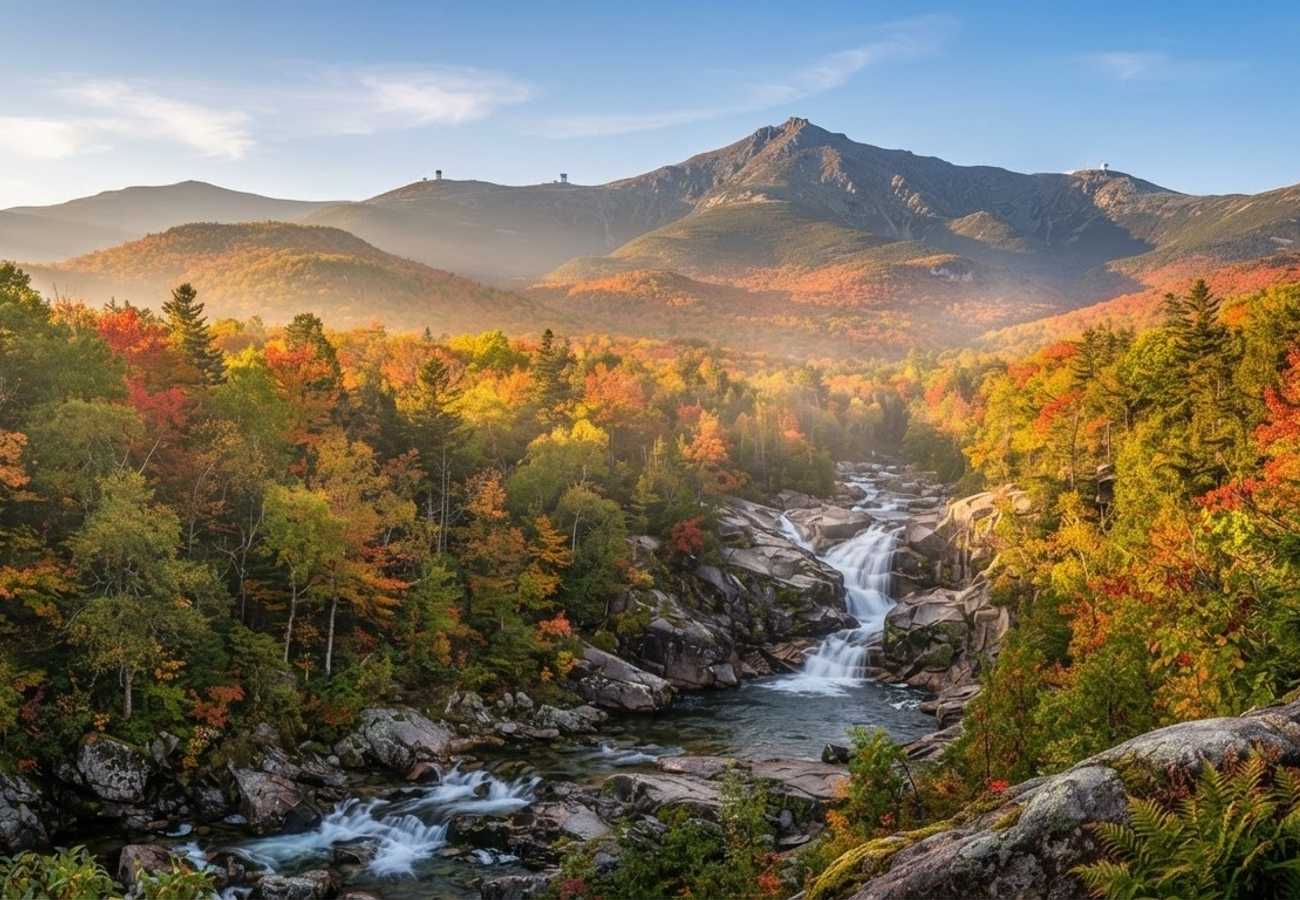
Image generated by AI
New Hampshire has secured the top position as the most naturally beautiful state in the US, scoring 90.83 out of 100 in a comprehensive geographic evaluation. The ranking prioritizes states with concentrated natural features over sheer landmass, placing West Virginia and Virginia in the top three.
The 2026 Natural Beauty Index evaluated all 50 US states based on a rigorous set of environmental and geographic metrics. The scoring system analyzed mountain elevation, river and waterway coverage, forest density, the number of national parks, volcanic landscapes, and total waterfall counts to determine which destinations offer the most diverse outdoor experiences.
Top-Rated US States by Natural Beauty Score
The data reveals a strong preference for the Northeast and Appalachian regions, where high forest density and concentrated waterways drive higher scores. New Hampshire's victory is attributed to its "Granite State" geography, where 83% of the territory is forested and the White Mountains cover nearly 25% of the state.
The following table details the specifications for the top-performing states:
| State | Beauty Score (Out of 100) | Forest Coverage | Key Geographic Features | Notable Peaks/Waterways |
|---|---|---|---|---|
| New Hampshire | 90.83 | 83% | 353 Waterfalls | Mt. Washington (6,288 ft) |
| West Virginia | 78.23 | 78% | 6,647 miles of rivers; 174 Waterfalls | Spruce Knob (4,863 ft) |
| Virginia | 74.50 | 63.5% | 25 National Parks; 5 Volcanoes | 11,000+ miles of rivers |
| Connecticut | 74.48 | 58.3% | 1.54 waterfalls per km | 21.78 river miles per km |
| Hawaii | 72.78 | 35.8% | 25 Volcanoes; 543 Waterfalls | Mauna Kea (13,803 ft) |
| Washington | 71.43 | N/A | 3,057 Waterfalls; 15 National Parks | Mt. Rainier (14,411 ft) |
| New Jersey | 71.43 | 42.3% | 10 National Parks; 67 Waterfalls | Appalachian Scenic Trail |
| North Carolina | 71.10 | 60.5% | 12 National Parks; 816 Waterfalls | 6,684 ft peak |
| Vermont | 70.77 | 76.5% | 356 Waterfalls | 4,395 ft peak |
| Massachusetts | 65.32 | 60.7% | 17 National Parks; 107 Waterfalls | Atlantic Coastline |
Traveler Logistics Guide: Navigating High-Beauty Zones
From a ground-level perspective, visiting these top-ranked states requires different logistical approaches depending on the region's geography.
Northeast Corridor (NH, VT, MA, CT): The high density of attractions in these smaller states makes them ideal for "hub-and-spoke" travel. Instead of multiple hotels, establish a base in a central town (such as North Conway, NH) and use a rental vehicle to access waterfalls and peaks. Because forest coverage is so high (up to 83% in NH), cellular reception can be intermittent in the White Mountains; downloading offline maps via Google Maps or using physical USGS topographical maps is highly recommended.
Appalachian Routes (WV, VA, NC): For those exploring West Virginia and Virginia, the primary challenge is the terrain. The Blue Ridge Parkway in Virginia is one of the most scenic drives in the US, but it has strict speed limits and no commercial trucks. When planning connections between national parks, allow for "winding road time"—GPS estimates often underestimate travel time in the Appalachian mountains due to steep grades and curves.
Pacific and Volcanic Zones (WA, HI): Hawaii's logistics are island-specific. To experience the 25 volcanoes and 543 waterfalls, inter-island flights or ferries are necessary. For Washington state, the sheer volume of waterfalls (3,057) means that focusing on specific regions—such as the Olympic Peninsula or Mount Rainier—is more efficient than attempting to see the state in one trip.
Infrastructure and Regional Connectivity Impact
This ranking highlights a shift in tourism potential toward "concentrated beauty." Smaller states like Connecticut are proving that high-density natural features (such as 26.82 mountain elevation points per kilometer) can compete with massive western states.
The high scores for New Jersey and Massachusetts suggest that the "urban-nature" hybrid model is gaining traction. Travelers can now integrate visits to historic cities with excursions to national parks—such as the Appalachian National Scenic Trail in New Jersey—without extensive transit times. This proximity is likely to increase short-term regional tourism and "micro-cationing" trends in 2026.
The data confirms that natural beauty is a matter of density and diversity, not just acreage.
Related Travel Guides
Disclaimer
This article is for informational and educational purposes only. It does not constitute legal, financial, or professional advice. While we strive to provide accurate and up-to-date information, travel policies, regulations, and conditions change rapidly. Always verify information with official sources before making travel decisions. Nomad Lawyer makes no representations about the accuracy, reliability, completeness, or suitability of the information provided. Readers should consult qualified professionals for advice specific to their circumstances. The views expressed in this article are those of the author and do not necessarily reflect the views of Nomad Lawyer.
Raushan Kumar
Founder & Lead Developer
Full-stack developer with 11+ years of experience and a passionate traveller. Raushan built Nomad Lawyer from the ground up with a vision to create the best travel and law experience on the web.
Learn more about our team →