
Tourism Growth: Nareshwor Lake Project Completed in Tanahun
Nepal's Tanahun district develops the Nareshwor Lake in Byas Municipality, combining rural tourism with agricultural irrigation.

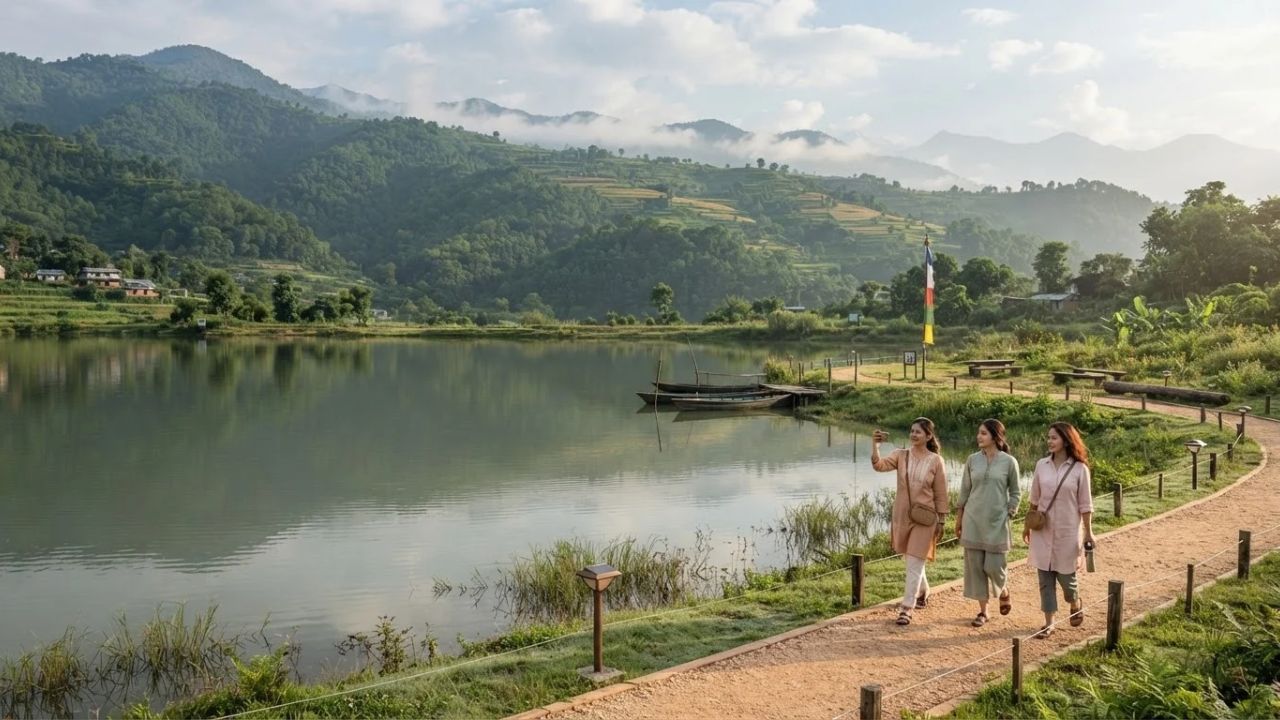
Image generated by AI
Nepal's Tanahun district develops the Nareshwor Lake in Byas Municipality, combining rural tourism with agricultural irrigation. The Nepal Tourism Board indicates that community-led water reservoirs distribute visitor spending to mountain farming villages while securing stable water grids for local fields.
The Transition of Rural Streams into Multi-Purpose Tourism Reservoirs
A significant trend in Himalayan regional planning is the transition of seasonal mountain streams into multi-purpose tourism and agricultural reservoirs. Historically, local infrastructure projects focused on narrow, single-objective targets, separating tourist facility development from rural farming needs and resulting in high construction costs with low community yields. In 2026, development agencies coordinate public funds to build gravity dams, creating artificial lakes that attract domestic weekend travelers for boating and photography while serving as irrigation hubs for surrounding terraced farmlands.
By combining leisure facilities with agricultural support, municipalities build a more resilient rural economy. This dual-use model protects local ecosystems and provides mountain communities with direct income from both tourism and farming.
Nareshwor Lake Project Parameters and Finances
The artificial lake has been constructed by blocking the Nareshwor stream in Ward No. 10:
- Total Project Funding: Estimated at Rs. 40 million.
- Government Allocations:
- Gandaki Province Government: Provided Rs. 15 million.
- Provincial Lake Conservation Authority: Allocated Rs. 1 million.
- Byas Municipality: Contributed Rs. 5 million.
- Construction Contract: Awarded to GES Construction Service for Rs. 18.4 million.
- Physical Scale:
- Surface Area: Covers approximately 28 ropanis.
- Length: Measures around 300 metres along the valley floor.
- Width: Varies between 28 metres and 68 metres.
- Average Depth: Maintained at around 3.5 metres.
- Water Storage: Stores approximately 30,000 cubic metres behind a concrete gravity dam.
- Land Acquisition & Compensation: Acquired 24 ropanis and 11 annas of private land, distributing approximately Rs. 13.7865 million as compensation to local landowners.
These metrics demonstrate a coordinated effort between provincial and municipal departments to establish a durable regional asset.
Tanahun Inbound Tourism and Infrastructure Coordinates
The table below breaks down the project sectors, funding structures, physical dimensions, custom visitor attractions, regional partners, and coordinating authorities recorded on August 23, 2026:
| Core Project Sector | Public Funding Allocation | Physical Inclusions & Size | Custom Visitor Attraction | Regional Key Partner | Coordinating Authority |
|---|---|---|---|---|---|
| Rural tourism | Rs. 15M provincial grant | 28 ropanis surface area | Recreational boating zones | GES Construction Service | Nepal Tourism Board |
| Agricultural grid | Rs. 5M municipal funding | 30,000 cubic meter storage | Separate irrigation tanks | Local farming unions | Provincial Lake Authority |
| Land compensation | Rs. 13.7865M landowner fee | 24 ropanis & 11 annas | Lakeside walking paths | Dumsichaur community | Gandaki Tourism Ministry |
These coordinates outline the sectors, allocations, dimensions, attractions, partners, and authorities established for the reservoir program.
Resource Stewardship and Eco-Aware Rural Travel
For the traveler, the benefit of visiting Nareshwor Lake is the opportunity to support a community-owned infrastructure model that directly funds local farming. Choosing walking trails over motorized boat tours preserves the quiet mountain setting.
Additionally, carrying reusable travel containers prevents plastic bottle accumulation along the lakeside walking paths. Buying organic mountain vegetables directly from Dumsichaur farmers supports sustainable food production.
For comparison, you can explore the changing dynamics of Stimulus Launch: Taiwan Unveils Billion-Dollar Repeat Visitor Rewards to see how destinations promote visitor spend. For transit updates, comparing travel scheduling matches other networks, such as Destination Strategy: Matterhorn Glacier Paradise Ticket Guides updates. This trend is similar to the tourism growth seen in other destinations, as detailed in our guide on the Hacienda Heights Bus Fire Transport Safety regulations.
Visitor Insider Tips: Exploring Tanahun and Nareshwor Lake
If you are planning to travel to Tanahun, keep these practical tips in mind:
- Visit During the Autumn Months: Travel between September and November to enjoy clear mountain skies and full water levels in the reservoir.
- Support Local Eateries in Dumsichaur: Dine at small family-run food stalls near the lake, sampling traditional dal bhat and regional hill specialties.
- Respect Private Farmlands: Follow designated lakeside trails and avoid walking through local terraced fields without permission.
- Prepare for Rural Roads: Ensure your transit vehicle is suitable for unpaved hill roads, as access routes to the lake involve dirt trails.
- Coordinate with Local Guides: Hire a guide from Byas Municipality to learn about the region's cultural heritage and the lake's construction history.
Long-Term Outlook for Tanahun's Tourism Infrastructure
The long-term outlook for transit in Tanahun is focused on constructing paved road links connecting Byas Municipality with the Prithvi Highway, installing solar lighting grids along lakeside paths, and establishing electric vehicle charging terminals at visitor stations. As destination campaigns expand, regional development committees and environmental ministries will cooperate to maintain water quality standards.
By developing sustainable transit options and protecting mountain watersheds, the tourism sector aims to build a sustainable transport network.
FAQ
What is the size and capacity of Nareshwor Lake?
Nareshwor Lake covers approximately 28 ropanis, extends around 300 metres in length, and can store approximately 30,000 cubic metres of water behind its dam.
How was the project funded?
The Rs. 40 million project was funded by the Gandaki Province Government (Rs. 15 million), the Provincial Lake Conservation Authority (Rs. 1 million), and Byas Municipality (Rs. 5 million).
What is the double-benefit of the Nareshwor Lake reservoir?
The lake serves as a rural tourism destination for recreation and photography, while a connected irrigation tank distributes water to local agricultural farmlands.
Where is the lake located?
The lake is located in Dumsichaur (Ward No. 10), Byas Municipality, within the Tanahun district of Gandaki Province, Nepal.
Stay updated on regional travel regulations and tourism campaigns shaping Himalayan transit.
Related Travel Guides
Disclaimer
This article is for informational and educational purposes only. It does not constitute legal, financial, or professional advice. While we strive to provide accurate and up-to-date information, travel policies, regulations, and conditions change rapidly. Always verify information with official sources before making travel decisions. Nomad Lawyer makes no representations about the accuracy, reliability, completeness, or suitability of the information provided. Readers should consult qualified professionals for advice specific to their circumstances. The views expressed in this article are those of the author and do not necessarily reflect the views of Nomad Lawyer.
Raushan Kumar
Founder & Lead Developer
Full-stack developer with 11+ years of experience and a passionate traveller. Raushan built Nomad Lawyer from the ground up with a vision to create the best travel and law experience on the web.
Learn more about our team →