
Myanmar Airways International Partnering with Aerohub and Aeroplay to Launch Wireless Bring Your Own Device Inflight Entertainment Platform
Myanmar Airways International will launch a fleet-wide wireless inflight entertainment platform in partnership with Aerohub and Aeroplay.

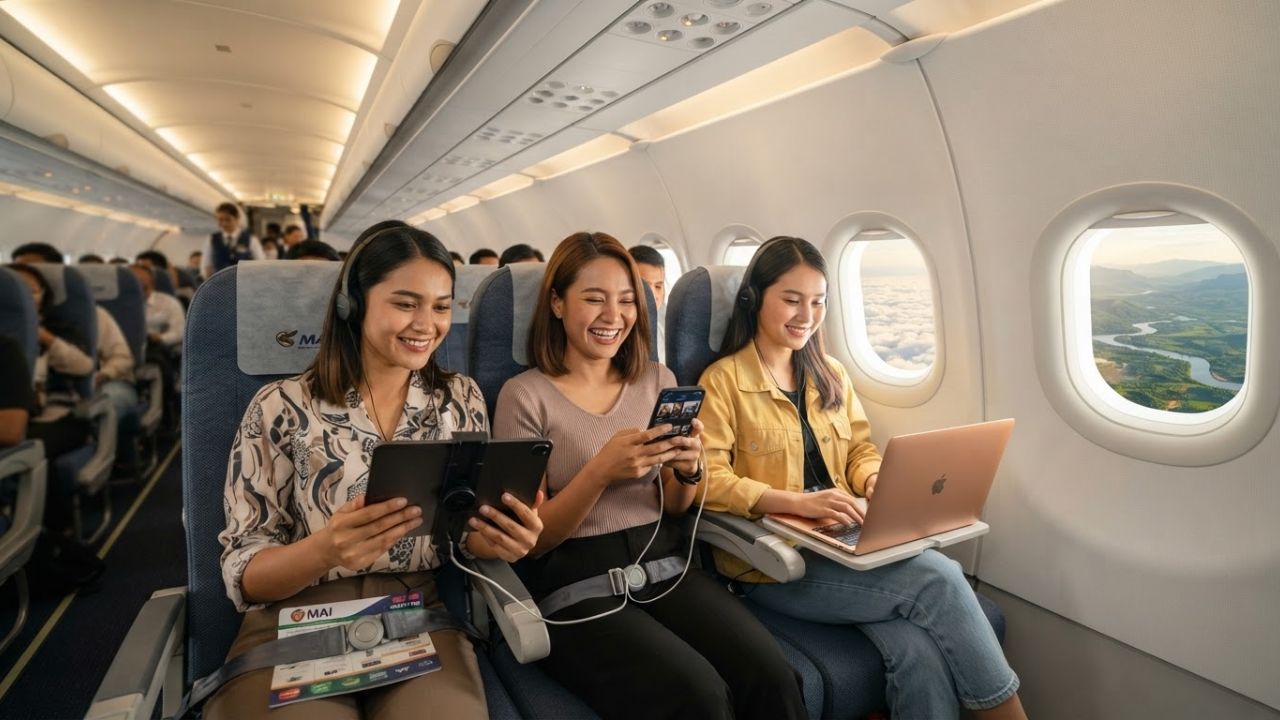
Image generated by AI
Myanmar Airways International Partnering with Aerohub and Aeroplay to Launch Wireless Bring Your Own Device Inflight Entertainment Platform
SEO Title: Myanmar Airways International Wireless Entertainment 2026 Meta Description: Myanmar Airways International will launch a fleet-wide wireless inflight entertainment platform in partnership with Aerohub and Aeroplay. Slug: /myanmar-airways-international-wireless-inflight-entertainment-2026 Standfirst: Myanmar Airways International is launching a fleet-wide wireless inflight entertainment system. Developed with Aerohub and Aeroplay, the bring-your-own-device platform enables streaming directly to passenger smartphones, tablets, and laptops.
Article
[Yangon, July 9, 2026] — Myanmar Airways International is rolling out a wireless inflight entertainment platform across its passenger fleet. The carrier is the first airline in Myanmar to adopt a bring-your-own-device streaming solution.
Passengers can connect their personal smartphones, tablets, or laptops to the onboard Wi-Fi network to stream digital media. The platform eliminates the need for seatback video monitors and associated cabling.
Industry observers note that this deployment reflects a broader aviation industry shift toward digital services. By using personal hardware, carriers can upgrade their software systems without grounding aircraft for physical modifications.
Technology Integration by Aerohub and Aeroplay
The wireless entertainment system is powered by digital solutions from aviation tech companies Aerohub and Aeroplay. The technology integrates content delivery servers with the cabin's local wireless network routers.
Passengers can access a library of movies, television programs, and music files stored on the aircraft's internal servers. The local connection does not require active satellite internet connections to stream files.
This cloud-managed delivery model allows the airline to update its movie catalogs and music playlists remotely. Technical teams can reload media packages during routine overnight maintenance stops.
Weight Reduction and Fleet Fuel Efficiency Benefits
Replacing traditional built-in entertainment hardware significantly reduces the empty operating weight of commercial aircraft. Heavy seatback screens, power supply boxes, and wiring harnesses add weight to the airframe.
Reducing overall aircraft weight helps airlines lower their hourly fuel consumption and decrease carbon emissions. For regional carriers, these marginal fuel savings support route profitability.
Additionally, removing seatback monitors simplifies cabin maintenance work. Ground technicians no longer need to troubleshoot broken screens or faulty headphone jacks between flight rotations.
Digital Transformation Priorities for Asian Airlines
Airlines across Asia are investing in digital passenger services to improve their competitiveness in regional markets. Regional carriers are prioritizing tech upgrades that improve customer satisfaction while keeping capital expenditures low.
Wireless systems allow smaller airlines to match the passenger amenities offered by larger legacy carriers. The technology provides a scalable platform that can eventually integrate digital shopping and duty-free catalogs.
Myanmar Airways International is using the BYOD launch to accelerate its broader corporate digitalization strategy. The carrier plans to integrate flight tracking maps and digital destination guides into the streaming interface.
Impact on Myanmar Tourism and Domestic Connectivity
Improving the onboard passenger experience is expected to support tourism recovery efforts in Myanmar. Reliable digital services help shape positive traveler impressions of regional air networks.
The country relies on domestic and regional flights to connect international visitors with major cultural destinations. Modern cabin amenities are vital to retaining business travelers and luxury tourists.
Airlines are increasingly evaluated on the digital conveniences they offer during transit. Introducing advanced entertainment options helps the carrier protect its market share on key international routes.
Onboard Guidelines and Streaming Instructions
Passengers scheduled to fly with the carrier should prepare their personal hardware before boarding. Travelers should ensure their devices are fully charged and equipped with headphones.
To access the platform, passengers must enable Wi-Fi in flight mode and select the cabin network. The system is compatible with standard web browsers and does not require third-party app installations.
Airline crews will distribute instruction cards during pre-flight preparation. The availability of specific movies and music options may vary depending on the flight duration and aircraft type.
Data Table
System Specifications
| Parameter | Details |
|---|---|
| Airline | Myanmar Airways International (MAI) |
| Technology Partners | Aerohub & Aeroplay |
| System Type | Wireless Inflight Entertainment (IFE) |
| Access Model | Bring Your Own Device (BYOD) |
| Supported Devices | Smartphones, tablets, laptops |
| Available Content | Movies, television programs, music |
Passenger Pre-Flight Checklist
| Requirement | Action Required |
|---|---|
| Device Power | Fully charge device before boarding the aircraft |
| Audio Access | Bring personal headphones for media playback |
| Connection | Enable Wi-Fi and connect to onboard network |
| Software | Access system via standard web browser |
| Flight Mode | Keep mobile devices in flight mode during operations |
Why This Matters
This launch illustrates how regional airlines in emerging markets are bypassing expensive legacy hardware to modernize their passenger experience. Installing traditional seatback screens can cost millions of dollars and require months of fleet downtime, which is often cost-prohibitive for smaller carriers.
Our analysis of the aviation technology landscape indicates that BYOD solutions represent the most cost-effective path to digital maturity. Wireless systems reduce aircraft weight, directly lowering fuel burn and operating costs on short-haul sectors.
Additionally, this deployment changes the relationship between carriers and software updates. Cloud-based systems allow the airline to refresh media libraries instantly, bypassing the physical updates required by older entertainment hardware.
Industry Outlook
Market trends suggest that wireless inflight entertainment will become the standard offering for regional airlines worldwide. Traditional seatback screens will likely remain limited to premium cabins on long-haul wide-body routes.
Furthermore, carriers will seek to monetize BYOD portals by integrating online shopping, hotel bookings, and targeted advertising. Developing seamless digital ecosystems is essential to securing ancillary revenue growth in competitive markets.
Related Aviation News Guides
- Saudi Arabia Aviation Expansion Drives Massive Fleet Growth for Riyadh Air, flyadeal, and flynas
- Emirates to Deploy Second Daily Airbus A350 to Colombo Doubling Premium Economy Seat Capacity on Key South Asian Route in August 2026
- Thai Airways to Introduce Second Daily Paris to Bangkok Service Deploying Boeing 787-9 Dreamliner Starting December 2026
Disclaimer
This article is for informational and educational purposes only. It does not constitute legal, financial, or professional advice. While we strive to provide accurate and up-to-date information, travel policies, regulations, and conditions change rapidly. Always verify information with official sources before making travel decisions. Nomad Lawyer makes no representations about the accuracy, reliability, completeness, or suitability of the information provided. Readers should consult qualified professionals for advice specific to their circumstances. The views expressed in this article are those of the author and do not necessarily reflect the views of Nomad Lawyer.
Preeti Gunjan
Contributor & Community Manager
A passionate traveller and community builder. Preeti helps grow the Nomad Lawyer community, fostering engagement and bringing the reader experience to life.
Learn more about our team →