
Oman Unveils Muscat Airport Free Zone to Global Investors: A Strategic Shift Toward Air-Linked Tourism and Aviation-Led Investment to Combat Regional Travel Chaos
The Muscat Airport Free Zone (MAFZ) is now operationally ready, marking Oman's transition from a transit point to a global business and air-linked tourism hub.

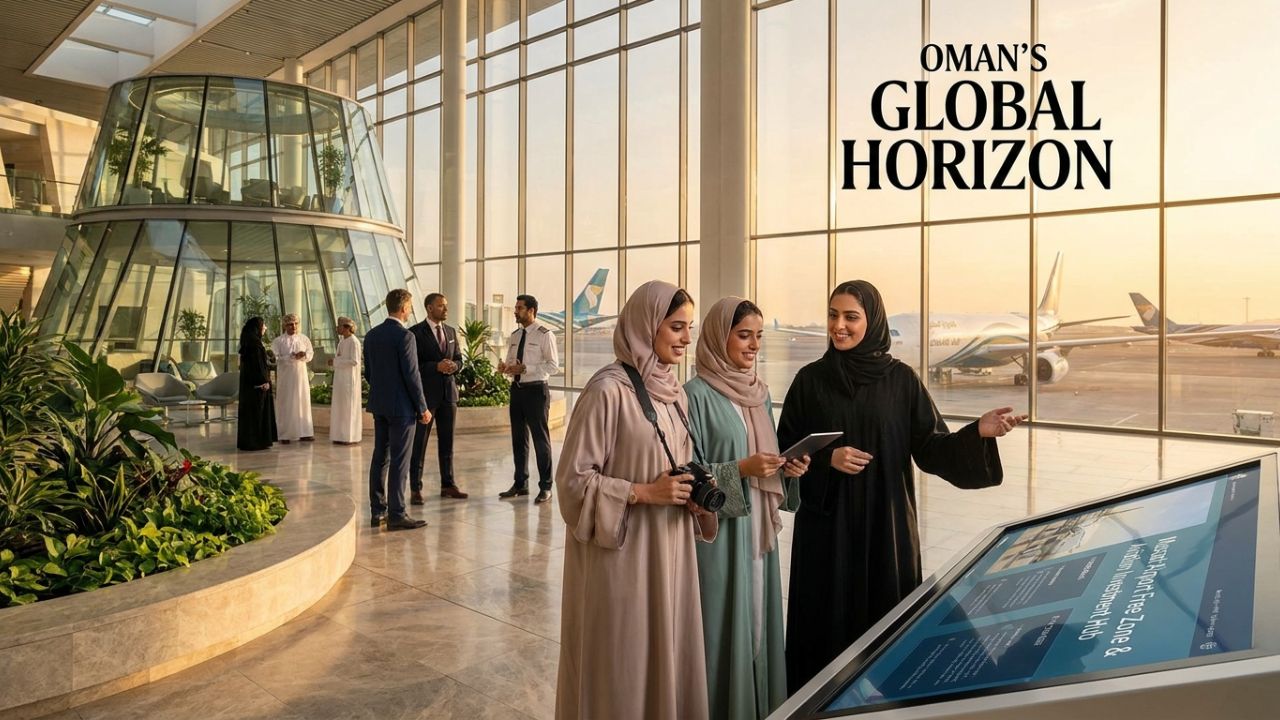
Image generated by AI
In a landmark move that has set the global airline news community abuzz, the Sultanate of Oman has officially declared the Muscat Airport Free Zone (MAFZ) operationally ready for international investment. This strategic development, anchored at Muscat International Airport, represents a paradigm shift in the region's aviation landscape. By integrating high-value logistics, e-commerce, and travel technology directly into the airport’s ecosystem, Oman is positioning itself as more than just a tranquil transit point; it is becoming a mission-critical hub for air-linked tourism and regional business. The announcement was punctuated by the signing of the first usufruct agreement with Nama Real Estate, a deal that signals the official commencement of a new era in Omani aviation updates.
Breaking: MAFZ Declared Ready to Anchor the Gulf’s Next Business Hub
The operational readiness of the Muscat Airport Free Zone comes at a time when the global travel industry is increasingly seeking "safe harbor" hubs to mitigate the risks of travel chaos and airport disruptions seen in more congested regional gateways. Managed and operated by Asyad Group—Oman’s global integrated logistics provider—under a concession from OPAZ, the zone is designed to capitalize on Muscat’s reputation for efficiency and calm.
Aviation experts suggest that the MAFZ will serve as a stabilizing force in the Gulf’s logistics grid, providing international companies with "unrestricted global access" and a plug-and-play environment. By offering a unified one-stop-shop for licensing and permits, Oman is effectively removing the bureaucratic friction that often leads to turnaround delays and operational bottlenecks, factors that are becoming increasingly vital as carriers struggle to maintain schedule reliability across the GCC.
Expanded Overview: Phase One Infrastructure and the Nama Anchor Project
The physical infrastructure of Phase One is now complete, covering approximately 400,000 square meters of prime land adjacent to the airport terminals. This phase includes a comprehensive internal road network, smart telecommunications, and core utilities, all of which were showcased during the recent Oman Real Estate Exhibition. The centerpiece of this initial phase is a 25,000sqm modern business complex to be developed by Nama Real Estate Company.
This complex is intended to serve as a flagship address for regional corporate headquarters, travel tech startups, and aviation service providers. By housing these entities directly on the airport’s doorstep, Oman is creating a "business-first" tourism model. For the executive traveler, this means landing in Muscat for a morning meeting at a world-class facility and transitioning seamlessly into a coastal leisure experience by the afternoon—a vision that aligns perfectly with Oman Vision 2040.
Section-Wise Breakdown: Strategic Pillars of the MAFZ
Air-Linked Tourism and Aviation Services
The free zone is not merely a cargo hub; it is a catalyst for "air-linked tourism." By attracting tour operators, travel technology firms, and airport hospitality groups, MAFZ aims to turn Muscat into a long-stay destination. The ability to combine office, warehousing, and customer-facing operations in one integrated airside-connected platform is expected to appeal strongly to airlines seeking a base for Gulf-wide operations.
Unprecedented Investor Incentives
To ensure a rapid influx of global capital, MAFZ offers a highly competitive package of incentives. These include 100% foreign ownership, full customs and tax exemptions, and a streamlined "one-stop-shop" service building. For the global airline news sector, these incentives make Muscat an attractive alternative to traditional, over-saturated free zones elsewhere in the Middle East.
Supporting Integrated Logistics and SMEs
Asyad officials have framed the MAFZ as a critical node in Oman’s integrated logistics ecosystem, linking air cargo and passenger flows with the sultanate’s ports and economic cities. Beyond large-scale corporations, the zone is expected to create a fertile environment for Omani SMEs specialized in travel support services, pharmaceuticals, and precious metals, generating new jobs and diversifying the national economy.
Redefining the Passenger Experience
For frequent flyers, the emergence of the MAFZ means a richer mix of travel services and improved connectivity. As new companies take up residence in the Nama complex, the airport precinct will evolve into a vibrant district where commerce and travel intersect. This development is expected to reduce the likelihood of the localized airport disruptions that occur when business travelers are forced to navigate congested urban centers far from their departure gates.
Detailed Features of the Muscat Airport Free Zone (MAFZ)
The following table provides the technical and operational specifics for the first phase of the MAFZ development.
MAFZ Operational Matrix: Phase One and Beyond
| Feature | Details and Specifications |
|---|---|
| Developer / Operator | Asyad Group (under OPAZ concession) |
| Primary Aviation Hub | Muscat International Airport (MCT) |
| Total Planned Area | Approximately 1.7 sqkm (Multi-phase) |
| Phase One Footprint | ~400,000 sqm (Infrastructure Complete) |
| First Major Anchor | 25,000 sqm Nama Real Estate Business Complex |
| Primary Industry Focus | E-commerce, Travel Tech, Pharma, Aviation Services |
| Investor Incentives | 100% Foreign Ownership, Tax/Customs Exemptions |
Impact on Investors and Travelers: The "MCT Advantage"
The opening of the MAFZ offers a dual benefit for both global investors and the aviation public.
- Logistics Reliability: By providing "plug-and-play" infrastructure, MAFZ helps airlines and ground handlers improve their turnaround times, directly reducing the risk of flight cancellations related to logistical failures.
- Business Travel Efficiency: The proximity of high-end corporate workspaces to the terminal allows business travelers to maximize their time, effectively eliminating the "commute chaos" typical of larger regional hubs.
- Tourism Synergy: Integrated travel technology firms within the zone will likely drive innovation in passenger services, leading to better booking options and smoother travel itineraries for those exploring Oman.
- Sustainable Growth: The focus on smart offices and flexible workspaces ensures that the development grows in a way that respects Oman’s commitment to sustainable urban planning.
Industry Analysis: A Counter-Strategy to Regional Congestion
Aviation analysts suggest that Oman’s move to open the MAFZ is a sophisticated attempt to capture the "middle-ground" traveler—those who value reliability and speed over sheer hub size.
- Capturing Displaced Traffic: As other GCC airports face increasing travel chaos due to over-saturation, Muscat’s "efficiency-first" model becomes a significant competitive advantage.
- Integrated Airside Access: The physical connection between the free zone and the air cargo/passenger terminals is a force multiplier for companies that rely on high-frequency international travel.
- The "Vision 2040" Catalyst: MAFZ is a tangible expression of Oman’s desire to diversify away from oil, using its strategic geographical position to become a premier node in global trade and tourism.
Conclusion: Muscat’s Evolving Role on the Global Map
The operational readiness of the Muscat Airport Free Zone marks a significant milestone in Oman’s journey toward becoming a world-class logistics and investment hub. By marrying the sultanate’s traditional hospitality with cutting-edge aviation infrastructure, the MAFZ is set to redefine how the world interacts with the Gulf. As the Nama Real Estate complex rises and Phase One fills with global brands, Muscat International Airport will be recognized not just as a place to land, but as a place to stay, invest, and grow.
Key Takeaways
- Operational Readiness: Muscat Airport Free Zone (MAFZ) is now officially open to global investors.
- Anchor Project: A 25,000sqm business complex by Nama Real Estate will serve as the zone's first major hub.
- Phase One Complete: ~400,000sqm of infrastructure, roads, and utilities are ready for plug-and-play use.
- Target Sectors: Focus on travel tech, e-commerce, and aviation-related services.
- Investor Perks: Includes 100% foreign ownership and full tax/customs exemptions.
- Strategic Impact: Aimed at positioning Oman as a long-stay business and tourism destination.
Related Travel Guides
- Muscat International Airport (MCT) Business Guide: Lounges and Transit
- Investing in Oman: A Guide for International Travel Tech Startups
- Exploring Muscat: From the Royal Opera House to the Mutrah Souq
Z as of May 16, 2026. Prospective investors are advised to consult with the MAFZ "one-stop-shop" for the most current regulatory and licensing requirements.
Disclaimer
This article is for informational and educational purposes only. It does not constitute legal, financial, or professional advice. While we strive to provide accurate and up-to-date information, travel policies, regulations, and conditions change rapidly. Always verify information with official sources before making travel decisions. Nomad Lawyer makes no representations about the accuracy, reliability, completeness, or suitability of the information provided. Readers should consult qualified professionals for advice specific to their circumstances. The views expressed in this article are those of the author and do not necessarily reflect the views of Nomad Lawyer.
Kunal K Choudhary
Co-Founder & Contributor
A passionate traveller and tech enthusiast. Kunal contributes to the vision and growth of Nomad Lawyer, bringing fresh perspectives and driving the community forward.
Learn more about our team →