
Mumbai-Pune Railway Approves ₹2 Crore Emergency Road to Monkey Hill Station
Central Railway has proposed a 1.5 km concrete road costing up to ₹2 crore to connect Monkey Hill station in the Khandala Ghat with the Mumbai-Pune Expressway.

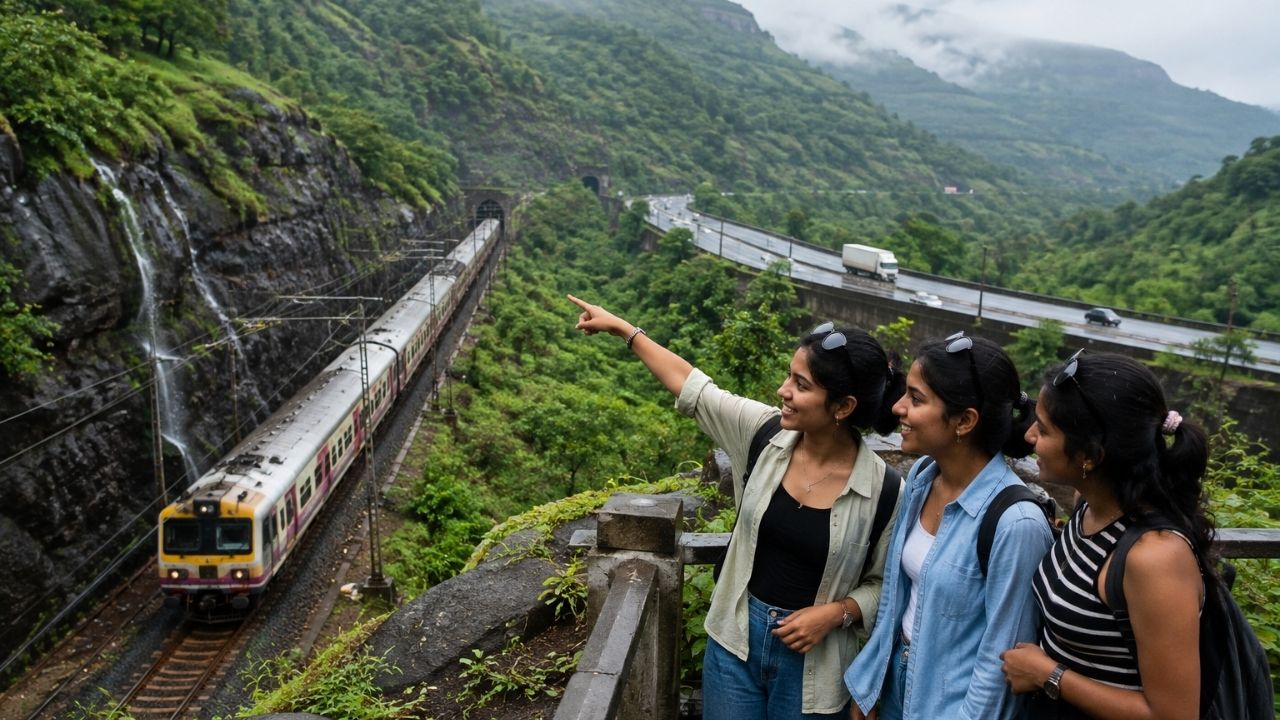
Image generated by AI
Central Railway has finalized plans for a 1.5-kilometer concrete road linking Monkey Hill station in the Khandala Ghat directly to the Mumbai-Pune Expressway.
[MUMBAI, India] — Engineering disclosures from Central Railway confirm a project to construct a 1.5-kilometer emergency road connecting Monkey Hill station in Maharashtra's Khandala Ghat section to the Mumbai-Pune Expressway. Currently lacking any road access, Monkey Hill relies entirely on railway tracks for maintenance and rescue operations. Estimated to cost between ₹1.5 crore and ₹2 crore, the concrete road will allow ambulances, heavy disaster response machinery, and maintenance crews direct access to the Bhor Ghat rail corridor during monsoon landslides and train disruptions.
Critical Infrastructure Deficit: Monkey Hill's Isolation in the Bhor Ghat
The 19 to 20-kilometer railway stretch between Palsadhari and Khandala in the Bhor Ghat represents one of the steepest and most geographically challenging rail sections in western India.
Monkey Hill station currently operates without a direct road link, requiring railway technicians and emergency responders to walk along active train tracks to reach the facility.
Other key operational posts along the ghat section—including Thakurwadi, Nagnath, and Jambung—face similar access constraints during heavy monsoon downpours and slope failures.
Bhor Ghat Railway Section Baseline:
├── Railway Corridor Span: 19 to 20 Kilometers (Palsadhari to Khandala stretch)
├── Current Access Bottleneck: Monkey Hill station has zero road connections (Track access only)
└── Remote Operational Outposts: Thakurwadi, Nagnath, Jambung & Monkey Hill
| Project Specification | Data Value / Metric | Operational Disaster Impact |
|---|---|---|
| Total Road Length | 1.5 Kilometers | Connects Expressway to Monkey Hill station |
| Estimated Construction Cost | ₹1.5 Crore to ₹2 Crore | Infrastructure investment for emergency readiness |
| Construction Material | Concrete Pavement | High-durability surface for heavy machinery |
| Expressway Connection Point | Khandala-bound Carriageway | Direct vehicle off-ramp from Mumbai-Pune Expressway |
| Ghat Section Corridor | 19 to 20 km (Palsadhari–Khandala) | Bhor Ghat / Khandala Ghat mountain section |
| Target Completion Window | December (Post-monsoon start) | Subject to Forest Department clearance |
| Additional Feasibility Sites | Thakurwadi, Nagnath, Jambung | Google Earth mapping for future road links |
1.5-Kilometer Concrete Alignment: Connecting to the Expressway
The proposed 1.5-kilometer concrete road is engineered to branch off from the Khandala-bound carriageway of the Mumbai-Pune Expressway, leading directly down to Monkey Hill station.
Concrete pavement was selected to withstand heavy monsoon runoff and accommodate heavy emergency equipment.
Once operational, the road will permit ambulances, fire trucks, railway breakdown vans, and heavy earth-moving equipment to access the railway line without traversing active tracks.
Road Engineering & Alignment Profile:
├── Entry Ramp Location: Khandala-bound carriageway of the Mumbai-Pune Expressway
├── Pavement Specification: 1.5 km heavy-duty concrete roadway
└── Emergency Capacity: Designed for ambulances, breakdown cranes & earthmovers
Regulatory Clearances and Project Timeline
Estimated at ₹1.5 crore to ₹2 crore, the project requires environmental and administrative clearances before construction begins.
Because the road passes through protected forest land in the Western Ghats, Central Railway has submitted a formal proposal to the Forest Department for regulatory clearance.
Pending environmental approval, construction is targeted to begin after the monsoon season, with completion scheduled for December.
Project Approval & Timeline Schedule:
├── Cost Estimate: ₹1.5 Crore to ₹2.0 Crore
├── Regulatory Status: Environmental proposal submitted to the Forest Department
└── Construction Schedule: Post-monsoon launch with a targeted December completion
Expanding Access: Feasibility Studies for Thakurwadi, Nagnath, and Jambung
The Monkey Hill project forms part of a wider disaster response plan across the Bhor Ghat rail corridor.
Central Railway engineers are conducting technical feasibility assessments using Google Earth and satellite mapping to evaluate potential road alignments for neighboring isolated stations:
- Thakurwadi: Evaluating terrain slopes for emergency road access.
- Nagnath: Assessing forest boundary clearances for utility tracks.
- Jambung: Mapping road links from nearby mountain highways.
Secondary Feasibility Studies:
├── Technical Assessment Tools: Google Earth & satellite elevation mapping
└── Target Feasibility Outposts: Thakurwadi, Nagnath & Jambung stations
Frequently Asked Questions (FAQ)
Q1: Why is a new road being constructed at Monkey Hill station?
A: Monkey Hill currently has no road access. The 1.5 km road will connect the station with the Mumbai-Pune Expressway for emergency ambulances and landslide clearance equipment.
Q2: How much will the Monkey Hill road project cost?
A: The project is estimated to cost between ₹1.5 crore and ₹2 crore.
Q3: When is the project scheduled for completion?
A: Pending clearance from the Forest Department, construction is planned to begin post-monsoon with a completion target of December.
Why This Matters for Commuters, Emergency Teams, and Railway Operations
Analyzing the Monkey Hill road project highlights critical infrastructure insights:
- For Passengers and Commuters: Establishing direct road access speeds up emergency response and track restoration during monsoon landslides.
- For Railway Engineering Crews: Moving heavy machinery directly from the Mumbai-Pune Expressway simplifies routine track maintenance in the Bhor Ghat.
- For Disaster Management Teams: Providing ambulance access to Monkey Hill reduces casualty response times during railway incidents.
Related Travel Guides
Disclaimer
This article is for informational and educational purposes only. It does not constitute legal, financial, or professional advice. While we strive to provide accurate and up-to-date information, travel policies, regulations, and conditions change rapidly. Always verify information with official sources before making travel decisions. Nomad Lawyer makes no representations about the accuracy, reliability, completeness, or suitability of the information provided. Readers should consult qualified professionals for advice specific to their circumstances. The views expressed in this article are those of the author and do not necessarily reflect the views of Nomad Lawyer.
Raushan Kumar
Founder & Lead Developer
Full-stack developer with 11+ years of experience and a passionate traveller. Raushan built Nomad Lawyer from the ground up with a vision to create the best travel and law experience on the web.
Learn more about our team →