
Mumbai Airport Shuts Down for 6-Hour Strategic Maintenance Amid Global Energy Crisis: How India’s Financial Gateway Surmounts Strait of Hormuz Tensions and Rising Oil Prices to Ensure Monsoon Resilience
Chhatrapati Shivaji Maharaj International Airport (CSMIA) in Mumbai has suspended all flight operations for six hours on May 7, 2026, for critical pre-monsoon maintenance, ensuring infrastructure resilience amid the global energy crisis.

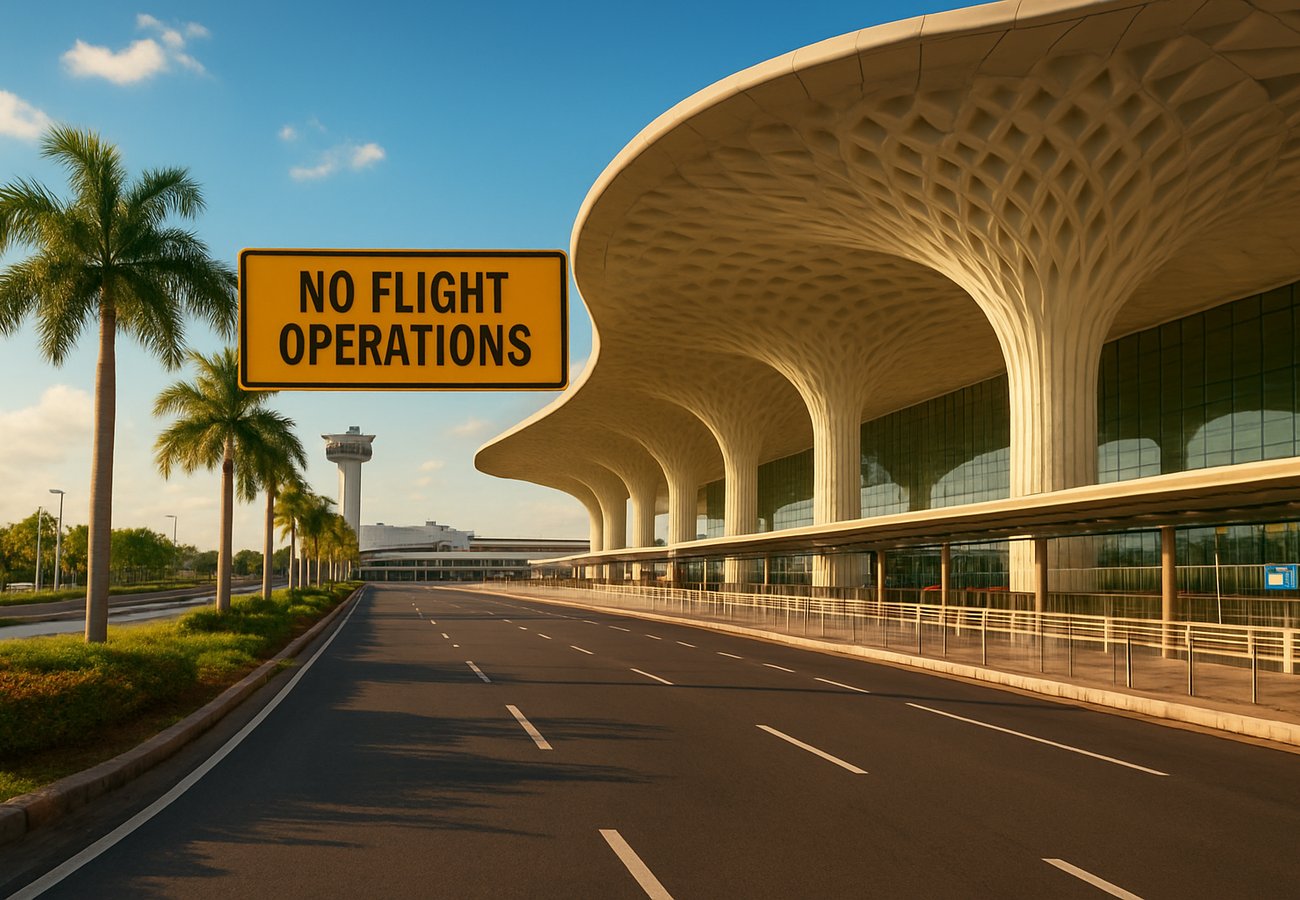
Image generated by AI
Quick Summary
- Operational Suspension: Chhatrapati Shivaji Maharaj International Airport (CSMIA) suspended all flight operations for six hours on May 7, 2026, from 11:00 AM to 5:00 PM.
- Infrastructure Focus: The closure targeted critical pre-monsoon maintenance on twin runways RWY 09/27 and RWY 14/32 to prevent hydroplaning and waterlogging.
- Energy Resilience: This scheduled window ensures "first-attempt landing safety" for airlines struggling with high oil prices and the global energy crisis.
- Geopolitical Stability: The maintenance secures Mumbai’s role as a stable alternative hub as the US-Iran conflict and Strait of Hormuz tensions disrupt Middle Eastern aviation corridors.
- Advanced Coordination: A Notice to Airmen (NOTAM) was issued months in advance, allowing Air India, IndiGo, and international carriers to recalibrate trans-continental schedules.
- Technical Goals: Program included friction testing, runway light inspections, micro-fissure repairs, and comprehensive drainage system cleaning.
- Source: Adani Airports Operational Update, May 7, 2026.
MUMBAI — In a high-stakes operational maneuver designed to safeguard India’s primary financial gateway against the upcoming monsoon, Mumbai’s Chhatrapati Shivaji Maharaj International Airport (CSMIA) has successfully executed a six-hour total flight suspension. On May 7, 2026, from 11:00 AM to 5:00 PM, all runway activity ceased to allow engineering teams to bolster the facility’s infrastructure. This strategic shutdown is being analyzed by senior global affairs journalists as a vital "resilience window," occurring precisely as Gulf tensions and the threat of a Strait of Hormuz closure send oil prices to record highs and force global aviation to prioritize hubs with the highest safety and reliability standards.
Expanded Overview: Securing the Cross-Runway System
The temporary closure of runways 09/27 and 14/32 is not merely a routine chore; it is a critical defense mechanism for a coastal megacity. While the global energy crisis has inflated the cost of fuel and made every minute of "holding patterns" a financial disaster for airlines, CSMIA’s maintenance ensures that aircraft can land safely on the first attempt, even during torrential rains. By prioritizing structural integrity now, the airport operator, Adani Airports, is preventing the kind of emergency closures that could paralyze the national economy during the peak of the monsoon in June and July.
Geopolitical Context: Navigating the Strait of Hormuz and US-Iran Conflict
The broader geopolitical landscape in 2026 has been dominated by the standoff in the Strait of Hormuz. As Saudi Arabia, the UAE, and Qatar work to stabilize global energy flows, the resulting volatility has made traditional Middle Eastern transit hubs less predictable. Mumbai, leveraging its strategic position on the edge of the Arabian Sea, has become a "stable transition hub" for travelers looking to bypass the high-stress environments of the Gulf. The US-Iran conflict has further prioritized the reliability of Indian aviation infrastructure, as global trade increasingly flows through the "safe haven" corridors of the subcontinent.
Global Energy Impact: Landing Safety as an Oil Hedge
Rising oil prices have fundamentally changed the requirements for aviation profitability.
- Fuel Conservation: Airlines can no longer afford the fuel burn associated with hydroplaning-related go-arounds or waterlogged runway diversions.
- Maintenance as a Multiplier: By ensuring optimal friction levels and flawless drainage, Mumbai Airport is providing a critical service to carriers struggling with the global energy crisis, ensuring that every drop of jet fuel is utilized with maximum efficiency.
Shipping and Trade Impact: The Air Cargo Artery
The ongoing shipping disruption in global maritime routes has placed an unprecedented burden on air cargo.
- Trade Resilience: Mumbai’s twin runways serve as the primary trade artery for high-value exports from Maharashtra.
- Logistics Stability: The six-hour maintenance window, planned months in advance via NOTAM, ensured that cargo flights could be rescheduled without contributing to the wider supply chain risks currently affecting global commerce.
Regional Impact: The Gulf and Asian Traveler Pivot
Interestingly, travelers from the Gulf States—including Saudi Arabia, the UAE, and Qatar—are increasingly transiting through Mumbai for long-haul connections.
- Safe Hubbing: As travelers look to escape the geopolitical friction of the US-Iran conflict, CSMIA offers a modern, efficient, and secure environment.
- Monsoon Readiness: The visible commitment to safety through these annual shutdowns reinforces Mumbai’s reputation as a world-class aviation hub that can handle the most extreme weather conditions.
Industry / Expert Analysis: Why Infrastructure Longevity Matters Globally
Aviation and economic analysts at Reuters and Bloomberg suggest that Mumbai’s May 7 shutdown is a "masterclass in proactive resilience." In an era where the global energy crisis makes infrastructure failure a catastrophic financial risk, CSMIA’s 6-hour pause is a small price to pay for four months of monsoon-proof operations. The coordination between Adani Airports and global carriers ensures that the city remains a beacon of efficiency, even as the geopolitical shadow of the Strait of Hormuz looms over the Indian Ocean.
What Happens Next: The Post-5:00 PM Reopening
As the clock struck 5:00 PM, the first phase of the reopening began:
- FOD Sweep: Safety teams conducted a comprehensive "Foreign Object Debris" sweep to ensure the tarmac was clear of maintenance materials.
- ILS Verification: Technicians monitored the first few arrivals to ensure the Instrument Landing System (ILS) and ground lighting were functioning with 100% accuracy.
- Monsoon Watch: The airport now enters a state of heightened readiness, with the engineering teams prepared for the first pre-monsoon showers expected by late May.
Conclusion: Reinforcing the Global Risk and Indian Reward
Mumbai Airport’s strategic shutdown on May 7 is a testament to the power of foresight in a world of shipping disruptions and oil price volatility. By surmounting the challenges of the US-Iran conflict and the geopolitical shadow of the Strait of Hormuz, India’s financial gateway has proven that safety is the ultimate competitive advantage. As the world watches the Middle East, Mumbai stands as a beacon of operational excellence, proving that infrastructure resilience is the key to a thriving aviation future.
Key Takeaways: Mumbai Airport Maintenance 2026
- Closure: 6-hour flight suspension (11 AM - 5 PM) on May 7.
- Target: Runways 09/27 and 14/32.
- Purpose: Critical pre-monsoon infrastructure resilience.
- Energy Impact: Reducing fuel waste through landing safety during a global energy crisis.
- Geopolitics: Anchoring Mumbai as a stable hub amid Strait of Hormuz tensions.
- Operator: Adani Airports (CSMIA).
Related Tourism Reports
Disclaimer
This article is for informational and educational purposes only. It does not constitute legal, financial, or professional advice. While we strive to provide accurate and up-to-date information, travel policies, regulations, and conditions change rapidly. Always verify information with official sources before making travel decisions. Nomad Lawyer makes no representations about the accuracy, reliability, completeness, or suitability of the information provided. Readers should consult qualified professionals for advice specific to their circumstances. The views expressed in this article are those of the author and do not necessarily reflect the views of Nomad Lawyer.
Kunal K Choudhary
Co-Founder & Contributor
A passionate traveller and tech enthusiast. Kunal contributes to the vision and growth of Nomad Lawyer, bringing fresh perspectives and driving the community forward.
Learn more about our team →