
Cruise Updates: MSC Cruises and Meyer Werft Finalize 4+2 'New Frontier' Mega-Ship Deal to Bypass European Travel Chaos
As European flight cancellations mount, MSC Cruises aggressively expands its fleet, finalizing a massive 4+2 mega-ship order with German shipbuilder Meyer Werft.

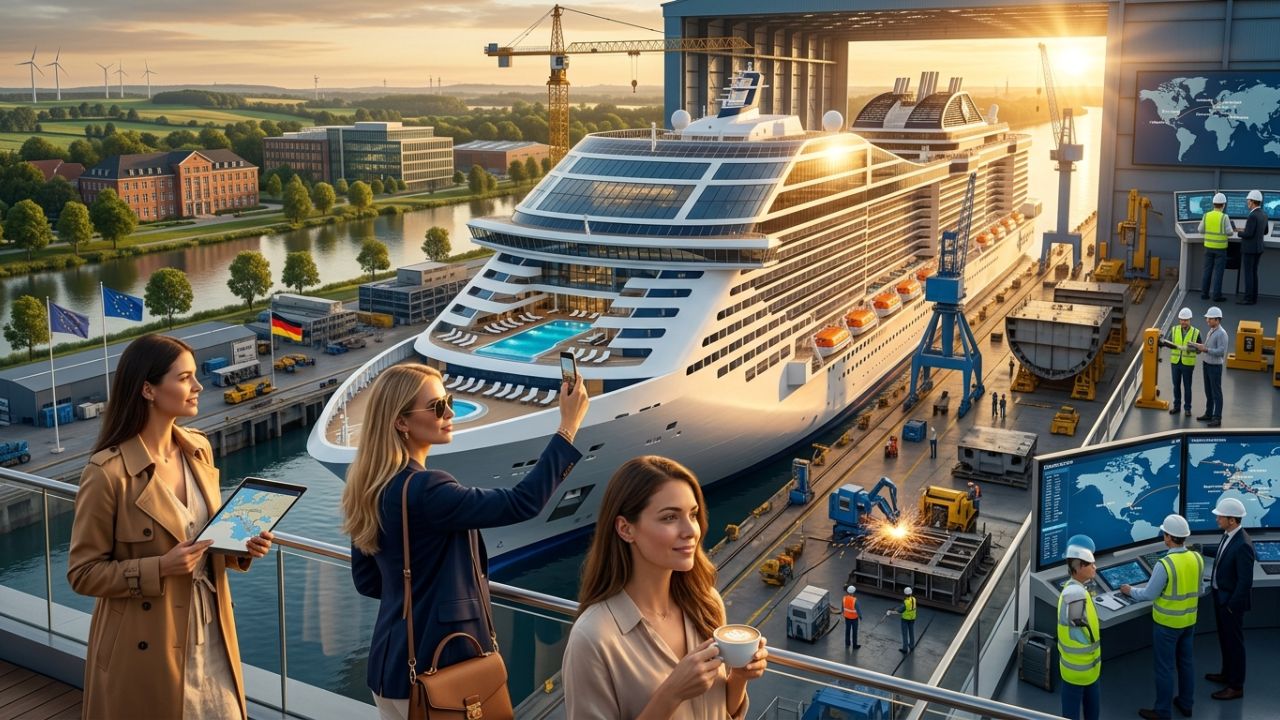
Image generated by AI
Cruise Updates: MSC Cruises and Meyer Werft Finalize 4+2 'New Frontier' Mega-Ship Deal to Bypass European Travel Chaos
With terrestrial transit networks crumbling under the weight of severe airport disruptions, the global cruise sector is aggressively deploying ultra-large passenger vessels to offer high-capacity, highly reliable holiday alternatives.
Image generated by AI
As peak-season airline news continues to be dominated by reports of sprawling airport disruptions and endless, rolling flight cancellations, European travelers are increasingly abandoning aviation in favor of highly insulated maritime holidays. According to the absolute latest maritime and aviation updates, the global cruise sector is on the verge of executing one of its most significant fleet expansions in history. Global heavyweight MSC Cruises and premier German shipbuilder Meyer Werft have officially confirmed that negotiations for a massive 4+2 shipbuilding programme are now in an advanced, final stage. Following an initial Letter of Intent signed in December 2025, the two companies are finalizing contracts for a brand-new class of mega-ships officially named the "New Frontier". This incredibly ambitious project, based out of Papenburg, Germany, Europe, aims to deploy massive floating resorts capable of holding thousands of passengers, effectively offering European tourists a seamless, luxurious escape from the systemic travel chaos that currently defines continental air travel.
Expanded Overview: The 4+2 Shipbuilding Architecture
When tracking structural shifts in the global tourism sector, an order of this magnitude represents a profound confidence in long-term, high-capacity maritime leisure.
The agreement officially involves the construction of four confirmed next-generation cruise vessels, alongside two additional optional ships (the 4+2 structure). According to highly established European shipbuilding practices, executing a contract of this immense complexity requires extensive, multi-layered engineering alignment. MSC Cruises and Meyer Werft have spent months navigating strict financing arrangements, rigorous classification approvals, and massive environmental compliance checks. Both companies have expressed absolute confidence that the final execution of the agreement will occur in the coming weeks. The scale of the "New Frontier" project firmly positions it among the most ambitious maritime orders currently under development, permanently reinforcing Papenburg, Germany as the undisputed global hub for ultra-large shipbuilding.
Section-Wise Breakdown: The "New Frontier" Engineering Profile
The upcoming "New Frontier" class represents an aggressive, major evolution in ultra-large passenger ship design, engineered specifically to absorb massive tourism demand.
Each colossal vessel is structurally planned to accommodate an incredible 5,400 passengers. Boasting a massive gross tonnage of approximately 180,000 tons, these ships will immediately rank among the absolute largest cruise vessels operating within the global maritime industry. The core design philosophy heavily prioritizes next-generation cruise travel, seamlessly blending ultra-high passenger capacity with drastically improved onboard circulation. Industry sources confirm that the engineering architecture includes advanced hull optimization and next-generation propulsion systems. Furthermore, the ships will feature enhanced waste management technologies specifically designed to reduce emissions in strict alignment with International Maritime Organization (IMO) sustainability frameworks and EU maritime regulations.
Section-Wise Breakdown: Papenburg and the European Supply Chain
The finalization of this agreement carries massive economic significance for the entire European industrial sector.
Papenburg, located in northern Germany, serves as the critical cornerstone of global cruise ship construction. This massive deal completely strengthens complex industrial supply chains stretching across Europe, securing lucrative contracts for marine engineering firms, interior outfitting companies, and propulsion system manufacturers spanning Germany, Italy, and Switzerland. Once these vessels begin rolling out of the shipyard, they are meticulously scheduled for annual deliveries beginning in exactly 2030. This phased, highly coordinated delivery structure ensures continuous production flow at the Meyer Werft shipyard while allowing MSC Cruises to seamlessly integrate the massive 5,400-passenger vessels into its global fleet without triggering operational bottlenecks.
Cruise Details: MSC Cruises Expansion Matrix
The exact operational telemetry outlining this massive shipbuilding project, detailing the specific vessel parameters and delivery timelines, has been consolidated into the mandatory matrix below.
MSC Cruises "New Frontier" Class Shipbuilding Matrix
| Project Metric | Specifications & Deployment Data |
|---|---|
| Cruise Operator | MSC Cruises |
| Shipbuilder | Meyer Werft (Papenburg, Germany) |
| Ship Class Name | "New Frontier" |
| Order Structure | 4 Confirmed + 2 Optional Vessels |
| Delivery Timeline | Annual deliveries beginning in 2030 |
| Passenger Capacity | ~5,400 Passengers per ship |
| Gross Tonnage | ~180,000 GT |
| Initial Agreement | Letter of Intent (December 2025) |
Passenger Impact: Avoiding Hub Congestion and Aviation Friction
For the European consumer, the deployment of these massive vessels offers a highly attractive, frictionless alternative to standard terrestrial holidays.
By scaling up to 5,400 passengers per vessel, MSC Cruises is aggressively targeting travelers exhausted by the intense travel anxiety associated with modern aviation. Rather than risking missed connections in highly congested airports or battling overbooked flights, passengers can board these smart-cruise platforms in major regional ports. The "New Frontier" class is explicitly designed to integrate advanced digital navigation systems, automated energy monitoring, and vastly improved passenger service infrastructure. This ensures that even on long-duration voyages across the Mediterranean Sea or on complex transatlantic routes, the passenger experience remains highly insulated, seamless, and entirely predictable.
Industry Analysis: Shifting Global Capacity
Aviation and maritime strategists note that the cruise sector is experiencing a massive post-pandemic recovery, heavily diverging from the operational struggles of the airline industry.
Industry reports clearly indicate that major cruise lines are heavily prioritizing larger, infinitely more efficient ships to radically optimize operating costs while actively absorbing rising passenger demand. The 4+2 "New Frontier" programme will unilaterally reshape global cruise capacity distribution. By adding capacity for tens of thousands of additional passengers per sailing cycle, this expansion will generate massive economic activity in key cruise tourism hubs, specifically benefiting major ports like Genoa, Italy and Hamburg, Germany. The long-term deployment schedule beginning in 2030 ensures that these ports have adequate time to align their infrastructure expansion projects to handle the incoming passenger surge.
Conclusion: A Maritime Super-Project
Ultimately, the advancing 4+2 "New Frontier" cruise ship programme executed between MSC Cruises and Meyer Werft marks a defining moment for the global tourism sector. By securing four confirmed 180,000-ton vessels (with two optional) capable of holding 5,400 passengers each, MSC Cruises is aggressively preparing for massive, sustained tourism demand stretching deep into the 2030s. As terrestrial transit networks continue to generate brutal travel chaos and relentless flight cancellations, this mega-ship order ensures that European travelers possess highly reliable, luxurious alternatives. Driven by the engineering mastery of Papenburg, Germany, the "New Frontier" class perfectly blends IMO-compliant environmental technologies with ultra-high capacity, permanently cementing Europe’s absolute leadership in maritime engineering and high-end global hospitality.
Key Takeaways
- Massive Fleet Expansion: MSC Cruises and Meyer Werft are in the final stages of executing a 4+2 shipbuilding agreement for the new "New Frontier" class.
- Colossal Capacity: Each next-generation vessel will feature a gross tonnage of 180,000 tons and accommodate up to 5,400 passengers.
- Delivery Schedule: Following the initial December 2025 Letter of Intent, the finalized ships are scheduled for annual deliveries beginning in 2030.
- Advanced Engineering: The ships will feature next-generation propulsion, smart digital navigation, and strict IMO-compliant emissions technologies.
- European Economic Boost: The project secures massive, long-term industrial supply chain contracts across Papenburg (Germany), Genoa (Italy), and Switzerland.
FAQ: MSC Cruises "New Frontier" Class Mega-Ships 2026
What is the "New Frontier" class by MSC Cruises? The "New Frontier" class is a brand-new, next-generation series of ultra-large cruise ships being built by Meyer Werft in Papenburg, Germany, designed to hold up to 5,400 passengers each.
How many ships are included in the MSC Cruises and Meyer Werft agreement? The highly complex agreement is structured as a 4+2 programme, meaning it includes four officially confirmed vessels and the option to build two additional ships.
When will the first "New Frontier" cruise ship be delivered? According to the joint statements regarding the December 2025 Letter of Intent, the first vessel in the class is scheduled to be delivered in 2030, with subsequent ships arriving annually.
Related Travel Guides
Carnival Cruise Line The Next Course Dining Fleet Expansion 2026
United Airlines Denver Turks and Caicos Route Expansion 2026
European Cruise Terminal Embarkation Survival Guide 2026
Disclaimer: This article is strictly for informational purposes. The shipbuilding specifications (180,000 GT, 5,400 passengers), delivery timelines (annual deliveries beginning in 2030), and contractual structures (4+2 programme, December 2025 Letter of Intent) regarding the MSC Cruises "New Frontier" class are based on official corporate statements and maritime industry reports at the time of publication. Shipyard production schedules, environmental compliance integration, and final contractual executions are highly complex and subject to continuous modification by regulatory authorities and corporate boards. Travelers should verify exact ship deployments directly with MSC Cruises.
Disclaimer
This article is for informational and educational purposes only. It does not constitute legal, financial, or professional advice. While we strive to provide accurate and up-to-date information, travel policies, regulations, and conditions change rapidly. Always verify information with official sources before making travel decisions. Nomad Lawyer makes no representations about the accuracy, reliability, completeness, or suitability of the information provided. Readers should consult qualified professionals for advice specific to their circumstances. The views expressed in this article are those of the author and do not necessarily reflect the views of Nomad Lawyer.
Preeti Gunjan
Contributor & Community Manager
A passionate traveller and community builder. Preeti helps grow the Nomad Lawyer community, fostering engagement and bringing the reader experience to life.
Learn more about our team →