
Beyond the French Quarter: New Orleans’ Most Affordable Neighborhoods for Renters and Homebuyers
With average one-bedroom rents hovering around $1,272 citywide, savvy renters and buyers are turning to quieter district

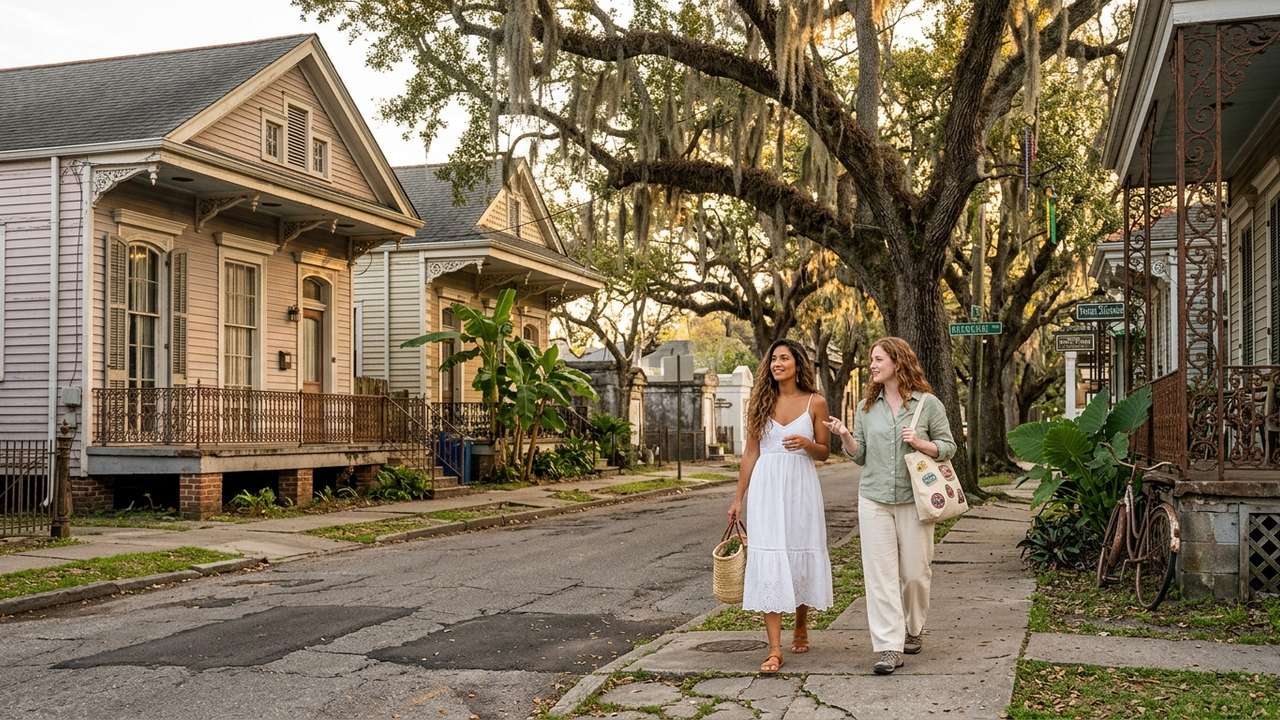
Image generated by AI
New Orleans’ housing market extends far beyond its historic core. While the French Quarter and Garden District command premium rents, a growing number of residents are relocating to peripheral districts that offer significantly lower housing costs without sacrificing daily convenience. Across the city’s five most affordable neighborhoods, average one-bedroom rents range from $807 to $888 per month—well below the citywide average of $1,272. These areas, spanning the West Bank, New Orleans East, and Lake Pontchartrain’s southern shore, provide distinct advantages for budget-conscious renters and first-time buyers.
West Lake Forest: Suburban Quiet Amid Urban Wetlands
Located roughly 15 miles east of the French Quarter, West Lake Forest operates as a residential enclave within New Orleans East. The area’s distance from high-tourism zones translates to a quieter daily rhythm and notably lower housing costs. Properties here blend single-family homes with apartment complexes along tree-lined streets, with most grocery retailers situated within a 15-minute walk.
The neighborhood’s defining geographic feature is its proximity to the Bayou Sauvage Urban National Wildlife Refuge, a 23,000-acre wetland system offering fishing, birdwatching, and extensive nature trails. Residents also benefit from Joe W. Brown Memorial Park, which provides tennis courts, baseball fields, an indoor heated pool, and playgrounds. Adjacent to the park, the renovated Audubon Louisiana Nature Center features a planetarium, classroom pavilions, and boardwalk trails. Daily errands and dining typically require a drive to Read Boulevard or Crowder Boulevard retail corridors. Transportation relies heavily on private vehicles, with Interstate 10 serving as the primary route to downtown, typically taking 20 to 25 minutes during off-peak hours. Regional Transit Authority bus service exists but operates on limited schedules.
Read Boulevard East: Highest Walkability in the Affordable Tier
Situated south of I-10 and west of the Chef Menteur Highway, Read Boulevard East distinguishes itself with a walk score of 50, making it the most pedestrian-friendly district among the city’s lowest-cost areas. The neighborhood maintains a residential character while offering direct access to local markets, restaurants, and shopping centers along Read Boulevard and Bullard Avenue.
Like its eastern neighbor, it borders the Bayou Sauvage National Wildlife Refuge and provides straightforward access to Lake Pontchartrain’s southern shoreline for fishing and lakeside recreation. Commuters benefit from I-10’s northern boundary and US-90’s east-west corridor, both connecting to downtown in roughly 20 minutes. While car ownership remains the norm, improved sidewalk infrastructure supports shorter bike or foot trips, and RTA bus routes provide supplemental transit coverage.
Little Woods: Lakeside Living and Natural Preserves
Nestled directly along Lake Pontchartrain’s southern coast, Little Woods prioritizes waterfront access and residential tranquility over dense urban infrastructure. The area features a relaxed pace, with the levee offering panoramic lake views, fishing access, and kayaking routes. Commercial amenities are concentrated further south along I-10, requiring short drives for grocery shopping and dining. To the east, the Bayou Sauvage National Wildlife Refuge provides additional outdoor recreation, including nature photography and wetland exploration.
Transportation is overwhelmingly vehicle-dependent. Multiple I-10 interchanges provide 20- to 25-minute commutes to downtown, but public transit options remain sparse in this far-northern district. Cycling and walking are primarily recreational rather than utilitarian in this low-density corridor.
Behrman: West Bank Connectivity and Dedicated Bike Lanes
Positioned across the Mississippi River in the Algiers district, Behrman offers a distinct community identity separate from the East Bank’s commercial hubs. The neighborhood stands out for its integrated bicycle infrastructure, with protected lanes along Wall and Peace Boulevards supporting two-wheeled commuting. Residents enjoy a mix of corner stores, tree-lined residential streets, and reliable access to the Westbank Expressway commercial corridor.
Morris FX Jeff Sr. Park anchors outdoor recreation with sports fields, green space, and a paved perimeter trail. Just beyond the neighborhood, the Mississippi River Trail extends across the metro area, while Algiers Point—featuring historic architecture and the free river ferry—offers cultural and dining options. Transit flexibility is a major advantage: the Algiers Ferry runs regularly to Canal Street, the Crescent City Connection and Westbank Expressway support vehicular travel, RTA buses cover the West Bank, and dedicated bike lanes make active commuting viable.
Old Aurora: Riverfront Access and Spacious West Bank Layout
Adjacent to Behrman, Old Aurora occupies a sprawling section of the Algiers West Bank. The district features ranch-style homes and low-rise apartment communities set along quiet residential streets. Its northern boundary directly abuts the Mississippi River, granting residents immediate access to levee pathways and riverfront parks. Commercial services, including grocery retailers, casual dining, and the regional library, are concentrated along the Westbank Expressway. Southern residents benefit from proximity to Brechtel Park and Lakewood Golf Club.
Transportation mirrors Behrman’s model, with the Westbank Expressway and Crescent City Connection providing primary automotive links to downtown. RTA bus service covers the corridor, while the neighborhood’s bike-friendly street design and continuous levee trails support car-free travel to adjacent Algiers communities.
New Orleans’ affordable housing corridor continues to attract residents seeking manageable rents, outdoor recreation access, and reliable regional transit. Whether prioritizing lakeside tranquility, West Bank connectivity, or East New Orleans walkability, these five districts demonstrate that budget-conscious living in the city remains highly viable.
| Neighborhood | Average 1-Bedroom Rent | Median Home List Price | Primary Transit & Access |
|---|---|---|---|
| Citywide Average | $1,272/month | — | Varies by district |
| West Lake Forest | $807/month | $210,000 | I-10 (20–25 min to downtown); Limited RTA bus service |
| Read Boulevard East | $825/month | $255,000 | I-10 & US-90; RTA bus routes; Walk score: 50 |
| Little Woods | $844/month | $195,000 | I-10 interchanges (20–25 min to downtown); Minimal public transit |
| Behrman | $888/month | $159,000 | Westbank Expressway, Crescent City Connection, Algiers Ferry, RTA bus, dedicated bike lanes |
| Old Aurora | $866/month | $235,000 | Westbank Expressway, Crescent City Connection, RTA bus, levee bike trails |
Key Takeaways
- Citywide average one-bedroom rent stands at $1,272/month, with the five featured neighborhoods averaging between $807 and $888.
- West Lake Forest offers the lowest entry rent ($807) and direct adjacency to the 23,000-acre Bayou Sauvage Urban National Wildlife Refuge.
- Read Boulevard East ranks highest for pedestrian accessibility among affordable districts, with a walk score of 50.
- Behrman provides the most multimodal transit options, including the free Algiers Ferry, protected bike lanes, and direct Westbank Expressway access.
- West Bank neighborhoods (Behrman and Old Aurora) deliver median home prices between $159,000 and $235,000, with reliable bridge and ferry connections to downtown.
FAQ
What is the most affordable neighborhood to rent in New Orleans? West Lake Forest offers the lowest average one-bedroom rent at approximately $807 per month, significantly below the citywide average.
Which affordable New Orleans neighborhood has the best public transit and bike infrastructure? Behrman provides the most comprehensive transit network, featuring dedicated bike lanes on major corridors, regular RTA bus service, the free Algiers Ferry to downtown, and direct access to the Westbank Expressway.
How do commute times to downtown compare across these districts? Most neighborhoods require 20 to 25 minutes by car during off-peak hours via I-10 or the Crescent City Connection. Public transit schedules are limited outside the West Bank, making private vehicles the primary mode for most residents.
What income level is recommended for comfortable living in New Orleans? Cost of living analyses suggest a gross annual salary of approximately $83,000 for a single adult without dependents to maintain a comfortable standard of living in the city.
Are these neighborhoods suitable for renters prioritizing outdoor recreation? Yes. All five districts offer direct or nearby access to significant natural spaces, including Lake Pontchartrain’s southern shoreline, the Bayou Sauvage Urban National Wildlife Refuge, and the Mississippi River Trail system.
Related Travel Guides
Disclaimer
This article is for informational and educational purposes only. It does not constitute legal, financial, or professional advice. While we strive to provide accurate and up-to-date information, travel policies, regulations, and conditions change rapidly. Always verify information with official sources before making travel decisions. Nomad Lawyer makes no representations about the accuracy, reliability, completeness, or suitability of the information provided. Readers should consult qualified professionals for advice specific to their circumstances. The views expressed in this article are those of the author and do not necessarily reflect the views of Nomad Lawyer.
Raushan Kumar
Founder & Lead Developer
Full-stack developer with 11+ years of experience and a passionate traveller. Raushan built Nomad Lawyer from the ground up with a vision to create the best travel and law experience on the web.
Learn more about our team →