
Moscow Domodedovo Airport Chaos: 53 Flights Delayed, 3 Canceled Disrupting Aeroflot, S7, Emirates, Turkish Airlines
Massive disruptions hit Moscow's Domodedovo International Airport as 53 flights delayed and 3 canceled, affecting Aeroflot, S7 Airlines, Emirates, Turkish Airlines, and more on major domestic and international routes.

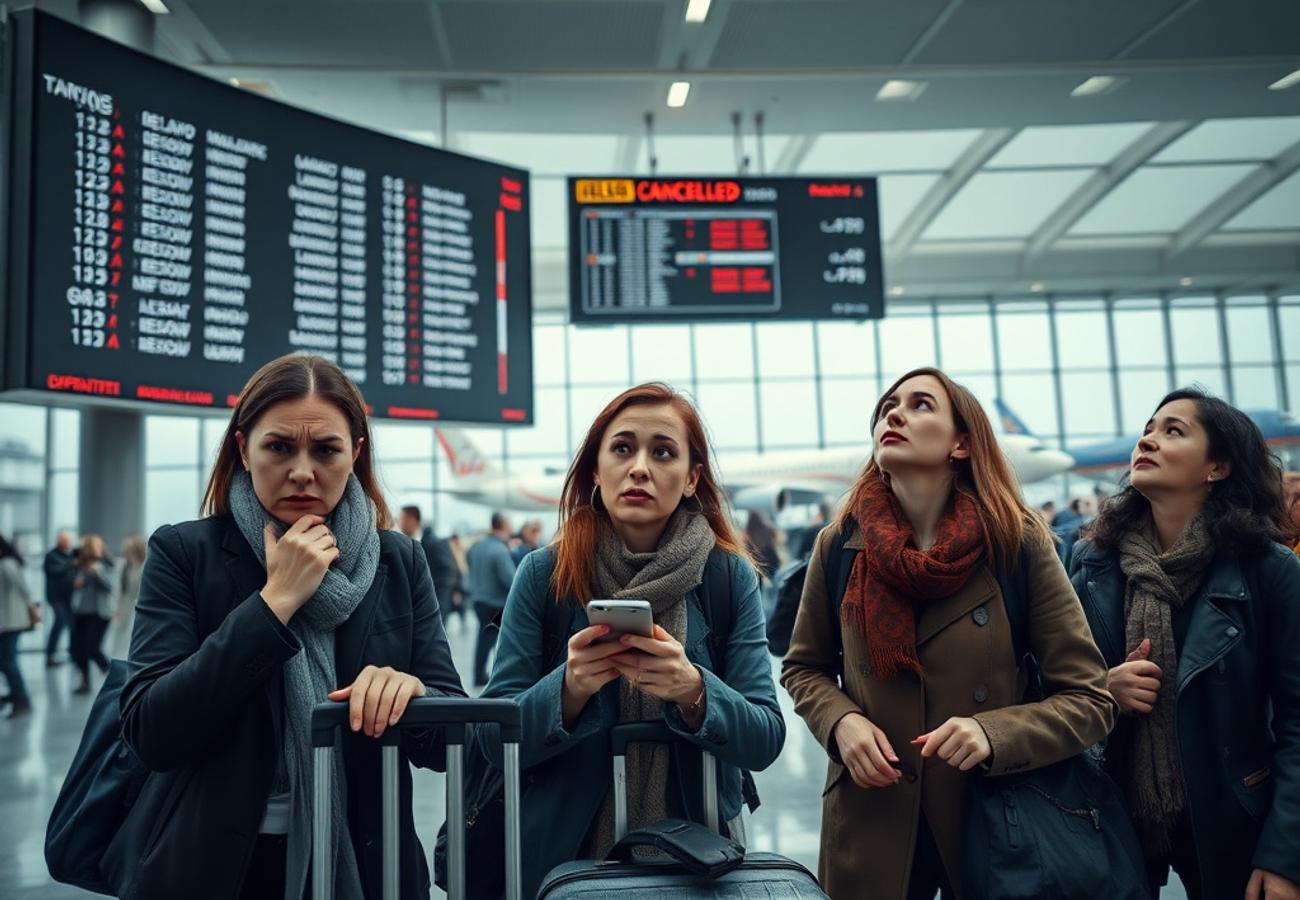
Image generated by AI
Chaos Erupts at Moscow's Busiest Hub
Moscow Domodedovo International Airport descended into operational pandemonium on July 1, 2026, when 53 flights were delayed and 3 were canceled across both domestic and international routes. The cascading disruptions rippled through networks operated by Aeroflot, S7 Airlines, Ural Airlines, Emirates, Turkish Airlines, and numerous other carriers, leaving thousands of passengers stranded in terminals, frantically refreshing departure boards, and reassessing their travel plans.
This wasn't a minor schedule hiccup. This was a full-scale operational crisis that exposed just how fragile modern aviation scheduling really is.
When One Delay Becomes 56 Problems
The mathematics of airport disruption are unforgiving. A single aircraft delayed by 90 minutes doesn't just affect one flight—it cascades. That same aircraft was scheduled for another departure. Then another. By day's end, you've got a domino effect of chaos rippling across an entire airport's operation.
Reddit: "I was stuck at Domodedovo for 6 hours watching delays multiply. One cancellation turned into three, and suddenly 50+ flights were affected. It's like watching dominoes fall in real-time." — r/travel
Why Domodedovo Matters
Domodedovo International Airport is Moscow's second-largest airport and one of Russia's premier aviation gateways. It handles a staggering volume of traffic daily: domestic flights to destinations across the Russian Federation, international connections to Europe, Asia, the Middle East, and neighboring countries. When Domodedovo stumbles, thousands of travelers feel the impact immediately.
The airport serves as a critical infrastructure node for Aeroflot (Russia's flagship carrier), S7 Airlines (a major domestic and regional operator), Ural Airlines, and international carriers like Emirates and Turkish Airlines who depend on Moscow connections for onward travel throughout Asia and Eastern Europe.
The Cascade Effect: Understanding Airport Delays
Modern airports operate on razor-thin margins. Flights are scheduled in sequences that assume aircraft arrive on time, turn around quickly, and depart according to plan. Ground crews, pilots, flight attendants, catering teams, fueling operations, and security procedures all sync to precise timelines.
When one aircraft departs 20 minutes late, here's what happens:
The aircraft arrives at its next destination 20 minutes late. That destination's next departure is now delayed. A crew scheduled to work that flight may violate mandatory rest regulations if the next flight is tight. Ground handlers at the arrival airport face compressed turnaround times. Passengers with tight connections miss flights. Upstream airports begin experiencing congestion as aircraft fail to arrive when expected.
By the time the day is over, a single 20-minute operational delay has metastasized into dozens of disruptions across multiple cities, multiple airlines, and multiple time zones.
Common Culprits Behind Major Airport Disruptions
What triggered Domodedovo's July 1st crisis? While official incident reports were still circulating, operational disruptions of this magnitude typically stem from:
Air traffic congestion — Airways near major hubs become congested, forcing delays in departures to maintain safe spacing.
Weather-related adjustments — Thunderstorms, low visibility, or wind conditions require aircraft to wait for safer conditions.
Aircraft rotation bottlenecks — When inbound flights fall behind, outbound aircraft simply aren't available.
Crew duty limits — Regulatory maximum flight hours mean crews must rest, and delayed flights compress scheduling.
Ground handling delays — Maintenance checks, refueling, catering, or cleaning can extend ground times beyond planned intervals.
Airspace restrictions — Flight corridors near Moscow's multiple airports create competition for departure slots.
The Role of Russia's Aviation Authority
Rosaviatsiya (the Federal Air Transport Agency of Russia's Ministry of Transport) oversees all civil aviation operations, including airport safety, air navigation, and regulatory compliance. During operational crises, Rosaviatsiya coordinates with airport management to ensure that safety protocols take absolute precedence over schedule maintenance.
This is critical: Russian aviation authorities prioritize safety over schedule adherence, which means aircraft may be held or delayed if maintenance concerns, weather hazards, or crew fatigue issues surface. That's not bureaucratic inefficiency—that's regulatory wisdom born from decades of aviation accident investigation.
Who Gets Hit Hardest?
The 53 delayed flights disrupted multiple passenger segments:
Business travelers — Missed meetings, rescheduled calls, lost deals.
International tourists — Interrupted vacation schedules, missed hotel check-ins, forfeited bookings.
Transit passengers — Those connecting through Moscow to Asia or Europe faced missed onward flights, particularly if they had booked separate tickets on different airlines.
Cargo operations — Time-sensitive shipments experienced delays.
Crew scheduling — Flight attendants and pilots approaching mandatory rest limits needed reassignment.
Passengers with tight connections faced the worst scenarios. If you booked Flight A to Moscow plus separate ticket on Flight B onward, and Flight A arrived 90 minutes late, you almost certainly missed Flight B. You're now rebooked on tomorrow's flight (if space exists), facing overnight accommodation costs, meal expenses, and severe itinerary disruption.
This is precisely why travel experts recommend building substantial buffer time between connecting flights at major hubs, especially on separate ticket bookings.
Passenger Rights During Disruptions
Airlines operating under EU261 regulations must provide specific compensation and care for disrupted passengers. Russia has its own consumer protection frameworks, though they vary by airline and ticket conditions.
During extended disruptions, affected passengers may receive:
Meal vouchers for waits exceeding 2-3 hours Hotel accommodation for overnight delays Flight rebooking on alternative carriers or later departures Communication access (phone calls, emails, updates) Refunds for unused portions of tickets
However—and this matters—assistance levels depend heavily on the airline's policies, ticket terms, and whether the disruption was deemed an "extraordinary circumstance" beyond operational control.
Real-Time Information: Your Only Reliable Tool
During airport chaos, passengers who constantly monitored official sources made better decisions than those relying on outdated information. Domodedovo's live flight information system updated departure times multiple times throughout the day as aircraft became available and ground operations stabilized.
The worst mistake travelers made: trusting printed itineraries or outdated airline confirmations. The best travelers repeatedly refreshed airport departure boards, checked airline apps, called customer service, and remained flexible about alternative routings.
Safety Always Trumps Schedules
Aviation industry veterans consistently emphasize one principle: operational delays almost always reflect safety-first decision-making. A 2-hour delay beats departing with a mechanical issue. A crew rest delay beats flying fatigued pilots. A weather delay beats flying through dangerous conditions.
This isn't excuse-making—it's the reality of modern aviation. Every delay you experience represents someone in the operational chain making a conservative decision to protect passenger safety.
What's Next for Domodedovo Travelers
As Domodedovo's operations stabilized through July 1st evening, delayed aircraft eventually found departure slots. By July 2nd, schedules were expected to normalize as the cascading effect diminished and aircraft rotations realigned.
For travelers planning Domodedovo passages over the coming weeks, three rules matter:
Monitor continuously — Check your airline's app and airport flight boards the morning of travel and again 2 hours before departure.
Build buffers — Allow at least 3-4 hours between flights at major hubs, and never book tight connections through Moscow on separate tickets.
Stay connected — Respond immediately to airline notifications, keep your phone charged, and maintain contact with your carrier's customer service team.
Even chaotic days at major aviation hubs eventually stabilize. Passengers armed with current information, realistic expectations, and flexibility navigate disruptions far more successfully than those clinging to original schedules.
The skies may occasionally turn turbulent, but transparency and patience remain your compass.
Related Travel Guides
Disclaimer
This article is for informational and educational purposes only. It does not constitute legal, financial, or professional advice. While we strive to provide accurate and up-to-date information, travel policies, regulations, and conditions change rapidly. Always verify information with official sources before making travel decisions. Nomad Lawyer makes no representations about the accuracy, reliability, completeness, or suitability of the information provided. Readers should consult qualified professionals for advice specific to their circumstances. The views expressed in this article are those of the author and do not necessarily reflect the views of Nomad Lawyer.
Preeti Gunjan
Contributor & Community Manager
A passionate traveller and community builder. Preeti helps grow the Nomad Lawyer community, fostering engagement and bringing the reader experience to life.
Learn more about our team →