
Minneapolis Airport Just Hit With 74 Flight Delays — Here is What Travelers Need to Know
A critical TSA staffing shortfall and aviation crisis trigger 74 flight delays and 8 cancellations at Minneapolis-St. Paul International Airport.

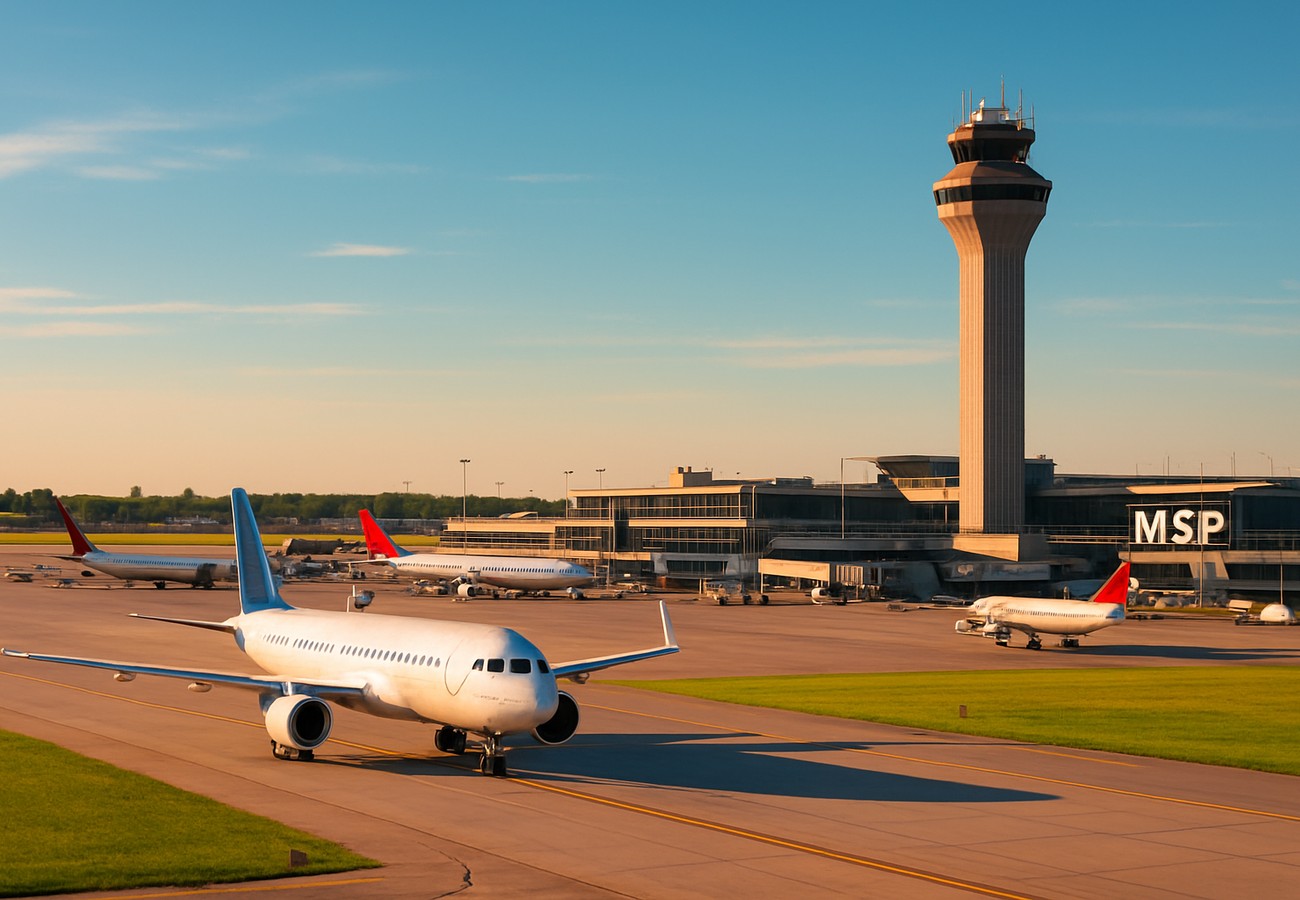
Image generated by AI
Quick Summary
- A major aviation crisis has struck Minneapolis-St. Paul International Airport, causing 74 flight delays and 8 outright cancellations today.
- The gridlock is primarily driven by a severe TSA staffing shortfall stemming from a 61-day partial government shutdown affecting the Department of Homeland Security.
- Regional and cross-border Canada routes are hit hardest, with carriers like Jazz and WestJet Encore reporting massive 50% delay rates.
- Delta and SkyWest are struggling with the sheer volume of disruptions, and travelers are urged to monitor inbound aircraft and claim delayed meal vouchers.
Travel chaos has officially struck Minneapolis-St. Paul International Airport today as a complex aviation crisis triggers a massive logistical gridlock. Triggered by national staffing shortages and equipment displacement, the disruption has resulted in a staggering 74 flight delays and 8 new cancellations. Major operators including Delta Air Lines, SkyWest, Sun Country, and cross-border Canadian carriers are actively struggling to position crews. With regional “feeder” imbalances and technical hurdles mounting, passengers traveling through domestic and Canadian networks must remain on extremely high alert as the situation evolves.
Why the Crisis Persists: The "Invisible Amplifiers"
The primary catalyst for today’s sweeping aviation gridlock is a critical Transportation Security Administration (TSA) staffing shortfall. This severe manpower deficit stems directly from a 61-day partial government shutdown impacting the Department of Homeland Security.
Industry voices are referring to this TSA shortage as an "invisible amplifier" for every minor disruption. For instance, when a single inbound flight arrives late from a city like Toronto or New Orleans, the reduced security staffing levels make it virtually impossible to rapidly process the sudden backlog of passengers and flight crews. This bottleneck creates a cascading failure across the airport, directly leading to the 74 mounting delays witnessed today.
Key Facts & Carrier Breakdown
The chaos is not evenly distributed but reveals specific operational failures within regional and cross-border infrastructure. Data manually sourced from FlightAware paints a stark picture of the disruption:
- SkyWest Airlines: Grappling with a 12% delay rate (25 flights) and 3 cancellations.
- Delta Air Lines: The primary hub operator currently reports 26 delays.
- Canadian Corridors: Jazz (Air Canada) and WestJet Encore are both suffering enormous 50% delay rates.
- Regional & Low-Cost Carriers: PSA Airlines (American) faces 33% delays, Frontier sees a 20% delay rate, and Endeavor Air (Delta) is fighting a 5% delay rate.
Geography of the Crisis: Domestic and Canada Impact
The cross-border network is buckling under immense strain. Flights departing for Montreal (YUL), Regina (YQR), and Tri-Cities (PSC) are currently immobilized with an astonishing 100% delay rate. Furthermore, flights to Winnipeg (YWG) are suffering a 33% cancellation rate.
Inside the US, specific domestic hotspots are bearing the brunt of the crisis. Passengers heading to San Antonio (SAT) are facing a 100% delay rate (4 out of 4 flights), while routes to New York (JFK) are dealing with a 20% cancellation rate. Additionally, small regional "spoke" cities—including Rhinelander (RHI), Iron Mountain (IMT), and Watertown (ATY)—are seeing total schedule collapses with 100% delay or cancellation rates as airlines desperately prioritize mainline operations.
What This Means for Travelers
If you are caught in today's Minneapolis disruption, immediate and proactive action is absolutely necessary. Delays and cancellations will likely increase as the TSA staffing shortfall continues to ripple through the schedule. Information remains subject to real-time fluctuations as carriers actively adjust operations to prioritize passenger safety.
- Track Inbound Aircraft: Use your airline's mobile app to track the physical location of the plane arriving to pick you up. If it is delayed in Denver or Atlanta, your departure will slide further.
- Ask About Co-Terminals: If your flight to a heavily impacted destination (like San Antonio or Richmond) is delayed, explore rebooking into nearby hubs like Austin (AUS) or Washington (DCA/IAD).
- Claim Your Vouchers: Airlines are legally obligated to provide meal vouchers for delays exceeding three hours that are caused by "controllable" factors, such as crew positioning.
Conclusion
The 8 new cancellations and 74 mounting delays prove that this aviation crisis is far from resolved for carriers like SkyWest, Delta, and Jazz. As the TSA staffing crisis continues to amplify logistical friction at Minneapolis-St. Paul International Airport, travelers must maintain a high degree of flexibility, continuously monitor live updates, and proactively review airline rebooking policies to navigate the gridlock.
Frequently Asked Questions (FAQ)
Why are there so many flight delays at Minneapolis Airport today? A severe TSA staffing shortage—caused by a 61-day partial government shutdown affecting the Department of Homeland Security—is acting as an "invisible amplifier," turning minor delays into massive passenger and crew backlogs.
Which airlines are most affected by the Minneapolis travel disruption? Delta Air Lines and SkyWest are experiencing the highest volume of delays. Regional and cross-border carriers like Jazz (Air Canada), WestJet Encore, and PSA Airlines are experiencing massive percentage spikes in delayed flights.
Are flights to Canada impacted by the Minneapolis aviation crisis? Yes, the Canada-US corridor is under extreme strain. Flights to Montreal (YUL) and Regina (YQR) are seeing 100% delay rates, while Winnipeg (YWG) has a 33% cancellation rate.
What should I do if my flight out of Minneapolis is delayed? Track your inbound aircraft using your airline's app, ask gate agents about rebooking into nearby "co-terminal" airports, and request meal vouchers if your delay exceeds three hours due to controllable factors like crew positioning.
Disclaimer
This article is for informational and educational purposes only. It does not constitute legal, financial, or professional advice. While we strive to provide accurate and up-to-date information, travel policies, regulations, and conditions change rapidly. Always verify information with official sources before making travel decisions. Nomad Lawyer makes no representations about the accuracy, reliability, completeness, or suitability of the information provided. Readers should consult qualified professionals for advice specific to their circumstances. The views expressed in this article are those of the author and do not necessarily reflect the views of Nomad Lawyer.
Kunal K Choudhary
Co-Founder & Contributor
A passionate traveller and tech enthusiast. Kunal contributes to the vision and growth of Nomad Lawyer, bringing fresh perspectives and driving the community forward.
Learn more about our team →