
Middle East Tourism Shifts From Mass Arrivals to High-Value Travel as Muscat and More Cites Drive Visitor Spending
The global travel economy is witnessing a historic transformation across the Arabian Peninsula as regional governments abando

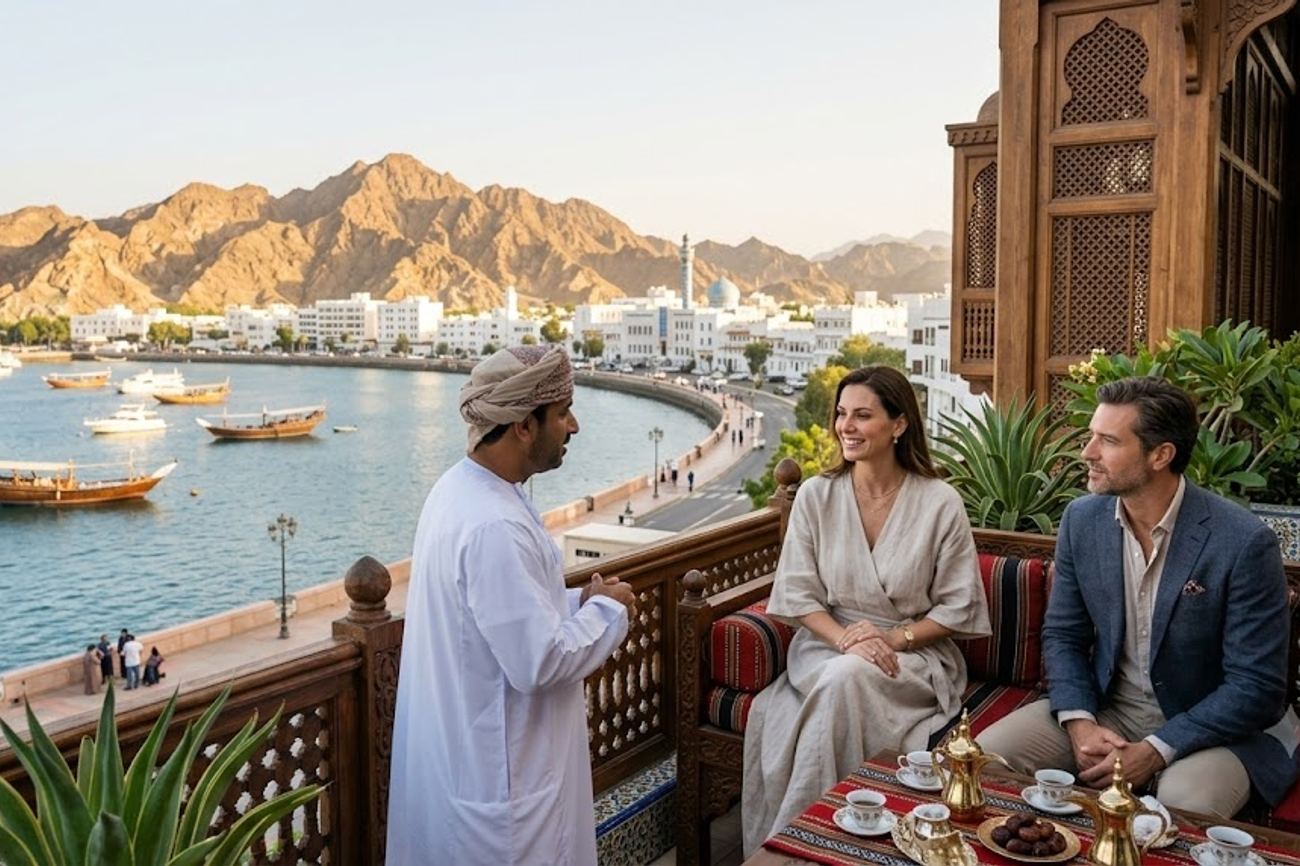
Image generated by AI
The global travel economy is witnessing a historic transformation across the Arabian Peninsula as regional governments abandon vanity arrival metrics to capture economic yield. The rapid evolution of Middle East tourism value marks a departure from chasing mass visitor volumes toward maximizing local expenditure, extending dwell times, and empowering domestic enterprises. With international spending projected to surge 57 per cent to 408 billion dollars by 2030, destinations are restructuring their visitor economies. Spearheaded by Oman through digital enablement of local suppliers alongside massive investments across Dubai, Abu Dhabi, and Saudi Arabia, the region is actively establishing an enduring sustainable blueprint.
The Macroeconomic Evolution: Moving From Footfall to Economic Yield
For decades, the standard benchmark of national tourism performance across emerging markets was measured almost exclusively by gross inbound arrivals. Tourism authorities celebrated border crossing headcounts, airport terminal volumes, and broad physical capacity milestones. While this volume-first development model allowed the Middle East to establish itself as a crossroads of international civil aviation and hospitality, it created structural economic limitations. Mass arrivals do not automatically generate high local economic retention, extended visitor stays, or equitable wealth distribution across domestic commercial ecosystems.
Regional destination managers and economic planners have initiated a coordinated pivot away from aggregate volume chasing toward the deliberate capture of long-term economic yield. Tourism growth is being re-evaluated through the lens of quality, operational resilience, and sustained in-destination value creation. Rather than asking how many foreign passports cross their frontiers, destinations are examining what travelers do after arrival, where their capital flows, how many nights they remain in-country, and whether domestic enterprises participate directly in the international visitor supply chain.
Empirical economic indicators underline the scale of this structural transition. Inbound visitor volumes across the Middle East, North Africa, and South Asia (MENASA) region surpassed pre-pandemic baselines by roughly 50 per cent in 2025, outpacing broader global travel expansion. By 2030, regional arrivals are projected to reach 316 million, supporting 2.3 billion visitor nights. Crucially, international traveler expenditure across the Middle East is forecast to expand by US$116 billion, or 57 per cent, between 2025 and 2030, culminating in an annual spend of US$408 billion. This outsized acceleration of financial yield relative to physical entries demonstrates an intentional recalibration of regional travel systems.
Metric 2025–2030 Forecast Projected Expenditure Surge +57% Incremental Spending US$116 billion Total Forecast Spend by 2030 US$408 billion Total Forecast International Arrivals by 2030 316 million travellers Total Forecast Visitor Nights 2.3 billion nights
This trajectory reflects deliberate policy shifts across the Gulf Cooperation Council (GCC) and the wider Levant. National diversification agendas—such as Saudi Arabia’s Vision 2030, Oman’s Vision 2040, and long-range economic master plans in the United Arab Emirates, Qatar, and Bahrain—treat tourism not as an isolated public-relations exercise, but as a primary engine for non-hydrocarbon GDP expansion, foreign exchange retention, and private sector employment. Achieving these objectives requires extracting higher gross value per visitor through enriched product offerings, digital distribution channels, and diversified local supply chains.
Dismantling Capital Leakage: The Modern Tourism Value Chain
The traditional tourism model in developing and emerging markets suffers from persistent capital leakage. When an international traveler purchases an all-inclusive package through a foreign tour operator, boards a foreign carrier, stays at an internationally franchised resort, and takes tours coordinated by multinational intermediaries, only a small fraction of the traveler’s total outlay remains within the destination economy. Local guides, artisanal producers, family-owned restaurants, and community transport operators are often relegated to informal, low-margin interactions.
The Middle East tourism industry is undergoing a significant shift, with a focus on high-value travel driving visitor spending in cities like Muscat. According to the Oman Ministry of Tourism, the country is investing heavily in infrastructure development to cater to the growing demand for luxury tourism. This includes the expansion of Muscat International Airport, which is expected to increase passenger capacity and enhance the overall travel experience.
To counter this structural deficit, Middle Eastern destinations are redesigning the regional tourism value chain. The emerging model replaces fragmented, manual booking channels with unified digital platforms that link every node of the visitor journey—from inspiration and air booking to on-the-ground experiential consumption.
Value Chain Node Legacy Volume Model Emerging Value-Driven Model Domestic Impact Discovery & Search Passive, generic overseas mass marketing AI-assisted personalization; predictive targeting Direct consumer engagement; niche interest matching Transaction & Booking Foreign wholesale aggregators; offshore OTAs National B2B platforms; open API connectivity Lower commission leakage; immediate local settlement Aviation & Arrival Pure hub-and-spoke transit passenger throughput Integrated stopover programs; seamless visas Conversion of transit flyers into overnight spenders
Passenger logistics are also being streamlined to facilitate the growth of high-value travel in the region. Emirates, one of the largest airlines in the Middle East, is offering personalized services and luxurious amenities to its premium passengers, as outlined on their official website Emirates. By providing a seamless and comfortable travel experience, airlines like Emirates are helping to drive visitor spending and boost the local economy. Accommodation Concentration in metropolitan luxury towers Verified short-stay rentals; eco-lodges; heritage stays Geographic dispersal of hospitality revenues Local Experiences Unregulated, ad-hoc, informal cash excursions Digitised, licensed, pre-bookable SME itineraries Direct domestic wealth capture; elevated standards Economic Retention High leakage to foreign corporate intermediaries Deep domestic multiplier effect across local SMEs Broad-based employment and regional economic growth
By converting unorganised local services into verified, bookable digital assets, national platforms enable domestic small and medium-sized enterprises (SMEs) to secure contracted revenue from global wholesalers and individual travelers. This architecture retains capital within the destination, driving local economic multipliers across transport, agriculture, retail, and regional hospitality.
Tourism insights suggest that the shift towards high-value travel is being driven by a growing demand for unique and authentic experiences. The Dubai Tourism board is promoting the city's rich cultural heritage and world-class amenities to attract high-end travelers, who are willing to spend more on exclusive experiences. By targeting this niche market, cities like Dubai and Muscat are able to drive visitor spending and establish themselves as premier tourist destinations in the region.
The Oman Benchmark: Digitising the National Tourism Supply Chain
The Sultanate of Oman provides a clear operational model for this value-driven transition. Rather than attempting to replicate the multi-billion-dollar urban theme parks or glittering skyscraper developments of its neighbors, Oman has engineered an asset-light, digitally orchestrated tourism ecosystem focused on authentic cultural heritage, nature-based adventure, and local enterprise empowerment.
At the core of this strategy sits Visit Oman, the digitally native national travel operator and a core subsidiary of the state-backed OMRAN Group. Over five years of phased infrastructure development, Visit Oman has established a comprehensive digital B2B booking ecosystem designed to eliminate transaction friction between international distributors and domestic suppliers. The platform holds International Air Transport Association (IATA) certification, provides direct Global Distribution System (GDS) connectivity, integrates with more than 85 international airlines, and maintains live inventory connectivity with more than 140 domestic hotels.
Metric Official Platform Reach Global Trade Partners Onboarded 390+ across 55+ countries Domestic Tourism Providers Connected 250+ (80% SMEs) Digitised Bespoke Tourism Services 350+ bookable products Airline Distribution Integrations 85+ carriers, including Oman Air & SalamAir Accommodation Live Inventory 140+ domestic hotels & licensed inns Global Market Syndication 170+ markets via AI-powered B2B2C hub
The defining mechanism of the Omani platform is supplier inclusion. The marketplace connects more than 250 local tourism providers directly to global trade partner
FAQ: Middle East Tourism Shifts From Mass Arr 2026
What's driving the shift in Middle East tourism? Luxury experiences and high-end amenities are attracting high-value travelers.
Which cities are leading the shift? Muscat, Dubai, and Abu Dhabi are driving visitor spending with upscale offerings.
What can travelers expect from high-value travel? Personalized services, unique experiences, and high-quality accommodations.
How will this shift impact traveler costs? Expect higher prices for luxury experiences, but also increased value and exclusivity.
Related Travel Guides
- BART Service Cuts Could Add 43 Minutes to California Journeys as Bay Area Traffic Pressure Mounts
- Africa Reshapes Tourism Corridors as Kigali and More Cities Unlock Secondary Heritage Hubs
- THE OZEN COLLECTION Is Now Unlocking New Luxury Tourism Opportunities Across Maldives And India With Sustainability
Disclaimer
This article is for informational and educational purposes only. It does not constitute legal, financial, or professional advice. While we strive to provide accurate and up-to-date information, travel policies, regulations, and conditions change rapidly. Always verify information with official sources before making travel decisions. Nomad Lawyer makes no representations about the accuracy, reliability, completeness, or suitability of the information provided. Readers should consult qualified professionals for advice specific to their circumstances. The views expressed in this article are those of the author and do not necessarily reflect the views of Nomad Lawyer.
Naina Thakur
Contributor & Travel Specialist
Travel enthusiast and legal writer covering visa regulations, responsible tourism, and cultural journeys across global destinations.
Learn more about our team →