
Middle East Aviation Disruption: Dubai, Cairo, and Riyadh Airports Face 871 Delays and 59 Cancellations in 2026

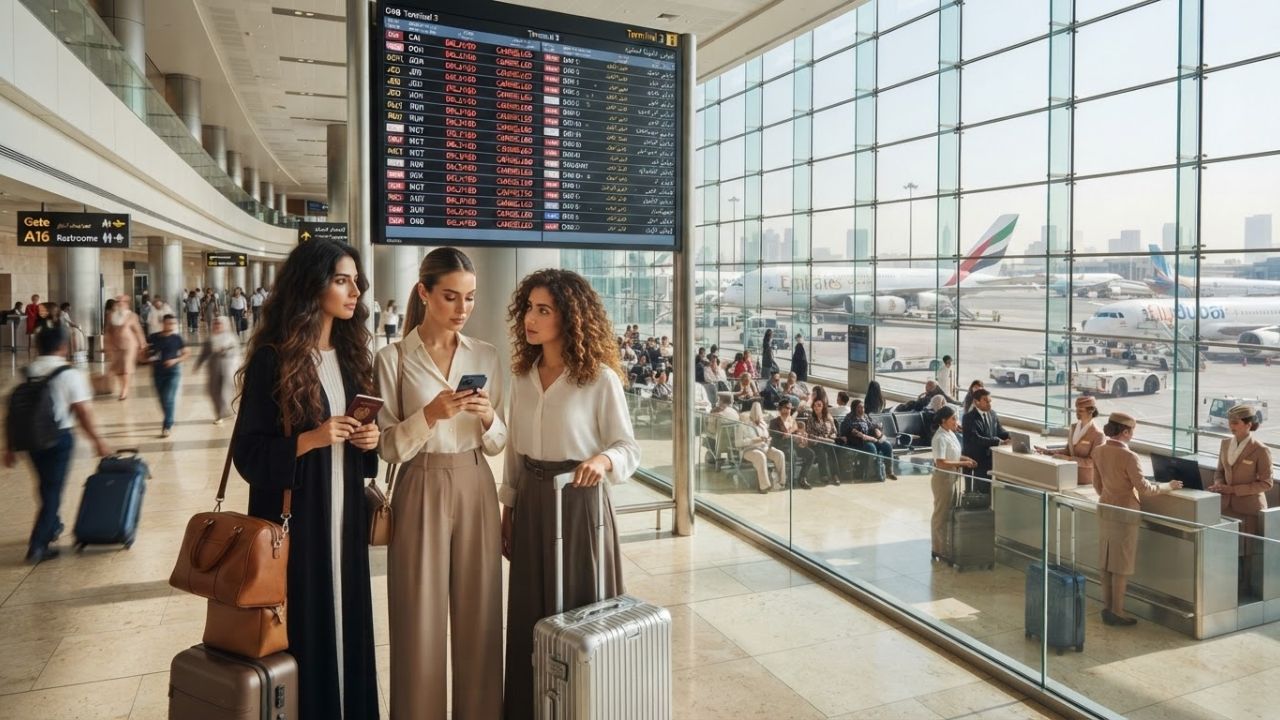
Transatlantic and regional air transit across the Middle East encountered severe operational friction on September 9, 2026, as 871 flight delays and 59 cancellations cascaded through premier international hubs in Egypt, Qatar, Oman, the United Arab Emirates, and Saudi Arabia. With primary transit gateways—including Dubai, Cairo, Riyadh, and Doha—experiencing compounding schedule adjustments that disrupted thousands of connecting passengers, regional carriers are activating contingency protocols to clear backlogs across congested airspace corridors.
Documented via real-time aviation intelligence recorded at 2:43 pm ET USA (12:13 am IST) through FlightAware, the operational bottleneck swept across Cairo International Airport (CAI), Hamad International Airport (DOH) in Doha, Muscat International Airport (MCT), Zayed International Airport (AUH) in Abu Dhabi, King Abdulaziz International Airport (JED) in Jeddah, Dubai International Airport (DXB), King Khalid International Airport (RUH) in Riyadh, Abha International Airport (AHB), and Gizan Regional Airport (GIZ). The acute disruption pattern highlights how tightly linked aircraft rotations and airspace capacity pressures in mega-hubs can swiftly ripple through global intercontinental itineraries.
Airspace Disruption Matrix: Tracking Hub-by-Hub Delays and Cancellations
The heaviest operational strain centered on the Persian Gulf and Red Sea corridors, where high-density flight operations collided with airport capacity thresholds and cascading arrival delays:
| Airport Hub | IATA Code | Flight Delays | Flight Cancellations | Primary Affected Carriers | Key Operational Metrics |
|---|---|---|---|---|---|
| Dubai International | DXB | 202 delays | 10 cancellations | Emirates (72), FlyDubai (69), SpiceJet, Saudia, Air France | 20% origin delay rate; 1% cancellation rate; 17% destination delay rate |
| Cairo International | CAI | 157 delays | 2 cancellations | EgyptAir (67 delays, 2 cancellations), Air Cairo (23), Nile Air (20) | Severe domestic and regional flight adjustments |
| Jeddah King Abdulaziz | JED | 134 delays | 11 cancellations | Saudia (42 delays, 8 cancellations), Flynas (17), Garuda Indonesia (2) | 16% origin delay rate; 1% cancellation rate; 16% destination delay rate |
| Doha Hamad International | DOH | 114 delays | 2 cancellations | Qatar Airways (95 delays), Pegasus Airlines (2 cancellations) | Heavy evening European and Asian departure bank delays |
| Riyadh King Khalid | RUH | 104 delays | 14 cancellations | Saudia (29 delays, 14 cancellations), Flynas (37), flyadeal (21) | Highest cancellations among hubs; 10% origin & 16% destination delay rates |
| Abu Dhabi Zayed Intl | AUH | 98 delays | 2 cancellations | Etihad Airways (81 delays), Oman Air (2 cancellations) | Concentrated delays on outbound European connections |
| Abha International | AHB | 37 delays | 8 cancellations | Saudia (8 delays, 8 cancellations), Flynas (15 delays) | 46% origin delay rate; 7% cancellation rate; 21% destination delay rate |
| Muscat International | MCT | 25 delays | 2 cancellations | Oman Air (10 delays, 2 cancellations), Air India Express (4 delays) | Regional feeder network adjustments |
| Gizan Regional | GIZ | — | 8 cancellations | Saudia (concentrated domestic flight cancellations) | Southern domestic transit restrictions |
Dubai International Airport registered the highest individual delay count across the region, logging 202 delayed flights alongside 10 outright cancellations. Home carrier Emirates absorbed 72 delayed departures, while regional partner FlyDubai recorded 69 delays. Foreign operators—including SpiceJet, Airblue, Air France, Saudia, and Air India Express—experienced extended ground holds.
In Saudi Arabia, Riyadh’s King Khalid International Airport recorded the region’s highest cancellation volume with 14 scrapped flights, all operated by national flag carrier Saudia, alongside 104 delays. In the southern highlands, Abha Airport experienced an acute localized disruption, posting a staggering 46% origin delay rate and a 7% cancellation rate.
Airline Impact: Pressure Points on Gulf and Regional Flag Carriers
The disruption fell disproportionately on six primary regional carriers that manage vast connecting networks linking Europe, Africa, North America, and the Asia-Pacific:
- Qatar Airways: Absorbed the heaviest delay tally of any single airline, recording 97 delayed flights, including 95 at its Doha hub and 2 at Muscat.
- Saudia: Suffered the highest overall operational impact, recording 88 delays and 39 cancellations across Gizan, Abha, Jeddah, Dubai, and Riyadh, with Riyadh alone accounting for 14 scrapped services.
- Etihad Airways: Registered 86 delays across the network, with 81 concentrated at its Abu Dhabi hub alongside secondary delays in Muscat and Riyadh.
- Flynas: Encountered 75 delays distributed across Riyadh (37), Cairo, Abha, and Jeddah.
- FlyDubai: Logged 75 delayed flights, with 69 clustered at Dubai International alongside disruptions in Doha and Abha.
- Emirates: Recorded 72 delayed departures at Dubai International, creating tight connections for westbound transatlantic and European travelers.
Operational experts indicate that Middle East aviation bottlenecks typically stem from compounding operational triggers: strict air traffic control sequencing through narrow regional flight corridors, high summer thermal headwinds affecting aircraft payload calculations, tight turnaround schedules where incoming aircraft arrive behind schedule, and international crew duty-time constraints.
Passenger Protection Rights and Carrier Obligations
When flight disruptions strike major Middle Eastern aviation hubs, understanding regulatory protections and carrier responsibilities is essential for safeguarding passenger interests.
In Saudi Arabia, consumer protections are governed by the General Authority of Civil Aviation (GACA) Passenger Rights Protection Regulations. Under GACA mandates, if an airline cancels a flight or delays departure by more than two hours, it must provide travelers with complimentary drinks and refreshments. If delays exceed six hours, or if a cancellation requires an overnight stay, carriers like Saudia and Flynas are legally required to provide complimentary hotel accommodations, airport ground transfers, and alternate booking options or full cash refunds.
In the United Arab Emirates, the UAE General Civil Aviation Authority (GCAA) oversees carrier obligations. Airlines operating out of Dubai and Abu Dhabi—such as Emirates and Etihad—maintain comprehensive customer service charters that offer complimentary rebooking on the next available flight, accommodation vouchers for transit passengers enduring unexpected overnight layovers exceeding eight hours (subject to eligibility rules), and lounge access or meal vouchers during extended gate delays.
Local Visitor Insider Tips: Layover Comfort, Rights, and Culinary Highlights
For travelers currently stranded or navigating tight connections through Middle Eastern transit hubs, these expert recommendations help mitigate transit stress:
- Minimum Connection Time (MCT) Buffering: When booking connections through massive hubs like Dubai (DXB) or Doha (DOH), never schedule transfers under two hours. At Dubai, moving between Terminal 2 (FlyDubai) and Terminal 3 (Emirates) requires inter-terminal shuttles and dedicated security re-screening that can consume up to 90 minutes during peak departure banks.
- Sanctuary and Rest Zones Inside Terminals: If faced with a prolonged delay, bypass crowded gate concourses for dedicated rest facilities:
- Dubai (DXB): Utilize the "sleep 'n fly" sleep lounges and sleep pods located in Concourse A, B, and C of Terminal 3, accessible via pay-per-use or Priority Pass.
- Doha (DOH): Unwind at "The Orchard," an expansive 6,000-square-meter indoor tropical garden located in the terminal extension, offering quiet relaxation benches beneath living trees and natural daylight.
- Abu Dhabi (AUH): Explore the modern relaxation pods and spa services within the newly opened Zayed International Airport midfield terminal.
- Terminal Dining Specialties: Instead of standard Western fast-food chains, explore authentic regional gastronomy within transit halls:
- Dubai: Sample crispy golden luqaimat (warm yeast fritters drizzled with sweet date syrup and toasted sesame seeds) paired with an iced cardamom camel milk latte.
- Cairo: Savor authentic Egyptian koshari (a comforting, carbohydrate-rich bowl of layered rice, lentils, macaroni, chickpeas, and spicy tomato-vinegar sauce topped with crispy fried onions) or sweet cream-filled fiteer pastry.
- Doha: Order fragrant Qatari machboos (spiced basmati rice served with tender marinated chicken, dried lime, and toasted pine nuts).
- Riyadh & Jeddah: Enjoy freshly brewed Saudi gahwa (lightly roasted golden coffee infused with cardamom and cloves), served with premium Madinah dates.
- Proactive Rebooking Tactics: If a flight is delayed and threatens an onward connection, do not wait in long customer service lines at the gate. Immediately open your airline’s mobile application to accept automated rebooking options, contact the airline's 24-hour overseas customer helpline via internet calling, or reach out to official airline social care desks on digital messaging channels, which frequently process re-routings faster than airport agents.
Sustainable Aviation and Fleet Modernization in the Middle East
Even as airlines manage day-to-day airspace congestion, Middle Eastern carriers are spearheading significant investments in sustainable fleet operations. Gulf operators are aggressively retiring older four-engine widebodies in favor of fuel-efficient twin-engine airliners like the Airbus A350-900, Airbus A350-1000, and Boeing 787-9 and 787-10 Dreamliners, which reduce carbon emissions per seat by up to 25% compared to previous-generation aircraft.
Simultaneously, major hubs are integrating clean energy infrastructure. Dubai Airports and Hamad International Airport have deployed large-scale rooftop solar photovoltaic arrays to power terminal ground operations, electrify ground-handling baggage fleets, and eliminate single-use plastics across terminal concessionaires, aligning airport resilience with long-term environmental sustainability.
Tourism Outlook: Resilient Middle East Aviation Navigates Complex Skies
The disruption affecting 871 flights across Dubai, Cairo, Jeddah, and Doha underscores the immense scale and operational sensitivity of Middle Eastern aviation. As the primary transit crossroads connecting east and west, the region's air transport network bears unmatched responsibility for global passenger movement.
With proactive regulatory enforcement under GACA and the UAE GCAA, paired with substantial airport infrastructure expansions in Abu Dhabi, Riyadh, and Doha, the Middle East's aviation sector continues to demonstrate exceptional operational elasticity. For international travelers navigating these dynamic skies in 2026, combining situational awareness, buffered connection times, and a clear understanding of passenger rights ensures a smooth, rewarding journey through the heart of the global transit network.
Related Travel Guides
- Revenue Rise: Portugal Tourism Generates Billions in Record First Half
- Japan Outpaces US to Lead European Tourism Search Surge in 2026
- Scientists Demand Antarctica Tourism Cap as Hantavirus Outbreak and Global Energy Crisis Redefine the Frozen Frontier: How Saudi Arabia and UAE Stability Anchors the $1.2 Billion Expedition Market Amid Strait of Hormuz Tensions
Disclaimer
This article is for informational and educational purposes only. It does not constitute legal, financial, or professional advice. While we strive to provide accurate and up-to-date information, travel policies, regulations, and conditions change rapidly. Always verify information with official sources before making travel decisions. Nomad Lawyer makes no representations about the accuracy, reliability, completeness, or suitability of the information provided. Readers should consult qualified professionals for advice specific to their circumstances. The views expressed in this article are those of the author and do not necessarily reflect the views of Nomad Lawyer.
Raushan Kumar
Founder & Lead Developer
Full-stack developer with 11+ years of experience and a passionate traveller. Raushan built Nomad Lawyer from the ground up with a vision to create the best travel and law experience on the web.
Learn more about our team →