
Middle East Aviation Disruption Alert: Over 1,617 Delays and 71 Cancellations Squeeze Dubai, Istanbul, and Cairo Hubs
Airspace rerouting and weather fronts trigger 1,617 delays and 71 cancellations across Dubai, Istanbul, Cairo, and Saudi hubs, disrupting global flight corridors.

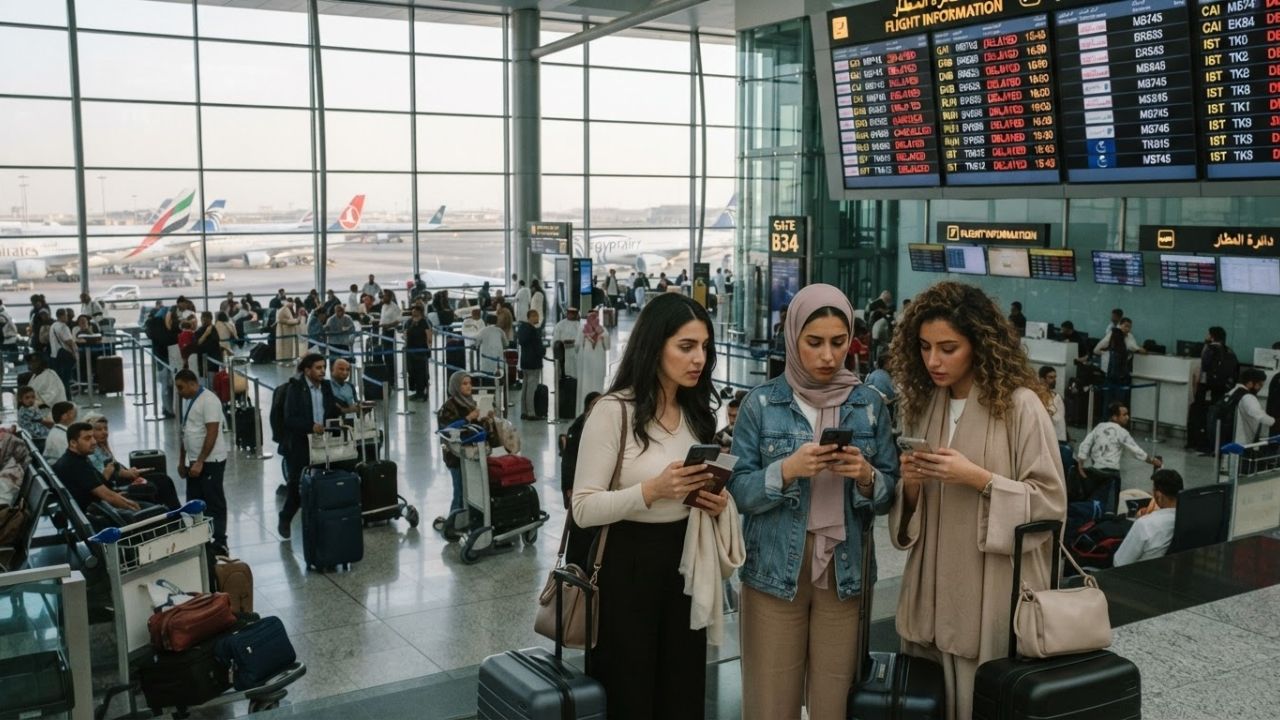
Image generated by AI
Driven by compounding geopolitical airspace closures, mandatory navigational detours, and sudden localized weather fronts, commercial aviation networks across the Middle East experienced intense operational bottlenecks on 3 September 2026, generating 1,617 flight delays and 71 cancellations across six nations.
Cross-Regional Corridor Closures and Capacity Pressures
Major transit gateways linking Europe, Asia, and Africa faced severe schedule disruptions on 3 September 2026. Verified real-time tracking data logged at 5:08 PM ET (4 September, 1:21 AM GST) documented a cumulative 1,617 flight delays and 71 outright cancellations, stranding thousands of international connecting passengers.
The disruption stems from three converging operational challenges:
- Forced Flight Path Rerouting: Restrictions over sensitive regional airspace corridors forced commercial jetliners onto narrow bypass routes through Egypt, the Red Sea, and the Caucasus, adding significant flight time and fuel burn to routine sectors.
- Cascading Rotation and Crew Misplacements: Extended flight durations caused aircraft to arrive late at primary super-hubs, triggering duty-hour timeouts for flight crews and ground gate gridlock during high-density connecting banks.
- Localized Convective Storms: Sharp localized dust and rain squalls in southern Saudi Arabia forced precautionary flight groundings at regional airfields.
[Middle East Aviation Disruption Snapshot: 3-4 September 2026]
• Total Flight Delays:         1,617 Flights Across 6 Nations
• Total Flight Cancellations:    71 Flights Across 6 Nations
• Most Delayed Hub:            Dubai International (DXB) - 319 Delays
• Most Cancelled Airport:       King Khalid International (RUH) - 14 Cancellations
• Highest Carrier Delay Count: Turkish Airlines (234 Delays)
• Highest Carrier Cancellation: Saudia (24 Cancellations)
| Airport Hub | Country | Scheduled Delays | Cancellations | Primary Operational Dynamic |
|---|---|---|---|---|
| Dubai International (DXB) | UAE | 319 | 6 | Dense connecting banks & airspace slot meters |
| Istanbul Airport (IST) | Turkey | 264 | 1 | Rerouted corridor bottlenecks & transit holds |
| Cairo International (CAI) | Egypt | 226 | 2 | Airspace funneling & regional arrival pacing |
| Istanbul Sabiha Gökçen (SAW) | Turkey | 201 | 5 | Point-to-point low-cost rotation delays |
| Abu Dhabi International (AUH) | UAE | 156 | 2 | Extended flight detours on westbound routes |
| King Abdulaziz International (JED) | Saudi Arabia | 130 | 12 | Domestic feeder delays & turnaround holds |
| King Khalid International (RUH) | Saudi Arabia | 109 | 14 | Highest single-airport cancellation count |
| Sharjah International (SHJ) | UAE | 81 | 2 | Budget carrier turnaround constraints |
| Kuwait International (KWI) | Kuwait | 56 | 1 | Northern Gulf corridor flow controls |
| King Fahd International (DMM) | Saudi Arabia | 37 | 2 | Eastern Province schedule realignments |
| Abha Regional (AHB) | Saudi Arabia | 20 | 10 | Convective mountain weather disruptions |
| Al Maktoum International (DWC) | UAE | 14 | 1 | Secondary charter & cargo schedule shifts |
| Gizan Regional (GIZ) | Saudi Arabia | 0 | 8 | Precautionary weather ground stops |
| Najran Domestic (EAM) | Saudi Arabia | 0 | 4 | Precautionary weather ground stops |
| Erbil International (EBL) | Iraq | 4 | 1 | Regional airspace metering holds |
Major Gateway Epicenters: Dubai, Istanbul, and Cairo
Disruption figures revealed acute passenger congestion across the Middle East's premier global transfer portals:
Dubai International (DXB): Europe-Asia Transit Under Pressure
As the world’s busiest international passenger hub, Dubai International absorbed the heaviest overall disruption volume, logging 319 delays and 6 cancellations. Flagship carrier Emirates recorded 178 delays (affecting 33% of its daily schedule) alongside one cancellation. Aircraft operating long-haul flights from Europe and North America arrived behind schedule due to fuel-heavy detour routings, creating ripple delays across connecting services to South Asia and Australasia. In the same emirate, Al Maktoum International (DWC) added 14 delays and one cancellation, while neighboring Sharjah International (SHJ) posted 81 delays and 2 cancellations.
The Istanbul Air Corridors: IST and SAW
At the crossroads of Europe and Asia, Istanbul’s dual gateways experienced high traffic density:
- Istanbul Airport (IST): Recorded 264 delays and one cancellation. Home carrier Turkish Airlines sustained the highest individual delay count among all regional operators, with 234 flights held back (13% of its total schedule) and one cancellation.
- Istanbul Sabiha Gökçen (SAW): On the city’s Asian side, low-cost operations registered 201 delays and 5 cancellations, heavily affecting regional point-to-point routes.
Cairo International (CAI): North African Crossroads
Serving as an essential alternative corridor for traffic bypassing closed airspaces, Cairo International processed 226 delays and 2 cancellations. National carrier EgyptAir recorded the highest schedule impact percentage among major regional airlines, with 108 flights delayed (representing 35% of its total operations) and two cancellations.
The Arabian Peninsula: Saudi Gateways and Kuwait
In Saudi Arabia, commercial aviation was tested across commercial and regional airports:
- Riyadh (RUH): King Khalid International Airport recorded 109 delays and 14 cancellations, marking the highest cancellation count of any single airport in the region.
- Jeddah (JED): King Abdulaziz International Airport logged 130 delays and 12 cancellations.
- Domestic Network Strain: Flag carrier Saudia canceled 24 flights (4% of its schedule) and delayed 85 flights. Low-cost operator Flynas posted 51 delays (15%) and two cancellations. Southern regional airfields experienced severe weather groundings, with Abha Regional suffering 10 cancellations, Gizan Regional logging eight cancellations, and Najran Domestic posting four cancellations despite recording zero flight delays.
- Kuwait International (KWI): Logged 56 delays and one cancellation, while King Fahd International (DMM) in Dammam registered 37 delays and two cancellations.
Essential Passenger Rights and Tactical Contingency Protocols
Travelers navigating flight delays and cancellations across Middle Eastern gateways should implement specific protective steps:
- Confirm Operational Status Before Leaving Hotels: Do not travel to crowded airport terminals like Dubai Terminal 3, Cairo Terminal 3, or Istanbul Main Terminal if your flight shows an active delay or cancellation. Terminal boarding gates and lounges are experiencing severe seating shortages.
- Leverage Fee-Free Airspace Waiver Policies: Airlines operating through rerouted sectors—including Emirates, Saudia, and Turkish Airlines—routinely enact flexible waiver policies during major airspace disruptions. Check your booking online to change departure dates or reroute via alternate hubs without paying fare differentials or change penalties.
- Exercise Statutory Duty of Care: Under aviation consumer protection frameworks administered by authorities like the UAE General Civil Aviation Authority (GCAA) and Saudi Arabia's General Authority of Civil Aviation (GACA), passengers experiencing delays beyond two to four hours are entitled to complimentary meal vouchers, refreshments, and communications. For mandatory overnight layovers, request airline-funded hotel accommodations and airport transfer vouchers directly at carrier service desks.
- Monitor Flight Numbers on Carrier Mobile Apps: Enable push notifications and SMS updates. Aircraft tail routing shifts frequently during airspace congestion, meaning boarding gates and departure times can change with minimal advance warning.
Local Insider Tips for Navigating Impacted Hubs
- At Dubai International (DXB): Rest in Airside Sleep Pods: If stranded on an extended layover in Terminal 3, avoid sleeping on concourse benches. Book an hourly private pod at sleep 'n fly (located in Concourses A, B, and C), or use an eligible credit card to access 24-hour Marhaba Lounges for showers and hot meals. If leaving the airport, take the direct Dubai Metro Red Line to reach Downtown Dubai in 25 minutes without highway taxi lines.
- At Jeddah (JED): Take the High-Speed Haramain Train: If your domestic flight between Jeddah and Medina or Mecca is disrupted, exit Terminal 1 and walk directly into the integrated Haramain High-Speed Railway station. Modern 300 km/h electric trains reach Mecca in 54 minutes and Medina in under two hours, bypassing regional flight cancellations entirely.
- At Istanbul (IST): Utilize YOTELAIR Transit Facilities: Istanbul Airport features YOTELAIR, one of the world’s largest airside transit hotels located directly inside the duty-free transit zone. If you hold a multi-hour international layover without a Turkish visa, reserve a day room airside without passing through border control.
- At Cairo (CAI): Arrange Pre-Booked Ground Transit: If stranded at Cairo International and heading to a hotel in Heliopolis or New Cairo, avoid unregulated terminal curbside solicitations. Head to the official Cairo Airport Shuttle Bus counter in the arrivals hall or request an official ride-hail via Uber from the designated terminal pickup deck.
Aviation Outlook: Geopolitical Resilience in Middle Eastern Skies
The 1,617 delays and 71 cancellations recorded across Middle Eastern hubs underscore the extraordinary strategic complexity of the region’s aviation infrastructure. As global long-haul carriers continue managing delicate airspace boundaries and volatile weather patterns, regional aviation ministries are prioritizing dynamic air-traffic management architectures, expanded tarmac parking facilities, and high-speed rail integration to keep global air corridors dependable and secure.
Frequently Asked Questions
How many flights were delayed and canceled across the Middle East on 3-4 September 2026?
Aviation monitoring records from FlightAware documented 1,617 delays and 71 cancellations across major transit hubs in the UAE, Saudi Arabia, Turkey, Egypt, Kuwait, and Iraq.
Which Middle Eastern airport recorded the highest number of flight delays?
Dubai International Airport (DXB) in the United Arab Emirates logged the highest individual delay count with 319 delayed flights, alongside six cancellations.
Which airport experienced the highest number of cancellations?
King Khalid International Airport (RUH) in Riyadh, Saudi Arabia, recorded 14 flight cancellations, the highest single-airport cancellation total in the region.
Which airline suffered the highest proportion of delayed flights?
EgyptAir experienced the highest delay percentage relative to its schedule, with 108 flights delayed (35% of its total operations), while Turkish Airlines logged the highest raw volume with 234 delays.
What primary factors caused these widespread Middle Eastern flight disruptions?
The disruptions were triggered by mandatory airspace rerouting around restricted regional corridors, extended flight durations causing crew duty-time expirations, high terminal congestion during connecting banks, and localized weather squalls.
Related Travel Guides
Disclaimer
This article is for informational and educational purposes only. It does not constitute legal, financial, or professional advice. While we strive to provide accurate and up-to-date information, travel policies, regulations, and conditions change rapidly. Always verify information with official sources before making travel decisions. Nomad Lawyer makes no representations about the accuracy, reliability, completeness, or suitability of the information provided. Readers should consult qualified professionals for advice specific to their circumstances. The views expressed in this article are those of the author and do not necessarily reflect the views of Nomad Lawyer.
Raushan Kumar
Founder & Lead Developer
Full-stack developer with 11+ years of experience and a passionate traveller. Raushan built Nomad Lawyer from the ground up with a vision to create the best travel and law experience on the web.
Learn more about our team →