
Middle East Gulf Aviation Network Faces Flight Delays and Cancellations
Gulf airports experience flight disruptions, with FlightAware recording 752 delays and 18 cancellations across Dubai, Doha, Riyadh, and Sharjah.

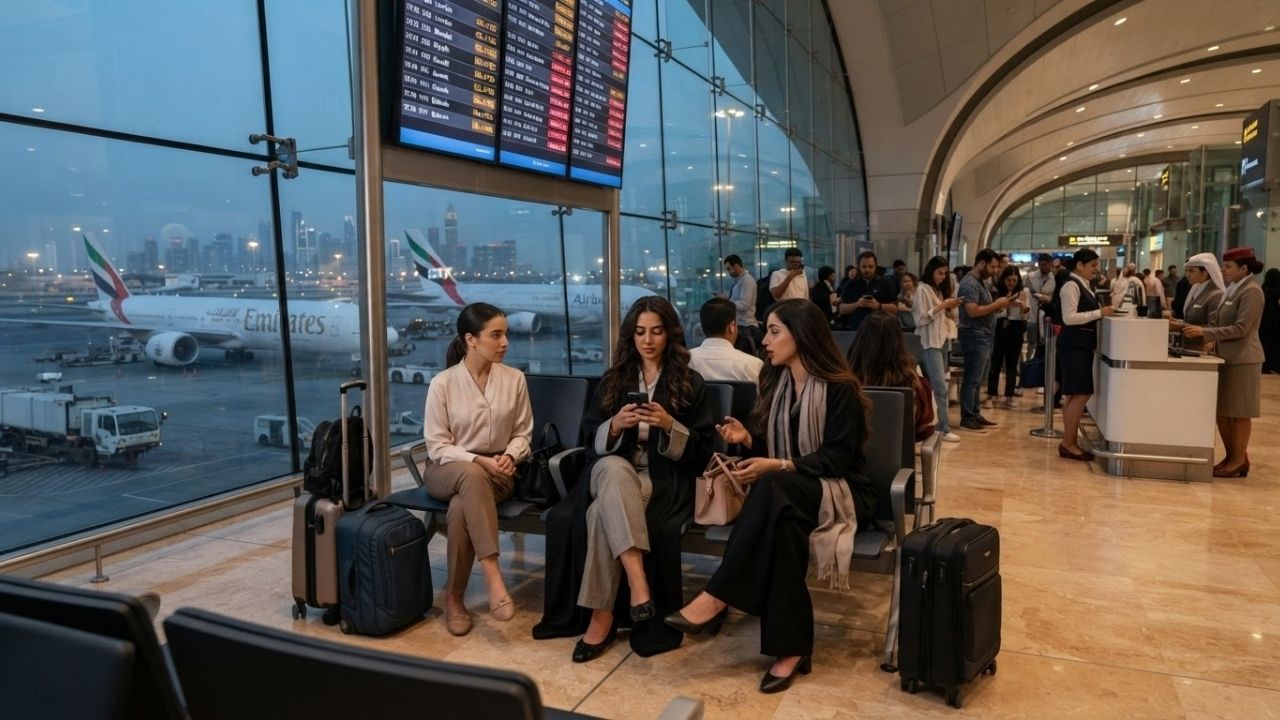
Image generated by AI
Middle East aviation networks experienced significant flight disruptions on August 28, 2026, with FlightAware recording 752 delays and 18 cancellations across Gulf gateways. Accounting for nearly half of all regional disruptions, Dubai International Airport led the schedule changes with 368 delays and 7 cancellations.
The Local Trend Revealed
Gulf transit hubs are facing increased operational pressure as high passenger volumes connect through major international transit banks. Monitored by the Dubai Civil Aviation Authority (DCAA), the Qatar Civil Aviation Authority (QCAA), and Saudi Arabia's General Authority of Civil Aviation (GACA), these airport and airline disruption statistics outline the impact recorded at 4:59 pm ET:
- Disruption Counts by Airport:
- Dubai International (DXB): 368 delays and 7 cancellations.
- Hamad International (DOH): 143 delays and 1 cancellation.
- King Khalid Riyadh (RUH): 90 delays and 2 cancellations.
- Sharjah International (SHJ): 87 delays and 5 cancellations.
- Kuwait International (KWI): 48 delays and 1 cancellation.
- Abha Regional (AHB): 16 delays and 2 cancellations.
- Airline Delay and Cancellation Records:
- FlyDubai: 118 delays and 4 cancellations.
- Air Arabia: 67 delays and 5 cancellations (highest cancellation count among listed carriers).
- Saudia: 56 delays and 2 cancellations.
Local Community & Environmental Value
For the traveler, the real benefit of supporting green local transport is protecting resident communities. Choosing to dine at family-run souk eateries (like those in Dubai's spice and gold souks) and purchasing traditional handwoven textiles directly from local craftsmen ensures that tourism revenue directly benefits resident families.
Environmental protection is advanced by choosing sustainable urban transit networks. Passengers transiting through Dubai can utilize the fully automated, driverless Dubai Metro for airport transfers, significantly reducing urban carbon emissions compared to private taxi transfers. Supporting carbon offsetting programs that fund desert ecosystem preservation supports regional sustainability, satisfying guidelines monitored by local tourism departments.
Visitor Insider Tips for Gulf Airport Transit
Travel and transit specialists recommend the following practices when traveling through Middle Eastern hubs:
- Access Free Airport Showers: If delayed or transiting at Dubai International (DXB), use the free public shower facilities located in Terminal 3 (between gates A1-A24 and B13-B19) to refresh.
- Rent Private Sleep Pods: For long layovers, utilize the sleep pods (SnoozeCube) located in Terminal 1 Concourse D, which offer private cabin rentals by the hour.
- Observe the Off-Peak Window: Visit the Gulf region during the cooler winter months of November to March. Temperatures are comfortable (18°C to 25°C), avoiding the extreme summer heat of May to September (frequently exceeding 45°C) and high humidity.
- Sample Regional Culinary Specialties:
- In Dubai: Try a plate of Machboos (spiced rice with meat) or sample Luqaimat (sweet fried dough balls drizzled with date syrup).
- In Doha: Sip a cup of warm, cardamom-scented Karak Chai at airport dining outlets.
- Observe Local Customs: Dress modestly when visiting public places in the Gulf (shoulders and knees covered). During business interactions, accept tea or coffee with your right hand. Tipping is not mandatory, but 10 to 15 percent at sit-down restaurants is standard for good service.
- Explore Under-the-Radar Escapes: If stuck on an extended connection in Dubai, take the metro to the Al Fahidi Historical Neighbourhood (Bastakiya) in Bur Dubai. Explore its sand-colored wind-tower buildings, narrow walkways, and traditional art galleries.
Tourism Outlook
The long-term impact of rising transit delays at Gulf gateways is the acceleration of digitizing baggage and transit flows. By introducing automated passenger routing systems and real-time aircraft rotation tracking, airport authorities in Dubai and Doha aim to minimize connection failures during peak schedule banks, safeguarding the region's position as a primary global connection hub.
FAQ: Middle East Flight Disruptions
How many total flights were delayed and canceled across the Middle East? Gulf airports recorded a combined total of 752 delays and 18 cancellations on August 28, 2026, as logged by FlightAware. Note that the source title also cites 52 delays as an alternate record.
Which Gulf airport recorded the highest flight delays? Dubai International Airport (DXB) recorded the highest delays in the region, with 368 delays and 7 cancellations.
Which airline experienced the most flight cancellations? Air Arabia recorded the highest airline cancellations in the region, logging 67 delays and 5 cancellations.
What is the best time of year to travel to the Gulf region? The winter months of November to March are the best time to visit, featuring mild weather (18°C to 25°C) and comfortable conditions.
Related Travel Guides
Disclaimer
This article is for informational and educational purposes only. It does not constitute legal, financial, or professional advice. While we strive to provide accurate and up-to-date information, travel policies, regulations, and conditions change rapidly. Always verify information with official sources before making travel decisions. Nomad Lawyer makes no representations about the accuracy, reliability, completeness, or suitability of the information provided. Readers should consult qualified professionals for advice specific to their circumstances. The views expressed in this article are those of the author and do not necessarily reflect the views of Nomad Lawyer.
Raushan Kumar
Founder & Lead Developer
Full-stack developer with 11+ years of experience and a passionate traveller. Raushan built Nomad Lawyer from the ground up with a vision to create the best travel and law experience on the web.
Learn more about our team →