
Middle East Aviation Crisis 2026: 811 Flight Delays and 196 Cancellations Hit Gulf Hubs
Major Middle East aviation hubs face severe operational strain with 811 delays and 196 cancellations as geopolitical tensions involving Iran, the US, and Israel disrupt Gulf airspace.

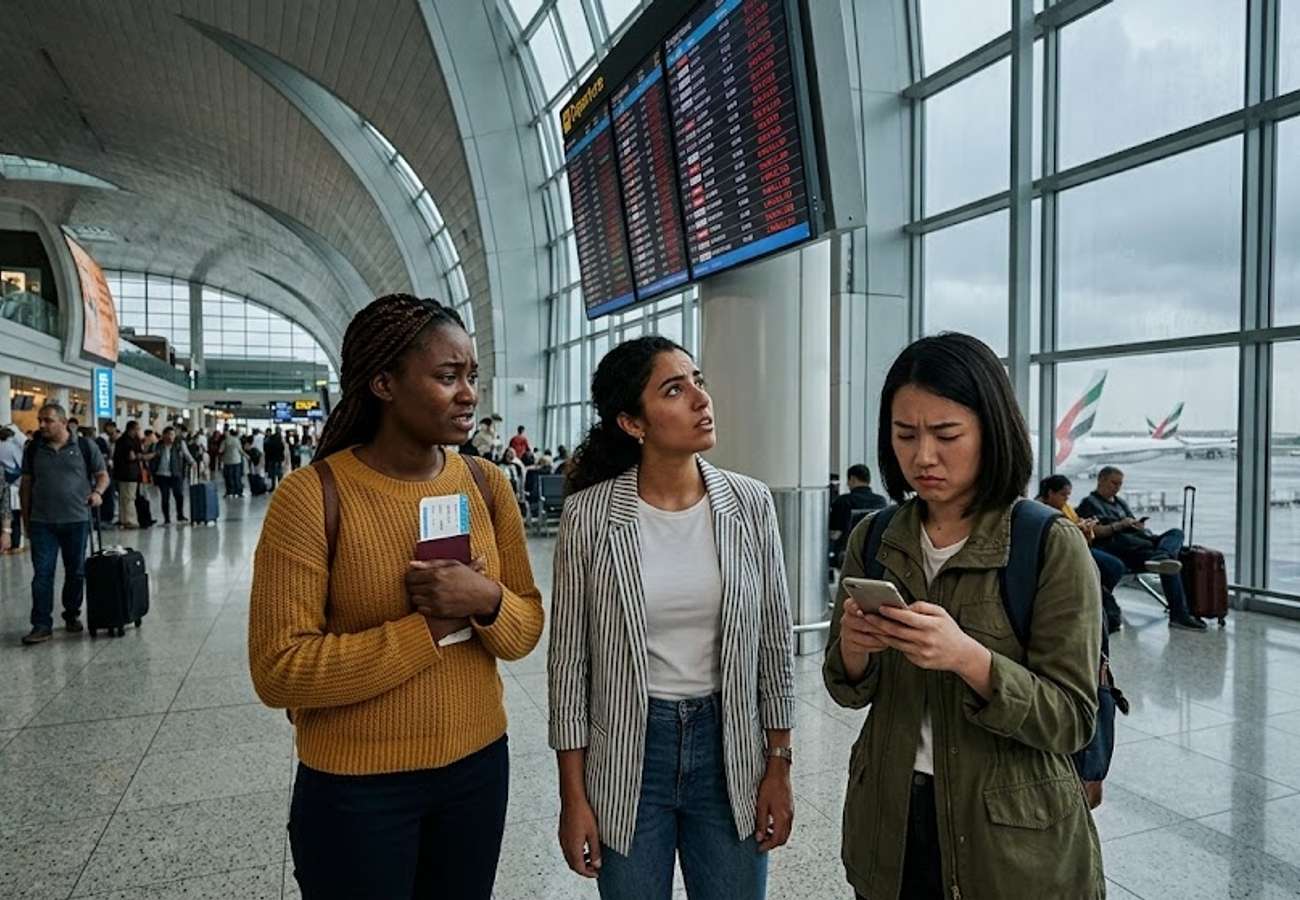
Image generated by AI
Operational instability has surged across the Middle East, resulting in 811 delays and 196 flight cancellations. Major aviation hubs in the UAE, Qatar, and Saudi Arabia are currently under extreme pressure due to a combination of logistical failures and escalating regional security threats.
The disruption is centered on the world's most critical transit corridors connecting Asia, Europe, and North America. Data indicates that the instability is not merely operational but is tied to heightened military tensions involving Iran, the United States, and Israel. Reports of missile and drone exchanges have forced airlines to reassess airspace safety, leading to immediate route adjustments and service suspensions.
Regional security has further deteriorated following reported retaliatory actions by Tehran against US-linked facilities in Bahrain and Kuwait. Simultaneously, Houthi attacks in the Red Sea have prompted United Nations warnings of a wider conflict, directly impacting crew planning, aircraft movements, and overall passenger confidence.
Regional Operational Impact Breakdown
The scale of the disruption varies by hub, with the UAE experiencing the most concentrated volume of delays.
- Dubai International Airport: Recorded 164 delays and 21 cancellations.
- Abu Dhabi International Airport: Recorded 150 delays and 8 cancellations.
- Hamad International Airport (Doha): Recorded 137 delays and 4 cancellations.
- Sharjah International Airport: Recorded 81 delays and 10 cancellations.
- King Khalid International Airport (Riyadh): Recorded 68 delays and 29 cancellations.
- King Abdulaziz International Airport (Jeddah): Recorded 54 delays and 28 cancellations.
Smaller regional airports have also seen significant cancellation spikes, specifically Gizan Regional Airport (34 cancellations) and Najran Domestic Airport (21 cancellations).
Airline Performance and Disruption Metrics
The operational strain is evident in the performance data of the region's primary carriers. Etihad Airways and Air Arabia have seen a disproportionate number of their scheduled flights impacted by delays.
| Airline | Delays | Cancellations | Key Metric |
|---|---|---|---|
| Etihad Airways | 126 | 8 | 38% of operations delayed |
| Emirates | 84 | 15 | High volume transit impact |
| Air Arabia | 73 | 10 | 29% delay rate |
| Saudia | 32 | 42 | Highest total cancellations |
| Flynas | 37 | 7 | Moderate disruption |
| flyadeal | 11 | 6 | Low-cost carrier impact |
| Royal Jordanian | 14 | 8 | Regional transit strain |
| Pakistan Intl Airlines | 14 | 4 | External hub impact |
Additional disruptions were noted at Queen Alia International (38 delays, 8 cancellations), Bahrain International (30 delays, 8 cancellations), Erbil International (6 delays, 15 cancellations), Islamabad International (26 delays, 6 cancellations), and Ankara Esenboğa (57 delays, 4 cancellations).
Why This Matters: Industry Analysis
From a logistical perspective, the concentration of these disruptions in "super-hubs" like Dubai and Doha creates a massive ripple effect. Because these airports serve as the primary connective tissue for global east-west travel, a delay in Dubai does not just affect UAE travelers; it disrupts schedules in London, New York, and Singapore.
Our analysis of the flight data indicates a shift from routine operational delays to "security-driven" volatility. When airlines like Etihad experience a 38% delay rate, it suggests that flight planning is being reactive rather than proactive. For travelers, this means the "buffer time" usually allocated for connections is no longer sufficient.
Furthermore, the high cancellation rate for Saudia (42) compared to the UAE carriers suggests that Saudi Arabian airspace may be facing more stringent security restrictions or more aggressive scheduling pivots in response to the geopolitical climate.
Forward Outlook
Expect continued volatility in the Gulf corridor through the remainder of the quarter. Airspace management will likely remain restrictive as long as drone and missile tensions persist. Passengers should anticipate:
- Dynamic Rerouting: Increased frequency of flight path changes to avoid high-risk zones.
- Extended Connection Windows: A necessity for those transiting through Hamad or Dubai International.
- Capacity Shifts: Potential reductions in frequency for regional routes in Saudi Arabia and Jordan.
Travelers are urged to verify flight status via real-time carrier channels before departing for the airport.
Related Travel Guides
Disclaimer
This article is for informational and educational purposes only. It does not constitute legal, financial, or professional advice. While we strive to provide accurate and up-to-date information, travel policies, regulations, and conditions change rapidly. Always verify information with official sources before making travel decisions. Nomad Lawyer makes no representations about the accuracy, reliability, completeness, or suitability of the information provided. Readers should consult qualified professionals for advice specific to their circumstances. The views expressed in this article are those of the author and do not necessarily reflect the views of Nomad Lawyer.
Raushan Kumar
Founder & Lead Developer
Full-stack developer with 11+ years of experience and a passionate traveller. Raushan built Nomad Lawyer from the ground up with a vision to create the best travel and law experience on the web.
Learn more about our team →