
Middle East Aviation Crisis 2026: 527 Flight Disruptions Hit Saudi Arabia, Jordan and Gulf Hubs
Regional instability triggers 434 delays and 93 cancellations across major Middle East airports, with Saudi Arabia's Riyadh and Jeddah hubs facing the most severe operational pressure.

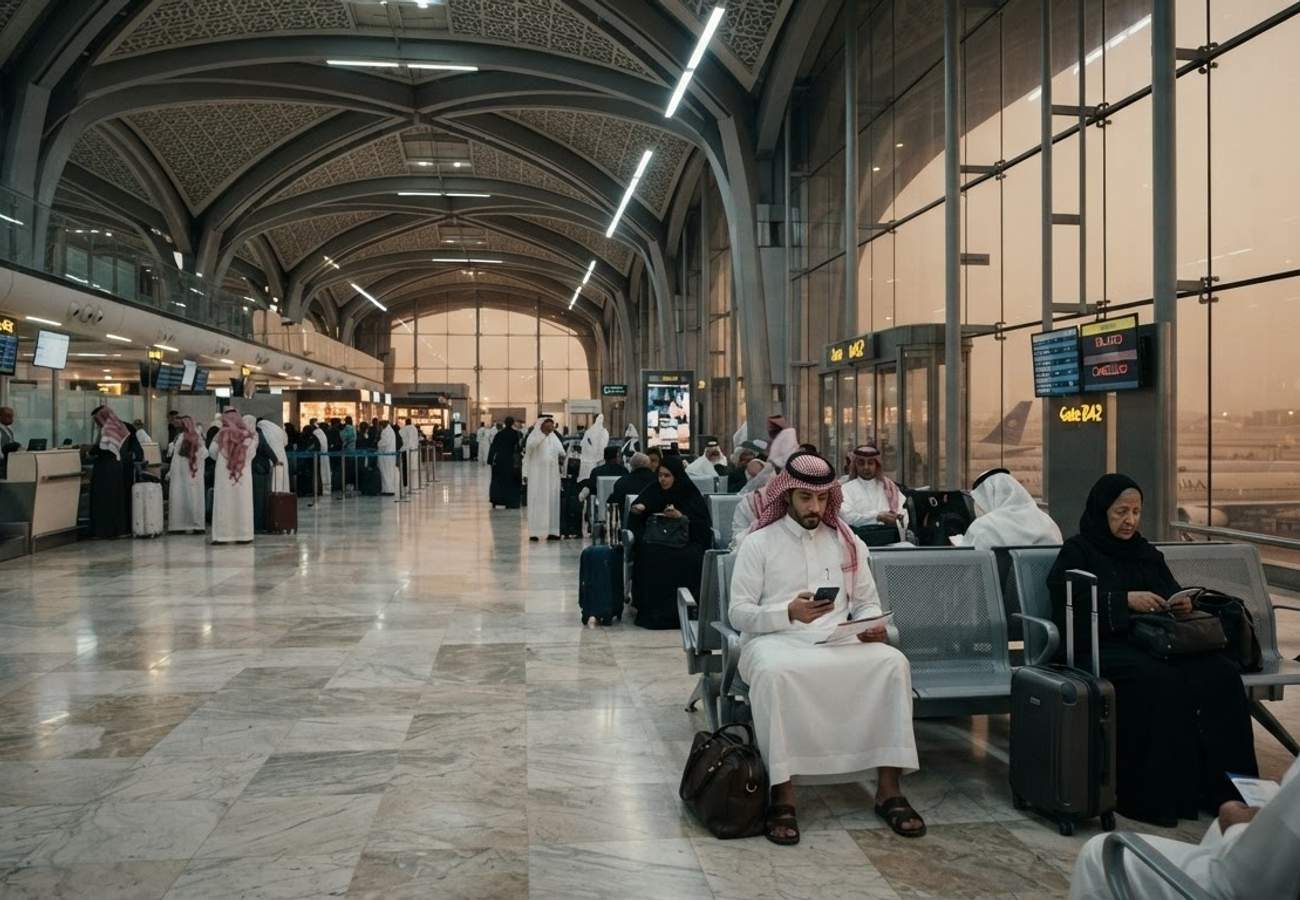
Image generated by AI
Regional geopolitical instability has triggered widespread operational failure across Gulf aviation networks, resulting in 434 delays and 93 cancellations. Saudi Arabia’s primary hubs are currently the epicenter of the disruption, impacting hundreds of international and domestic passengers.
The Middle East aviation sector is currently grappling with significant systemic pressure. Recent operational data confirms 527 total disruptions across airports in Saudi Arabia, Bahrain, Kuwait, Iraq, and Jordan. These disruptions are directly linked to heightened security concerns, including Houthi movement activities in Yemen and ongoing geopolitical friction surrounding the Strait of Hormuz.
The volatility has forced major carriers—including Saudia, Royal Jordanian, and Iran National Airlines—to adjust schedules rapidly. Because Gulf airports function as the primary transit bridge between Europe, Asia, and Africa, these localized failures are creating a ripple effect across global flight paths.
Regional Impact Breakdown
Saudi Arabia has emerged as the most severely impacted market. The concentration of delays in the Kingdom suggests a systemic struggle to maintain schedules amidst shifting security protocols.
- King Khalid International Airport (Riyadh): The region's most disrupted hub with 160 delays and 27 cancellations.
- King Abdulaziz International Airport (Jeddah): Recorded 141 delays and 18 cancellations, impacting religious tourism and international transit.
- Abha Regional Airport: Reported 23 delays and 7 cancellations.
- Gizan Regional Airport: 22 cancellations (zero delays reported).
- Najran Domestic Airport: 8 cancellations (zero delays reported).
Outside of Saudi Arabia, the disruption extends to other key regional gateways:
- Queen Alia International Airport (Amman): 52 delays and 3 cancellations.
- Bahrain International Airport: 31 delays and 4 cancellations.
- Kuwait International Airport: 24 delays and 2 cancellations.
- Al Najaf International Airport (Iraq): 3 delays and 2 cancellations.
Carrier Performance and Operational Loss
The data indicates that both full-service national carriers and low-cost carriers (LCCs) are struggling, though LCCs are showing higher percentage-based delay rates due to tighter aircraft rotation schedules.
Flight Disruption Statistics by Airline
| Airline | Cancellations | Cancellation % | Delays | Delay % |
|---|---|---|---|---|
| Saudia | 37 | 6% | 78 | 13% |
| flyadeal | 7 | 2% | 65 | 25% |
| Air Arabia | 9 | 3% | 59 | 23% |
| Royal Jordanian | 3 | 2% | 26 | 17% |
| Iran National Airlines | 2 | 6% | 2 | 6% |
Geopolitical Drivers of Aviation Instability
The current operational collapse is not a result of technical failure but of external security pressures. Two primary catalysts are driving these changes:
- The Strait of Hormuz: While Iran and Oman have reported progress toward an agreement regarding shipping routes, the lack of a finalized implementation keeps aviation authorities on high alert.
- Yemen Conflict: Reported Houthi missile and drone attacks targeting Saudi-backed forces and shipping in the Red Sea have necessitated immediate safety assessments and schedule adjustments for aircraft operating in adjacent airspace.
For passengers, this means longer operational planning cycles for airlines and a higher probability of "tactical" cancellations to ensure safety.
Analysis: Why This Matters
From a logistical perspective, the concentration of disruptions in Riyadh and Jeddah is particularly damaging. These are not merely airports but critical nodes for the Hajj and Umrah pilgrimages and the Saudi "Vision 2030" business expansion. When King Khalid International Airport sees 160 delays, it creates a bottleneck that affects every connecting flight into the GCC.
Our analysis of the data suggests that low-cost carriers like flyadeal are disproportionately affected by delays (25%) compared to their cancellation rates (2%). This is a classic symptom of "cascading delays," where a single aircraft's late arrival disrupts the entire day's rotation because LCCs operate with minimal buffer time between flights.
For travelers on these routes, the real impact is a total loss of predictability. The shift from "scheduled" to "contingent" travel means that connecting windows of two hours are no longer sufficient.
Forward Outlook
The recovery of Middle East flight schedules is entirely dependent on the stabilization of the Red Sea and the Strait of Hormuz. Until a formal security agreement is ratified, passengers should expect:
- Increased Buffer Times: A necessary shift in booking habits to allow for 4-6 hour connection windows.
- Dynamic Scheduling: Airlines may continue to consolidate flights to maintain efficiency, leading to higher load factors and fewer flight options.
- Insurance Necessity: A critical requirement for comprehensive travel insurance covering "political unrest" or "security-related" cancellations.
The region's aviation hubs remain the world's most efficient, but they are currently operating in a high-risk environment where geopolitics dictate the flight board.
Related Travel Guides
Disclaimer
This article is for informational and educational purposes only. It does not constitute legal, financial, or professional advice. While we strive to provide accurate and up-to-date information, travel policies, regulations, and conditions change rapidly. Always verify information with official sources before making travel decisions. Nomad Lawyer makes no representations about the accuracy, reliability, completeness, or suitability of the information provided. Readers should consult qualified professionals for advice specific to their circumstances. The views expressed in this article are those of the author and do not necessarily reflect the views of Nomad Lawyer.
Preeti Gunjan
Contributor & Community Manager
A passionate traveller and community builder. Preeti helps grow the Nomad Lawyer community, fostering engagement and bringing the reader experience to life.
Learn more about our team →