
Michigan’s Crosswinds Marsh Offers Wildlife Trails And A Peaceful Nature Escape Near Detroit
Michigan’s Crosswinds Marsh Offers Wildlife Trails And A Peaceful Nature Escape Near Detroit

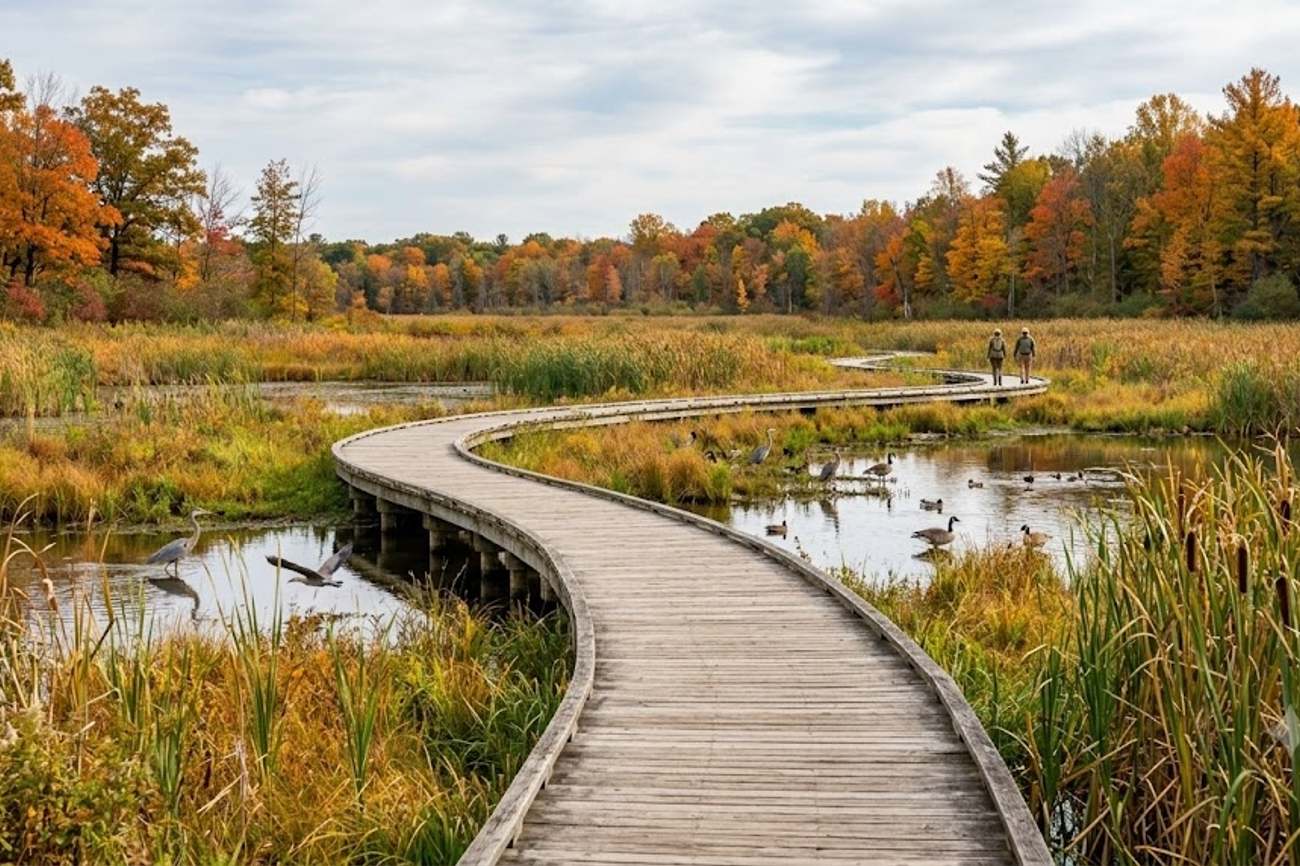
Image generated by AI
[New Boston, May 2024] — Crosswinds Marsh has emerged as a critical conservation hub in Wayne County, transforming over 1,000 acres of restored wetlands into a premier wildlife sanctuary and nature tourism destination.
The site serves as a primary environmental mitigation zone linked to the expansion of the Detroit Metropolitan Airport (DTW), effectively balancing aviation infrastructure growth with ecological preservation. Located in southeastern Michigan, the preserve now functions as a sanctuary for migratory birds and endangered species, offering a structured outdoor escape for travelers visiting the Detroit metropolitan area.
The Airport Expansion Trigger
The creation of Crosswinds Marsh was not an organic development but a mandatory response to the environmental disruptions caused by the expansion of Detroit Metropolitan Airport during the 1990s. To offset the loss of natural habitats resulting from runway and terminal growth, the project focused on the large-scale restoration of wetland ecosystems and the strategic relocation of endangered species.
This mitigation strategy shifted the land from industrial or undeveloped states into a managed conservation area. While the primary goal was ecological stability rather than tourism, the success of the habitat restoration has turned the site into a significant draw for nature-focused travel. The preserve is managed to ensure that public recreation does not compromise the biological integrity of the restored lands.
Impacted Markets and Visitor Access
The preserve attracts a specific demographic of travelers—primarily birdwatchers, eco-tourists, and short-stay visitors from nearby urban centers. The site is strategically positioned for those staying in hotels near the airport or visiting from Detroit and Toledo.
The following trail systems define the visitor experience:
| Trail Name | Reported Length | Primary Experience |
|---|---|---|
| Bald Eagle Trail | 1.8 miles | Woodland scenery and apex predator observation |
| Woodpecker Trail Loop | 0.5 miles | High-efficiency nature walk |
| Equestrian Trail | 4.5 miles | Long-distance exploration and horseback riding |
Access to the site is reported as dawn-to-dusk year-round, though certain conservation zones remain restricted to the general public to protect sensitive nesting grounds.
Practical Traveler Advisory and Strategic Insights
For those booking trips to the Detroit region, Crosswinds Marsh provides a high-value, low-cost alternative to urban sightseeing. However, the "conservation-first" mandate means strict behavioral guidelines are in place.
The Practical Impact:
- Strict Transit Rules: Travelers cannot bring bicycles or motorized vehicles onto any trail. If you are planning a cycling trip, this destination is not compatible.
- Water Access Bans: Unlike many Michigan wetlands, boats, kayaks, and canoes are strictly prohibited within the marsh to prevent habitat degradation.
- Limited Fishing: Angling is not permitted throughout the preserve; it is restricted exclusively to designated areas near the entrance.
- Observation Etiquette: Due to the presence of nesting bald eagles, visitors are required to maintain a respectful distance. Interference with wildlife can lead to site restrictions.
Ecological Recovery and Wildlife Metrics
The success of the Michigan Department of Natural Resources style conservation efforts is evident in the biodiversity metrics recorded at the site. The marsh has become a vital waypoint for avian migration in the Great Lakes region.
Avian Data: Approximately 240 bird species have been documented at the marsh via eBird submissions. The site is most famous for its resident pair of bald eagles, which have returned annually since the preserve's inception. Seasonal visitors can expect to see:
- Spring/Summer: Wrens, vireos, flycatchers, and cuckoos.
- Winter: Various gull species and cold-weather waterfowl.
- Year-Round: Sandhill cranes and swans.
Mammalian and Insect Recovery: The site has seen the return of over 40 mammal species. Most notably, beavers—which had been absent from Wayne County for several decades—have successfully recolonized the area following the habitat restoration. Other frequent sightings include muskrats, coyotes, foxes, and deer. Additionally, the site features a dedicated wildflower garden and a "bee hotel" specifically designed to bolster wild pollinator populations.
Crosswinds Marsh, located near Detroit, offers an escape from the city's hustle and bustle with its serene wildlife trails and picturesque landscapes. For more information on planning a visit, including accommodations and activities, travelers can check the Michigan Department of Natural Resources website for official details and guidelines. This resource provides valuable insights into the state's natural attractions and helps visitors make the most of their trip.
Logistics and Regional Connectivity
Crosswinds Marsh is positioned as a convenient day-trip destination for those navigating the Detroit-Toledo corridor. Its proximity to major transport hubs makes it an accessible "green lung" for international travelers landing at DTW.
Travel Distance Matrix:
- From Detroit: Approximately 40 miles.
- From Toledo: Approximately 40 miles.
- From Detroit Metropolitan Airport: Approximately 30 minutes by car.
Visitors are advised that travel times fluctuate based on regional traffic conditions, particularly around the airport corridor. Because the site is open from dawn to dusk, the most productive hours for wildlife observation are typically the early morning windows.
FAQ: Crosswinds Marsh 2024
Can I bring my dog or bike to Crosswinds Marsh? Bicycles and motorized vehicles are strictly prohibited on all trails to protect the ecosystem. While walking is encouraged, visitors should stay on designated boardwalks and trails to avoid disturbing the marsh floor.
Is there a fee to enter the preserve? The source indicates the site is open for public exploration from dawn to dusk; however, visitors should check current Wayne County park regulations for any updated parking or entry requirements.
What is the best time of year for birdwatching? While the site is a year-round destination, the warmer months are peak times for songbirds (vireos, flycatchers), while winter offers sightings of gulls and waterfowl. The Bald Eagle Trail is a primary draw for eagle sightings.
Are there facilities for overnight stays at the marsh? No. Crosswinds Marsh is a day-trip destination. Travelers are encouraged to utilize hotels in the vicinity of the Detroit Metropolitan Airport or within the city of Detroit.
A rare example of aviation infrastructure fueling ecological rebirth.
Related Travel Guides
- Thailand Rewards Repeat Tourists With Faster Entry as Suvarnabhumi Opens New E-Gates
- Capella Sydney Elevates Australia’s Luxury Hotel Market as Boutique Retreats and Michelin Keys Transform Premium Tourism
- China Follows Australia and More as AI Unlocks New Holiday Ideas and Transforms How Travellers Explore the World
Disclaimer
This article is for informational and educational purposes only. It does not constitute legal, financial, or professional advice. While we strive to provide accurate and up-to-date information, travel policies, regulations, and conditions change rapidly. Always verify information with official sources before making travel decisions. Nomad Lawyer makes no representations about the accuracy, reliability, completeness, or suitability of the information provided. Readers should consult qualified professionals for advice specific to their circumstances. The views expressed in this article are those of the author and do not necessarily reflect the views of Nomad Lawyer.
Raushan Kumar
Founder & Lead Developer
Full-stack developer with 11+ years of experience and a passionate traveller. Raushan built Nomad Lawyer from the ground up with a vision to create the best travel and law experience on the web.
Learn more about our team →