
Michigan Travel Boom: Upper Peninsula and Mackinac Island Lead America's Fall Tourism Rankings

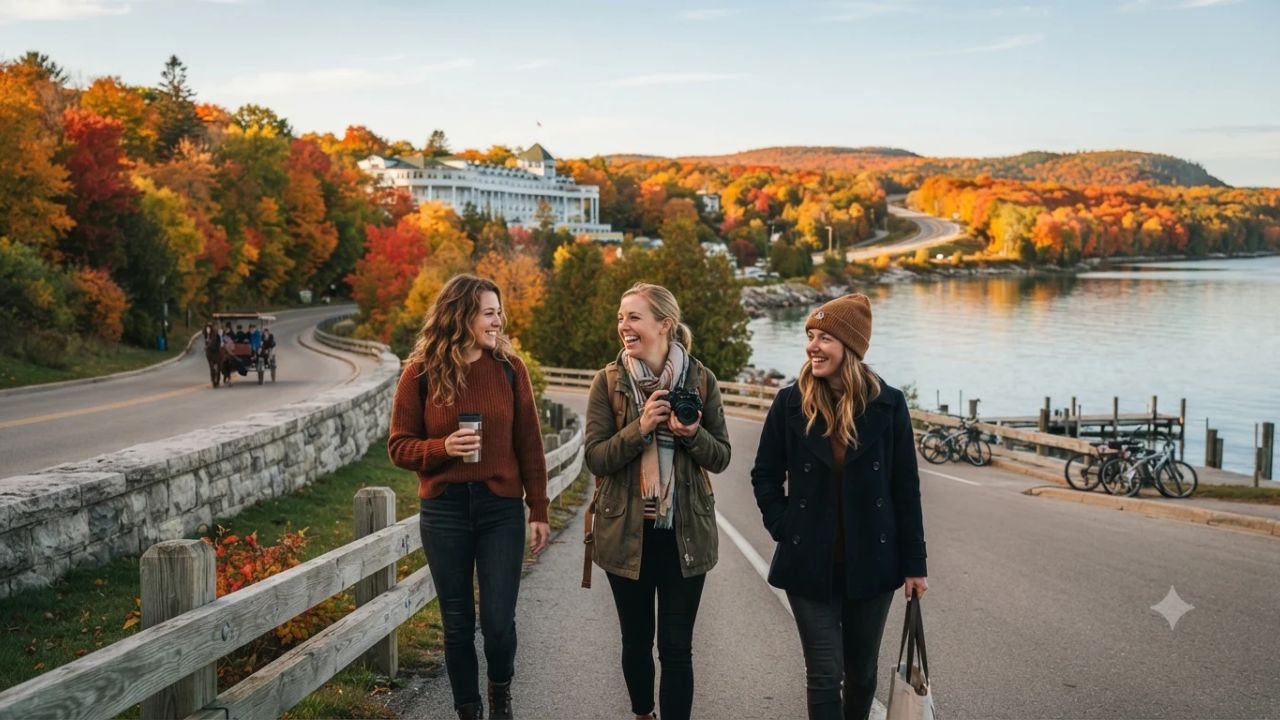
Image generated by AI
Covering approximately 7 million acres of dense northern timberland and networked by 10 recognized touring routes spanning nearly 1,500 miles, Michigan's Upper Peninsula has secured the nation's premier ranking for autumn foliage. Simultaneously, Mackinac Island captured the number-one spot among overall fall vacation destinations in the USA TODAY 10Best Readers’ Choice Awards. This double victory marks a structural shift in North American seasonal travel. As travelers pivot away from over-commercialized, congested corridors in New England and the Blue Ridge Mountains, the Great Lakes basin is establishing itself as the primary proving ground for slow, nature-oriented autumn exploration.
Shifting North American Travel Corridors: How Michigan Captured Twin National Titles
The rise of northern Michigan to the top of national travel rankings is not accidental. It stems from a convergence of distinct forest biology, unique coastal geography, and deliberate preservation policies. Across the Upper Peninsula, vast tracts of sugar maples ignite into intense crimson and amber, while paper birch and trembling aspen blanket the interior highlands in brilliant gold. What sets this geographic zone apart from inland mountain ranges is the thermal moderating effect of three surrounding inland seas: Lake Superior to the north, Lake Michigan to the south, and Lake Huron to the east. These massive freshwater bodies insulate the coastline against premature hard freezes, generating a prolonged, staggered color progression that frequently lasts several weeks longer than foliage cycles in higher-elevation interior states.
Statewide, Michigan touches four of the five Great Lakes, offering over 3,200 miles of freshwater shoreline. While summer visitors traditionally crowd coastal beaches from Memorial Day through mid-August, the autumn corridor represents an expanding economic frontier. Travelers arriving via Detroit Metropolitan Wayne County Airport or regional aviation gateways such as Marquette Sawyer Regional Airport and Pellston Regional Airport increasingly bypass urban centers, heading directly onto secondary highways that connect remote state parks, historic lighthouses, and wilderness preserves.
The USA TODAY 10Best Readers' Choice Awards spotlighted two contrasting yet symbiotic models of autumn travel. While the Upper Peninsula provides boundless space, solitude, and self-guided driving tours across millions of public acres, Mackinac Island offers a tightly controlled, vehicle-free sanctuary defined by 19th-century architecture and pedestrian-scale mobility. Together, they demonstrate how regional destinations can capture market share by emphasizing environmental stewardship and authentic local character over rapid commercial expansion.
Regional Transit Metrics and Byway Breakdown: Navigating 1,500 Miles of Peak Foliage
The Upper Peninsula's autumn tourism framework relies on a decentralized transit network designed to distribute traveler volume across an area larger than several Eastern states combined. Approximately 10 designated driving routes guide motorists through nearly 1,500 miles of scenic county highways, state trunks, and national forest roads. These pathways wind past thousands of miles of cold-water rivers, dozens of protected waterfalls, and expansive state and federal forests.
Because peak leaf coloration moves chronologically from the interior highlands of the western Upper Peninsula toward the coastal lowlands of the east, travelers who understand this geographic progression can optimize their itineraries to follow peak conditions across different zones.
| Travel Zone & Route | Approx. Mileage | Primary Canopy Composition | Waterway & Shoreline Anchors | Notable Transit Stops |
|---|---|---|---|---|
| Western Highlands Byway (M-28 / US-2 Corridors) | 220 Miles | Sugar Maple, Red Maple, Yellow Birch | Lake Superior Coastal Cliffs, Black River Waterfalls | Ironwood, Porcupine Mountains, Bessemer |
| Central Wilderness Loop (US-41 / M-94 / M-28) | 185 Miles | Paper Birch, Trembling Aspen, Hemlock | Munising Falls, Au Train River Basin | Marquette, Munising, Hiawatha National Forest |
| Copper Country Corridor (M-26 / US-41 Spine) | 140 Miles | Northern Hardwoods, Red Oak, White Pine | Lake Superior, Portage Canal | Houghton, Hancock, Copper Harbor |
| Eastern Straits Connection (M-123 / US-2 / I-75) | 165 Miles | Mixed Hardwoods, Tamarack, Jack Pine | Lake Michigan, Whitefish Bay, Lake Huron | St. Ignace, Tahquamenon Falls, Paradise |
| Mackinac Island Perimeter (M-185 Outer Loop) | 8.2 Miles | Northern White Cedar, Balsam Fir, Birch | Lake Huron Shoreline, Straits of Mackinac | Fort Mackinac, British Landing, Downtown Harbor |
This distributed network allows road-trippers to build flexible journeys that balance driving hours with wilderness hikes, maritime photography, and stops in historic mining and timber towns. The deliberate integration of coastal overlooks, roadside waterfalls, and historic districts ensures that travel time functions as an active part of the vacation experience rather than mere transit between lodging points.
The Car-Free Economics of Mackinac Island and Lake Huron Marine Transit
Sitting in the Straits of Mackinac where Lake Michigan and Lake Huron converge, Mackinac Island operates under one of North America’s most famous and rigorous municipal transit regulations: an absolute ban on personal motor vehicles enacted in 1898. To access the island, travelers must use scheduled passenger ferry catamarans departing from mainland terminals in St. Ignace and Mackinaw City, or touch down at the island's single paved airstrip via chartered regional air services.
Upon arrival, all mobility transitions strictly to three low-impact modes: walking, cycling, or horse-drawn carriage. The island’s primary ring road, State Highway M-185, is the only state highway in the United States that completely prohibits motor vehicle traffic. Encircling the island's 8.2-mile shoreline, this road provides uninterrupted views across Lake Huron framed by limestone bluffs and vibrant autumn trees.
According to data highlighted by the Mackinac Island Tourism Bureau, this deliberate isolation from modern vehicular congestion directly underpins its national ranking. Visitors encounter an environment where noise pollution is virtually nonexistent, historical landmarks like Fort Mackinac remain preserved in their authentic late-18th-century setting, and the downtown shopping district—anchored by historic artisan fudge confectioneries and Victorian resorts—encourages extended foot traffic. By removing the stress of parking, traffic jams, and exhaust fumes, the island turns transit into a centerpiece of its hospitality appeal.
Expert Analysis: Season Extension, Capacity Bottlenecks, and the Infrastructure Reality
For travelers booking Great Lakes itineraries, the direct consequence of these top national rankings is an immediate tightening of availability and higher pricing across the entire hospitality value chain. Historically, northern Michigan operated on a strict ninety-day summer sprint, with properties shuttering or dramatically reducing operations right after Labor Day. The surge in autumn travel demand has stretched that operational calendar well into late October, providing vital cash-flow stability for regional operators while exposing severe infrastructure limits.
The pricing pressure this creates means that spontaneous autumn trips into the Upper Peninsula are no longer practical. In gateway communities such as Munising, Marquette, and St. Ignace, hotel occupancy rates during peak October weekends now rival mid-July peaks, driving standard room rates upward by 30 to 45 percent compared to historical shoulder-season averages. Remote rural towns, while economically enriched by seasonal restaurant and retail spending, frequently lack the municipal water, parking, and public transit systems needed to absorb tens of thousands of visitors arriving in private vehicles.
On Mackinac Island, the absence of cars protects the local environment from gridlock, but it concentrates pressure onto ferry schedules, carriage taxi dispatchers, and bicycle rental inventories. During crisp autumn weekends, lines at mainland ferry docks can lead to significant boarding queues, requiring operators to run continuous shuttle departures across the Straits.
At the regional policy level, the state’s promotional agency, Pure Michigan, faces the delicate task of marketing remote wilderness areas without triggering ecological degradation. Heavy foot traffic on delicate sandstone bluffs, such as those within Pictured Rocks National Lakeshore, accelerates trail erosion, while crowded single-lane highways challenge local emergency services operating with volunteer staffing. For travelers, navigating this autumn boom successfully requires shifting away from peak weekend travel, securing accommodations months in advance, and treating sensitive northern public lands with rigorous Leave No Trace discipline.
Key Takeaways
- Twin National Honors: Michigan secured top billing in the USA TODAY 10Best Readers’ Choice Awards, with the Upper Peninsula named America's best fall foliage destination and Mackinac Island ranked the nation's premier fall getaway.
- Vast Forest Scale: The Upper Peninsula features roughly 7 million acres of continuous northern hardwood forest and approximately 10 established touring routes covering nearly 1,500 miles.
- Strict Vehicle Restrictions: Mackinac Island’s total ban on private motor vehicles channels all visitor movement into passenger ferries, horse-drawn carriages, walking, and cycling along the 8.2-mile M-185 perimeter.
- Economic Season Extension: Autumn demand has pushed northern Michigan’s hospitality season deep into late October, creating substantial economic gains for small communities while sharply elevating weekend lodging rates.
- Transit Planning Mandate: Gateway lodging shortages and ferry queue times mean travelers must secure reservations well in advance and plan around peak midday transit windows.
FAQ: Michigan Autumn Travel 2026
When is peak fall foliage in Michigan's Upper Peninsula?
Peak color typically begins in late September across the interior western highlands and Porcupine Mountains, gradually rolling eastward and toward the Great Lakes coastlines through mid-October. Coastal areas near Lake Superior and Lake Huron often peak up to two weeks later than elevated inland forests.
How do visitors travel to Mackinac Island during autumn?
Visitors reach Mackinac Island by taking commercial passenger ferries from mainland docks in St. Ignace or Mackinaw City, or by booking chartered regional flights. Ferries run regular daily schedules through late October, weather permitting, transporting passengers, luggage, and personal bicycles across the Straits of Mackinac.
Are private cars permitted on Mackinac Island in the fall?
No. Private motor vehicles have been strictly prohibited on Mackinac Island since 1898. All visitors and residents get around exclusively by foot, bicycle, or horse-drawn carriage. State Highway M-185, which loops around the island, remains entirely vehicle-free year-round.
What are the most popular fall driving routes in the Upper Peninsula?
Popular routes include the Western Highlands along US-2 and M-28 near the Porcupine Mountains, the coastal stretch of M-26 through the Keweenaw Peninsula to Copper Harbor, and the M-123 corridor connecting Tahquamenon Falls to Whitefish Point along Lake Superior.
In an era of congested highways and hurried vacations, Michigan’s winning autumn formula proves that slowing down to the pace of a bicycle wheel or a winding two-lane byway remains the ultimate luxury in American travel.
Related Travel Guides
Springfield Illinois Hotel Surge & Route 66 Lincoln Tourism Guide
Belize Sargassum Travel Guide & Coastal Vacation Planning
Minnesota MSP Airport Airline Cost Battle & Winter Hub Travel Guide
Disclaimer
This article is for informational and educational purposes only. It does not constitute legal, financial, or professional advice. While we strive to provide accurate and up-to-date information, travel policies, regulations, and conditions change rapidly. Always verify information with official sources before making travel decisions. Nomad Lawyer makes no representations about the accuracy, reliability, completeness, or suitability of the information provided. Readers should consult qualified professionals for advice specific to their circumstances. The views expressed in this article are those of the author and do not necessarily reflect the views of Nomad Lawyer.
Naina Thakur
Contributor & Travel Specialist
Travel enthusiast and legal writer covering visa regulations, responsible tourism, and cultural journeys across global destinations.
Learn more about our team →