
Miami International Airport Gripped by Travel Chaos: 223 Flights Delayed and 11 Cancelled as American Airlines, Frontier, and United Face Operational Gridlock; Major Impact on Dallas, Toronto, and São Paulo Routes
Miami International Airport (MIA) is currently navigating a significant operational crisis following a wave of 223 flight delays and 11 cancellations on May 10, 2026. Major carriers including American Airlines, Frontier, and United are struggling to maintain schedules, impacting critical routes to Dallas, Toronto, and São Paulo. The disruption at this vital international gateway has left hundreds of travelers stranded, raising concerns about the resilience of US aviation hubs during peak travel periods.

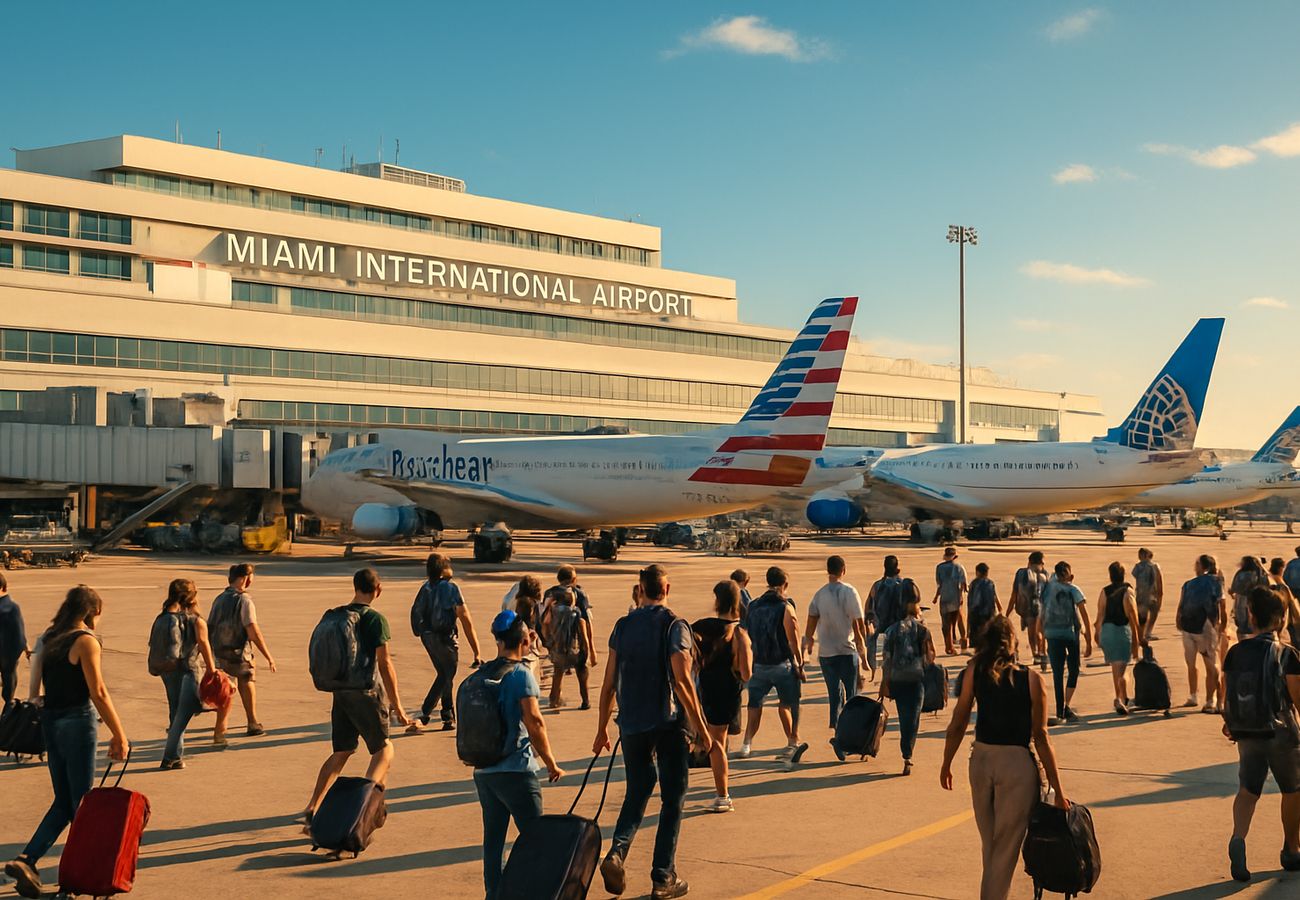
Gateway Gridlock: Miami International manages 223 delays and 11 cancellations.
Miami International Airport "Gateway Gridlock": 223 Flights Delayed and 11 Grounded as Major US Carriers Face Operational Turmoil; Major Aviation News for Floridian Travelers
In a significant operational setback that has rippled through the North American and international aviation networks, Miami International Airport (MIA) is currently grappling with a wave of severe disruptions. This airline news update, confirmed on May 11, 2026, reports that on the preceding day, May 10, a total of 223 flights were delayed and 11 were cancelled. The crisis has hit the "Gateway to the Americas" at a time of peak traveler volume, primarily impacting routes operated by American Airlines, Frontier, United, and Southwest.
The logistical nightmare has left hundreds of passengers stranded across MIA’s sprawling terminals, with critical routes to Dallas, Atlanta, Toronto, and New York City bearing the brunt of the instability. As the airport struggles to clear the backlog, the "Gateway Gridlock" highlights the extreme vulnerability of high-density US hubs to even minor operational friction, triggering a cascade of missed connections and travel chaos from São Paulo to Casablanca.
Expanded Overview: Gridlock at the Gateway
Miami International is one of the busiest and most vital hubs in the global aviation system, serving as the primary link between the United States and Latin America. This aviation update reveals that the 223 delays and 11 cancellations have created a "Pressure Cooker" environment at the airport. While the cancellation percentage remained relatively low for some carriers (1% for American Airlines), the sheer volume of delayed services—160 for American alone—has overwhelmed ground handling crews and customer service desks.
"When you have 223 delays at a hub like Miami, the system effectively stops breathing," stated a senior aviation journalist specializing in Floridian infrastructure. "MIA is a high-precision machine. When American Airlines, which operates the vast majority of the airport's traffic, sees 26% of its flights delayed, it triggers a 'Logistical Domino Effect'. Passengers bound for São Paulo or Toronto find themselves in six-hour queues, while flight crews time out, leading to further cancellations. This isn't just a Miami problem; it’s a global connectivity crisis."
Section-Wise Breakdown: Hub Pressure and International Ripple
American Airlines: The Hub Pressure at MIA
As the dominant carrier at MIA, American Airlines faced the most significant operational challenge. With 160 delayed flights and 6 cancellations, the airline’s Concourse D hub was the center of the chaos. The disruption affected high-frequency domestic routes to Dallas (DFW) and New York (JFK), as well as critical international links. The 26% delay rate suggests that the airline struggled with a combination of gate congestion and crew scheduling issues during the peak period.
Frontier, United, and Southwest: Domestic Friction
Budget and legacy carriers alike were caught in the Miami gridlock. Frontier Airlines saw a 7% cancellation rate, while Southwest struggled with a 23% delay rate. For these carriers, the disruptions at MIA meant that aircraft and crews were unable to cycle back to other hubs like Atlanta or Nashville, spreading the travel chaos across the Eastern Seaboard.
International Impact: From São Paulo to Casablanca
The disruption was not limited to domestic routes. International carriers including Air Europa, Royal Air Maroc, TAP Air Portugal, and Turkish Airlines all reported delays on their Miami services. Travelers bound for Toronto via Air Canada and São Paulo via LATAM were particularly affected, with many facing overnight layovers in Miami as they waited for rebooking options in an already saturated market.
Miami (MIA) Airline Disruption Matrix: May 10-11, 2026
The following table provides the exact cancellation and delay data for the primary carriers impacted at Miami International.
Miami International (MIA): Flight Disruption Statistics
| Airline | Flights Cancelled | Cancellation (%) | Flights Delayed | Delay (%) |
|---|---|---|---|---|
| American Airlines | 6 | 1% | 160 | 26% |
| Frontier | 2 | 7% | 4 | 14% |
| United | 2 | 4% | 4 | 9% |
| Southwest | 1 | 2% | 9 | 23% |
| Delta Air Lines | 0 | 0% | 12 | 17% |
| Turkish Airlines | 0 | 0% | 4 | 57% |
| TAP Air Portugal | 0 | 0% | 3 | 60% |
| Air Canada | 0 | 0% | 2 | 25% |
Source: FlightAware Operational Audit. Data as of May 11, 2026.
Passenger Impact: The "Concourse D" Struggle
For the hundreds of travelers caught in the Miami gridlock, the experience was one of exhausting uncertainty:
- Missed Connections: With 223 delays, the "Connection Window" for international travelers evaporated, leaving passengers bound for Europe and South America stranded for 24-48 hours.
- Terminal Congestion: Concourse D at MIA saw thousands of weary travelers camping near gates as they waited for updates on the 160 delayed American Airlines flights.
- Rebooking Hurdles: With only 11 cancellations but massive delays, the "Soft Rebooking" systems were overwhelmed, forcing many to wait in multi-hour customer service lines.
Industry Analysis: The Fragility of the International Gateway
Aviation analysts suggest that the MIA disruption is a symptom of "Hub Saturation." When an airport operates at near-100% capacity, even a minor logistical hiccup can trigger a cascade of 200+ delays. The high delay rates for international carriers like Turkish Airlines (57%) and TAP (60%) indicate that ground handling and flow control at MIA were unable to prioritize long-haul departures during the peak volume. The industry is now looking at whether MIA’s current infrastructure can handle the projected 5% annual increase in passenger traffic without becoming a permanent bottleneck in the US aviation network.
Conclusion: A Slow Recovery for the Gateway to the Americas
As Miami International Airport and its resident carriers work to clear the backlog of 223 delays, the recovery phase is expected to last through the end of May 11. While the immediate logistical pressure may ease, the impact on traveler confidence and the "Miami Brand" as a reliable hub remains a concern for local tourism boards. For the travelers catch in the "Gateway Gridlock," the lesson is clear: in the high-stakes world of international travel, a flexible itinerary and a reliable travel insurance policy are no longer optional—they are essential for survival.
Key Takeaways
- 223 flights delayed and 11 cancelled at Miami International (MIA) on May 10.
- American Airlines hit hardest with 160 delays (26% of their schedule).
- Frontier, United, and Southwest also faced significant operational friction.
- Critical routes to Dallas, Toronto, and São Paulo saw major disruptions.
- International carriers like Turkish and TAP saw delay rates as high as 60%.
- Logistical congestion at the Gateway triggered a massive passenger backlog.
- FlightAware data confirms the scale of the disruption at this vital hub.
/article-footer-standard
Related Travel Guides:
Disclaimer
This article is for informational and educational purposes only. It does not constitute legal, financial, or professional advice. While we strive to provide accurate and up-to-date information, travel policies, regulations, and conditions change rapidly. Always verify information with official sources before making travel decisions. Nomad Lawyer makes no representations about the accuracy, reliability, completeness, or suitability of the information provided. Readers should consult qualified professionals for advice specific to their circumstances. The views expressed in this article are those of the author and do not necessarily reflect the views of Nomad Lawyer.
Kunal K Choudhary
Co-Founder & Contributor
A passionate traveller and tech enthusiast. Kunal contributes to the vision and growth of Nomad Lawyer, bringing fresh perspectives and driving the community forward.
Learn more about our team →