
Sydney and Melbourne Lead Australia's International Tourism Growth
Australia's international visitor recovery is concentrated at Sydney and Melbourne airports, which recorded historic passenger volumes in early 2026.
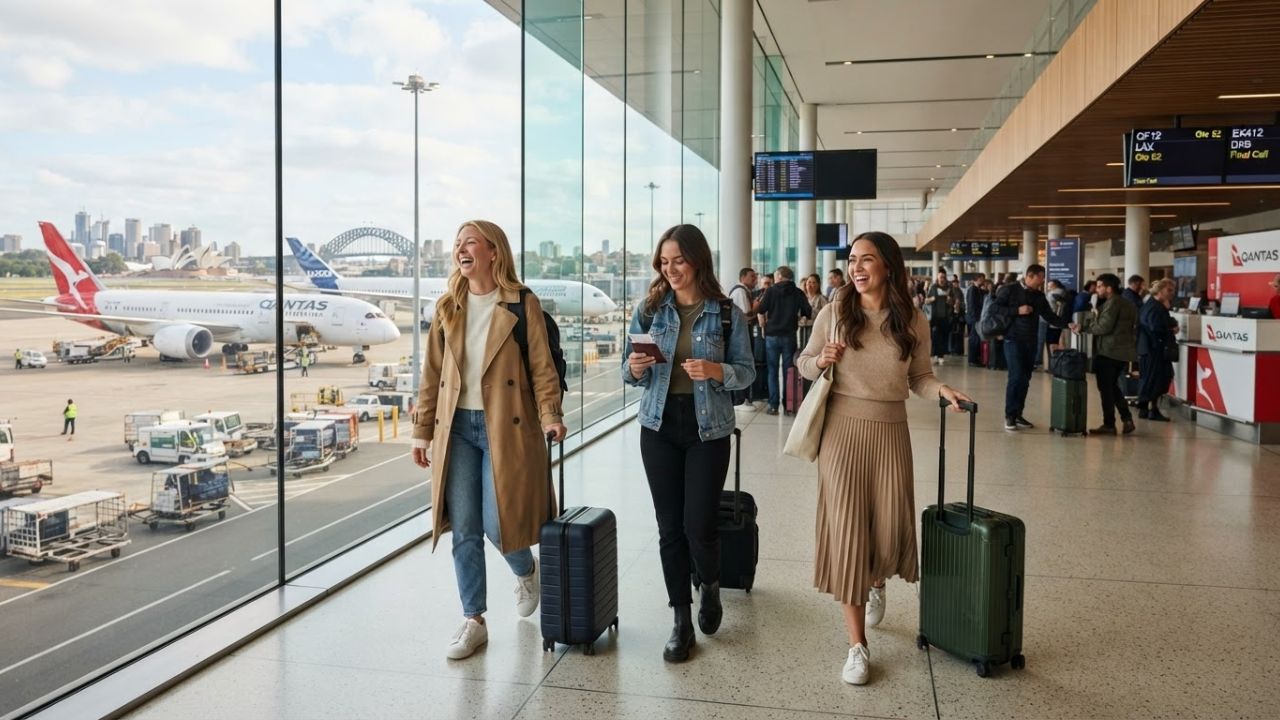
Image generated by AI
Sustaining historic passenger volumes including 4.57 million international arrivals in Sydney during Q1 2026 and breaching the one-million monthly international mark in Melbourne, Australia's twin gateways are driving national tourism growth.
The Core Transit Update
Aviation scheduling corridors and border security infrastructures in Australia are managing unprecedented passenger volumes. According to data from federal bodies and corporate disclosures, international tourism growth is concentrated almost entirely at Sydney Airport (SYD) and Melbourne Airport (MEL).
Between January and March 2026, Sydney Airport processed 4.57 million international passengers (a 5.8 per cent growth compared to Q1 2025). Concurrently, Melbourne Airport processed 3,129,811 passengers in March 2026 alone, including an all-time monthly record of 1,002,589 international travelers, surpassing the previous record of 937,696 from March 2025. Data from Tourism Australia and the Australian Bureau of Statistics (ABS) indicates that the country welcomed 9.2 million visitors in the 12 months ending April 2026, which is 98.8 per cent of 2019 levels.
Airport Operations & Outbound Market Metrics
Evaluating Australia's aviation market requires tracking terminal capacity and comparing visitor demographics. The following tables outline the operational statistics of the two main airports and review the growth rates of the key international source markets.
| Australian Airport Hub | Q1 2026 International Passengers | Total Passenger Throughput | Security / Customs Processing Performance |
|---|---|---|---|
| Sydney Airport (SYD) | 4.57 million passengers | 10.78 million (inc. domestic) | 99.8% clear security under 10 mins |
| Melbourne Airport (MEL) | 1.002 million (March 2026) | 3.129 million (March 2026) | Breached 1 million international barrier |
Sydney and Melbourne airport operational passenger traffic and border processing.
| Outbound Source Market | 12-Month Growth Rate (to April 2026) | Primary Hub Entry Route |
|---|---|---|
| China | 20.0% growth | Direct flights to Sydney & Melbourne |
| Hong Kong | 17.0% growth | Direct flights to Sydney & Melbourne |
| Italy | 16.0% growth | Direct flights to Sydney & Melbourne |
| United Kingdom | 15.0% growth | Direct flights to Sydney & Melbourne |
| France | 15.0% growth | Direct flights to Sydney & Melbourne |
Australia international visitor growth rates by source market.
Traveler Logistics Guide
From a ground-level perspective, the best way to navigate this is to utilize the automated SmartGate border processing kiosks upon arrival in Sydney or Melbourne, as these biometric gates clear 90 per cent of passengers through immigration within 34 minutes, bypassing manual passport inspection desks. Checking visa requirements is recommended.
To plan your journey:
- Allow Adequate Connecting Windows: If you are transferring from international to domestic terminals in Sydney or Melbourne, allow at least three hours to retrieve your checked bags, clear customs, and take transfer shuttles.
- Review Air Service Agreements: The International Air Services Commission (IASC) has approved unlimited capacity on Australia-Canada routes and added Qantas routes to Italy and France. Check for new direct flight options.
- Coordinate Airport Transfers: Sydney Airport is located eight kilometers from the CBD. Use the Airport Link rail line to avoid peak-hour road traffic gridlock.
- Plan Around Peak Major Events: Melbourne's monthly numbers spike during sporting events (e.g. Australian Open in January, Grand Prix in March). Book airport taxi services early.
Infrastructure Impact Assessment
The concentration of passenger volumes at Sydney and Melbourne airports supports the economic viability of domestic air links and corporate tourism services.
By utilizing BITRE figures (showing 45.736 million international movements for the year ended April 2026) to justify terminal investments and processing 4.466 million seat capacity in April 2026, airport operators generate the non-aeronautical retail revenues needed to expand regional connection grids and stabilize service jobs across New South Wales and Victoria.
Related Travel Guides
Vermont Tourism Launches 'State of Inspiration' Brand Campaign
Shravani Mela 2026 Deoghar Travel Tips and Logistics Guide
10 Best Travel Tips for Booking Flights to Australia, Clearing Customs at Sydney and Melbourne Airports, and Navigating Domestic Connecting Terminals, According to Reddit
Disclaimer
This article is for informational and educational purposes only. It does not constitute legal, financial, or professional advice. While we strive to provide accurate and up-to-date information, travel policies, regulations, and conditions change rapidly. Always verify information with official sources before making travel decisions. Nomad Lawyer makes no representations about the accuracy, reliability, completeness, or suitability of the information provided. Readers should consult qualified professionals for advice specific to their circumstances. The views expressed in this article are those of the author and do not necessarily reflect the views of Nomad Lawyer.