
Why McDonnell Douglas's Audacious Plan to Commercialize the C-17 Globemaster Never Got Off the Ground
Breaking airline news and aviation industry updates for 2026.

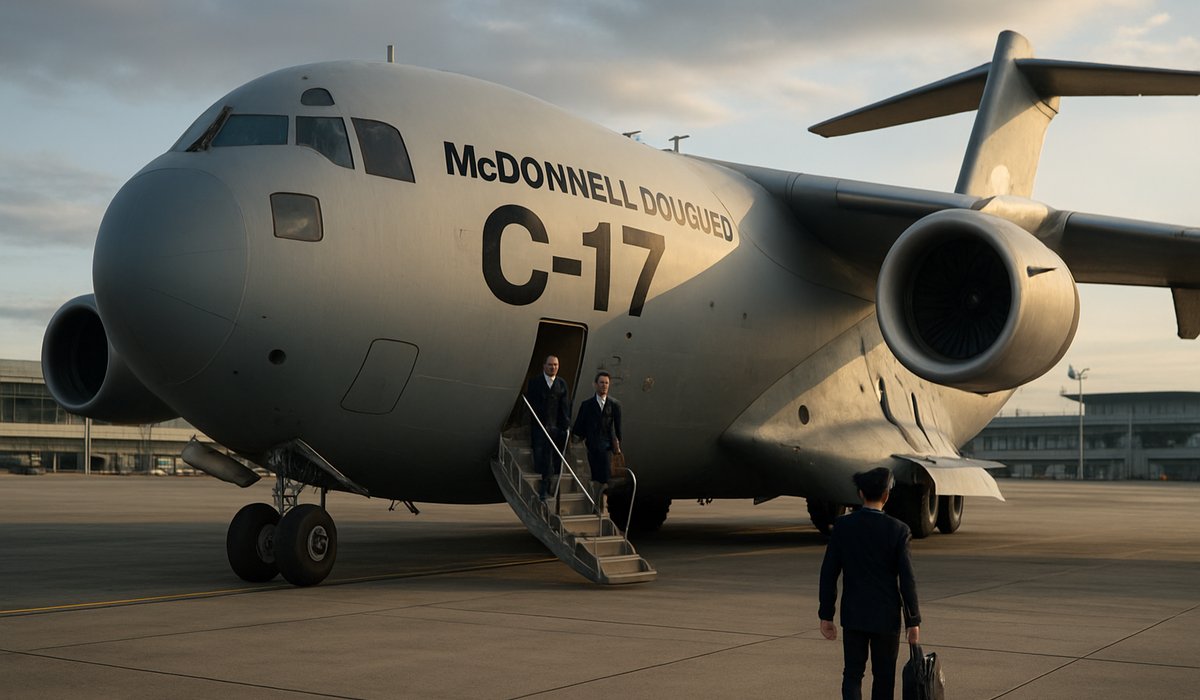
Image generated by AI
Why McDonnell Douglas's Audacious Plan to Commercialize the C-17 Globemaster Never Got Off the Ground
The aerospace giant's ambitious bid to convert a military heavy-lift transport into a civilian cargo aircraft reveals the fundamental economics that define commercial aviation
A Capability That Seemed Tailor-Made for Cargo Operations
The Boeing C-17 Globemaster III stands as one of aviation's most formidable engineering achievements. With a maximum payload capacity exceeding 170,000 pounds and the extraordinary ability to operate from runways shorter than 3,500 feet, the military transport aircraft represents unmatched versatility in the heavy-lift segment. These same operational advantages caught the attention of McDonnell Douglas executives, who envisioned a commercial successor: the MD-17, a civilian freighter variant designed to capture lucrative cargo markets worldwide.
On paper, the concept appeared compelling. Airlines and logistics operators faced mounting pressure to move oversized freight—industrial equipment, aircraft components, and emergency relief supplies—across intercontinental distances. The C-17's short-field performance and cavernous cargo hold seemed positioned to dominate this niche. Yet the journey from military success to commercial viability would expose the profound gulf between military procurement priorities and civilian aviation economics.
The Economics of Military Versus Commercial Aviation
The fundamental problem lay not in engineering capability but in financial reality. The C-17's design reflected military specifications emphasizing robustness, redundancy, and operational flexibility over cost efficiency. Every system bore excess capacity margins. Maintenance protocols demanded rigorous protocols suited to combat zones rather than predictable commercial operations. Fuel consumption, while necessary for military missions, generated operating costs incompatible with civilian freight margins.
Airlines evaluating the MD-17 confronted an uncomfortable mathematics: the aircraft's sticker price far exceeded comparable alternatives, while its operational expenses—crew training, spare parts availability, and fuel burn—remained prohibitively high. Established cargo operators already invested in established fleets like the Boeing 747 and Airbus A300-600F possessed networks of maintenance facilities and spare-part suppliers. A new entrant, however capable, offered no offsetting advantages sufficient to justify fleet conversion.
Why Commercial Markets Rejected Superior Military Technology
The aviation industry's historical pattern demonstrates that operational excellence alone cannot guarantee commercial success. The MD-17 project ultimately collapsed because civilian operators prioritize return-on-investment metrics that military procurement does not. Capacity metrics matter less than cost-per-ton-mile calculations. The C-17's advanced technology represented unnecessary expense when simpler, purpose-built freighters could deliver competitive results at substantially lower acquisition and operating costs.
McDonnell Douglas never secured significant customer commitments for the commercial variant, and the project quietly faded from development plans. The C-17 remains exclusively a military asset, a reminder that the aerospace industry's most impressive technological achievements do not automatically translate into commercial marketplace success.
Frequently Asked Questions
Why didn't airlines purchase the MD-17 commercial variant? Airlines prioritize cost-efficiency and return-on-investment above raw capability. The C-17's military-grade systems, maintenance requirements, and fuel consumption made it economically uncompetitive against purpose-built freighters designed for commercial operations.
What is the C-17 Globemaster III's primary military advantage? The C-17's combination of 170,900-pound payload capacity and ability to operate from 3,500-foot runways enables strategic airlift operations to austere, forward-deployed locations unavailable to standard transport aircraft.
How do military aircraft specifications differ from commercial aviation requirements? Military aircraft prioritize operational flexibility, redundancy, and performance in unpredictable environments. Commercial aircraft emphasize fuel efficiency, maintenance simplicity, and cost-per-mile economics.
What aircraft successfully dominate the heavy-lift cargo market instead? The Boeing 747-400F and Airbus A300-600F remain industry standards for intercontinental freight, offering established supply chains, proven reliability, and lower operating costs than specialized military conversions.
Has Boeing considered other military-to-civilian aircraft conversions? Yes, though with greater success—military transport variants have occasionally generated commercial interest, but most conversions fail due to prohibitive acquisition costs and operational expenses that undercut civilian competitors.
Related Travel Guides
- American Airlines Flight AA2248 from Reagan National to New Orleans Diverts to Charlotte Douglas for Emergency Landing After Mid-Air Operational Alert: New Aviation Updates
- Delta Air Lines Relaunches Daily Los Angeles to London Heathrow Flights to Prevent Flight Cancellations and Travel Chaos Across California, United Kingdom, France, and Netherlands: New Airline News and Aviation Updates
- Preventing Security-Driven Travel Chaos: India DGCA Issues Urgent Clarification on Airport Photography to Eradicate Terminal Gridlock
Disclaimer
This article is for informational and educational purposes only. It does not constitute legal, financial, or professional advice. While we strive to provide accurate and up-to-date information, travel policies, regulations, and conditions change rapidly. Always verify information with official sources before making travel decisions. Nomad Lawyer makes no representations about the accuracy, reliability, completeness, or suitability of the information provided. Readers should consult qualified professionals for advice specific to their circumstances. The views expressed in this article are those of the author and do not necessarily reflect the views of Nomad Lawyer.
Kunal K Choudhary
Co-Founder & Contributor
A passionate traveller and tech enthusiast. Kunal contributes to the vision and growth of Nomad Lawyer, bringing fresh perspectives and driving the community forward.
Learn more about our team →