
Michigan's Marquette Sawyer Regional Airport Reports 5 Flight Delays, Zero Cancellations as Delta and American Airlines Navigate Upper Peninsula Weather Disruptions
Five flights delayed at Marquette Sawyer Regional Airport in Michigan's Upper Peninsula as Delta Air Lines and American Airlines navigate weather challenges. No cancellations reported.

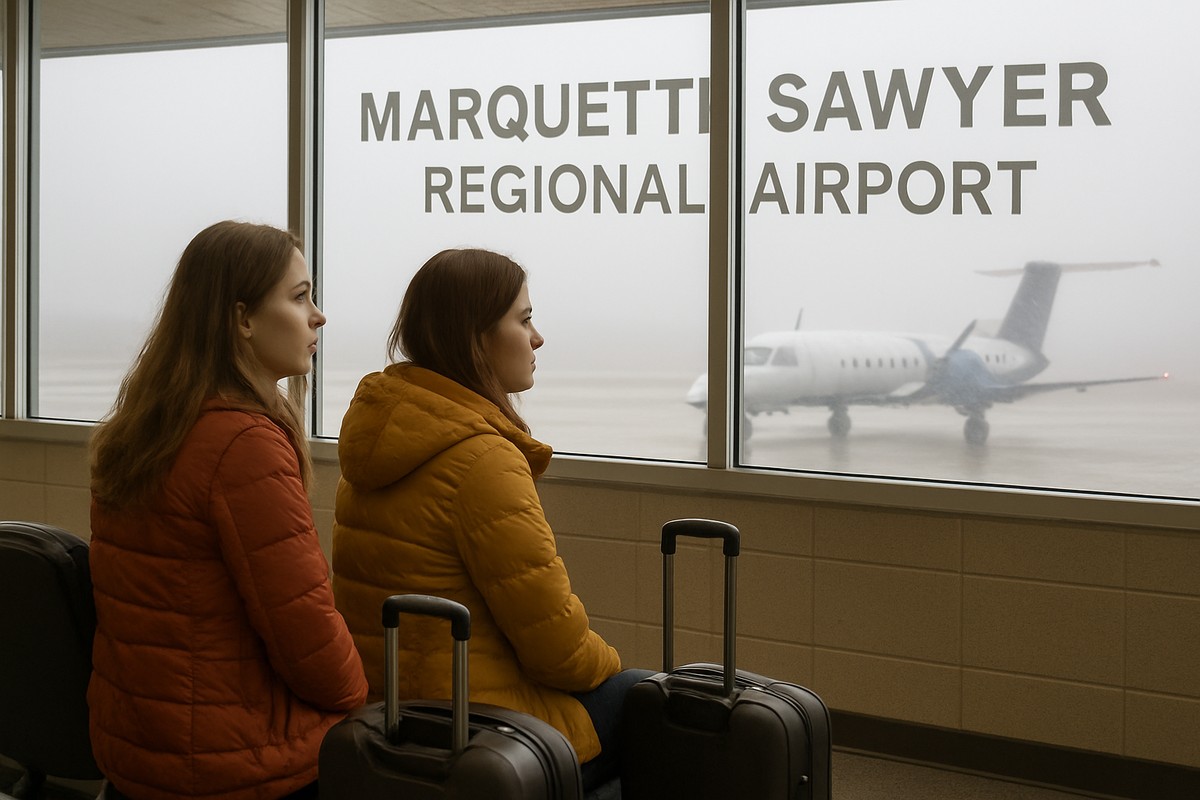
Image generated by AI
```
Michigan's Marquette Sawyer Regional Airport Reports 5 Flight Delays, Zero Cancellations as Delta and American Airlines Navigate Upper Peninsula Weather Disruptions
Regional Aviation Resilience Tested as Weather and Operational Constraints Strain Midwest Connectivity
Five flights experienced delays at Marquette Sawyer Regional Airport in Michigan's remote Upper Peninsula this week, disrupting connections across critical routes to Detroit, Chicago, Minneapolis, and throughout the Midwest travel network. Despite operational pressures and challenging weather conditions, the airport reported zero cancellations—a sign of operational coordination between airlines, airport authorities, and air traffic management teams serving one of America's most geographically isolated aviation hubs.
For passengers, students, business travelers, and tourists depending on this critical regional gateway, the delays underscore both the vulnerability and resilience of small-to-mid-sized airports operating under tighter margins than major metropolitan hubs.
The Week's Operational Impact: Five Delays, Zero Cancellations
Marquette Sawyer Regional Airport's operations data for May 2026 paints a mixed but ultimately positive picture of regional aviation reliability. While five flights experienced delays affecting connections through Delta Air Lines and American Airlines services, the complete absence of cancellations demonstrates the airport's ability to maintain schedule integrity despite challenging circumstances.
The delayed flights disrupted passenger connections across multiple Midwest routes:
- Detroit Metropolitan Hub Connections
- Chicago O'Hare Hub Connections
- Minneapolis-St. Paul Hub Connections
- Additional regional destinations across the Upper Peninsula network
For a regional airport with limited daily departures and tighter aircraft rotation schedules than major hubs, this operational outcome reflects significant coordination among all aviation stakeholders. However, the delays themselves highlight ongoing pressures facing smaller airports nationwide.
Why Marquette Sawyer Regional Airport Matters to the Midwest Aviation Network
Nestled in Michigan's Upper Peninsula—a region of stunning natural beauty and geographic remoteness—Marquette Sawyer Regional Airport serves as a critical lifeline connecting isolated northern communities to major metropolitan centers. The airport is far more than a convenience; it represents an essential transportation artery for:
- Healthcare access — connecting patients to specialized medical facilities
- University connectivity — serving students at Northern Michigan University and other institutions
- Business continuity — enabling corporate and professional travel across the region
- Emergency services — providing rapid access during medical and weather emergencies
- Tourism economy — supporting the rapidly growing outdoor recreation and hospitality sector
Unlike major international airports where multiple backup aircraft and dozens of daily departures provide operational redundancy, Marquette Sawyer operates under fundamentally different constraints. Aircraft rotations are tight, staffing is lean, and flight frequencies are limited. This means that disruptions at hub airports like Chicago O'Hare or Detroit Metropolitan can cascade directly to regional schedules within hours.
Weather: The Persistent Challenge in the Upper Peninsula
The National Weather Service office in Marquette recently reported fluctuating atmospheric conditions that directly influenced this week's flight delays:
- Fog and reduced visibility affecting departure and landing procedures
- Rain showers and precipitation impacting ground operations
- Changing temperatures during seasonal transition periods
- Lake-effect weather systems unique to the Superior shoreline
These meteorological factors carry particular significance at regional airports where pilots must navigate with less operational flexibility than they possess at major weather-equipped hubs. Sawyer Airport's proximity to Lake Superior creates distinctive weather patterns that can change rapidly, requiring constant coordination between airline operations, air traffic control, and weather monitoring services.
During winter months and seasonal transitions, the Upper Peninsula experiences some of North America's most challenging aviation weather, including snow, freezing rain, and wind shifts that can alter flight operations within minutes. This week's conditions, while not catastrophic, nonetheless demonstrated why weather remains the single largest factor influencing regional aviation reliability.
The Broader Context: Regional Airports Under Pressure Nationwide
Marquette Sawyer Regional Airport's operational challenges this week reflect systemic pressures affecting regional aviation networks across the United States:
Staffing and Pilot Shortages
Regional airlines continue experiencing pilot shortages, with smaller carriers struggling to attract and retain experienced crews. This personnel shortage cascades through scheduling decisions and operational flexibility.
Aircraft Availability and Maintenance
Unlike major carriers with extensive aircraft fleets, regional partners operate with limited spare aircraft. Maintenance events that might go unnoticed at a major hub can create significant disruptions at smaller airports.
Hub Airport Congestion
Delays originating at major hubs like Chicago O'Hare, Detroit Metropolitan, and Minneapolis-St. Paul immediately affect regional airports dependent on those connections. A single weather event at a hub airport can ripple throughout regional networks.
Infrastructure and Capacity Constraints
Many regional airports operate with aging infrastructure designed for smaller passenger volumes. Runway conditions, taxiway capacity, and apron space can become limiting factors during peak travel periods.
Weather Vulnerability
Small airports often lack the sophisticated weather-monitoring and operational-flexibility capabilities of major hubs, making them particularly susceptible to atmospheric disruptions.
Marquette Sawyer's $23 Million Modernization: Building Resilience for the Future
Despite operational challenges, Marquette Sawyer Regional Airport is entering a transformative development phase. Regional economic development agencies have announced more than $23 million in planned infrastructure improvements over the next several years, including:
- Taxiway upgrades — improving aircraft movement efficiency
- Parking apron modernization — expanding capacity and safety
- Terminal facility improvements — enhancing passenger experience and operational efficiency
- Air traffic control system enhancements — incorporating modern navigation and communications technology
- Rescue equipment modernization — upgrading emergency response capabilities
These investments reflect a strategic commitment to strengthening the airport's role within Michigan's transportation network and positioning it to support projected passenger growth throughout the decade.
New United Airlines Service Expansion
Adding to the modernization momentum, airport officials announced in late 2025 that United Airlines will expand operations at Marquette Sawyer throughout 2026. This service expansion is expected to improve connectivity for Upper Peninsula passengers and attract additional leisure and business travel.
Tourism as a Growth Engine: Lake Superior and Outdoor Recreation
Michigan's Upper Peninsula has emerged as one of the Midwest's most dynamic outdoor tourism destinations. The region attracts growing numbers of travelers seeking:
- Hiking and backcountry exploration
- Waterfalls and natural attractions
- Lake Superior coastal experiences
- Winter skiing and snow sports
- Cultural and historical tourism
Marquette itself has solidified its position as a rising outdoor recreation hub, drawing tourists from across North America. Improved air connectivity directly supports this tourism economy, making airport reliability and service expansion strategically important for regional economic development.
The relationship between aviation infrastructure and tourism growth is direct: better service attracts more visitors; more visitors justify additional routes and increased flight frequency; improved connectivity supports regional hospitality, retail, and outdoor recreation businesses.
Delta Air Lines and American Airlines: The Regional Carriers
Both Delta Air Lines and American Airlines maintain critical operations through Marquette Sawyer Regional Airport, operating the delayed flights this week. These carriers provide the essential connectivity that allows passengers to:
- Access hub operations in Detroit and Chicago
- Connect to national and international destinations
- Serve business travel across the Midwest
- Support leisure travel and family connectivity
The operational challenges facing these carriers at regional airports like Marquette underscore the delicate balance regional airlines must maintain between profitability, schedule reliability, and operational sustainability.
What's Happening Next: Operational Outlook and Passenger Expectations
Immediate Operational Priorities
- Enhanced weather monitoring — Regional airports will continue coordinating closely with National Weather Service offices
- Staffing optimization — Airlines are implementing scheduling adjustments to maximize available crew resources
- Passenger communication — Airlines are emphasizing real-time flight status updates through digital channels
Medium-Term Developments
- Infrastructure improvements — The $23 million modernization project will proceed with priority given to airfield improvements
- Service expansion — United Airlines' expanded operations should materially improve connectivity
- Tourism marketing — Regional authorities will coordinate aviation improvements with tourism promotion efforts
Passenger Recommendations
Aviation experts and airport officials continue advising travelers to:
- Check flight status regularly, especially during seasonal transitions or unstable weather
- Contact airlines directly for updates rather than relying on third-party sources
- Arrive early during weather-sensitive periods, as smaller airports operate with less staffing flexibility
- Monitor weather forecasts before travel to Upper Peninsula destinations
- Book flights during optimal weather windows when feasible
Regional Airport Resilience: A Tale of Adaptation and Determination
While five flight delays may appear minor compared to disruptions at major international hubs, the context matters profoundly. Marquette Sawyer Regional Airport operates under fundamentally different constraints than airports like Chicago O'Hare or Atlanta Hartsfield-Jackson.
The absence of cancellations despite weather challenges and operational pressures reflects genuine coordination among airport authorities, airline operations teams, and air traffic management services. This is operational resilience in action—the kind of quiet competence that enables remote communities to maintain connectivity to the wider world.
For passengers navigating the airport, the experience often exceeds expectations formed at major metropolitan hubs. The compact design, shorter security lines, efficient ground transportation connections, and minimal congestion create a travel experience that many passengers find remarkably efficient and stress-free.
As one traveler noted in online discussions, passengers can often move from rental car returns to boarding gates within minutes—a striking contrast to the sprawling inefficiency of major international airports.
Industry Analysis: The Systemic Pressures and Market Dynamics
The delays experienced this week reflect broader industry trends that will shape regional aviation throughout 2026:
Weather Volatility and Climate Factors
Changing atmospheric patterns are increasing weather-related disruptions across North America. Regional airports, lacking the sophisticated operational flexibility of major hubs, bear disproportionate impact.
Labor Market Tightness
Pilot shortages, ground crew availability challenges, and overall aviation staffing constraints continue pressuring regional operators. These staffing limitations directly restrict operational flexibility and schedule reliability.
Hub-and-Spoke Network Vulnerability
The concentration of connecting traffic at major hubs creates systemic vulnerability. A single disruption at Chicago O'Hare or Detroit Metropolitan can cascade through dozens of regional airports within hours.
Infrastructure Modernization Imperative
Airports like Marquette Sawyer demonstrate why regional infrastructure investment remains essential. The $23 million modernization project represents a strategic recognition that competitive positioning requires up-to-date facilities and systems.
Tourism-Driven Growth Opportunities
Many regional airports are discovering that strategic investment in improved connectivity can attract growing tourism demand, creating virtuous cycles of service expansion and economic development.
The Bigger Picture: Regional Aviation in America's Transportation Network
Marquette Sawyer Regional Airport represents one of thousands of regional aviation hubs scattered across North America, each serving essential connectivity functions for geographic areas that would otherwise face severe transportation limitations.
These airports collectively handle tens of millions of passengers annually, serving functions that transcend pure commercial viability—connecting patients to medical care, students to educational opportunities, families to one another, and communities to economic opportunity.
The pressures affecting Marquette Sawyer this week—weather, staffing, hub connectivity, infrastructure constraints—are essentially universal across regional aviation. Yet the absence of cancellations, the operational coordination evident in achieving even minor delays, and the strategic investment in modernization all demonstrate that regional airports remain viable, essential, and capable of evolution.
Conclusion: Remote Communities Depend on Reliable Regional Aviation
The five flight delays experienced at Marquette Sawyer Regional Airport this week represent a minor operational disruption in the context of national aviation. Yet they carry profound significance for the communities depending on this critical transportation hub.
For residents of Michigan's Upper Peninsula—a region where long-distance driving remains challenging year-round and winter weather can isolate communities for extended periods—reliable air service represents far more than convenience. It represents connectivity to medical care, educational opportunity, family connection, and economic participation in the broader Midwest economy.
The airport's ability to avoid cancellations despite weather challenges and operational pressures reflects genuine competence. The planned $23 million modernization, the expansion of United Airlines service, and the growing recognition of the region's tourism potential all point toward a more robust aviation future.
As passenger demand continues growing and regional tourism becomes increasingly important to Midwest economic development, airports like Marquette Sawyer will play expanding roles in North American transportation networks.
The modest delays this week should not obscure the larger narrative: regional aviation works, regional airports matter, and strategic investment in these essential facilities pays dividends for the remote communities they serve.
Key Takeaways
- Five flights delayed, zero cancellations at Marquette Sawyer Regional Airport demonstrate operational resilience despite weather and staffing pressures
- Upper Peninsula weather patterns including fog, precipitation, and lake-effect systems continue challenging regional flight operations
- $23 million modernization project underway to upgrade taxiways, terminal facilities, air traffic control systems, and emergency equipment
- United Airlines service expansion announced for 2026, improving connectivity and supporting growth prospects
- Tourism economy increasingly important to regional aviation growth, with outdoor recreation attracting growing visitor numbers
- Regional airport constraints fundamentally different from major hubs—tighter schedules, fewer backup aircraft, less staffing flexibility
- Hub airport disruptions cascade quickly through regional networks; delays at Chicago O'Hare and Detroit Metropolitan directly affect Marquette Sawyer operations
- Passenger experience advantages at regional airports include shorter lines, faster security, minimal congestion, and efficient ground operations
- Staffing and pilot shortages continue pressuring regional carriers' operational flexibility and schedule reliability
- Strategic investment in infrastructure reflects recognition that competitive positioning requires modern facilities and systems
Related Travel Guides
Disclaimer
This article is for informational and educational purposes only. It does not constitute legal, financial, or professional advice. While we strive to provide accurate and up-to-date information, travel policies, regulations, and conditions change rapidly. Always verify information with official sources before making travel decisions. Nomad Lawyer makes no representations about the accuracy, reliability, completeness, or suitability of the information provided. Readers should consult qualified professionals for advice specific to their circumstances. The views expressed in this article are those of the author and do not necessarily reflect the views of Nomad Lawyer.
Kunal K Choudhary
Co-Founder & Contributor
A passionate traveller and tech enthusiast. Kunal contributes to the vision and growth of Nomad Lawyer, bringing fresh perspectives and driving the community forward.
Learn more about our team →