
Maldives and China Hainan University Partner on Blue Economy Training to Drive Coral Reef Restoration and Sustainable Eco-Tourism
The Maldives partners with China's Hainan University on a 50-participant blue economy training initiative focused on coral reef restoration and ocean tourism.

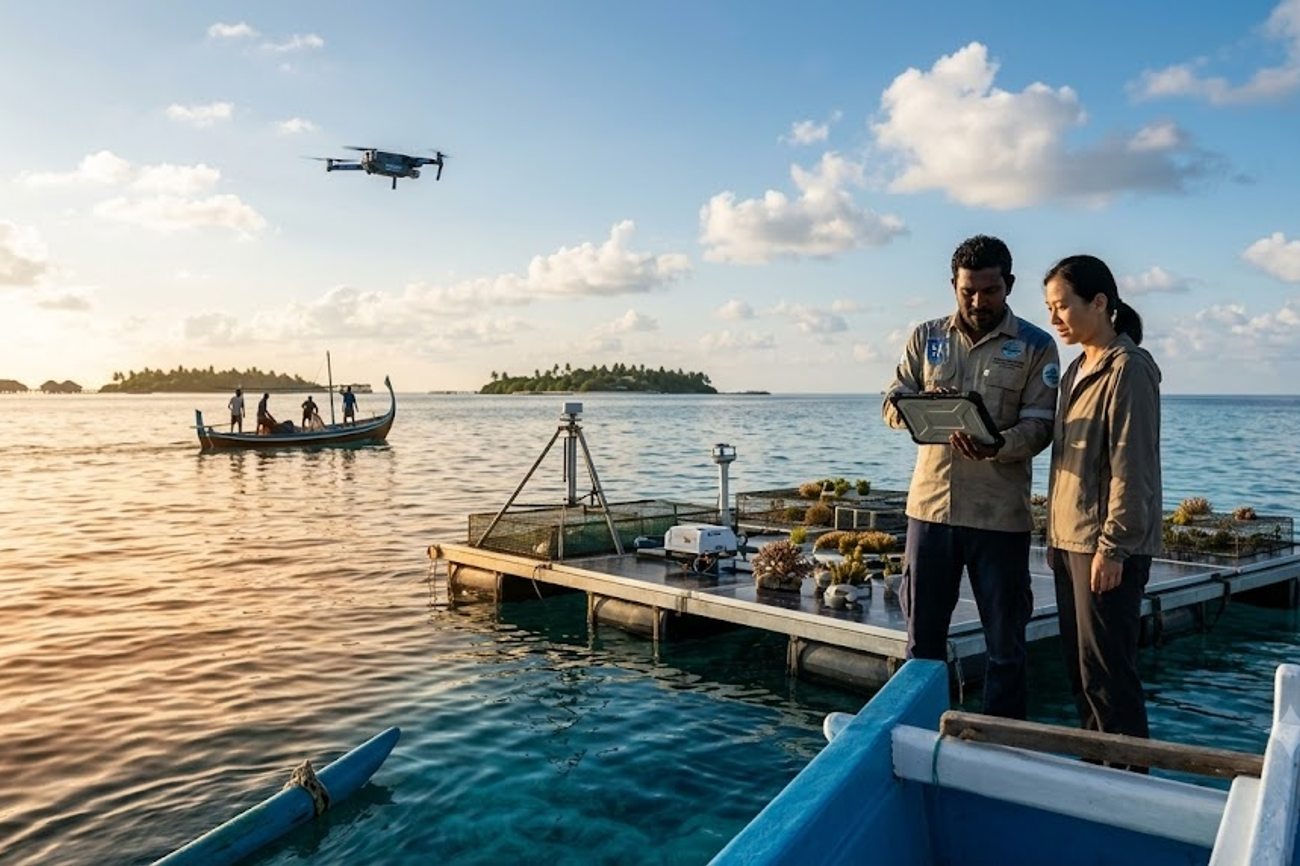
Image generated by AI
The Maldives has launched a technical marine training program in partnership with China’s Hainan University, training over 50 Maldivian fisheries scientists, marine researchers, and government officials to expand the country's blue economy and ocean-based tourism sector. The collaborative initiative focuses on coral reef restoration, tropical aquaculture, and marine conservation to safeguard the underwater ecosystems that anchor the nation's multi-billion-dollar resort and eco-tourism industry.
Blue Economy Framework & Institutional Marine Collaboration
Organized by Hainan University in coordination with the Maldivian Ministry of Fisheries, Agriculture and Ocean Resources, the Maldives Marine Research Institute, and Maldives National University, the technical training program aims to strengthen institutional knowledge in sustainable ocean resource management.
The curriculum equips Maldivian oceanographers and fisheries officers with practical methodologies for climate adaptation, ocean thermal stress mitigation, and marine biodiversity protection. Because the Maldives' global brand as a luxury resort destination relies on marine ecosystems, protecting coral reefs directly supports eco-tourism, diving excursions, and marine wildlife encounters.
The environmental framework is supported by national marine tourism initiatives overseen by the Ministry of Tourism of Maldives.
| Partner Institution | Technical & Academic Contribution | Core Training Focus | Strategic Tourism & Ecological Impact |
|---|---|---|---|
| Ministry of Fisheries & Ocean Resources | Policy implementation & resource management | Sustainable fisheries regulation | Environmental protection across fishing & tourism zones |
| Maldives Marine Research Institute (MMRI) | Oceanographic research & data collection | Coral reef restoration & marine monitoring | Enhanced marine protected area (MPA) management |
| Hainan University | Academic specialists & technical instruction | Tropical aquaculture & marine biotechnology | Knowledge transfer for sustainable ocean development |
| Maldives National University | Faculty training & student research integration | Marine biology & climate adaptation | Local capacity building for eco-tourism careers |
Traveler Logistics & Island Eco-Tourism Transit Guide
Visiting the Maldives for eco-tourism, marine research, or resort leisure involves specialized inter-atoll transportation channels:
Primary International Gateway
All international visitors and visiting marine scientists arrive at Velana International Airport (MLE) located on Hulhulé Island, adjacent to the capital city of Malé.
Inter-Atoll Resort Transit Options
- Seaplane Transfers: Trans Maldivian Airways (TMA) operates seaplane flights from the dedicated seaplane terminal at MLE to resort lagoons across outer atolls (including Baa, Ari, Noonu, and Dhaalu atolls). Seaplanes operate strictly during daylight hours (6:00 AM to 4:30 PM).
- Speedboat Transfers: Resorts situated within North and South Malé Atolls are accessible via 15-to-45-minute speedboat rides departing directly from the airport jetty.
- Public Ferry Services: Travelers accessing local inhabited islands can utilize the Maldives Transport and Contracting Company (MTCC) public ferry network operating from Malé.
Marine Protection & Diving Protocols
Eco-tourists engaging in diving or snorkeling excursions are subject to environmental regulations designed to protect fragile coral ecosystems. Visitors must use reef-safe, chemical-free sunscreens, refrain from touching or stepping on coral structures, and observe strict distance guidelines near protected marine species within Marine Protected Areas (MPAs) and UNESCO Biosphere Reserves such as Baa Atoll.
Environmental Resilience & Tourism Strategy Impact Assessment
The integration of blue economy principles into Maldivian marine management aligns with international demand for environmentally responsible travel. Protecting coral reef structures preserves natural barrier reefs that shelter island resorts from coastal erosion while maintaining rich marine habitats for long-haul dive tourists.
Key Program Highlights
- Training Scale: Over 50 marine researchers, fisheries scientists, and policy officials participated.
- Lead Institutions: Hainan University, Ministry of Fisheries, MMRI, Maldives National University.
- Technical Focus: Coral reef restoration, marine biodiversity conservation, tropical aquaculture, sustainable fisheries.
- Tourism Impact: Preserving underwater ecosystems for resort diving, snorkeling, and sustainable eco-tourism.
Strategic Logistics Analysis and 2026 Traveler Insights
The Maldives, renowned for its pristine beaches and vibrant coral reefs, is poised to become a hub for sustainable eco-tourism, thanks to its partnership with China's Hainan University. As the country embarks on this new journey, travelers can expect a unique blend of luxury and environmental responsibility. To make the most of their trip, visitors should consider the following strategic logistics analysis and 2026 traveler insights.
When planning a trip to the Maldives, timing is crucial. The peak tourist season runs from December to April, with the best weather conditions and calm seas. However, this period also coincides with the highest prices for accommodations and tourist services. Travelers looking for a more budget-friendly option may consider visiting during the shoulder season, from May to June or September to November, when the weather is still pleasant and the crowds are smaller.
Booking considerations are also essential for a smooth and enjoyable trip. With the growing focus on sustainable tourism, many resorts are now offering eco-friendly packages and activities, such as coral reef restoration programs and marine conservation initiatives. Travelers can research and book these packages in advance to ensure availability and make a positive impact on the local environment.
In terms of transit alternatives, the Maldives has made significant strides in recent years. The country's main airport, Velana International Airport, receives flights from major airlines around the world, including China, India, and the Middle East. Additionally, the Maldives has introduced a new ferry service connecting the capital city, Malé, to nearby islands, providing a more affordable and environmentally friendly option for travelers.
Regional context is also important for travelers to consider. The Maldives is located in the Indian Ocean, southwest of India and Sri Lanka. The country's unique geography, with its 26 atolls and over 1,000 islands, makes it an ideal destination for island-hopping and exploring the rich marine biodiversity. Travelers can take advantage of the many liveaboard boats and diving operators that offer trips to the outer atolls, where they can experience the untouched beauty of the Maldivian coral reefs.
For travelers interested in participating in the blue economy training program or contributing to coral reef restoration efforts, there are several options available. The Maldives Marine Research Institute (MMRI) offers research opportunities and volunteer programs for students and professionals, while the Ministry of Fisheries, Agriculture and Ocean Resources provides training and capacity-building programs for local communities. Travelers can also support local eco-tourism initiatives by choosing responsible tour operators and resorts that adhere to sustainable practices and support conservation efforts.
In 2026, travelers can expect to see further developments in the Maldives' sustainable tourism sector, with a focus on community-based tourism and environmental conservation. The government has announced plans to establish new marine protected areas and implement stricter regulations on fishing and tourism activities. As a result, travelers can expect a more immersive and responsible tourism experience, with opportunities to engage with local communities and contribute to the conservation of the Maldivian coral reefs.
Overall, the Maldives offers a unique and unforgettable travel experience, with its stunning natural beauty, rich culture, and commitment to sustainability. By considering the strategic logistics analysis and 2026 traveler insights, visitors can make the most of their trip and contribute to the country's efforts to become a leader in sustainable eco-tourism. Whether you're a seasoned traveler or a first-time visitor, the Maldives is a destination that is sure to inspire and captivate, with its turquoise waters, pristine beaches, and vibrant coral reefs.
Frequently Asked Questions: Maldives Blue Economy & Tourism (2026)
How does the Maldives-China marine partnership benefit tourism?
The partnership focuses on coral reef restoration and marine conservation, protecting the underwater biodiversity that attracts millions of diving, snorkeling, and eco-tourism visitors to the Maldives.
Which Maldivian institutions participated in the Hainan University training program?
More than 50 participants represented the Ministry of Fisheries, Agriculture and Ocean Resources, the Maldives Marine Research Institute (MMRI), and Maldives National University.
How do visitors travel from Velana International Airport to outer resort atolls?
Travelers transfer to outer atoll resorts via Trans Maldivian Airways seaplanes during daylight hours or via high-speed boats for resorts located in North and South Malé Atolls.
Related Travel Guides
- Iceland Reviews Tourism Levy As Reykjanes Travel Demand Grows
- Travel Estonia Taking Center Stage: Why Solo Female Travelers Are Choosing This Baltic Nation in 2026
- Kazakhstan and Russia Open Altai Border Corridor for Belukha Mountain Tourism Amid $200 Oil Shock and Strait of Hormuz Blockade: How US-Iran Conflict Pivots Central Asia to Low-Carbon Overland Travel
Disclaimer
This article is for informational and educational purposes only. It does not constitute legal, financial, or professional advice. While we strive to provide accurate and up-to-date information, travel policies, regulations, and conditions change rapidly. Always verify information with official sources before making travel decisions. Nomad Lawyer makes no representations about the accuracy, reliability, completeness, or suitability of the information provided. Readers should consult qualified professionals for advice specific to their circumstances. The views expressed in this article are those of the author and do not necessarily reflect the views of Nomad Lawyer.
Kunal K Choudhary
Co-Founder & Contributor
A passionate traveller and tech enthusiast. Kunal contributes to the vision and growth of Nomad Lawyer, bringing fresh perspectives and driving the community forward.
Learn more about our team →