
Maldives South Male Atoll Manta Ray Tourism Drives September Economic Growth Supported by Marine Protected Area Data
Manta-led marine tourism in South Malé Atoll fuels dive boats, guesthouses, and Kandooma's 3rd annual Manta Month.

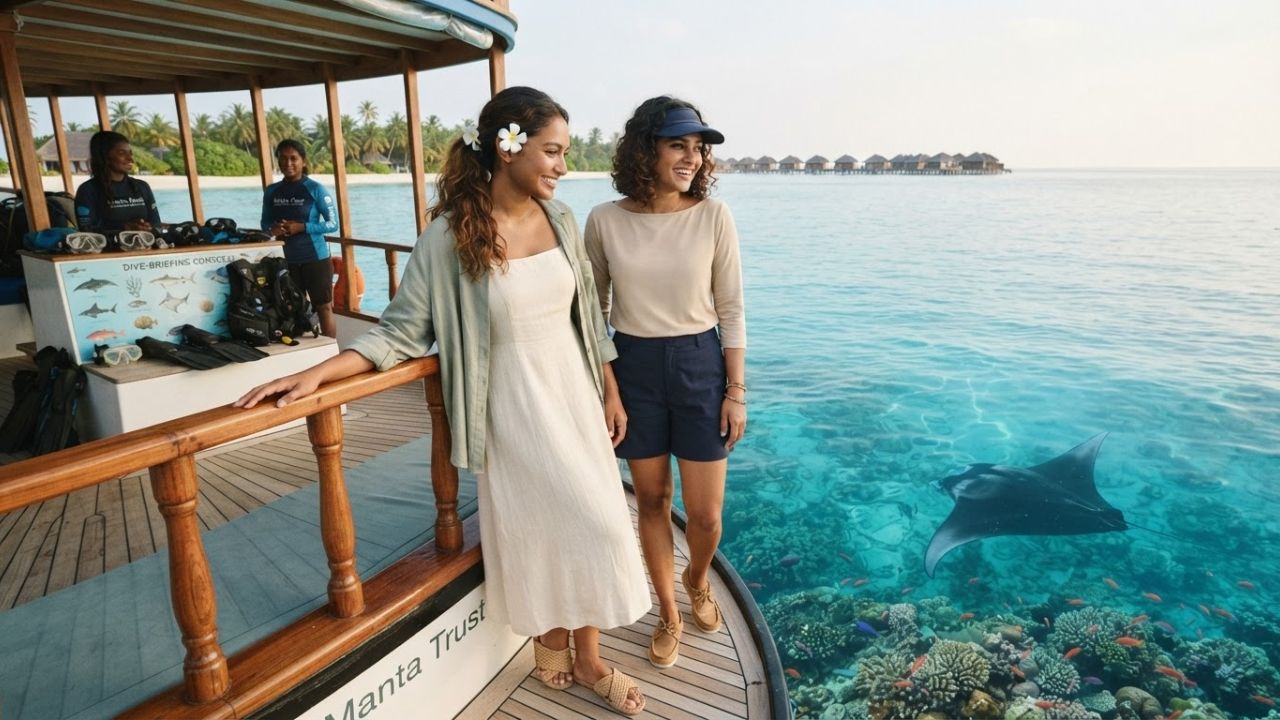
Image generated by AI
Marine conservation is powering the Maldivian travel economy as seasonal manta ray aggregations in South Malé Atoll drive over $311 million in annual economic activity across dive operators, local guesthouses, and island resorts.
[SOUTH MALÉ ATOLL, Maldives, Sept. 3, 2026] — Seasonal manta ray sightings across South Malé Atoll are channeling millions of dollars directly into local island economies, transforming marine protection from an environmental campaign into a primary financial growth engine. Structured dive excursions, liveaboard safari vessels, and dedicated resort programming are filling local guesthouses and excursion craft across the archipelago. Government environmental assessments confirm that predictable wildlife encounters allow marine operators to command premium pricing, directly benefiting local communities on inhabited islands alongside international resort chains.
The economic model hinges on protecting vital marine habitats while establishing clear commercial frameworks for eco-tourism. Research highlights that non-extractive marine tourism yields long-term financial returns that far exceed traditional resource extraction, providing a sustainable template for island nations worldwide.
Multi-Million Dollar Valuations Underline Maldivian Manta Ray Economic Impact
Peer-reviewed environmental research published in PLOS ONE (June 2026) established that manta ray tourism directly generated US$227.3 million for the Maldives in 2021. That economic output accounted for approximately 2.6% of the nation's total gross domestic product (GDP). When factoring in wider supply chain spending, direct financial benefits to local businesses, island communities, and government tax revenue exceed US$311 million annually.
The long-term asset value of the marine species is even higher. Scientists estimate the cumulative lifetime tourism contribution of the Maldivian reef manta ray (Mobula alfredi) population at US$8.6 billion. On an individual basis, a single reef manta ray carries an estimated lifetime tourism value of US$2.6 million over its natural lifespan.
| Economic / Operational Parameter | Measured Metric & Data Value | Tourism & Conservation Significance |
|---|---|---|
| 2021 Manta Tourism GDP Contribution | US$227.3 Million (2.6% of national GDP) | Direct economic output from manta encounters |
| Annual Direct Economic Benefit | >US$311 Million annually | Total business, community, & tax revenue |
| Reef Manta Lifetime Tourism Value | US$8.6 Billion (US$2.6M per individual manta) | Long-term economic argument for species conservation |
| Guraidhoo Kanduolhi MPA Area | 352 Hectares (Protected Sept 1995) | Primary manta cleaning station & feeding ground |
| Local Island Guesthouses Supported | 78 Registered Guesthouses (Maafushi, Gulhi, Guraidhoo) | Multiplier effect supporting local island economies |
| Daily Maafushi Boat Excursions | 3 to 4 boats/day (20–30 tourists/vessel) | Direct revenue for local dive captains & guides |
| Safari Liveaboard Fleet | 12+ Liveaboard Vessels (7–10 day itineraries) | High-value liveaboard diving across South Malé |
| Excursion Pricing Range | US$45 to US$55 per person | Base price for specialized marine wildlife tours |
These figures demonstrate why state agencies treat wildlife preservation as a core economic strategy. By maintaining pristine reef conditions, the Maldives secures a recurring revenue stream that scales with international travel demand.
Guraidhoo Kanduolhi Marine Protected Area Anchors South Malé Tourism
The financial success of marine tourism in South Malé Atoll relies heavily on the Guraidhoo Kanduolhi Marine Protected Area (MPA). Designated as a sanctuary in September 1995, the 352-hectare marine zone protects essential cleaning stations and feeding grounds for reef mantas.
Government data published by the Ministry of Climate Change, Environment and Energy indicates that the sanctuary directly sustains commercial operations across three main inhabited islands: Guraidhoo, Gulhi, and Maafushi. A total of 78 registered guesthouses operate across these three local islands, alongside 11 nearby luxury resort properties.
The proximity of the protected area ensures that small-scale local entrepreneurs can offer world-class diving experiences without requiring massive capital infrastructure. Consequently, guesthouse operators and independent dive shops capture a substantial share of regional tourist expenditure.
Daily Dive Fleet Operations Channel Spending Into Local Island Economies
During the peak manta season running from April through November, excursion craft move continuously between inhabited islands and protected dive sites. On Maafushi alone, local dive centers deploy three to four excursion vessels daily, carrying between 20 and 30 tourists per boat.
In addition to day-trip vessels, monitoring data shows 12 or more liveaboard safari vessels operating in the area during high-demand weeks. These liveaboards run seven-to-ten-day itineraries around South Malé Atoll, identifying Guraidhoo Kanduolhi as a central diving highlight.
Standard excursion and diving fees range between US$45 and US$55 per person per trip. Secondary expenditures—including scuba gear rentals, professional dive guide services, local dining, and boat transfers—further amplify local revenue generation. Because manta ray appearances follow predictable seasonal weather patterns, operators can schedule high-frequency trips with minimal operational downtime.
Kandooma Manta Month Expands Shoulder Season European Travel Demand
Recognizing the commercial weight of wildlife tourism, private operators are designing entire operational months around marine conservation. Holiday Inn Resort Kandooma Maldives commenced its third annual Manta Month throughout September 2026, following its initial week-long launch and subsequent full-month expansions in September 2024 and September 2025.
Promoted internationally under the IHG brand, the program combines guided scuba diving and snorkeling with marine biology lectures, youth workshops, and reef clean-up activities. The resort also sells custom manta pendants, donating US$5 from every purchase directly to the Manta Trust to support marine research.
The strategic timing of Manta Month addresses traditional seasonal lulls. Destination data from Visit Maldives shows that European travel habits are shifting in 2026. One in five European visitors (20%) now selects September and autumn travel windows over the traditional August peak, embracing a "smart shoulder season." By framing September around specialized manta ray encounters, regional hospitality providers convert a former shoulder season into a high-yield booking period.
Professional Certification Multipliers Boost Employment for Island Youth
The expansion of marine tourism creates distinct career pathways across Maldivian communities. High visitor volume supports ongoing demand for certified dive masters, licensed boat captains, hospitality staff, and professional marine guides.
Local dive centers provide formal training and professional certifications for young residents. This vocational ladder allows island youth to transition into skilled maritime and environmental management positions within their home communities.
Furthermore, state environmental management frameworks for Guraidhoo Kanduolhi incorporate strict visitor limits and boat handling protocols. These measures prevent overcrowding at dive spots, ensuring that increased tourist volume does not degrade the marine habitats that drive the economy.
Why This Matters (Information Gain & Experience)
For travelers, the commercialization of manta ray protection guarantees structured, highly regulated wildlife interactions that prioritize animal welfare and diver safety. Instead of unguided or potentially harmful tours, visitors gain access to certified marine biologists and experienced dive masters who understand local current conditions and species behavior.
From a logistical standpoint, the alignment of guesthouse networks and resort schedules gives travelers flexible price points. Independent backpackers staying on Maafushi and luxury guests staying at private island resorts share access to the same protected marine habitats, democratizing access to world-class diving.
From an economic and governance perspective, the Maldivian model proves that living wildlife generates vastly more capital through sustainable observation than through exploitation. Every dive fee collected helps fund sanctuary monitoring, enforcing environmental compliance while securing reliable livelihoods for coastal communities.
Frequently Asked Questions
When does Manta Month take place at Holiday Inn Resort Kandooma?
Manta Month takes place throughout the entire month of September, offering guided dives, snorkeling, marine education, and conservation clean-ups.
Where is the Guraidhoo Kanduolhi Marine Protected Area located?
The 352-hectare protected area is located in South Malé Atoll, adjacent to Kandooma and near the inhabited islands of Guraidhoo, Gulhi, and Maafushi.
How much revenue does manta tourism generate for the Maldives?
Research published in PLOS ONE indicates manta tourism generated US$227.3 million in 2021 (2.6% of national GDP), with direct annual economic benefits exceeding US$311 million and a lifetime population tourism value of US$8.6 billion.
How do travelers transit to South Malé Atoll from Malé Airport?
Travelers can take a 45-minute resort speedboat from Velana International Airport (MLE) to Kandooma, or utilize scheduled local speedboats (30–45 minutes, ~$25–$30) and public MTCC ferries to reach Maafushi, Gulhi, and Guraidhoo.
Related Travel Guides
- Air Canada Unveils Record Summer 2027 Expansion Adding Five New Intercontinental Destinations Across Vancouver Toronto and Montreal Hubs
- India and Belgium Announce Accelerated Schengen Visa Processing and Direct Flight Push Following September Summit
- Nigeria Air Peace Acquires Ex Kenya Airways Embraer E190 Registered 5N-CET Expanding Regional West African Network
Disclaimer
This article is for informational and educational purposes only. It does not constitute legal, financial, or professional advice. While we strive to provide accurate and up-to-date information, travel policies, regulations, and conditions change rapidly. Always verify information with official sources before making travel decisions. Nomad Lawyer makes no representations about the accuracy, reliability, completeness, or suitability of the information provided. Readers should consult qualified professionals for advice specific to their circumstances. The views expressed in this article are those of the author and do not necessarily reflect the views of Nomad Lawyer.
Raushan Kumar
Founder & Lead Developer
Full-stack developer with 11+ years of experience and a passionate traveller. Raushan built Nomad Lawyer from the ground up with a vision to create the best travel and law experience on the web.
Learn more about our team →