
Malawi's Majete Wildlife Reserve Pioneers Africa's New Conservation Blueprint: 1.37 Million Hectares Across Four Nations
From a depleted wilderness to a Big Five sanctuary, Malawi's Majete Reserve launches the Verifiable Nature Unit model, expanding across Chad, DRC, and Congo.

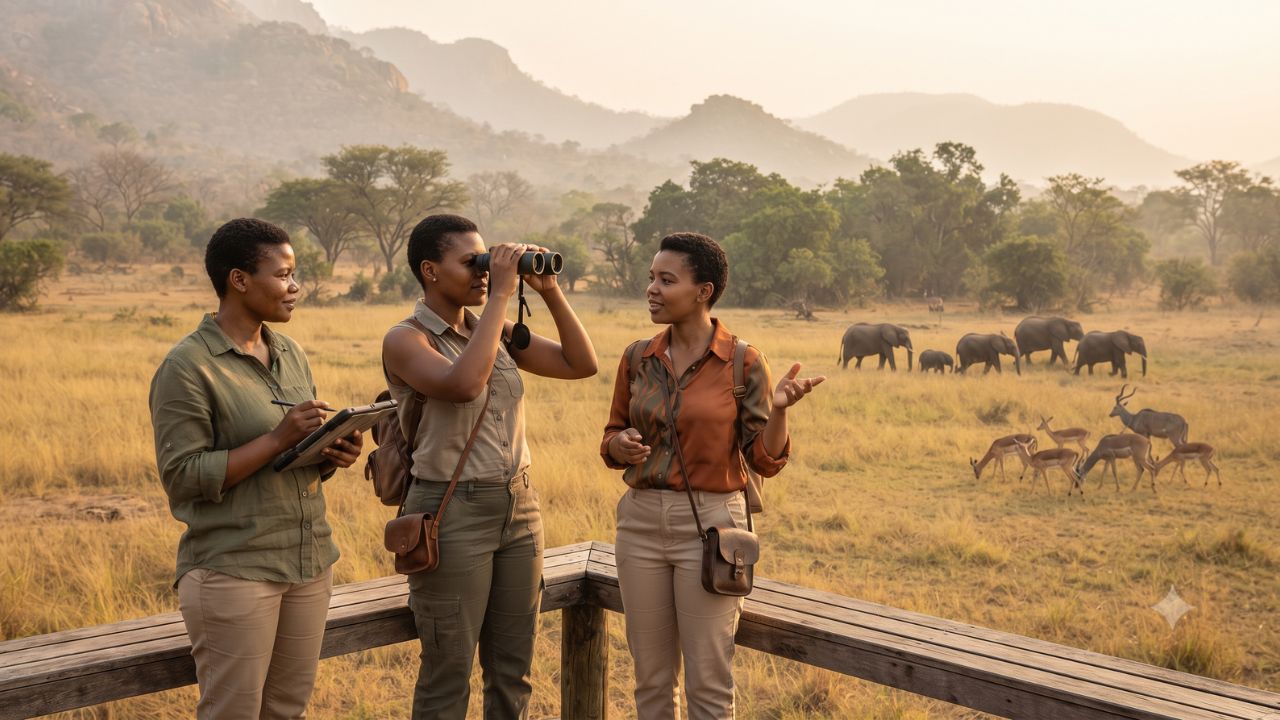
Twenty years after being written off as a completely depleted forest stripped of wildlife by commercial poachers, Malawi's Majete Wildlife Reserve has reintroduced over 3,000 animals across 17 species and launched an ecological auditing framework now protecting 1.37 million hectares of wilderness across four African nations. Developed jointly by the non-profit African Parks Official Conservation Network and The Landbanking Group, the Verifiable Nature Unit (VNU) system links verified biodiversity improvements directly to long-term conservation funding.
The transformation of Majete in southwestern Malawi represents one of the most successful wildlife recoveries on the continent. When African Parks secured its first-ever management mandate from the Malawian government in 2003, the reserve held zero elephants, zero lions, and almost no large mammals.
Over the following two decades, systematic translocations brought black rhinos in 2003, elephants in 2006, lions in 2012, giraffes in 2018, cheetahs in 2019, and endangered African wild dogs in 2021. Today, Majete stands as a thriving Big Five reserve and the testing ground for an empirical approach to financing conservation.
The VNU Framework: Auditing Ecosystem Health Over Time
Unlike traditional carbon offsets or theoretical biodiversity credits, a Verifiable Nature Unit is an independently verified, data-driven metric. Each VNU represents precisely one square kilometer of natural habitat where ecological integrity has been maintained or measurably improved over a defined 12-month evaluation cycle.
AFRICAN PARKS VNU CONSERVATION NETWORK MATRIX
| Entity / Route | Metrics | Operational Status |
|---|---|---|
| Protected Park | Host Nation & Habitat | Key Species & VNU Scope |
| Majete Wildlife | Southwestern Malawi | 711 VNUs issued (2024–2025); |
| Reserve | Miombo & Riverine | Big Five & African Wild Dogs |
| Zakouma National | Southeastern Chad | Savanna Elephant Herds, |
| Park | Sahelian Floodplains | Kordofan Giraffes & Lions |
| Garamba National | Democratic Republic | Northern Savanna Elephants & |
| Park | of the Congo | White Rhinos / Kordofan Giraffe |
| Odzala-Kokoua | Republic of the Congo | Western Lowland Gorillas, |
| National Park | Dense Guineo-Congolian | Forest Elephants & Bongo |
The auditing framework relies on machine learning, satellite imagery, ranger field patrols, and independent third-party scientific verification. Assessments measure two primary indicators:
- Habitat Intactness: Tracking canopy cover, soil moisture, and preventing deforestation or illegal agricultural encroachment.
- Indicator Species Abundance: Monitoring reproductive rates and herd densities among keystone herbivores and apex predators.
Majete piloted the methodology with 711 VNUs issued in 2024 and reissued in 2025. Building on this baseline, African Parks expanded the system across 1.37 million hectares (13,700 square kilometers) in 2025 and 2026, encompassing Odzala-Kokoua in the Republic of the Congo, Garamba in the Democratic Republic of the Congo, and Zakouma in Chad.
What Makes Majete and Malawi's Safari Circuit Different
While safari destinations like Kenya and South Africa experience heavy vehicle congestion around predator sightings, Malawi offers uncrowded, low-impact game viewing in intimate wilderness settings.
Promoted through the Malawi Tourism Official Portal, the country is celebrated as the "Warm Heart of Africa." Travelers can combine morning boat safaris along the Shire River in Majete with afternoon freshwater snorkeling among endemic cichlid fish species in UNESCO World Heritage Centre listed Lake Malawi National Park.
Intimate Boat and Walking Safaris
Majete's topography spans dense miombo woodlands, granite kopjes, and riverine forests along the Shire River. Visitors can take guided walking safaris with armed park scouts, tracking lion prides on foot and observing elephant breeding herds drinking at waterholes without competing with dozens of minibuses.
Community Enterprise and Buffer Zones
The next phase of the VNU model expands beyond park boundaries into community-managed buffer zones. In surrounding villages, African Parks funds community health clinics, builds solar-powered primary schools, and supports sustainable beekeeping and poultry cooperatives, ensuring local residents benefit directly from wildlife preservation.
Comprehensive African Parks Expedition Breakdown
| Sanctuary / Reserve | Country | Dominant Ecosystem | Signature Wildlife Encounter | Best Travel Months |
|---|---|---|---|---|
| Majete Wildlife Reserve | Malawi | Miombo woodland & Shire River | Big Five game drives & boat safaris | May to October (Dry winter) |
| Zakouma National Park | Chad | Sahelian savanna & floodplains | Massive elephant herds & bird flocks | January to April (Sahel dry) |
| Odzala-Kokoua Park | Rep. of Congo | Primary equatorial rainforest | Western Lowland Gorilla tracking | June to September / Dec–Feb |
| Garamba National Park | DR Congo | Dense savanna & gallery forest | Kordofan giraffes & elephant herds | November to March (Dry season) |
Visitor Insider Tips
Experiencing Malawi's premier wildlife sanctuary smoothly requires thoughtful field preparation:
- Visit During the Dry Season (May to October): Waterholes along the Shire River dry up in winter, forcing elephants, buffalo, and waterbucks into concentrated riverbanks where predators lie in wait.
- Combine Majete with Liwonde and Lake Malawi: Create a complete southern circuit. Drive two hours northeast to Liwonde National Park for riverboat cheetah viewings, then continue to Cape Maclear on Lake Malawi for freshwater sailing.
- Support Community Honey Cooperatives: Purchase jars of wild blossom honey harvested by village beekeepers outside Majete's perimeter fence. The honey project prevents illegal charcoal burning while generating household income.
- Pack Dull Earth-Toned Clothing: For walking safaris, bright colors and pure white garments startle wild game, while dark blue and black attract tsetse flies. Wear olive, khaki, or tan linen shirts and sturdy trail boots.
- Pre-Book Mkulumadzi or Community Campsite: Stay at luxury tented lodges like Robin Pope Safaris' Mkulumadzi on the Shire River, or book the community-run Thawale Camp, where private chalets overlook an active floodlit waterhole.
Cultural and Environmental Context
Wildlife tourism in Malawi functions as a vital engine for rural poverty alleviation. In regions where subsistence agriculture faces recurring climate droughts, park employment as rangers, trackers, hospitality staff, and fence monitors offers steady, dignified livelihoods.
By expanding the VNU accounting model into surrounding village lands, conservation organizations ensure that local Malawian communities are recognized as active stewards of the environment. Travelers who visit Majete participate in an ethical travel model where safari lodge fees fund anti-poaching canine units, wildlife veterinary care, and local community development.
FAQ: Visiting Majete and African Parks 2026
Where is Majete Wildlife Reserve located?
Majete is located in southwestern Malawi's Lower Shire Valley, approximately 70 kilometers (a 1.5-hour drive) southwest of the commercial city of Blantyre.
Can you see all of the Big Five in Majete?
Yes. Following twenty years of systematic wildlife translocations, Majete is home to flourishing populations of lion, leopard, elephant, black rhino, and buffalo.
What is a Verifiable Nature Unit (VNU)?
A VNU is an independently audited data metric representing one square kilometer of land where ecological integrity and species health are maintained or improved annually.
What vaccinations and medications are required for Malawi?
Travelers should take prescription antimalarial medication, carry proof of standard vaccinations, and use high-potency insect repellent throughout the Shire Valley.
By proving that devastated ecosystems can be fully restored and responsibly audited, Majete offers a beacon of hope for wildlife conservation and sustainable safari tourism across Africa.
Related Travel Guides
Disclaimer
This article is for informational and educational purposes only. It does not constitute legal, financial, or professional advice. While we strive to provide accurate and up-to-date information, travel policies, regulations, and conditions change rapidly. Always verify information with official sources before making travel decisions. Nomad Lawyer makes no representations about the accuracy, reliability, completeness, or suitability of the information provided. Readers should consult qualified professionals for advice specific to their circumstances. The views expressed in this article are those of the author and do not necessarily reflect the views of Nomad Lawyer.
Raushan Kumar
Founder & Lead Developer
Full-stack developer with 11+ years of experience and a passionate traveller. Raushan built Nomad Lawyer from the ground up with a vision to create the best travel and law experience on the web.
Learn more about our team →