
Major Airport Took Nearly a Decade to Open: €9B Overbudget
A European hub's decade-long construction delays and €9 billion cost overrun in 2026 expose systemic infrastructure project management failures affecting millions of travelers.

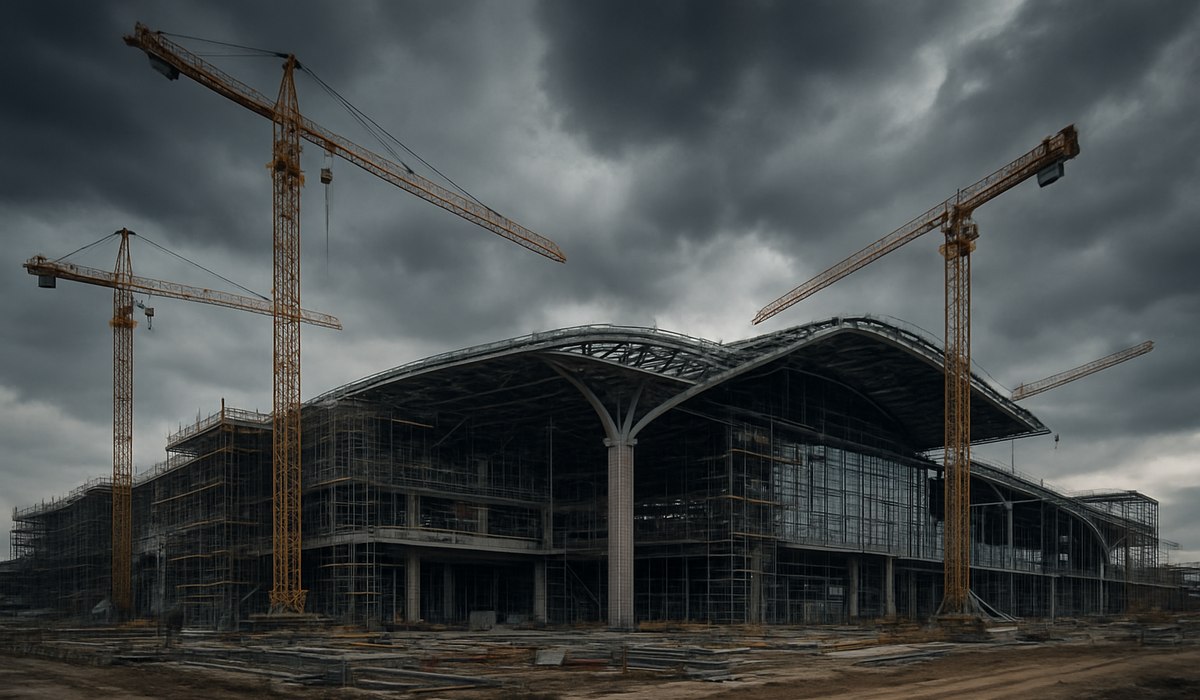
Image generated by AI
A Decade-Long Construction Nightmare: Europe's Most Expensive Airport Opens Years Behind Schedule
Berlin Brandenburg Airport, one of Europe's most ambitious infrastructure projects, finally opened its doors after a staggering 10-year delay and €9 billion in cost overruns. What was supposed to be a streamlined gateway connecting Germany's capital to the world became a cautionary tale about the complexities of megaproject management. The facility, designed to consolidate Berlin's fragmented aviation operations, now handles approximately 36 million annual passengers—though the journey to this opening date tested patience, budgets, and regional economies alike.
The delays cascaded across every major European airline operating German routes, disrupting schedules for Lufthansa, Ryanair, easyJet, and dozens of international carriers. Passengers booking flights through Berlin faced uncertainty for years, while the airport's construction timeline became the subject of parliamentary inquiries and public frustration. Understanding how this major airport took nearly a decade to open reveals systemic vulnerabilities in European infrastructure planning.
Timeline of Delays: How a Decade-Long Project Unfolded
Planning for Berlin Brandenburg Airport began in 1992, but active construction didn't commence until 2006. Initial completion targets pegged the opening for 2010—a deadline that came and went without fanfare. By 2012, officials announced a revised opening date of 2014, which itself slipped repeatedly throughout the mid-2010s.
The project went through multiple internal investigations and leadership changes. Technical issues emerged during testing phases, forcing engineers to redesign baggage handling systems and security infrastructure. Budget revisions occurred annually, each adjustment revealing new complications. By 2020, the opening date had shifted to late 2020, then 2021, before finally materializing in October 2020 as a soft opening with full operations in 2026.
Political accountability became contentious. Multiple airport CEOs resigned or were replaced. The Berlin state government faced criticism from federal authorities and the Bundestag. Airlines, meanwhile, scrambled to adjust routing schedules, divert flights through Frankfurt and Munich, and manage passenger expectations.
Financial Fallout: Billions Over Budget and Economic Consequences
The original project budget stood at approximately €2.8 billion when serious construction began. By 2018, estimates had climbed to €6 billion. The final tally approached €12 billion when all interest costs and infrastructure adjustments were factored in—representing a 328% cost overrun.
These overages strained Berlin's municipal finances and drew scrutiny from the European Investment Bank, which had provided significant funding. Delays meant extended operations at the aging Tempelhof and Tegel airports, which required additional maintenance investments. Airlines absorbed costs through continued inefficient routing and extended ground times at congested hubs.
The economic ripple effects extended throughout the region. Businesses in Brandenburg expecting airport-adjacent development faced postponed projects. Hotel chains delayed expansions. Retail concessionaires cancelled commitments. By the time the major airport took nearly a decade to actually open, the surrounding economy had already adapted—not necessarily successfully—to extended uncertainty.
Root Causes Behind the Infrastructure Debacle
Multiple interconnected factors contributed to this decade-long delay. First, the design itself proved overly ambitious. The original architectural vision incorporated cutting-edge but untested baggage sorting technology, requiring extensive recalibration during construction phases.
Second, coordination failures plagued the project. Different contractors operated without unified scheduling systems. Change orders multiplied as soil conditions, utility relocations, and regulatory requirements evolved. The contract structure incentivized neither contractor nor management to meet deadlines aggressively.
Third, regulatory complexity mounted unexpectedly. Federal environmental assessments revealed issues requiring design modifications. Noise mitigation requirements became stricter after initial construction. Aviation safety protocols updated during the project timeline, necessitating infrastructure updates.
Fourth, political transitions disrupted continuity. Three different airport CEOs managed portions of the project, each introducing strategic shifts. Budget approvals required Bundestag votes, creating legislative delays independent of construction reality.
This major airport took nearly a decade to open partly because Germany's federal procurement system lacked the flexibility to adapt rapidly to emerging complications. Unlike private projects with unified ownership and accountability, public infrastructure required consensus across government entities, contractors, and regulatory bodies—a slower decision-making structure.
Impact on Airlines, Passengers, and Regional Economy
Airline Operations: Lufthansa, Germany's flagship carrier, maintained primary hubs elsewhere during the delays. Ryanair and easyJet operated limited Berlin capacity, forcing passengers toward Frankfurt. Air Berlin, once a significant Berlin-based operator, ultimately ceased operations in 2017, partly due to route uncertainty around the airport's opening timeline.
Passenger Inconvenience: Travelers faced longer connections through alternative hubs, increased ticket prices due to routing inefficiencies, and delayed access to direct routes. Business travelers experienced extended journey times. Tourism suffered as international visitors encountered confusion about Berlin's airport situation.
Regional Economic Impact: Hotels, restaurants, and retail businesses near the planned airport delayed expansion plans. Construction employment peaked around 2,000 workers, below projections. Regional GDP growth slowed as uncertainty discouraged business investment in the Brandenburg economy.
Current Operations: With the major airport finally operational in 2026, projections suggest €50 million annually in efficiency gains from consolidated operations. Passenger convenience should improve substantially. However, the years of delay created operational inertia—some airlines have already established alternative routing patterns that won't immediately reverse.
Check real-time flight information via FlightAware for current Berlin Brandenburg operations and any ongoing disruptions.
Timeline and Key Data Table
| Event | Date | Impact |
|---|---|---|
| Original planning begins | 1992 | Initial concept for unified Berlin gateway |
| Active construction commences | 2006 | Project timeline: 2010 target opening |
| First deadline missed | 2010 | Delays attributed to design revisions |
| Second deadline missed | 2014 | Baggage system redesign required |
| Third deadline missed | 2018 | Cost estimates reach €6 billion |
| Fourth deadline missed | 2021 | Political accountability crises |
| Soft opening occurs | October 2020 | Limited operations begin |
| Full operational status | 2026 | 36 million annual passenger capacity |
| Total cost overrun | €9 billion | 328% above original budget |
| Decade-plus duration | 1992–2026 | Planning to full operation |
What This Means for Travelers: Your Action Checklist
Understand how this major airport took nearly a decade to open and what travelers should do moving forward:
-
Verify Routing Before Booking: When selecting Berlin flights in 2026 and beyond, confirm the airport code is BER (Brandenburg) rather than outdated TXL (Tempelhof) references. Cross-reference with your airline's official website.
-
Allow Extra Connection Time: Legacy routing patterns through Frankfurt and Munich may still offer competitive pricing. If booked, expect 2–3 hour additional travel time compared to direct Berlin flights.
-
Monitor Airline Updates: Carriers including Lufthansa, Ryanair, and easyJet continue optimizing Berlin schedules. Subscribe to airline notifications for route announcements and schedule changes.
-
Check Ground Transportation: Berlin Brandenburg's ground access improved with the opening, but public transit integration continues evolving. Visit the airport's official website for current S-Bahn and bus connections.
-
Review Passenger Rights: If historical delays caused you inconvenience, European Regulation 261/2004 may entitle you to compensation. Consult the U.S. Department of Transportation for comparable protections if your routing involved U.S. connections.
-
Confirm Baggage Procedures: The newly implemented baggage system is state-of-the-art but unfamiliar to ground crews.
Disclaimer
This article is for informational and educational purposes only. It does not constitute legal, financial, or professional advice. While we strive to provide accurate and up-to-date information, travel policies, regulations, and conditions change rapidly. Always verify information with official sources before making travel decisions. Nomad Lawyer makes no representations about the accuracy, reliability, completeness, or suitability of the information provided. Readers should consult qualified professionals for advice specific to their circumstances. The views expressed in this article are those of the author and do not necessarily reflect the views of Nomad Lawyer.
Preeti Gunjan
Contributor & Community Manager
A passionate traveller and community builder. Preeti helps grow the Nomad Lawyer community, fostering engagement and bringing the reader experience to life.
Learn more about our team →