
Macau Braces for Historic 10% Summer Tourism Surge as Mainland China, Philippines, Japan Drive Record Arrivals in 2026
Macau expects unprecedented summer tourism growth with visitor numbers projected to soar 10% during peak season, fueled by strong demand from Mainland China, Philippines, Japan, Russia, Thailand, and India.

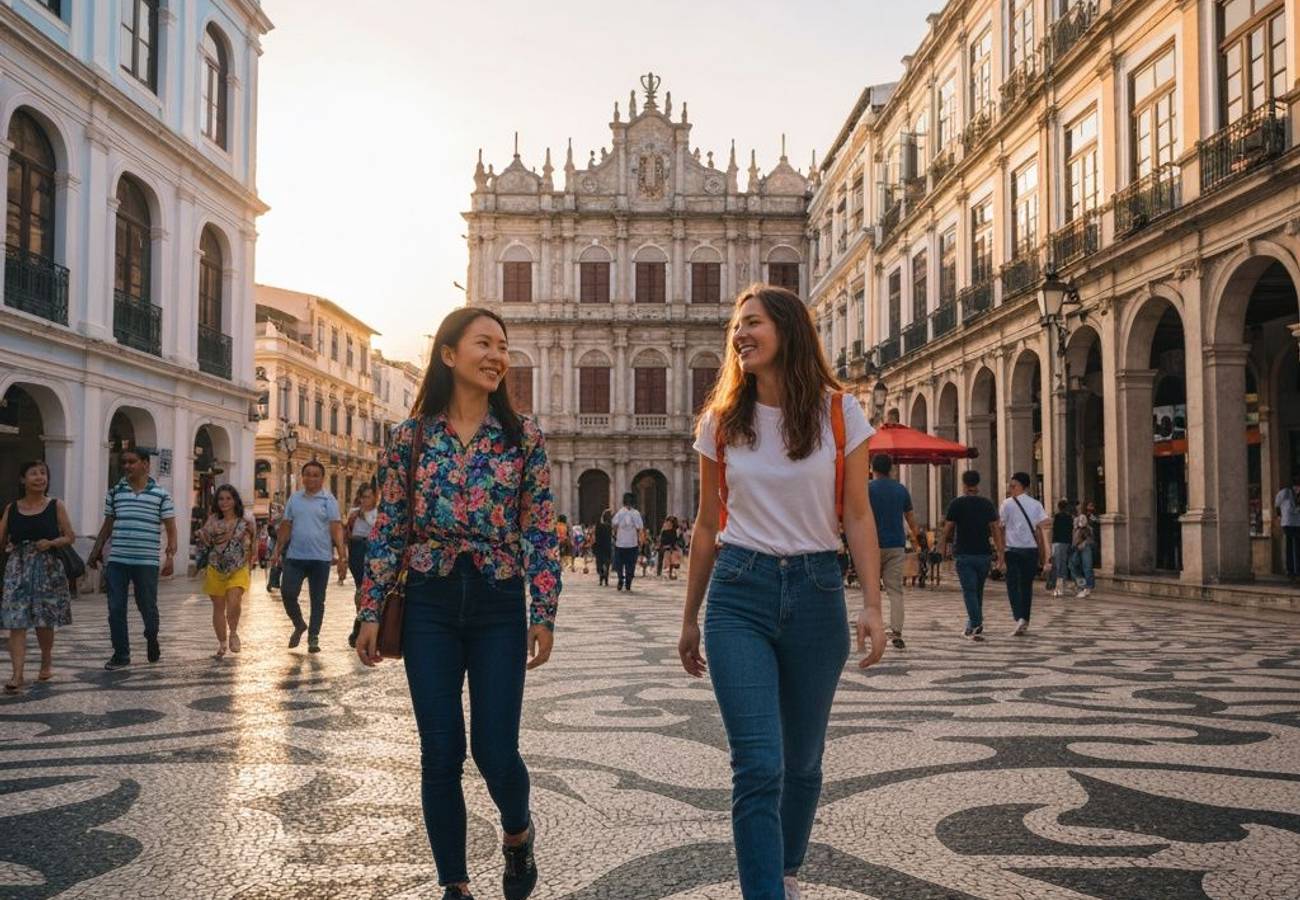
Image generated by AI
Macau Braces for an Unprecedented Summer as Visitor Numbers Expected to Skyrocket
Macau is steeling itself for what could be its most explosive summer tourism season on record. The city's tourism authorities are projecting a ten percent surge in visitor arrivals during the peak holiday period of 2026, driven by a perfect convergence of market recovery, expanded air connectivity, and booming outbound travel from across Asia and beyond.
The catalyst? A remarkable wave of demand from Mainland China, Philippines, Japan, Russia, Malaysia, Thailand, India, and a growing roster of international markets—all converging on the city simultaneously.
Reddit: "Macau is absolutely packed this summer. If you're thinking of going, book flights and hotels NOW." — r/travel
This isn't just another bump in arrivals. Industry analysts describe it as a structural shift in how Asian travelers are choosing destinations post-pandemic, with Macau positioned squarely at the epicenter.
Why This Summer Is Different: The Perfect Storm of Demand
The first half of 2026 has already delivered unmistakable signals. Early-year visitor statistics show consistent month-on-month growth, a trend that tourism economists say signals genuine underlying demand rather than statistical noise.
Several factors are converging to create this unprecedented surge:
Pent-up travel demand after years of regional restrictions remains robust and unabated. Expansion of direct flight routes into Macau International Airport has unlocked connectivity to cities previously underserved. The Greater Bay Area multi-destination travel strategy has transformed Macau from a standalone destination into a critical node in a broader regional circuit. Outbound travel propensity across Asia—particularly from Mainland China and India—has reached historical highs.
This combination has created a rare window where supply, demand, and infrastructure alignment perfectly.
The Mainland China Factor: Volume and Duration
Mainland China remains Macau's gravitational center. What's changed isn't just the volume of arrivals—it's the behavior of Mainland tourists themselves.
Post-restriction ease has triggered not merely day-tripping but genuine leisure travel with extended stays. Cross-border transport infrastructure improvements (particularly rail and road connectivity through the Guangdong-Hong Kong-Macau Greater Bay Area) have made multi-destination itineraries seamless. Collaborative tourism packages positioning Macau within larger regional circuits have proven wildly effective.
Mainland tourists now account for the plurality of arrivals and demonstrate higher spending on retail, hospitality, and entertainment than comparable international segments.
The International Surge: Seven Markets Driving Growth
The real story, however, lies in the diversification of Macau's source markets—a structural shift that reduces vulnerability to any single economy's fluctuations.
Philippines: The Young, Affluent Wave
Filipino travelers have emerged as one of Macau's fastest-growing international segments. Year-on-year arrival data show steady double-digit increases, driven primarily by younger adults and family groups with growing disposable income.
The Philippines' expanding middle class has coincided with expanded direct air connectivity. Airlines have responded to demand by increasing flight frequencies on key routes linking Manila, Cebu, and other major Philippine cities to Macau. Filipino travelers gravitate toward Macau's entertainment complexes, shopping districts, and cultural attractions—a profile that aligns perfectly with the city's premium leisure positioning.
Japan: Quality Over Quantity
Japanese visitors represent a smaller but disproportionately valuable segment. Japanese travelers exhibit strong preferences for:
Short-haul leisure travel with high-quality hospitality expectations. Multi-cultural experiences that blend entertainment, dining, and cultural immersion. Retail spending on luxury goods and designer brands.
Major Japanese airlines have responded to renewed demand by reinstating and expanding flights from Tokyo, Osaka, and regional hubs. The Japanese market recovery signals broader confidence in pan-Asian travel resumption.
Russia: The Long-Haul Premium Player
Perhaps most surprising is Russia's emergence as a significant long-haul market. Despite geographic distance, Russian leisure travelers—typically seeking premium experiences—have rediscovered Macau as a destination offering integrated resort entertainment, luxury shopping, and high-end hospitality.
The strength of Russian demand, even at distances exceeding 6,000 kilometers, reflects a global shift in travel patterns and renewed appetite for Asian destinations among affluent international travelers.
Thailand: The Standout Growth Story
Thailand has delivered the year's standout performance metric: nearly 60 percent year-on-year growth in visitor arrivals during early 2026.
Thai travelers are drawn by Macau's nightlife, entertainment venues, and seasonal promotional events. Group travel packages from Thailand have proliferated, and the demographic skews toward younger, repeat holidaymakers. This sustained surge suggests Thailand may now rank among Macau's top five source markets by volume.
Malaysia, India, and South Korea: The Reliable Engines
Malaysia continues delivering steady, predictable demand rooted in historical travel connections and geographic proximity. Malaysian visitors predominantly engage in cultural heritage exploration and multi-destination circuits.
India represents perhaps the most dynamic emerging opportunity. With outbound travel from India rising at unprecedented rates, Macau has captured market share through targeted promotions emphasizing cultural attractions, competitive packages, and positioning within multi-city itineraries (Singapore → Dubai → Thailand → Macau).
According to the Asian Development Bank, outbound travel from India is projected to grow 8-10% annually through 2030, making markets like Macau early beneficiaries of this structural shift.
South Korea remains robust, consistently ranking in Macau's top three international source markets outside Greater China. Korean travelers exhibit strong propensity for international leisure travel and significant per-capita spending.
Secondary and Emerging Markets Adding Depth
Beyond these primary markets, Singapore, Vietnam, Australia, United States, and multiple European countries contribute measurable, growing demand. This diversification is strategically significant—it insulates Macau from economic downturns in any single region.
The Infrastructure Advantage: Connectivity as Competitive Edge
The summer surge isn't occurring in a vacuum. Macau has systematically expanded its tourism infrastructure and air connectivity.
Increased flight frequencies on established routes have reduced ticket prices and improved accessibility. New direct routes have been added to underserved markets, particularly in Southeast Asia and South Asia. Cross-border transport improvements within the Greater Bay Area have made multi-destination travel logistically seamless.
The Greater Bay Area integration initiative has created a unified tourism ecosystem spanning Guangzhou, Shenzhen, Hong Kong, and Macau, multiplying the appeal of the entire region rather than individual cities.
What This Means for Hotels, Airlines, and the Broader Tourism Ecosystem
The projected 10 percent surge will test Macau's hospitality capacity. Premium hotels have already reported strong booking momentum for the summer peak. Airlines serving the market have added aircraft capacity and increased daily frequencies to major source markets.
Ground transportation, dining, and entertainment venues will face unprecedented demand. Industry observers suggest that service quality and operational efficiency will become critical competitive differentiators during the peak season.
For travelers planning summer visits to Macau, booking accommodation and air transport sooner rather than later is prudent. The convergence of demand from so many markets simultaneously suggests tight availability across premium segments.
The Bigger Picture: What Macau's Summer Reveals About Global Travel Patterns
Macau's summer surge is not isolated. It reflects broader truths about post-pandemic travel:
Pent-up demand remains powerful, particularly among affluent Asian travelers. Destination choice has become more diverse—travelers increasingly reject single-city itineraries in favor of regional circuits. Air connectivity improvements create outsized impacts on destination competitiveness. Emerging markets (India, Philippines) are becoming travel-source powerhouses as middle-class expansion accelerates.
The summer of 2026 will likely be studied as a pivotal moment in Macau's tourism recovery—the period when the city transitioned from recovering to thriving, when diversified demand stabilized growth, and when regional integration created a competitive advantage no single destination could replicate.
Macau's summer of 2026 could redefine how Asia thinks about premium leisure travel—and it's happening right now.
Related Travel Guides
Disclaimer
This article is for informational and educational purposes only. It does not constitute legal, financial, or professional advice. While we strive to provide accurate and up-to-date information, travel policies, regulations, and conditions change rapidly. Always verify information with official sources before making travel decisions. Nomad Lawyer makes no representations about the accuracy, reliability, completeness, or suitability of the information provided. Readers should consult qualified professionals for advice specific to their circumstances. The views expressed in this article are those of the author and do not necessarily reflect the views of Nomad Lawyer.
Raushan Kumar
Founder & Lead Developer
Full-stack developer with 11+ years of experience and a passionate traveller. Raushan built Nomad Lawyer from the ground up with a vision to create the best travel and law experience on the web.
Learn more about our team →