
Luxury Cruise Dining Trends 2026
Luxury Cruise Dining Trends 2026

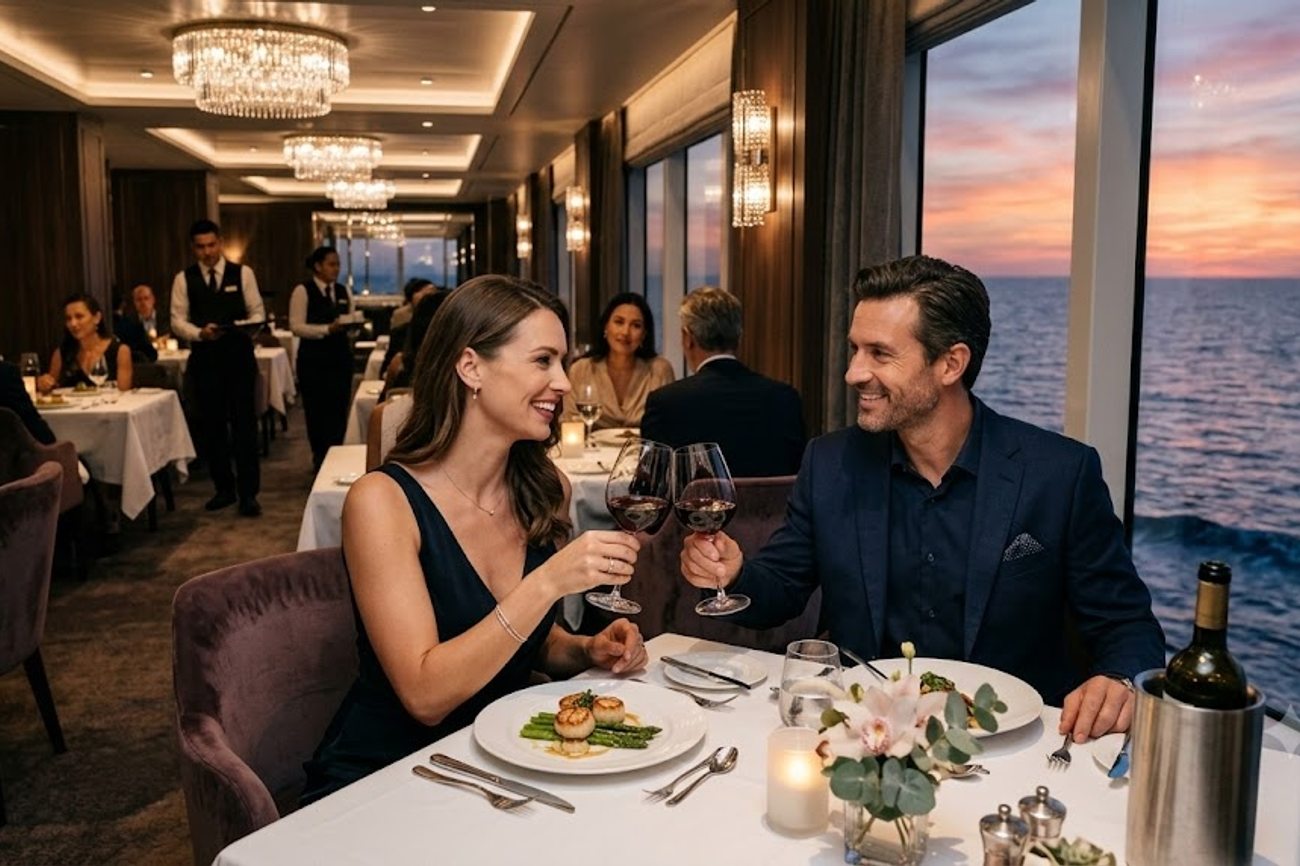
Image generated by AI
[Miami, May 2026] — Regent Seven Seas Cruises is preparing for the 2026 debut of the Seven Seas Prestige, a vessel designed to shift the luxury cruise paradigm by integrating high-concept gastronomy into the core destination experience. The ship enters a competitive market where dining is no longer a secondary amenity but a primary driver for bookings.
The Seven Seas Prestige joins an elite tier of vessels including the Celebrity Beyond, Icon of the Seas, and Explora I, all of which are aggressively expanding their culinary portfolios. As luxury travelers increasingly prioritize "foodie" itineraries, these cruise lines are deploying specialty restaurants, immersive technology, and destination-inspired menus to attract high-net-worth passengers. The shift represents a broader industry trend where the ship's galley is treated with the same importance as the ports of call.
The Shift Toward Culinary-Centric Voyaging
The catalyst for this evolution is a change in passenger demographics. Modern luxury travelers are moving away from traditional buffet-style dining in favor of curated, chef-led experiences. This has forced cruise operators to move beyond the "main dining room" model and instead implement a variety of niche concepts that mirror land-based Michelin-star experiences.
For the Seven Seas Prestige, this means a focus on exclusivity and scale. The vessel is configured for 822 guests across 411 suites, supported by a crew of 630. This high crew-to-guest ratio is essential for maintaining the service standards required by its high-end dining venues, which include Azure, Solmar Terrace, Prime 7, and the Culinary Arts Kitchen. By limiting the guest count, the line ensures that the culinary experience remains intimate rather than industrial.
Other operators are utilizing technology to differentiate their offerings. Celebrity Cruises has integrated theatrical elements into its dining via Le Petit Chef, where animated projections on the table guide guests through their meal. This approach transforms dinner from a necessity into a performance, targeting a younger, tech-savvy luxury market.
Market Comparison: Luxury Dining Profiles
The current landscape of luxury cruise dining is divided between "ultra-luxury" all-inclusive models and "premium" tiered models. The following breakdown illustrates the differing approaches across the industry's most prominent ships:
| Ship | Brand | Primary Dining Focus | Capacity / Data |
|---|---|---|---|
| Seven Seas Prestige | Regent Seven Seas | Ultra-luxury; Azure, Prime 7 | 822 guests; 411 suites |
| Celebrity Beyond | Celebrity Cruises | Immersive; Murano, Le Petit Chef | Annual count not verified |
| Icon of the Seas | Royal Caribbean | Mass-luxury; AquaDome Food Market | Annual count not verified |
| Utopia of the Seas | Royal Caribbean | Thematic; Royal Railway | Annual count not verified |
| Explora I | Explora Journeys | European-chic; Med Yacht Club | Annual count not verified |
| Viking Jupiter | Viking Ocean Cruises | Destination-led; Manfredi's | Annual count not verified |
| Disney Wish | Disney Cruise Line | Family-rotational; themed venues | Annual count not verified |
The Royal Caribbean Group is taking a different route with the Icon and Utopia of the Seas, focusing on "eatertainment." Their venues, such as the Royal Railway, prioritize spectacle and variety to cater to multi-generational families. In contrast, Viking Ocean Cruises focuses on the "World Café" and Manfredi’s, emphasizing regional authenticity and the culinary traditions of the specific waters the ship is traversing.
Practical Traveler Advisory and Strategic Insights
For the passenger, the rise of specialty dining creates a more personalized voyage but introduces new complexities in planning and budgeting.
1. The End of the "One-Size-Fits-All" Menu Travelers no longer have to rely on a single main dining room. Whether it is the French-influenced fine dining at Murano on the Celebrity Beyond or the specialized offerings at the Med Yacht Club on Explora I, passengers can now tailor their daily diet to their specific preferences.
2. Budgetary Shifts and "Hidden" Costs There is a critical distinction between "included" and "specialty" dining. While ultra-luxury lines like Regent Seven Seas often bundle these experiences into the fare, premium lines often charge additional fees for venues like the Tuscan Grille or Empire Supper Club. Travelers must now scrutinize their booking contracts to determine which restaurants are complimentary and which require a surcharge.
3. The Reservation Race As specialty restaurants become the primary draw, they are also the first to reach capacity. The shift toward "destination dining" means that high-demand venues—particularly those with theatrical elements like Le Petit Chef—now require advance reservations, often made weeks before the ship sails.
4. Health and Customization The move toward smaller, more specialized venues allows for better management of dietary restrictions. Chef-led kitchens, such as the Culinary Arts Kitchen on the Seven Seas Prestige, provide a level of ingredient transparency and customization that was previously impossible in large-scale cruise dining.
The 2026 Outlook and Industry Trajectory
As the Seven Seas Prestige prepares for its debut, the industry is moving toward a "hyper-local" dining model. This involves sourcing ingredients from the ports of call in real-time to ensure that a Mediterranean cruise features seafood caught that morning, rather than frozen stock managed by a corporate headquarters.
The data suggests a widening gap between the "mega-ship" experience and the "boutique" experience. While the Icon of the Seas uses scale to provide a vast array of options, the Seven Seas Prestige is betting on exclusivity. The success of the 2026 launch will likely determine if the market prefers the "food court of luxury" model or the "private club" approach.
Furthermore, the industry is facing a transparency challenge regarding passenger data. While capacity figures are readily available, annual visitor throughput remains closely guarded. This makes it difficult for independent analysts to determine exactly which dining concepts are driving the most revenue, though guest satisfaction scores—such as the 4.309 rating recently awarded to Celebrity Cruises for food and dining—provide a proxy for success.
FAQ: Luxury Cruise Dining 2026
Do I need to pay extra for specialty restaurants on luxury cruises? It depends on the brand. Ultra-luxury lines like Regent Seven Seas generally include specialty dining in the fare. Premium lines, such as Celebrity or Royal Caribbean, often charge a per-person fee for venues like Murano or the Empire Supper Club.
How do I secure a table at high-demand venues like Le Petit Chef? Reservations should be managed through the cruise line's official app or website immediately after booking. For the most popular immersive experiences, it is recommended to book your dining slots as soon as the window opens.
Are dietary restrictions handled better in specialty restaurants? Yes. Because specialty venues have smaller guest counts and more focused menus, chefs can provide higher levels of customization for allergies or dietary preferences compared to the mass-scale main dining rooms.
What is the difference between "passenger capacity" and "annual visitor counts"? Capacity is the maximum number of people a ship can hold at one time (e.g., 822 guests on Seven Seas Prestige). Annual visitor counts track the total number of unique passengers who sail on that ship over a full year.
The galley is the new destination.
Related Travel Guides
- MSC Cruises Unveils Winter 2027-28 Global Fleet Deployment Covering Canary Islands, Americas, and New Ship Debuts
- Switzerland’s Zurich Expands Tourism Appeal Through Technology Events and Innovation Travel: All You Need to Know
- Andaman Travel Alert Ferry Availability Changes Dramatically Between Monsoon and Peak Season
Disclaimer
This article is for informational and educational purposes only. It does not constitute legal, financial, or professional advice. While we strive to provide accurate and up-to-date information, travel policies, regulations, and conditions change rapidly. Always verify information with official sources before making travel decisions. Nomad Lawyer makes no representations about the accuracy, reliability, completeness, or suitability of the information provided. Readers should consult qualified professionals for advice specific to their circumstances. The views expressed in this article are those of the author and do not necessarily reflect the views of Nomad Lawyer.
Kunal K Choudhary
Co-Founder & Contributor
A passionate traveller and tech enthusiast. Kunal contributes to the vision and growth of Nomad Lawyer, bringing fresh perspectives and driving the community forward.
Learn more about our team →