
Luxury Business Class Flight Booking Expands to Japan and Australia

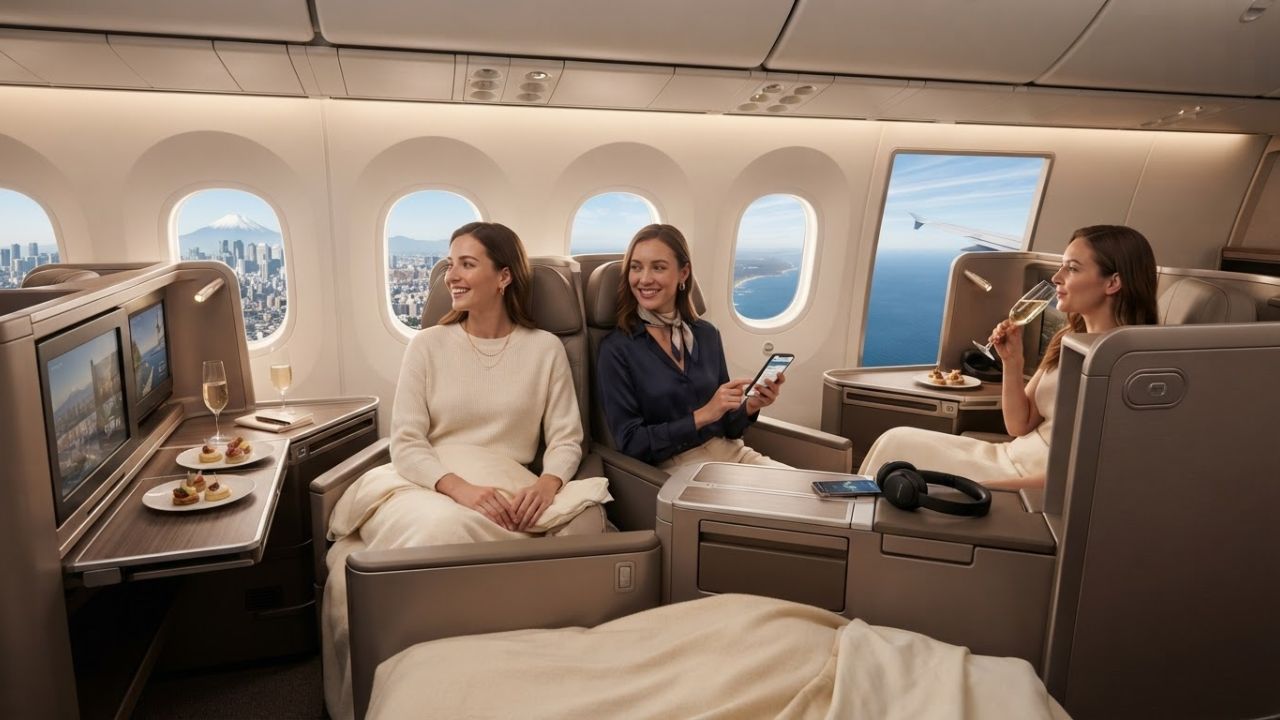
Digital luxury air travel expanded in September 2026 as premium booking platform Airtripmaker introduced specialized business and first class flight search capabilities from the U.S. and Canada to Asia, Oceania, Europe, Africa, and the Middle East. The shift empowers long-haul travelers to customize high-end journeys to Japan and Australia by matching flat-bed aircraft cabins, optimizing gateway airports, and securing personalized routing support.
For decades, reserving international premium cabins required navigating opaque corporate travel desks, calling specialized ticket brokers, or toggling between disconnected airline portals. The arrival of destination-driven premium flight engines changes this dynamic. In September 2026, Airtripmaker expanded its premium booking architecture, allowing travelers departing from both the United States and Canada to search, price, and customize business-class and first-class itineraries to key global regions, including Southeast Asia, Europe, Oceania, Africa, and the Middle East.
Rather than merely displaying scheduled airline inventory, the platform pairs digital comparison tools with telephone-based advisory support. This hybrid service model addresses a growing trend in long-haul aviation: premium flyers are no longer seeking just a lie-flat seat, but an integrated travel experience where arrival gateways, layover durations, and cabin hardware align seamlessly with their itineraries.
The Local Trend Revealed: Precision Routing to Japan and Australia
The expansion centers heavily on two of the world's most competitive premium long-haul corridors: North America to Japan and North America to Australia.
Japan: Strategic Airport Selection Beyond Tokyo
Japan features prominently through a dedicated US–Japan route page covering four primary gateways: Tokyo, Osaka, Fukuoka, and Okinawa. The platform enables passengers to evaluate fares, layover lengths, baggage policies, and fare conditions online before finalizing tickets with an adviser.
For international visitors, selecting the correct arrival point is foundational. The Japan National Tourism Organization (JNTO) highlights that Tokyo is served by two distinct gateways: Haneda Airport (HND) and Narita International Airport (NRT). While Narita historically handled the majority of long-haul flights, Haneda sits merely 15 to 20 minutes from downtown Tokyo via the Tokyo Monorail or Keikyu Line. Arriving at Haneda saves up to an hour of ground transit compared to Narita's 60- to 75-minute train ride aboard the Narita Express. For travelers bound for Kansai's historic temple districts, flying directly into Osaka's Kansai International Airport (KIX) or connecting through domestic services to Fukuoka and Okinawa removes redundant rail segments across central Honshu.
Australia: Why Cabin Hardware Dictates the Flight Experience
The platform's Australian coverage spans major transpacific entry hubs: Sydney, Melbourne, and Brisbane. Here, personalized cabin verification is vital for passenger comfort.
On long-haul transpacific crossings, Qantas configures its Boeing 787 Dreamliner and Airbus A330 aircraft with fully flat business-class beds offering direct aisle access. However, travelers continuing onward across Australia encounter a very different environment: Qantas operates Boeing 737 aircraft on domestic sectors, featuring business-class recliners with an extendable leg rest rather than a lie-flat suite. Personalizing a premium journey ensures passengers understand these aircraft differences in advance, avoiding unexpected surprises when transitioning from a 14-hour transpacific flight to an interstate connection.
| Destination Region | Key Gateway Airports | Primary Aircraft & Cabin Standard | Ground & Transfer Advantage |
|---|---|---|---|
| Japan | Tokyo Haneda (HND), Tokyo Narita (NRT), Osaka (KIX), Fukuoka (FUK), Okinawa (OKA) | Widebody long-haul suites (Boeing 787, Boeing 777, Airbus A350) | Haneda provides rapid rail links to central Tokyo; direct regional flights eliminate domestic transfers |
| Australia | Sydney (SYD), Melbourne (MEL), Brisbane (BNE) | Transpacific: Boeing 787 / Airbus A330 flat beds; Domestic: Boeing 737 recliners | Dedicated international-to-domestic shuttles; fast-track priority immigration lanes |
| Middle East Hubs | Dubai International (DXB) | Boeing 777 & Airbus A380 private suites | Seamless connections between North America, Africa, and South Asia |
| Europe & UK Hubs | London Heathrow (LHR) | Airbus A350 & Boeing 787 business suites | Fast-track transit security and high-speed rail links to London Paddington |
Cultural & Environmental Value: Aligning Luxury Travel with Local Heritage
For the visitor, the real impact of customized premium booking is the ability to channel high-value travel spending directly into regional cultural preservation and environmentally mindful operators.
According to the International Air Transport Association (IATA), global aviation recovery has placed intense focus on operational efficiency, customer experience, and digital services. Business-class passengers represent a modest fraction of total passenger volume, yet generate a disproportionate share of airline revenue. When travelers book efficient, modern widebody aircraft like the Boeing 787 Dreamliner or Airbus A350, they fly on airframes that consume roughly 20% to 25% less fuel per seat than preceding generations, significantly reducing the carbon footprint of transpacific crossings.
Additionally, personalized booking allows travelers to bypass overcrowded metropolitan circuits. By facilitating straightforward flight bookings into regional hubs like Fukuoka (the gateway to Kyushu's pottery towns and hot springs) or Okinawa (preserving distinct Ryukyu indigenous traditions), digital platforms help decentralize tourism revenue. Visitors arrive refreshed and ready to patronize independent heritage ryokans, family-owned sake breweries, and community-guided nature sanctuaries rather than concentrating spending solely in capital cities.
In Australia, customized booking allows premium travelers to connect seamlessly through Brisbane to Tropical North Queensland, supporting Indigenous-guided rainforest tours in the Daintree and sustainable reef protection initiatives.
Visitor Insider Tips: Maximizing Premium Journeys in Japan and Australia
Navigating international premium travel requires an understanding of airport systems, luggage logistics, and cabin selection:
- Haneda vs. Narita Slot Strategy: When searching flights to Tokyo, prioritize Haneda (HND) arrival slots landing in the early morning or late afternoon. Haneda's proximity to Hamamatsucho and Shinagawa cuts taxi and rail fares substantially. If landing at Narita (NRT), purchase the JR Narita Express ticket in Green Car class for designated luggage racks and quiet workspace.
- Hands-Free Luggage Forwarding (Takkyubin): Upon clearing customs at Tokyo Haneda or Narita, look for the Yamato Transport (Black Cat) service counters immediately outside the arrivals hall. Send heavy luggage directly to your hotel or ryokan in Kyoto or Osaka for roughly 2,500 to 3,500 yen per bag. This allows you to board the Tokaido Shinkansen unencumbered.
- Inspect Australian Aircraft Types: When booking a multi-city Australian ticket (such as Los Angeles to Melbourne via Sydney), verify whether the domestic sector operates on an Airbus A330 (which often carries lie-flat suites between Sydney, Melbourne, and Perth) or a narrow-body Boeing 737 with standard recliner seats.
- Transit Hub Lounge Coordination: If transiting through Dubai International Airport (DXB), Singapore Changi Airport (SIN), or London Heathrow (LHR), confirm whether your ticket grants access to flagship airline lounges equipped with shower suites and à la carte dining, which are essential for staying energized during long layovers.
Global Tourism Outlook: The Future of Personalized Premium Aviation
The ongoing digital transformation of premium aviation reflects a maturing international travel market. As IATA notes, airlines continue to invest heavily in digital passenger communication, flexible reservation management, and advanced loyalty program integration.
By integrating detailed route comparisons with advisory booking support across Japan, Australia, India, Europe, Dubai, and Africa, specialized platforms bridge the gap between complex airline fleet management and consumer convenience. The future of international premium travel will not rely solely on added flight frequencies, but on empowering travelers to curate flights that match their health, comfort, and cultural travel priorities from takeoff to touchdown.
Related Travel Guides
Disclaimer
This article is for informational and educational purposes only. It does not constitute legal, financial, or professional advice. While we strive to provide accurate and up-to-date information, travel policies, regulations, and conditions change rapidly. Always verify information with official sources before making travel decisions. Nomad Lawyer makes no representations about the accuracy, reliability, completeness, or suitability of the information provided. Readers should consult qualified professionals for advice specific to their circumstances. The views expressed in this article are those of the author and do not necessarily reflect the views of Nomad Lawyer.
Raushan Kumar
Founder & Lead Developer
Full-stack developer with 11+ years of experience and a passionate traveller. Raushan built Nomad Lawyer from the ground up with a vision to create the best travel and law experience on the web.
Learn more about our team →