
Lufthansa Joins Ryanair and More Airlines across Europe and Prepares to Rapidly Expand Fleet by 2035
Lufthansa Joins Ryanair and More Airlines across Europe and Prepares to Rapidly Expand Fleet by 2035

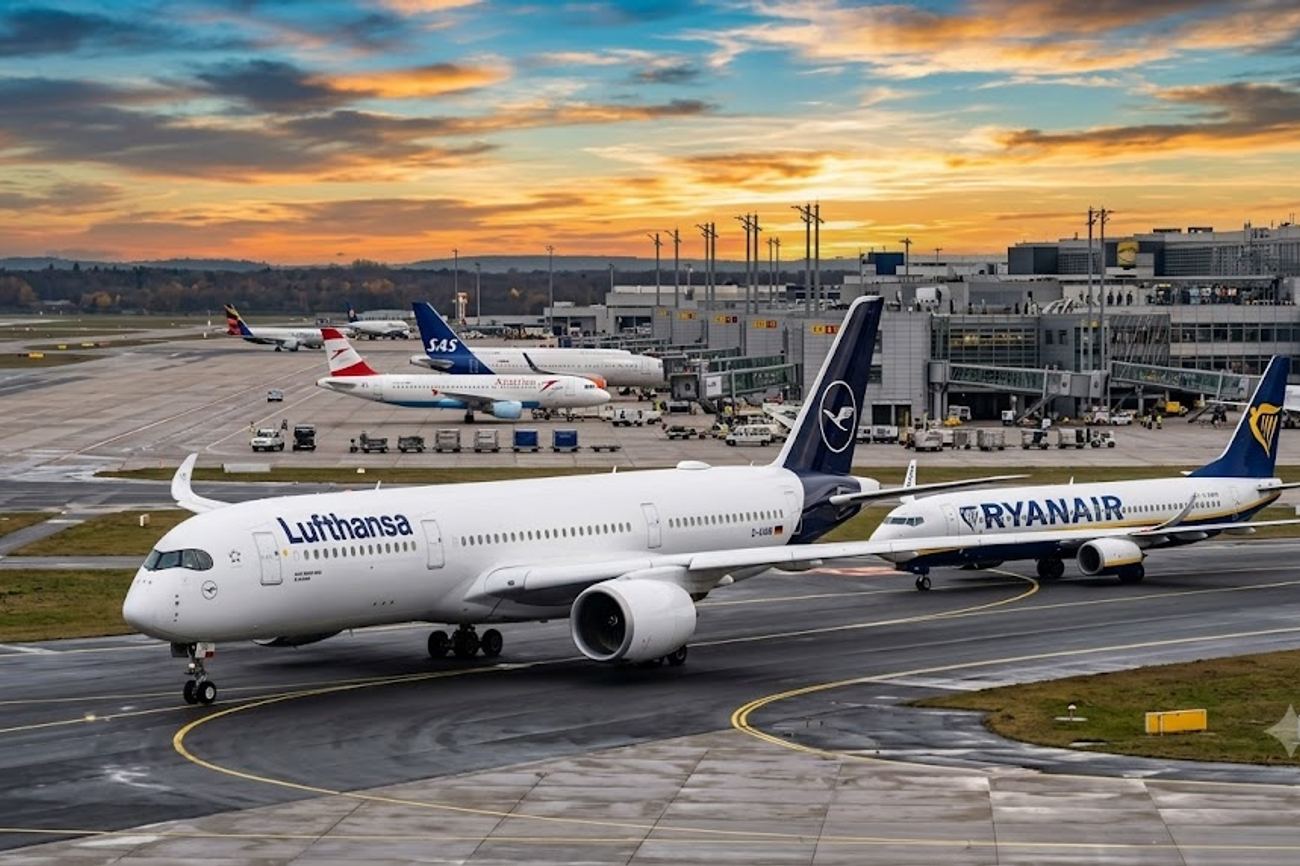
Image generated by AI
250 new aircraft by 2035 is the target for the Lufthansa Group, a figure that underscores a massive capital pivot toward fleet modernization across the European aviation sector. This aggressive acquisition strategy is not an isolated move by the German carrier but part of a systemic shift where legacy airlines and low-cost carriers (LCCs) are racing to replace aging airframes with next-generation Boeing and Airbus models to combat rising operational costs.
The Shift Toward Narrow-Body Efficiency
The current European aviation climate is defined by a paradox: passenger demand is surging, yet airport slot constraints and volatile fuel prices are squeezing margins. To navigate this, carriers are prioritizing "neo" (New Engine Option) and "MAX" aircraft. These models are engineered specifically to reduce fuel burn and carbon emissions, which are the two largest variable costs for any airline.
Lufthansa’s recent decision to exercise options for 20 Boeing 737 MAX 10 aircraft marks a strategic realignment. For years, the group leaned heavily on the Airbus A320 family; however, the return to Boeing narrow-bodies suggests a desire for diversified supply chains and specific capacity advantages. The 737 MAX 10, being the largest variant of its family, allows Lufthansa to maximize the number of passengers per slot—a critical advantage at congested hubs like Frankfurt and Munich.
Simultaneously, the low-cost sector is doubling down on high-density configurations. Ryanair has committed to as many as 300 Boeing 737 MAX 10 aircraft, split evenly between 150 firm orders and 150 options. This volume ensures that the Irish carrier can maintain its aggressive growth trajectory and expand its footprint in the Baltic region while lowering the seat-mile cost.
Fleet Expansion Data Breakdown
The scale of investment across the continent reveals a clear preference for the Airbus A321neo and Boeing 737 MAX 10 for short-to-medium haul, and the A350 and Boeing 787 for long-haul operations.
| Airline / Group | Primary Aircraft Focus | Manufacturer | Order Volume / Status |
|---|---|---|---|
| Lufthansa Group | Boeing 737 MAX 10 | Boeing | 20 options exercised (Part of 250+ total by 2035) |
| Ryanair Group | Boeing 737 MAX 10 | Boeing | Up to 300 (150 firm, 150 options) |
| easyJet | A320neo Family | Airbus | 157 firm + 100 purchase rights |
| Wizz Air | Airbus A321neo | Airbus | 75 additional aircraft |
| SAS | Airbus A330-900 | Airbus | 18 aircraft |
| IAG | A330neo, A350, B787, B777X | Airbus/Boeing | Multiple wide-body commitments |
| SMBC Aviation Capital | Airbus A320neo Family | Airbus | 100 aircraft |
Expert Analysis: The Logistics of Capacity Maximization
For the modern traveler, these fleet shifts are not merely about newer seats or better Wi-Fi; they are about the economics of the "slot." In the European market, the number of take-off and landing slots at primary airports is strictly limited. When an airline like easyJet or Wizz Air replaces an older A320 with an A321neo, they are effectively increasing their passenger capacity on that specific route without needing an additional slot from the airport authority.
The direct consequence for travelers booking these routes is a potential stabilization of fares on high-demand corridors. By increasing the "per-flight" capacity, airlines can spread fixed operating costs across more tickets. However, this also means a shift toward higher-density cabins. The Boeing 737 MAX 10 and Airbus A321neo are designed to squeeze more efficiency out of every square inch of the fuselage.
Furthermore, the move by International Airlines Group (IAG) and SAS to modernize their wide-body fleets with the A350 and A330neo indicates a long-term play for fuel hedge stability. These aircraft utilize composite materials and advanced aerodynamics to reduce fuel consumption significantly compared to the older 747s or A340s they replace. For the passenger, this manifests as more direct, long-haul routes that were previously economically unviable due to fuel costs.
The reliance on Airbus and Boeing remains absolute, despite well-documented supply chain disruptions. The fact that Lufthansa and Ryanair are exercising options now suggests that carriers are terrified of being pushed back in the delivery queue. In the current market, the aircraft delivery slot is as valuable as the airport slot.
Key Takeaways
- Capacity Surge: Lufthansa is targeting a total of 250+ new aircraft by 2035, signaling a massive overhaul of its narrow-body and long-haul networks.
- The MAX 10 Dominance: Both Lufthansa and Ryanair are betting heavily on the Boeing 737 MAX 10 to handle high-demand European routes with maximum efficiency.
- Slot Optimization: easyJet and Wizz Air are utilizing the A321neo to increase passenger volume at capacity-constrained airports without requiring new landing rights.
- Wide-body Renewal: IAG and SAS are pivoting toward the A350, A330neo, and Boeing 787 to lower the cost of long-haul operations and improve reliability.
- Lessor Influence: The 100-aircraft order from SMBC Aviation Capital indicates that aircraft leasing firms are also betting on the A320neo family, ensuring these planes will be available to smaller airlines.
FAQ: European Fleet Modernization 2025-2035
Will these new aircraft lead to cheaper flight tickets? Not necessarily. While efficiency lowers the airline's cost per seat, prices are driven by demand and airport fees. However, increased capacity on popular routes helps prevent extreme price spikes during peak seasons.
How do the new Boeing 737 MAX 10 and Airbus A321neo differ for passengers? Both offer more modern cabin interiors and better fuel efficiency. The A321neo is slightly wider, often providing a marginally better feel in the cabin, while the MAX 10 focuses on maximizing seat count for high-volume routes.
Why is Lufthansa switching back to Boeing for narrow-body planes? Lufthansa is diversifying its fleet to avoid over-reliance on a single manufacturer. The Boeing 737 MAX 10 provides specific capacity and efficiency benefits for their short-to-medium haul European network.
When will these aircraft actually be in the air? Deliveries are staggered. While some A320neo and MAX 8 aircraft are already flying, the larger MAX 10 and specific wide-body renewals are scheduled to enter fleets progressively through the early 2030s.
As the race for efficiency accelerates, the European sky is becoming a battleground of seat-mile economics.
Tags: Lufthansa Group, Boeing 737 MAX 10, Airbus A321neo, Ryanair Group, IAG Fleet Strategy, European Aviation 2035
Related Travel Guides
- Arnold Palmer Regional Airport and Others Secure Federal Grants to Attract a New Airline and Restore Flights
- AirAsia Secures Historic 17th Consecutive World’s Best Low Cost Airline Title at Skytrax Awards
- Flights Cancelled Sweep Through Asia with 241 Cancellations and 4,331 Delays Affecting Aleppo, Hanoi and More Airports
Disclaimer
This article is for informational and educational purposes only. It does not constitute legal, financial, or professional advice. While we strive to provide accurate and up-to-date information, travel policies, regulations, and conditions change rapidly. Always verify information with official sources before making travel decisions. Nomad Lawyer makes no representations about the accuracy, reliability, completeness, or suitability of the information provided. Readers should consult qualified professionals for advice specific to their circumstances. The views expressed in this article are those of the author and do not necessarily reflect the views of Nomad Lawyer.
Preeti Gunjan
Contributor & Community Manager
A passionate traveller and community builder. Preeti helps grow the Nomad Lawyer community, fostering engagement and bringing the reader experience to life.
Learn more about our team →