
Lufthansa A380 Diverted to Boston After Unruly Passenger Assault Mid-Flight Over Canada
A Lufthansa A380 carrying 508 passengers from San Francisco to Munich was forced to divert to Boston Logan after an unruly passenger allegedly attacked another traveler. The superjumbo reversed course over central Canada, costing the airline hundreds of thousands in fuel and fees.

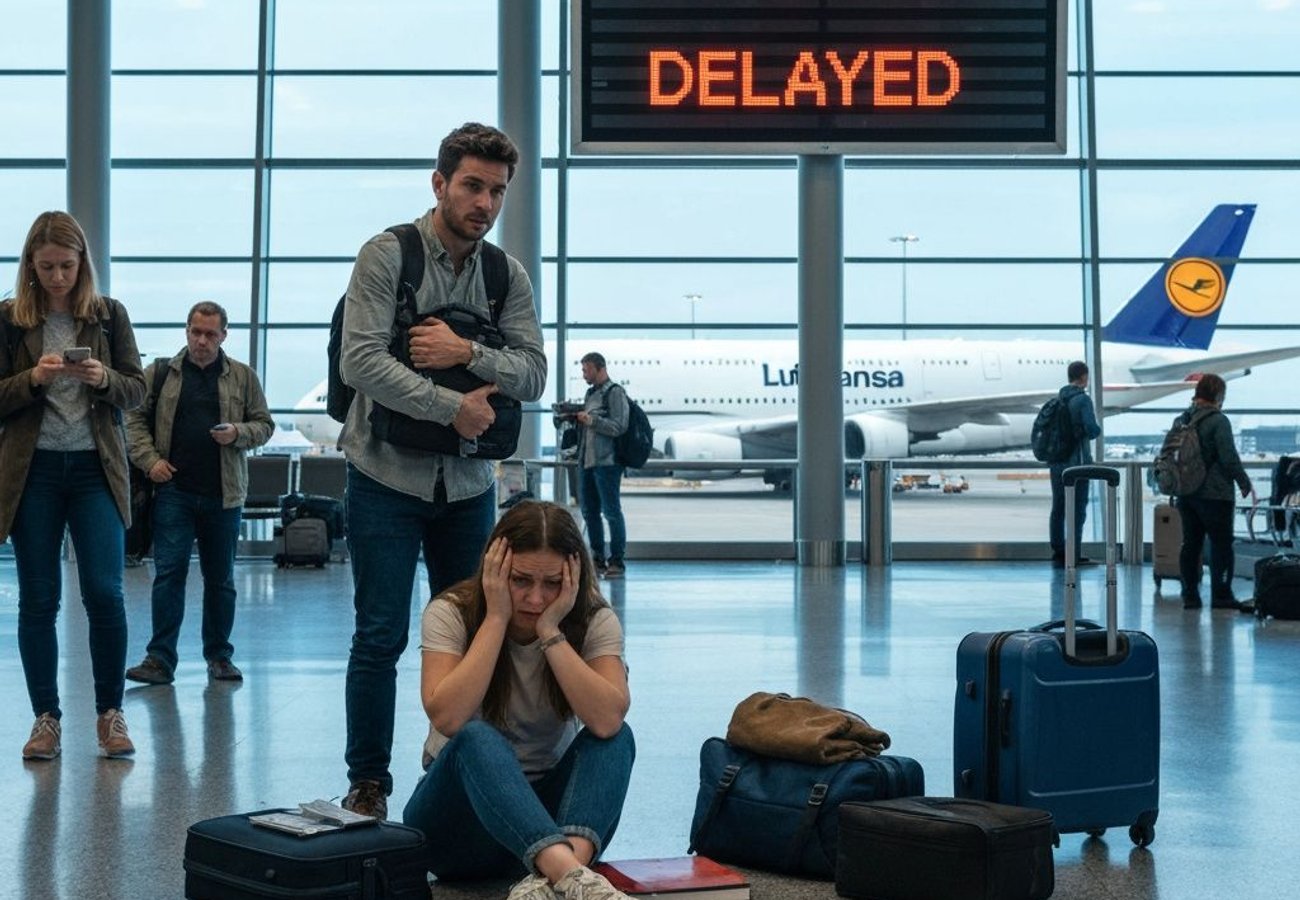
Image generated by AI
Superjumbo Turned Back Over Remote Canadian Wilderness
When Lufthansa flight LH459 pushed back from San Francisco International Airport (SFO) at 10:39 pm on June 10, 2026, the crew expected a routine 11-hour transatlantic crossing to Munich (MUC). They never made it across.
Just three hours into the journey, with 508 passengers aboard the double-decker Airbus A380, an unruly passenger allegedly assaulted another traveler. The situation escalated so rapidly that pilots made an emergency decision: abandon the great-circle route and divert the massive aircraft back toward American airspace.
Reddit: "Three hours in and they had to turn back? That's a nightmare for crew logistics and passenger connections." — r/flights
The A380 was tracking northeast over the remote wilderness of central Canada when the incident unfolded. At that point, the aircraft was surrounded by vast stretches of tundra with virtually no airports equipped to handle a superjumbo of that scale. The crew had one viable option: Boston Logan International Airport (BOS).
Why Boston? Strategic Routing and Operational Capacity
Lufthansa maintains substantial operational presence at Boston Logan, and crucially, the airport has the infrastructure to accommodate an A380—something most North American facilities can offer. The decision was sound from both a logistics and safety standpoint.
The superjumbo descended toward Massachusetts and landed safely in the early morning hours of Thursday, June 12. Upon touchdown, Massachusetts State Police boarded the aircraft and took the unruly passenger into custody.
The suspect's name has not been released publicly, and authorities have not yet disclosed whether formal charges will be filed. What is clear: one passenger's behavior triggered a $400,000+ response involving fuel burns, landing fees, crew overtime, and emergency ground services.
The Legal Gray Zone: EU-261 and "Extraordinary Circumstances"
Here's where it gets legally murky for the stranded passengers: under EU Regulation 261/2004, they're entitled to compensation of up to €600 per passenger for significant flight disruptions. In this case, the flight was delayed by hours and ultimately rerouted entirely.
But there's a catch.
Unruly passenger incidents are classified as "extraordinary circumstances" — events beyond the airline's reasonable control. This exemption shields carriers from compensation obligations, even when the disruption is severe. Learn more about EU-261 passenger rights and exemptions.
The 508 passengers aboard LH459 will not receive compensation. The airline absorbed the financial hit; they did not. This legal doctrine has proven controversial among traveler advocacy groups, who argue that airlines should bear more responsibility for passenger vetting and cabin crew training.
Departure at Last: 13-Hour Delay Resolved
After removing the disruptive passenger, the crew assessed the aircraft for any damage and completed a turnaround inspection. At approximately 10:30 am on Thursday, the A380 departed Boston (BOS) and resumed its journey to Munich (MUC).
The total delay exceeded 13 hours. Lufthansa did not publicly estimate the financial impact, but industry analysts suggest the diversion cost the carrier somewhere between $300,000 and $500,000 when accounting for fuel, landing and handling fees, crew extensions, and passenger accommodation.
Pattern Recognition: The Rise of In-Flight Disruptions
This incident isn't isolated. In fact, unruly passenger events have become disturbingly routine across the aviation industry.
Just last year, Delta Air Lines (DL) Flight 731 — an Airbus A321 operating from Atlanta (ATL) to San Diego (SAN) — was forced to divert to Dallas-Fort Worth International Airport (DFW) on July 5, 2025.
Two hours into the flight, a passenger identified as Corbin Sanders began shouting incoherently and removing his clothing. Witnesses, including San Diego resident Rodelyn Kupfersmid who was seated nearby, believed Sanders was intoxicated or under the influence of drugs.
As his behavior escalated, Sanders assaulted a crew member. Fellow passengers and flight attendants physically restrained him until the aircraft landed at DFW. When Dallas-Fort Worth Airport Police boarded, they found Sanders slumped in his seat with slurred speech and bloodshot eyes.
Officers subdued him with plastic zip ties and removed him without incident. Sanders, a North Carolina resident, was charged with public intoxication.
Federal Enforcement: The $37,000 Warning
The Federal Aviation Administration (FAA) maintains a zero-tolerance stance on interference with airline personnel. According to FAA policy, violators can face civil penalties of up to $37,000 per violation.
This threshold has proven insufficient as a deterrent. In 2021 and 2022, the FAA logged thousands of unruly passenger reports. While numbers have declined slightly in recent years, incidents continue at an alarming rate compared to pre-pandemic baseline data.
Kupfersmid, who recorded portions of the Delta incident, praised the crew's composure. "The staff performed well, the man was removed safely, and no one was harmed," she later stated. After 90 minutes on the ground, Delta Flight 731 continued to San Diego (SAN) without further incident.
Delta issued a statement reaffirming its zero-tolerance policy and thanking passengers for their patience. The carrier emphasized that crew and passenger safety is its "top priority."
What Airlines Can Do (And Aren't)
The legal framework exists to punish unruly passengers, but experts argue that prevention remains underfunded. Enhanced crew de-escalation training, real-time threat assessment protocols, and stricter pre-flight vetting could reduce incidents—yet most carriers view these as cost centers rather than investments.
The Lufthansa A380 diversion and the Delta A321 incident both reveal a system reactive, not proactive. Passengers are removed after disruptions occur, authorities are called after safety is already compromised, and airlines absorb massive costs that aren't reflected in ticket prices.
Until the industry treats in-flight safety as a systematic problem requiring systematic solutions—not just enforcement actions—expect more diversions, more delays, and more passengers stranded far from their destinations.
The skies remain safe, but the cabin? That's becoming increasingly unpredictable.
Related Travel Guides
Disclaimer: This article discusses actual aviation incidents and regulatory frameworks. While EU-261 protections exist for passengers, "extraordinary circumstances" exemptions may apply in cases involving unruly passenger behavior. Always consult official airline policies and relevant aviation authorities for flight disruption compensation claims. The FAA maintains enforcement authority over unruly passenger incidents under 49 U.S.C. § 46506 and related statutes.
Kunal K Choudhary
Co-Founder & Contributor
A passionate traveller and tech enthusiast. Kunal contributes to the vision and growth of Nomad Lawyer, bringing fresh perspectives and driving the community forward.
Learn more about our team →