
Lufthansa's Bold 2026 Expansion: Frankfurt, Munich Lead Arctic Tourism Push Across 210+ Global Destinations
Lufthansa accelerates 2026 global expansion with Arctic tourism focus, Allegris premium cabins, and new routes to Hyderabad, Trondheim, Seattle. Strategy balances Nordic travel with Mediterranean leisure and Asia growth.

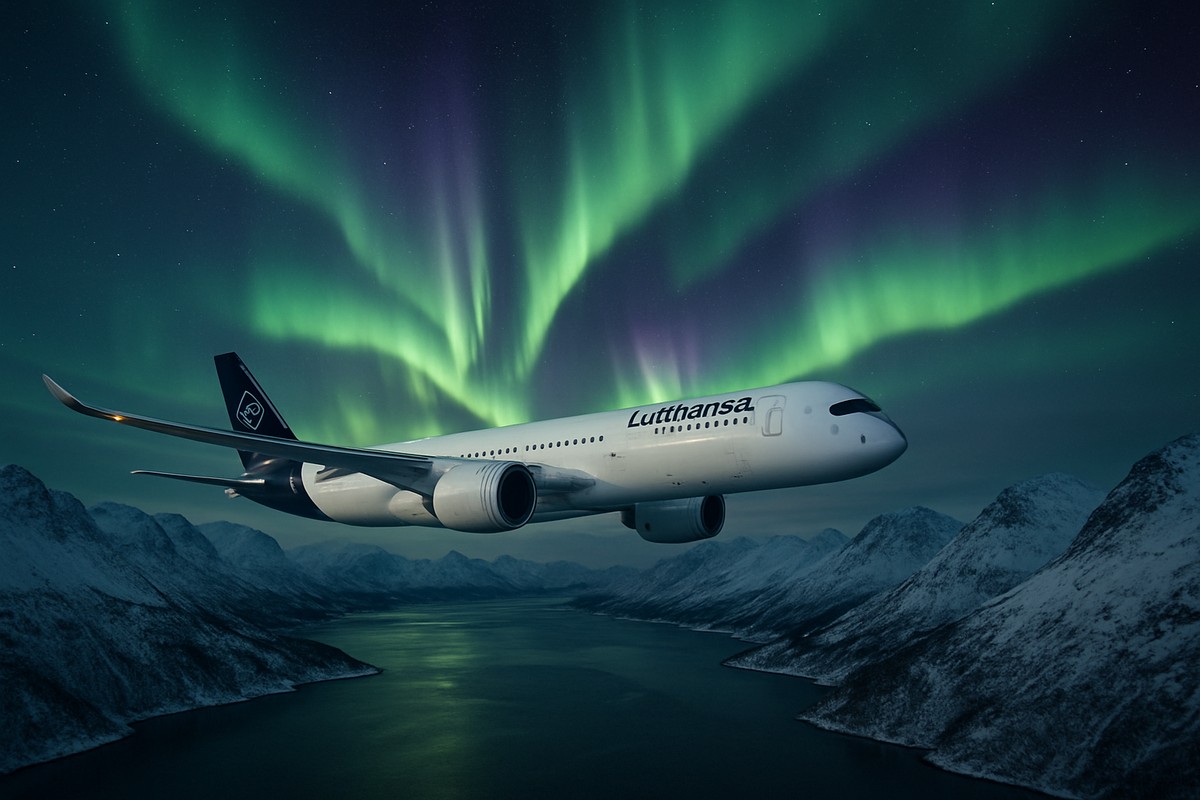
Image generated by AI
Lufthansa's Bold 2026 Expansion: Frankfurt, Munich Lead Arctic Tourism Push Across 210+ Global Destinations
German Carrier Deploys Allegris Premium Cabins While Targeting Nordic, Indian, and North American Growth
Lufthansa is executing an ambitious global expansion strategy in 2026 that signals a fundamental shift in international aviation toward Arctic tourism experiences, premium cabin offerings, and strategic connectivity across emerging markets. With Frankfurt and Munich serving as twin hubs, the German airline is scaling operations across 210+ destinations while introducing its revolutionary Allegris premium cabin product to compete aggressively on long-haul routes to North America, Asia, Africa, and the Middle East.
The "Sun & North" Strategy: Balancing Leisure and Adventure
At the heart of Lufthansa's 2026 transformation lies an innovative "Sun & North" strategy that reconciles two seemingly divergent travel trends: traditional Mediterranean leisure demand with explosive growth in Arctic and Nordic tourism experiences. This dual-focus approach reflects broader industry recognition that post-pandemic travelers increasingly demand diverse experiences—from beach relaxation to extreme adventure tourism in Scandinavia's fjords and northern wilderness.
The strategy manifests across Lufthansa's European network through expanded seasonal services to Norwegian Arctic hubs like Trondheim and Tromsø, while simultaneously maintaining high-frequency Mediterranean operations to Palma de Mallorca, Athens, and Istanbul. This balance enables the airline to maximize aircraft utilization across seasons while capturing distinct passenger segments.
Frankfurt-Trondheim: Unlocking Norway's Tourism Goldmine
Lufthansa's seasonal expansion on the Frankfurt-Trondheim route exemplifies its Arctic tourism bet. The route, which operates 2–3 weekly services during peak travel seasons, directly supports Norway's booming fjord tourism economy. Travelers booking these flights typically pursue interconnected experiences: fjord cruises, summer hiking expeditions, and winter northern lights packages extending into the Tromsø region.
Frankfurt–Trondheim Route Details
| Route Attribute | Specifications |
|---|---|
| Service Pattern | Seasonal direct and partner connections |
| Weekly Frequency | 2–3 weekly departures |
| Operating Partners | Lufthansa + Widerøe |
| Connection Hub | Bergen (typical routing) |
| Total Journey Time | Approximately 6 hours 25 minutes |
| Estimated One-Way Fare | Around €680 |
| Peak Travel Season | May through September |
The route's seasonal nature aligns with Norway's tourism calendar. May marks the opening of summer hiking season, while cruise tourism peaks June through August. Winter service extensions capture northern lights demand (September–March), making this route operationally dynamic across the calendar year.
Trondheim's appeal extends beyond outdoor tourism. The city's historic Nidaros Cathedral, vibrant waterfront districts, and proximity to Norway's most photographed landscapes—including Geirangerfjord and the Lofoten Islands—make it increasingly attractive to premium European leisure travelers and cruise passengers.
Nordic Expansion: The Arctic Tourism Boom
Lufthansa's Norwegian network expansion demonstrates the airline's commitment to capturing Arctic tourism growth before competitors saturate the market. Three key Norwegian destinations anchor this strategy:
Lufthansa's Norwegian Network Growth Targets
| Destination | Focus Area | Strategic Significance |
|---|---|---|
| Trondheim (TRD) | Seasonal expansion | Central Norway gateway; fjord tourism hub |
| Tromsø (TOS) | Arctic tourism | Fastest-growing Arctic destination; winter experiences |
| Ålesund (AES) | Fjord tourism | Western fjord region access; cruise connections |
Tromsø exemplifies Lufthansa's Arctic opportunity. Positioned north of the Arctic Circle, this northern Norwegian city has transformed from remote outpost to Europe's fastest-growing Arctic tourism destination. Rising demand for winter adventure tourism, northern lights experiences, and Arctic cruise tourism makes Tromsø an increasingly valuable route for premium carriers. The city attracted over 1 million tourists in 2025, with projections suggesting 15-20% annual growth through 2027.
By combining Frankfurt-Tromsø service with cruise port connections and hotel partnerships, Lufthansa positions itself as the preferred gateway for European Arctic adventurers—a market segment demonstrating strong pricing power and high-yield characteristics.
North America: Premium Transatlantic Dominance Through Allegris
Lufthansa's North American network remains among its most profitable operations, with the airline continuing transatlantic frequency expansion through its Allegris premium cabin initiative. The strategy prioritizes high-yield Business and First Class products across major gateways while expanding secondary routes to capture tech and corporate travel sectors.
Lufthansa's North American Route Portfolio
| Destination | Service Model | Strategic Purpose |
|---|---|---|
| New York (JFK/EWR) | 3–4 daily flights | Primary transatlantic hub |
| Chicago (ORD) | High-frequency operations | Midwest corporate gateway |
| San Francisco (SFO) | Premium hub route | Tech industry connectivity |
| Seattle (SEA) | Year-round service | Boeing/aerospace region; stable year-round demand |
| Minneapolis (MSP) | Permanent route | Upper Midwest corporate hub; established year-round operation |
| Raleigh-Durham (RDU) | Tech-sector focus | Emerging tech corridor; growing business travel |
Seattle and Minneapolis represent notable success stories. Both transitioned from experimental routes to stable year-round operations, indicating sustained demand sufficient to justify permanent capacity commitments. Seattle's proximity to Boeing's headquarters and major tech employers makes it strategically valuable, while Minneapolis serves as a gateway to upper Midwest corporate markets and leisure travelers accessing winter sports destinations.
Raleigh-Durham's inclusion reflects Lufthansa's recognition of emerging tech corridors. The Research Triangle region's concentration of pharmaceutical, software, and biotech companies creates substantial business travel demand between Germany and North Carolina. Direct Lufthansa service reduces connection friction and captures market share from competing transatlantic carriers.
Asia Expansion: Hyderabad Becomes Fastest-Growing India Gateway
Lufthansa's Asia strategy prioritizes India's rapidly expanding aviation market, with Hyderabad emerging as the airline's fastest-growing India destination in 2026. The carrier operates 5 weekly flights on the Hyderabad route—substantially exceeding initial projections—driven by explosive growth in tech industry connectivity, corporate travel, and student migration flows.
Lufthansa's Asian Network Expansion
| Destination | 2026 Operating Pattern | Strategic Driver |
|---|---|---|
| Shanghai (PVG) | Daily A350 service | China recovery; premium leisure/business |
| Beijing (PEK) | Full restoration | Corporate connectivity; diplomatic travel |
| Tokyo (NRT) | Premium long-haul | Japanese corporate demand; luxury leisure |
| Hyderabad (HYD) | 5 weekly flights | Tech sector explosion; rising business travel |
| Dubai (DXB) | Maintained hub operations | Middle Eastern connectivity; regional transfer hub |
Hyderabad's growth reflects India's transformation as a global technology powerhouse. The city hosts major operations for Indian IT giants (TCS, Infosys, Wipro) and multinational tech companies (Microsoft, Google, Amazon). Direct Lufthansa flights from Frankfurt dramatically reduce travel time for German tech executives, consultants, and service providers traveling to India. Additionally, rising Indian student enrollment in German universities creates reverse flows—Indian professionals and families traveling to Europe.
The airline's commitment to 5 weekly Hyderabad service signals confidence in sustained demand growth. This frequency positions Lufthansa ahead of competitors in capturing premium business travel segments willing to pay significant premiums for convenience and schedule flexibility.
Premium Fleet Transformation: Allegris and Modernization
Lufthansa's 2026 expansion occurs within the context of transformative fleet modernization. The Allegris premium cabin product—available across Airbus A350-900 and Boeing 787-9 aircraft—represents a generational leap in long-haul comfort and premium cabin design. Expanded availability across the 2026 route network amplifies the airline's competitive positioning on premium long-haul markets.
Lufthansa 2026 Operational Metrics
| Metric | 2026 Status |
|---|---|
| Total Destinations | 210+ global airports |
| Active Fleet Size | 300+ aircraft |
| Primary Fleet Modernization | A350-900 and 787-9 deployment |
| Premium Cabin Initiative | Allegris across major long-haul routes |
| Sustainability Focus | Green Fares program expansion |
The Allegris cabin introduces revolutionary design elements: direct-aisle Business Class seats with direct doors (eliminating middle-seat compromises), enhanced First Class private suites with sliding doors, and optimized cabin pressure/humidity systems. These innovations directly address premium passenger pain points and justify premium pricing strategies.
Fleet modernization simultaneously supports Lufthansa's sustainability commitments. Modern A350 and 787-9 aircraft reduce fuel consumption by 20-25% compared to older widebody aircraft, supporting the airline's Green Fares sustainability program—which encourages premium travelers to offset carbon emissions while enjoying enhanced travel experiences.
Africa and South America: Luxury Leisure and Corporate Gateways
Lufthansa's African and South American operations focus explicitly on premium long-haul travelers seeking luxury experiences and corporate connectivity. Johannesburg and Cape Town capture strong European demand linked to safari tourism and luxury leisure travel experiences.
Lufthansa's African and South American Route Focus
| Destination | Primary Market Segment | Demand Driver |
|---|---|---|
| Johannesburg (JNB) | Business and safari tourism | Corporate meetings; wildlife tourism |
| Cape Town (CPT) | Luxury leisure travel | Premium vacation experiences; wine tourism |
| São Paulo (GRU) | Corporate connectivity | Latin American business hub; manufacturing |
| Buenos Aires (EZE) | Tourism and business | Cultural tourism; corporate headquarters |
Cape Town's growth reflects Europe's expanding luxury tourism market. The city's combination of natural beauty, world-class hotels, wine regions, and premium leisure amenities attracts high-net-worth European travelers. Lufthansa's premium Allegris cabins and frequent service position the airline as the preferred choice for affluent European leisure travelers seeking seamless South African experiences.
Global Impact and Market Positioning
Lufthansa's 2026 expansion strategy positions the airline at the convergence of major global travel trends:
-
Arctic Tourism Boom: Arctic travel represents one of the fastest-growing global tourism segments (15-20% annual growth), driven by climate change visibility, adventure tourism demand, and premium travel emergence.
-
Tech Sector Mobility: Rising tech industry concentration in specific global cities creates new business travel demand. Direct Lufthansa service to secondary tech hubs (Raleigh-Durham, Hyderabad) captures high-yield markets.
-
India's Aviation Emergence: India's middle class expansion and tech industry growth create explosive aviation demand. Lufthansa's early commitment to frequent Hyderabad service positions the airline to capture market share growth.
-
Premium Cabin Competition: Allegris cabin deployment intensifies competition for premium transatlantic and long-haul business travel. Superior product encourages premium passenger migration from competitors.
-
Sustainability Integration: Green Fares programs align premium travel with climate consciousness, attracting environmentally aware affluent travelers.
Operational Outlook and Competitive Implications
Lufthansa's coordinated expansion across 210+ destinations signals confidence in post-pandemic demand durability. The airline's willingness to expand secondary route capacity while simultaneously upgrading premium cabins demonstrates sophisticated yield management strategies.
Competitors face mounting pressure. British Airways, Air France-KLM, and other traditional European carriers must accelerate their own premium cabin upgrades and route expansion initiatives. North American carriers (United, American, Delta) face intensifying transatlantic competition from upgraded Lufthansa service to secondary US markets.
The Arctic tourism focus represents particularly strategic positioning. As global awareness of climate change and Arctic experiences peaks, Lufthansa's established Nordic route network and cruise port partnerships create competitive moats difficult for competitors to replicate quickly.
Conclusion
Lufthansa's 2026 expansion represents one of European aviation's most ambitious network transformations. By deploying Allegris premium cabins, expanding Arctic tourism connectivity, and capturing emerging market demand in India and secondary US tech hubs, the airline signals fundamental confidence in global travel demand recovery and premium passenger growth. Frankfurt and Munich's role as twin global hubs continues strengthening, positioning Lufthansa to compete aggressively across all major long-haul markets through 2027 and beyond.
The combination of fleet modernization, route expansion, and premium product innovation creates a virtuous cycle: modern aircraft enable efficient service to new markets, premium cabins justify higher yields, and Arctic/Asia/North America diversification reduces dependence on saturated European leisure routes. Lufthansa enters 2026 as arguably Europe's most dynamically positioned intercontinental carrier.
Key Takeaways
-
Global Expansion: Lufthansa operating 210+ destinations with 300+ aircraft fleet in 2026, representing substantial post-pandemic recovery and growth investment.
-
Arctic Tourism Leadership: Strategic expansion to Norwegian cities (Trondheim, Tromsø, Ålesund) positions airline to capture fastest-growing global tourism segment amid rising Arctic travel demand.
-
Hyderabad Growth: 5 weekly flights to India's tech capital reflect explosive corporate travel demand from Indian IT sector and reverse flows of Indian professionals/students to Europe.
-
Allegris Premium Transformation: Next-generation First and Business Class cabins deployed across A350-900 and 787-9 aircraft intensify premium long-haul competition, particularly on transatlantic routes.
Disclaimer
This article is for informational and educational purposes only. It does not constitute legal, financial, or professional advice. While we strive to provide accurate and up-to-date information, travel policies, regulations, and conditions change rapidly. Always verify information with official sources before making travel decisions. Nomad Lawyer makes no representations about the accuracy, reliability, completeness, or suitability of the information provided. Readers should consult qualified professionals for advice specific to their circumstances. The views expressed in this article are those of the author and do not necessarily reflect the views of Nomad Lawyer.
Kunal K Choudhary
Co-Founder & Contributor
A passionate traveller and tech enthusiast. Kunal contributes to the vision and growth of Nomad Lawyer, bringing fresh perspectives and driving the community forward.
Learn more about our team →