
London Waterloo Station Deploys Canine Security Patrols to Enhance Passenger Safety in 2026
South Western Railway and Network Rail Wessex launch a three-month security trial at London Waterloo featuring trained canine units to improve passenger reassurance and deterrence.

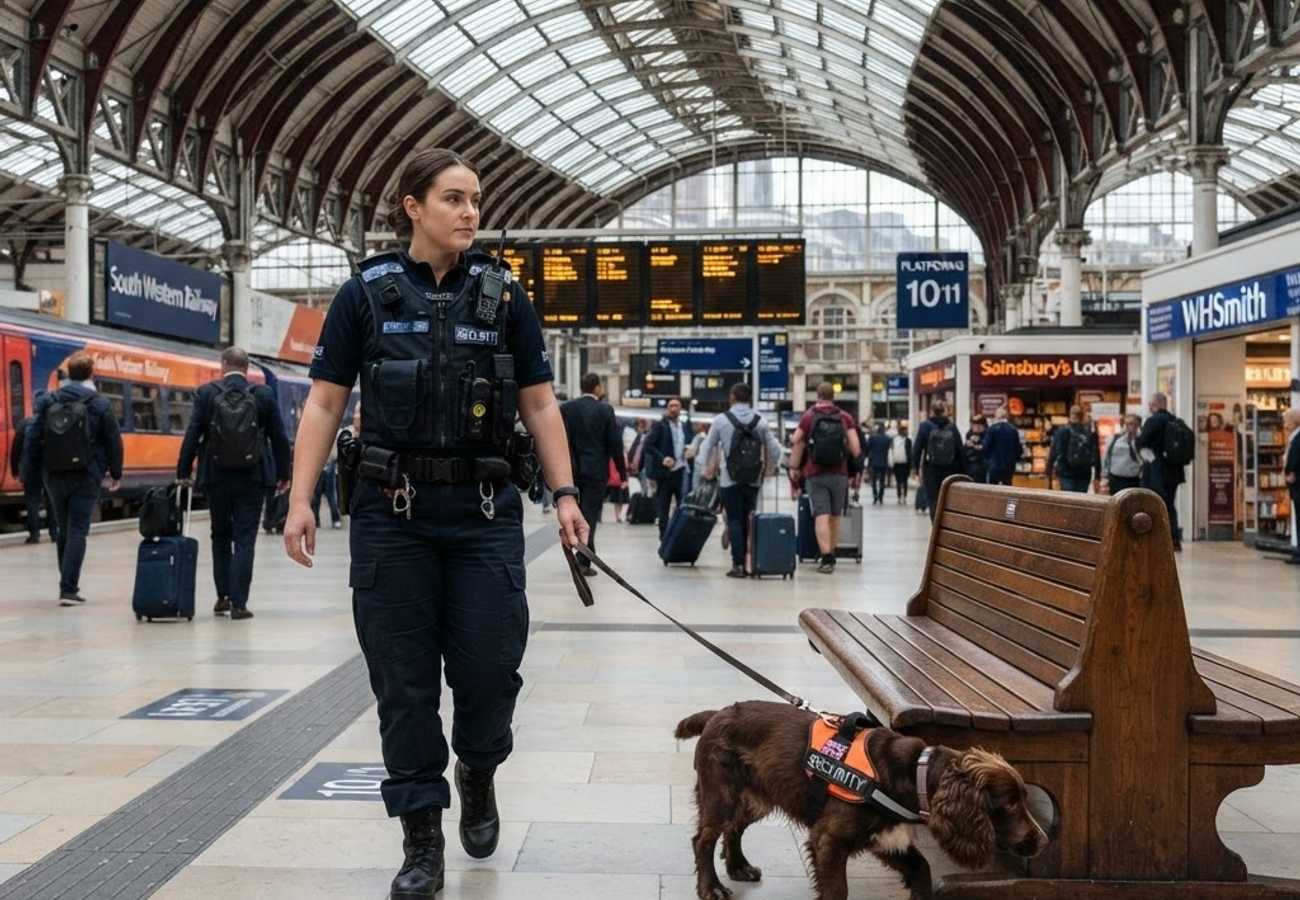
Image generated by AI
South Western Railway (SWR) and Network Rail Wessex have deployed trained canine units at London Waterloo to increase visible security and passenger reassurance. The initiative is part of a broader safety framework at one of Britain's busiest transport hubs.
Canine Security Trial Implementation
Beginning in August 2026, London Waterloo has integrated three trained security dogs into its patrol rotations. This program is a three-month trial conducted in partnership with Alpha Canine Specialists.
The canine units consist of two Cocker Spaniels, Riley and Buster, and one Labrador, Flo. These animals are experienced security professionals completing a final deployment before their retirement.
Railway officials have explicitly stated that this deployment is not a response to any specific or increased security threats. Instead, the program serves as a preventative measure to maintain a safe environment for both employees and the millions of passengers who transit through the station annually.
Station Impact and Security Breakdown
The introduction of canine units is one component of a multi-layered security strategy. Our analysis of the current operational changes at London Waterloo identifies the following key updates:
- Canine Patrols: Three specialist dogs providing visible deterrence and passenger support.
- Body-Worn Cameras: Deployment of cameras for staff to document and address incidents of abuse or assault.
- CCTV Infrastructure: A comprehensive network-wide renewal and upgrade of surveillance systems.
- Staff Identification: Implementation of shared high-visibility uniforms to ensure passengers can quickly identify authorized personnel.
- Community Outreach: Integration of a South Bank BID outreach worker to engage vulnerable youth in the surrounding area.
Passenger Rights and Advisory
For the passenger using London Waterloo, these security enhancements do not alter ticketing, booking conditions, or transit schedules. However, the increased security presence changes the station environment.
Operational Guidance for Travellers:
- Interaction: Passengers should treat canine units as official security personnel. If assistance is required, travellers should approach the handler or any identifiable railway staff member.
- Movement: Normal boarding and alighting procedures remain in effect; the patrols are designed to be non-intrusive.
- Reporting: The presence of body-worn cameras means that interactions with staff are likely being recorded for safety and accountability purposes.
Our analysis of the policy suggests that these measures are designed to lower the incidence of antisocial behaviour, which historically impacts the passenger experience in high-traffic urban hubs.
Industry Analyst View
The shift toward integrated security models is evident in the partnership between SWR and Network Rail Wessex. By combining traditional policing, technological upgrades (CCTV and body-cams), and psychological deterrents (canine units), the operators are pursuing a holistic safety strategy.
Notably, SWR has maintained maximum marks in the British Transport Police’s Safeguarding on Rail Scheme for three consecutive years. The transition toward the new "Safer Railway Scheme" accreditation indicates a move toward more rigorous, integrated business unit standards in the UK rail sector.
The use of "retirement" dogs from Alpha Canine Specialists is a strategic choice, utilizing experienced animals to provide high-visibility reassurance without the volatility sometimes associated with younger, less experienced security dogs.
A strategic blend of biological and technological surveillance to secure the UK's rail gateways.
Related Travel Guides
Disclaimer
This article is for informational and educational purposes only. It does not constitute legal, financial, or professional advice. While we strive to provide accurate and up-to-date information, travel policies, regulations, and conditions change rapidly. Always verify information with official sources before making travel decisions. Nomad Lawyer makes no representations about the accuracy, reliability, completeness, or suitability of the information provided. Readers should consult qualified professionals for advice specific to their circumstances. The views expressed in this article are those of the author and do not necessarily reflect the views of Nomad Lawyer.
Raushan Kumar
Founder & Lead Developer
Full-stack developer with 11+ years of experience and a passionate traveller. Raushan built Nomad Lawyer from the ground up with a vision to create the best travel and law experience on the web.
Learn more about our team →