
London Rail Chaos: Power Failure Disrupts Holiday Travel Across UK Network
A major power failure has crippled London's rail network in April 2026, stranding thousands during peak holiday season and forcing widespread service cancellations across domestic and international routes.

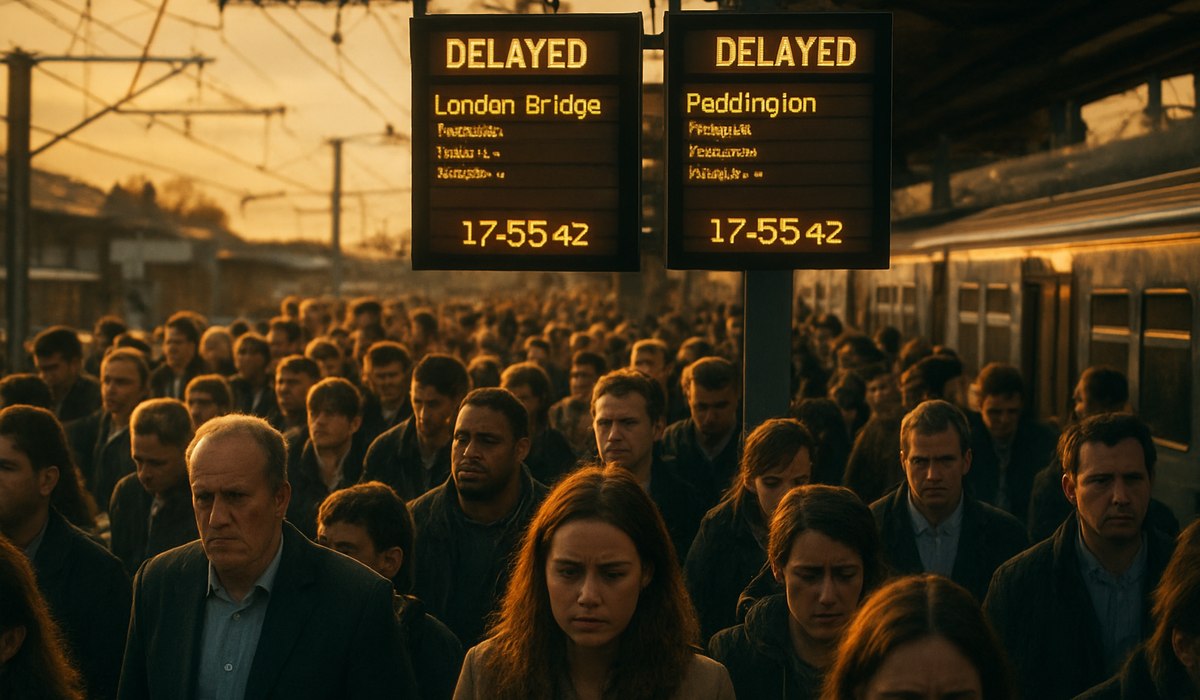
Image generated by AI
London's Rail Network Faces Critical Power Failure During Peak Holiday Period
A widespread power outage has devastated London's rail infrastructure, leaving thousands of travelers stranded during one of the year's busiest getaway periods. The power failure struck multiple critical sections of the network serving major London terminals—including Euston, King's Cross, and St Pancras International—disrupting both overhead and trackside electrical systems. Passengers heading to coastal destinations, Scotland, and continental Europe have faced cancelled services, extended delays, and missed connections as emergency timetables took effect across the system.
The timing of this london rail chaos could not be worse. With families, students, and international visitors attempting to depart the capital for holidays, the cascading impact has extended far beyond simple delays. Trains halted between stations, stranded travelers on platforms, and emergency service cuts have created a transportation crisis affecting tens of thousands during April 2026.
Power Outage Paralyzes London's Major Rail Terminals
The power failure struck without warning, disabling critical control systems and traction supplies across some of Britain's busiest railway corridors. Euston, serving the West Coast Main Line, experienced severe disruption as trains were unable to approach the station. Similarly, King's Cross—a major hub for east coast services—saw signal systems fail and trains held in holding patterns outside the terminal.
St Pancras International, which handles both high-speed Eurostar services to Paris, Brussels, and Amsterdam, plus domestic intercity routes, became a focal point of chaos. Passenger accounts describe overcrowded departure halls, extended queues at ticket gates, and staff struggling to manage capacity while maintaining border and security protocols with dramatically reduced service frequencies.
Control center operations faced impossible decisions: safely reverse stranded trains back to major stations or attempt rerouting around affected sections. In many cases, passengers spent hours aboard stationary trains while engineers investigated the power loss and positioned rescue locomotives. The complexity of London's interconnected rail network meant that disruption in one corridor quickly cascaded to others, as displaced rolling stock and displaced crews compounded the crisis.
Rail operators issued blanket "do not travel" advisories for leisure and discretionary journeys, effectively shutting down holiday travel across the network. Visit the National Rail Enquiries website for real-time service status updates and the Trainline for rebooking options.
Thousands Left Stranded During Peak Holiday Travel
Holiday plans spanning months of advance bookings collapsed within hours as the holiday disruption unfolded. Travelers reported missing flights, canceling cruise connections, and losing prepaid accommodation costs as services were successively withdrawn. The peak travel window—when demand for westbound services to Cornwall, eastbound routes to coastal Norfolk, and northbound trains to Scotland reaches its annual maximum—meant that cancellations affected disproportionately large numbers.
Social media filled with accounts of families camping on station concourses, children sleeping on floors, and desperate passengers attempting to rebook across fragmented service schedules. Border and customs delays compounded the crisis at St Pancras, where international travelers faced uncertainty about whether their Eurostar connections would operate at all.
The rail network disruption extended beyond London's immediate area. Long-distance services linking the capital with popular holiday regions experienced wholesale cancellations. West Country express trains, Scottish sleeper services, and international Eurostar connections all faced heavy cuts or complete suspension. Replacement bus services, typically deployed in such emergencies, proved insufficient—operators struggled to source additional coaches and drivers on short notice to accommodate the sudden surge in demand.
Consumer advocates highlighted that while UK and European rail compensation schemes offer refunds and limited additional reimbursement for severe delays, these provisions do not cover the broader financial losses: missed flights, hotel charges, cruise forfeitures, and work disruptions. Travelers facing legitimate claims found themselves navigating complex compensation procedures with uncertain outcomes.
Emergency Timetables and Cascading Disruption Expected
As engineers worked to restore power to critical infrastructure sections, rail operators implemented emergency timetables—typically 20-30% of normal service levels. This reduced capacity created severe bottlenecks, as the backlog of stranded passengers competed for limited available seats.
The service cancellations reflected the severity of the underlying power loss. Not only had overhead lines and trackside equipment failed, but the cascade effects through the system persisted long after initial repairs. Trains that had been halted between stations required inspection before returning to service. Crews found themselves displaced from normal rosters, creating staffing shortages for services that could technically operate. Rolling stock typically deployed across multiple routes sat idle in yards awaiting inspection and repositioning.
Previous power incidents on British rail networks have demonstrated that full recovery typically requires 24-48 hours minimum, assuming straightforward repairs. Complex failures affecting multiple substations or major junction points can extend disruption for days. Continental services through the Channel Tunnel corridor particularly require careful coordination to resume, given the need to work with French and Belgian rail operators and tunnel authorities.
Passenger information systems urged travelers not to attempt rail journeys unless absolutely essential. Stations imposed capacity restrictions. Real-time information updates became unreliable as disruption spread faster than information systems could process.
Travel Impact on Continental and International Routes
The london rail chaos extended across the English Channel, affecting Eurostar operations to Paris, Brussels, and Amsterdam. St Pancras International, the London terminus for these high-speed services, ground to a near standstill as power issues prevented trains from entering and departing platforms. The cascading effect disrupted services on the continental side, as rolling stock typically cycling through multiple daily London-Europe rotations sat stranded.
Border control procedures at St Pancras—which require passengers to clear security before boarding international trains—became impossible to manage with reduced infrastructure. Staff attempted to impose improvised queuing systems while maintaining security standards, creating bottlenecks that extended wait times to several hours even for passengers whose trains ultimately operated.
European media outlets reported the disruption alongside UK coverage, emphasizing the international scope of the crisis. Travelers from across Europe attempting to depart London faced the same service cuts and cancellations. The interdependence of high-speed rail corridors meant that St Pancras disruption affected Brussels-London and Paris-London schedules, with cascading impacts on onward connections across continental networks.
Domestic services proved no less affected. The West Coast Main Line services from Euston to Birmingham, Manchester, and Glasgow faced severe cuts. East Coast Main Line services from King's Cross to Edinburgh experienced substantial disruption. These trunk routes, handling both leisure and business travelers, saw cancellation rates exceeding 50% as emergency timetables took effect.
Key Facts: London Rail Disruption Impact
| Aspect | Details |
|---|---|
| Primary Affected Stations | Euston, King's Cross, St Pancras International, Liverpool Street |
| Power Systems Compromised | Overhead lines, trackside equipment, signal control systems, traction power supplies |
| Domestic Routes Impacted | West Coast Main Line, East Coast Main Line, Midland Main Line, southwestern routes |
| International Services Affected | Eurostar to Paris, Brussels, Amsterdam; cross-border peak hour services |
| Estimated Passengers Stranded | Tens of thousands across London terminals and en-route trains |
| Service Reduction Level | Emergency timetables at 20-30% of normal capacity |
| Expected Recovery Timeline | Minimum 24-48 hours; full service restoration potentially longer |
| Replacement Transportation | Limited replacement bus services; insufficient capacity for demand surge |
| Compensation Eligibility | Rail Compensation Standard; EU261 for missed connections; varied outcomes |
What This Means for Travelers
The london rail chaos during April 2026 serves as a stark reminder of rail network vulnerability during peak travel periods. Consider these practical responses:
- Check real-time status immediately: Before
Disclaimer
This article is for informational and educational purposes only. It does not constitute legal, financial, or professional advice. While we strive to provide accurate and up-to-date information, travel policies, regulations, and conditions change rapidly. Always verify information with official sources before making travel decisions. Nomad Lawyer makes no representations about the accuracy, reliability, completeness, or suitability of the information provided. Readers should consult qualified professionals for advice specific to their circumstances. The views expressed in this article are those of the author and do not necessarily reflect the views of Nomad Lawyer.
Preeti Gunjan
Contributor & Community Manager
A passionate traveller and community builder. Preeti helps grow the Nomad Lawyer community, fostering engagement and bringing the reader experience to life.
Learn more about our team →