
London, England Transforms Into a Global Culture Hub With Design and Creative Festivals: All You Need to Know
London, England Transforms Into a Global Culture Hub With Design and Creative Festivals: All You Need to Know

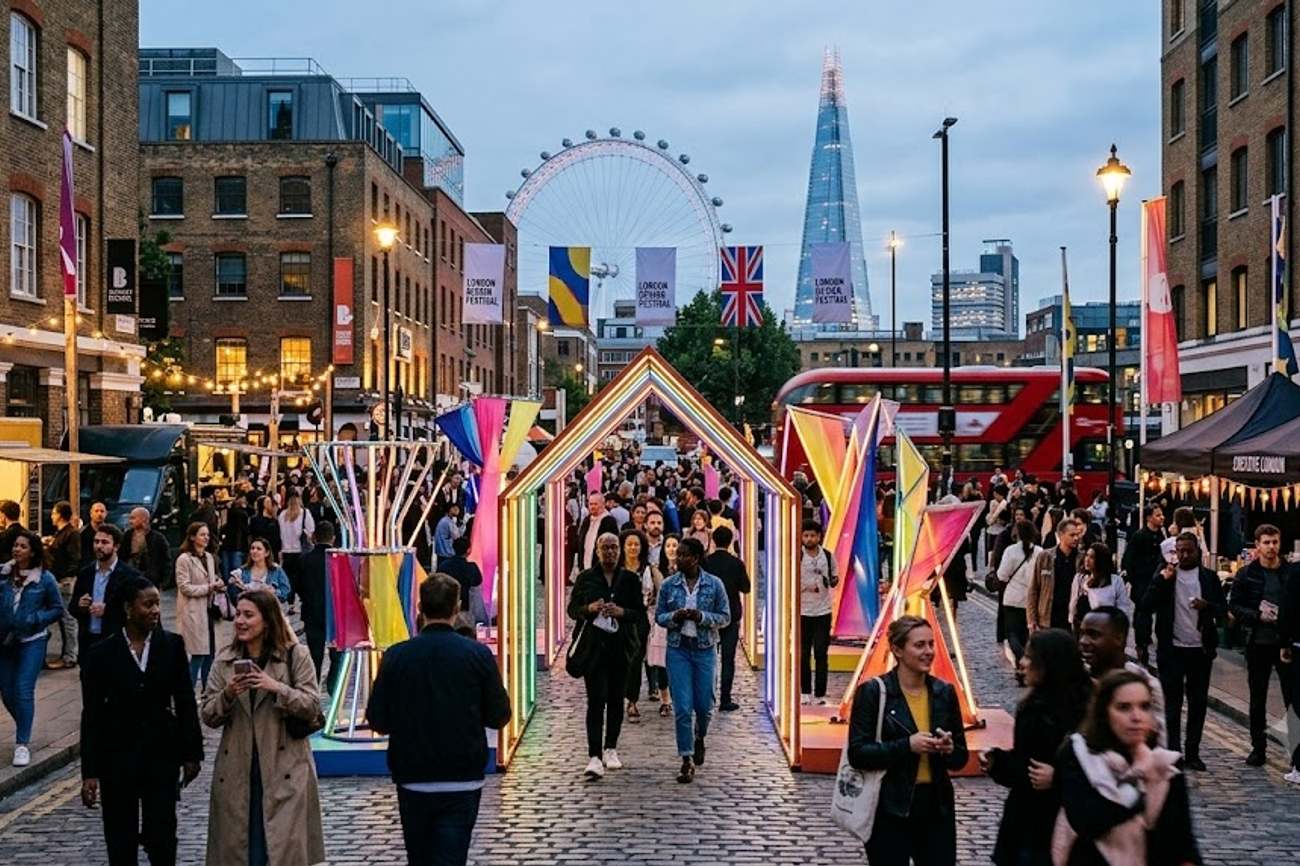
Image generated by AI
For a few days every September, the doors to London's most secretive spaces swing open, allowing the public to step inside private residences and restricted corporate headquarters that are normally off-limits. While most tourists queue for the Tower of London, the savvy visitor spends their weekend navigating the 35th edition of the Open House Festival, gaining rare access to the city's architectural skeleton.
The September Creative Convergence
London undergoes a fundamental shift in identity during the third weekend of September. From 19 to 20 September 2026, the city ceases to be a mere collection of museums and monuments and transforms into a decentralized, open-air gallery. This specific window represents a rare alignment of three massive cultural engines: the London Design Festival, the Open House Festival, and Totally Thames.
The London Design Festival 2026, celebrating its 24th year, runs from 12 to 20 September. It is not confined to a single venue but bleeds into the streets of Chelsea, Brompton, Shoreditch, Mayfair, and Bankside. Here, the city becomes a laboratory for future-focused design, where sustainable materials and digital craftsmanship are integrated into the urban fabric. Simultaneously, the Open House Festival (also 12–20 September) strips away the exclusivity of the city's built environment. Organized by Open City, this event allows visitors to move beyond the facades of contemporary structures and historic landmarks to understand the social and community drivers behind urban development.
Complementing these is Totally Thames, a celebration that utilizes the river as a connective thread. By linking the maritime heritage of Greenwich with the political gravity of Westminster and the artistic energy of the South Bank, the festival reminds visitors that the river is not just a scenic backdrop but the original reason for the city's existence.
What Makes London’s Design Circuit Different
Unlike the curated, sterile environment of a traditional museum, London's September offerings are immersive and unpredictable. The city’s creative energy is fragmented across distinct neighborhoods, each offering a different "flavor" of innovation. In Shoreditch, the focus is on emerging designers and raw, creative innovation, often manifesting as street art and experimental pop-ups. In contrast, the Chelsea Harbour showcases lean toward luxury interiors and high-end international brands.
The experience is further elevated by the V&A design programmes in South Kensington, which bridge the gap between ancient craft and future technology. This juxtaposition is what defines the London experience: you can spend your morning in a 19th-century private home via Open House and your afternoon examining a 3D-printed sustainable furniture piece in Mayfair.
The city also leverages its fashion status during this period. With London Fashion Week adding to the atmosphere, districts like Soho and Covent Garden become high-energy hubs of style. This creates a layering effect where architecture, interior design, fashion, and riverside art converge, offering a comprehensive look at the UK's creative economy. For those navigating the city, the Transport for London network becomes the primary artery connecting these disparate creative nodes.
Visitor Insider Tips
To navigate this weekend without falling into the common tourist traps, you must move with intention.
Timing the Crowds: The Open House Festival is notoriously popular. To avoid four-hour queues for the most coveted private homes, arrive at your chosen location at least 45 minutes before the official opening time. Alternatively, target the "Neighbourhood Walks" which are often less crowded than the flagship buildings but offer deeper local context.
Neighborhood Bases: If your primary interest is the Design Festival, base yourself in Shoreditch or South Kensington. Shoreditch provides immediate access to the "edge" of design, while South Kensington puts you within walking distance of the V&A. For those focusing on the river and arts, the South Bank is the most logical anchor.
The "River Logic" Transport Hack: Avoid the Tube during the Totally Thames festivities. Instead, use the river boats to move between Greenwich and Westminster. It turns a commute into a sightseeing tour and allows you to spot riverside installations that are invisible from the road.
Visitors attending London's creative festivals can find comprehensive guides on exhibitions and city-wide events through Visit London, the official tourism portal. The city's extensive public transport network ensures seamless access to design hubs across all boroughs.
Local Etiquette: When visiting private homes during Open House, remember that these are living spaces. Be mindful of noise and follow the guidance of the volunteer docents strictly. A small gesture of gratitude or a genuine question about the home's history is always appreciated by the residents who open their doors.
Regional Specialties to Seek: While in Shoreditch, skip the chain cafes and look for independent "concept" eateries that mirror the design festival's ethos. In Chelsea, seek out the smaller, independent galleries that often host satellite events for the larger festival.
Cultural and Environmental Context
The intersection of mass tourism and architectural preservation is a delicate balance in London. Events like the Open House Festival are not merely for entertainment; they are tools for civic engagement. By opening these spaces, the city fosters a conversation about who the city belongs to and how urban regeneration affects local communities.
The Totally Thames festival specifically addresses the environmental health of the waterway. By integrating educational activities with art, it highlights the ongoing struggle to maintain the Thames as a living ecosystem amidst one of the world's most densely populated urban centers. This reflects a broader shift in London's tourism strategy: moving away from "sightseeing" toward "experience-led travel."
Furthermore, the London Design Festival’s emphasis on sustainable materials is a direct response to the climate crisis. The exhibitions often serve as a critique of consumerism, showcasing how the city can evolve toward a circular economy. For those interested in the formal preservation of these sites, the UNESCO World Heritage Centre provides essential context on how London manages its historic sites—such as the Tower of London and Westminster Abbey—alongside this rapid modern innovation.
FAQ: Visiting London 2026
What is the best time to visit for these festivals? The peak window is 19–20 September 2026, as this is when the London Design Festival, Open House, and Totally Thames all overlap, providing the highest density of events.
How do I get to the creative districts from Heathrow? The Elizabeth Line is the fastest route into Central London, providing direct access to the West End and the City, from where you can easily reach Shoreditch or Chelsea via the Tube.
Is it safe for solo travelers? Yes, London is highly safe for solo travelers. The September festivals are community-focused and welcoming, and the high volume of pedestrians in creative districts makes navigation easy and secure.
Do I need tickets for the Open House Festival? Some locations require pre-booked tickets via the Open City website, while others operate on a first-come, first-served basis. Always check the official schedule before heading out.
Stop looking at the landmarks from the sidewalk and start stepping inside the city's secrets.
Related Travel Guides
- easyJet Restores Berlin Ljubljana Flights With Fifth Route For Summer 2027 Travel Expansion
- UK and China Travelers Fuel Australia’s Luxury Hotel Boom as Sydney Becomes a Premium Travel Powerhouse
- GRT Hotels Launches The Great Indian Tourism Quiz to Celebrate India’s Heritage, Culture and Travel Stories
Disclaimer
This article is for informational and educational purposes only. It does not constitute legal, financial, or professional advice. While we strive to provide accurate and up-to-date information, travel policies, regulations, and conditions change rapidly. Always verify information with official sources before making travel decisions. Nomad Lawyer makes no representations about the accuracy, reliability, completeness, or suitability of the information provided. Readers should consult qualified professionals for advice specific to their circumstances. The views expressed in this article are those of the author and do not necessarily reflect the views of Nomad Lawyer.
Naina Thakur
Contributor & Travel Specialist
Travel enthusiast and legal writer covering visa regulations, responsible tourism, and cultural journeys across global destinations.
Learn more about our team →