
LATAM Airlines Grounds Nine Flights at São Paulo–Guarulhos International Airport, Triggering Widespread Domestic and International Network Delays
LATAM Airlines grounded nine flights and delayed 39 others at São Paulo–Guarulhos International Airport, affecting domestic and international passenger routes.

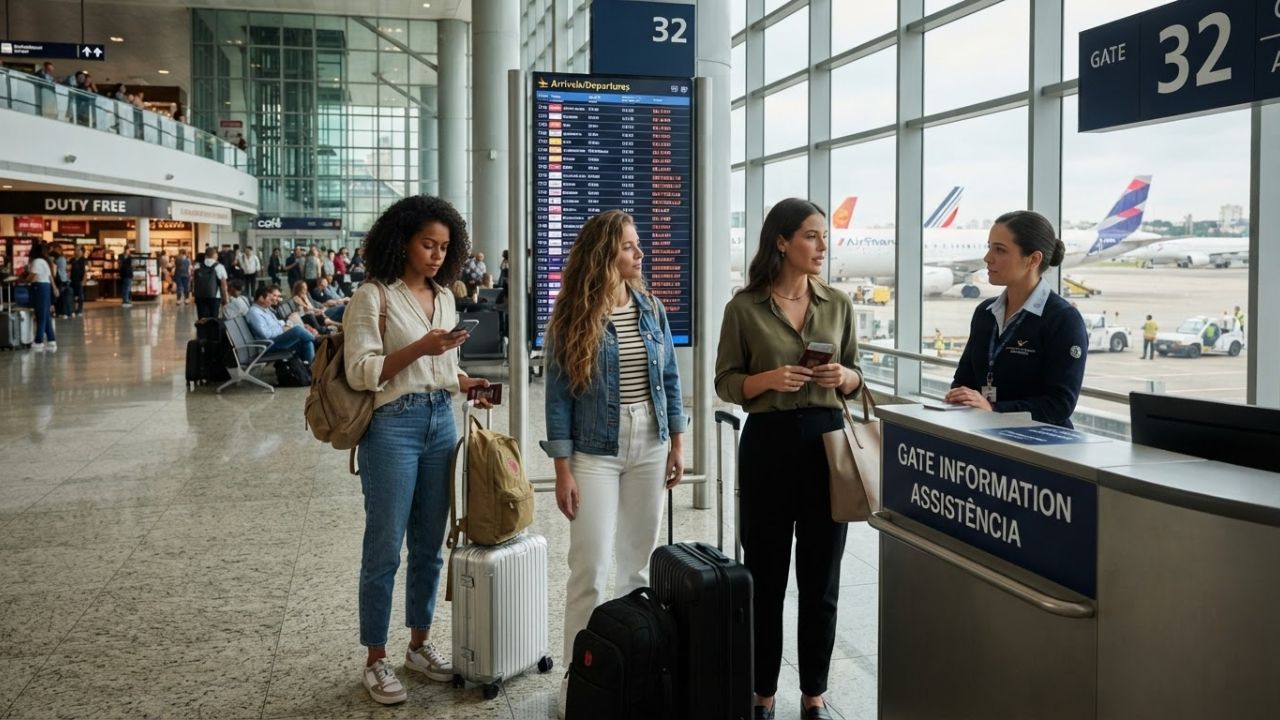
Image generated by AI
Sustained operational issues have forced LATAM Airlines to ground nine flights at São Paulo–Guarulhos International Airport. The cancellations, alongside 39 flight delays, have disrupted travel schedules across the carrier's domestic and international networks.
Hub Cancellations Impact Thousands of Air Travelers
According to reports, the flight disruptions began early in the morning at Brazil's primary international aviation gateway.
Terminal updates published by the Guarulhos Airport Authority (GRU) confirm that terminal services faced significant pressure from stranded passengers.
Flight operations logs released by LATAM Airlines show that aircraft scheduling adjustments were needed to prevent wider system failures.
Because Guarulhos serves as the main connecting hub for South American air traffic, the delays quickly spread to neighboring hubs.
The table below breaks down the cancellation and delay totals recorded at the airport.
LATAM Airlines Disruption Profile at Guarulhos Airport
| Terminal Hub | Cancelled Flights | Delayed Flights | Operating Airline Entity |
|---|---|---|---|
| São Paulo–Guarulhos International (GRU) | 9 | 39 | LATAM Brasil |
Operational Blockades Disrupt Regional and Long-Haul Connections
The cancellations mainly impacted high-frequency domestic trunk routes out of São Paulo.
Passengers flying to key state capitals and regional hubs encountered canceled segments and long delays.
- Affected Domestic Cities: Salvador, Florianópolis, São Luís, Joinville, and Maceió experienced direct schedule cuts.
- International Routing Disruptions: The service to Mendoza was canceled, forcing trans-Andean travelers to search for alternative routes.
- Secondary Hub Impacts: Minor flight cancellations were also recorded at Joinville, São Luís, Salvador, and Florianópolis as regional rotations stalled.
Beyond the direct cancellations, delayed flights impacted connections to South America, North America, Europe, Africa, and the Middle East.
Hub Congestion Triggers Cascading Aircraft Rotation Delays
Aviation analysts note that a major cancellation event at a hub airport disrupts aircraft schedules for several days.
When a plane is grounded in São Paulo, the subsequent flights assigned to that airframe cannot depart on time.
- Long-Haul Delay Spreads: Intercontinental flights to Cape Town, Chicago, Madrid, Porto, Lisbon, Punta Cana, Dubai, Doha, and Toronto recorded significant departures delays.
- South American Regional Networks: Flights to Buenos Aires, San Carlos de Bariloche, Curitiba, Cuiabá, Foz do Iguaçu, Fortaleza, Ilhéus, João Pessoa, Porto Alegre, Passo Fundo, Petrolina, Recife, Rio de Janeiro, Teresina, Vitória, Santiago, Asunción, Bogotá, Santa Cruz de la Sierra, and Montevideo experienced schedule shifts.
- Domestic Brazilian Corridors: Scheduled flights to Brasília, Belo Horizonte, Caldas Novas, Goiânia, Cochabamba, and Rosario faced delays due to gate congestion.
Passenger Guidelines and Rebooking Protocols
Industry observers advise passengers affected by cancellations to check their passenger rights under Brazilian civil aviation rules.
Under regional aviation guidelines, carriers are required to provide rebooking options, meals, and lodging for extended delays.
- Digital Monitoring: Travelers should use the carrier's mobile app to view updated gate information and boarding times.
- Customer Service Desks: Passenger assistance centers at O'Hare and other international gateways can assist with routing changes.
- Alternative Routing: When flights are full, passenger traffic is often rerouted through secondary domestic hubs like Brasília or Rio de Janeiro.
Why This Matters
Our analysis of flight data indicates that flight cancellations at central hubs have a major impact on secondary airports. Because LATAM operates a hub-and-spoke model, grounding flights in São Paulo disrupts crew schedules nationwide.
This structural constraint makes it difficult for airlines to recover quickly when regional weather or mechanical issues arise.
For business travelers on high-frequency routes like Rio de Janeiro, schedule changes can disrupt commercial engagements.
Meanwhile, leisure travelers on long-haul routes to Europe or the Middle East face missed connections at international gates.
Ultimately, this disruption shows the vulnerability of integrated airline schedules to localized operational bottlenecks.
Forward Outlook
Market trends suggest that South American carriers will increase their spare aircraft reserves at major hubs to improve reliability. Airport authorities are projected to upgrade baggage and gate management systems to speed up turnaround times.
Expect carriers to introduce more automated passenger rebooking tools to reduce queues at airport service desks. The regional air travel market is projected to see steady demand increases throughout the summer season.
Disclaimer
This article is for informational and educational purposes only. It does not constitute legal, financial, or professional advice. While we strive to provide accurate and up-to-date information, travel policies, regulations, and conditions change rapidly. Always verify information with official sources before making travel decisions. Nomad Lawyer makes no representations about the accuracy, reliability, completeness, or suitability of the information provided. Readers should consult qualified professionals for advice specific to their circumstances. The views expressed in this article are those of the author and do not necessarily reflect the views of Nomad Lawyer.
Kunal K Choudhary
Co-Founder & Contributor
A passionate traveller and tech enthusiast. Kunal contributes to the vision and growth of Nomad Lawyer, bringing fresh perspectives and driving the community forward.
Learn more about our team →