
Laos Travel Railway Infrastructure Reshapes Southeast Asian Connectivity
The Laos-China Railway transforms regional tourism access in 2026, moving record cargo volumes while opening unprecedented travel corridors across Southeast Asia.

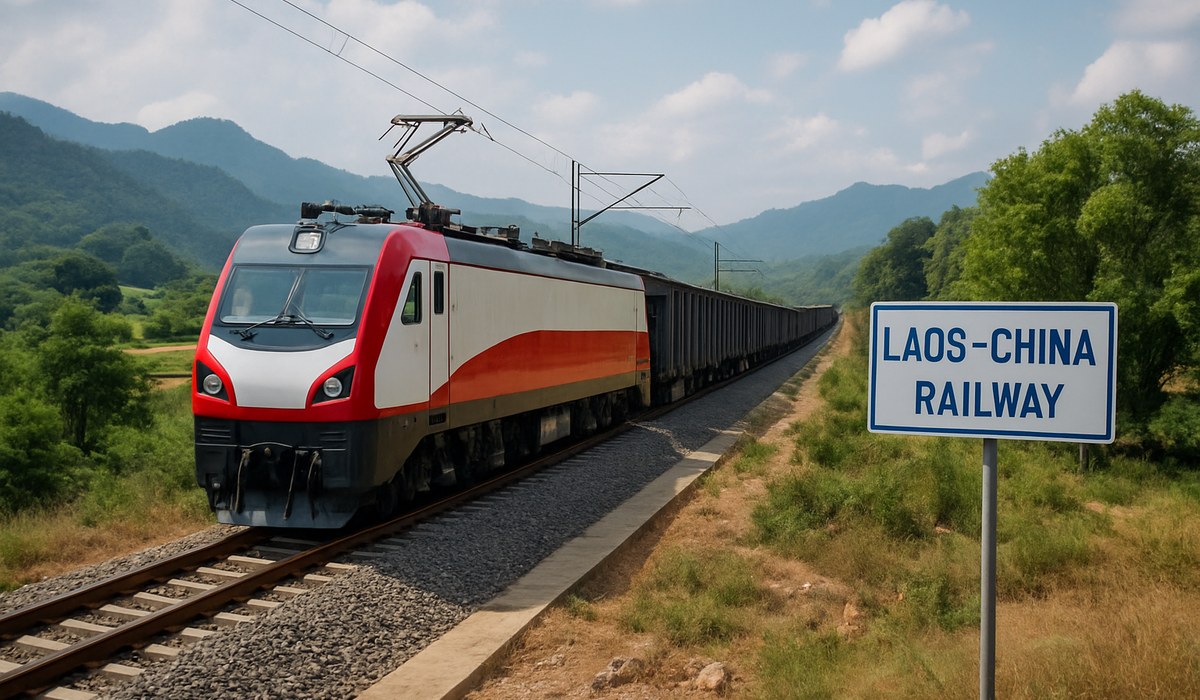
Image generated by AI
Quick Summary
- The Laos-China Railway now handles more than 80 million tonnes of annual cargo, fundamentally reshaping trade and travel patterns across Southeast Asia
- Passenger services alongside freight operations are opening new tourism routes that rival major international rail corridors in accessibility
- Regional connectivity improvements are attracting leisure travelers who previously relied solely on aviation or road transport
- Infrastructure development aligns with broader Southeast Asian tourism growth projections, similar to economic forecasts for neighboring markets
The Laos-China Railway: More Than Just Cargo
A single railway artery is quietly revolutionizing how millions of travelers and enormous quantities of goods move across Southeast Asia. The Laos-China Railway, now handling record volumes exceeding 80 million tonnes annually, represents far more than a logistics corridor—it's reshaping the entire accessibility landscape for the region's tourism economy.
Completed in December 2021 and operationalized across the intervening years, this 1,035-kilometer route connects Kunming in southwestern China with Vientiane, Laos's capital, and extends onward toward Thailand. The sheer cargo-carrying capacity demonstrates the infrastructure's critical role in regional commerce. Yet beneath those freight statistics lies a profound shift in how travelers navigate Southeast Asia.
Officials from both nations have emphasized that the railway serves dual purposes. While state transportation authorities focus on efficiency metrics and commodity throughput, tourism boards recognize an emerging opportunity: a fast, reliable alternative to congested highways and the carbon footprint of domestic flights.
The railway's operational success in 2025–2026 marks a turning point. Where previous generations of Southeast Asian tourists relied on backpacker buses and domestic aviation, the Laos travel railway now offers a genuinely competitive option for reaching landlocked destinations that were previously difficult to access.
How Rail Infrastructure Transforms Regional Tourism Access
Rail networks operate differently from airports and highways. They move large volumes of people and goods simultaneously, reducing per-unit costs and enabling longer itineraries without budget strain. The Laos-China Railway exemplifies this efficiency.
Consider the practical reality for a traveler planning a multiweek Southeast Asia journey. Three years ago, reaching Laos from China required either a 16-hour bus journey through winding mountain roads or expensive domestic flights. Today, that same trip takes approximately 10 hours via rail—with dining cars, sleeper compartments, and genuine comfort amenities.
This accessibility improvement directly correlates with tourism growth projections. Laos receives approximately 1.5 million international visitors annually pre-2026, with growth targets aiming substantially higher as infrastructure improvements remove traditional barriers. The railway's contribution to these targets cannot be overstated.
Infrastructure development like this connects to broader regional economic patterns. India's tourism and travel sector, forecast to reach USD 132 billion by 2032 according to recent market analyses, demonstrates how transportation corridors drive visitor volumes. Southeast Asia's infrastructure improvements follow an identical trajectory—remove friction from travel, and volume increases follow.
The railway also enables new itinerary combinations. Previously, travelers might choose either a China-focused trip or a Southeast Asia route, given time constraints. Now, those same travelers can meaningfully experience both regions within a single journey, with the railway serving as the connective tissue.
Practical Benefits for Travelers: What This Means for Your Southeast Asia Itinerary
If you're planning travel to Laos or the broader Southeast Asian region, the railway infrastructure offers several concrete advantages worth considering.
Accessibility to Previously Remote Destinations
The railway provides direct access to smaller towns and secondary cities along its corridor. Where air travel concentrated visitors in major hubs like Bangkok and Hanoi, rail service democratizes access to mid-sized communities. Vientiane, Laos's capital, becomes a genuine destination rather than a difficult add-on.
Cost Advantages for Extended Travel
A single ticket covering 1,035 kilometers costs substantially less per kilometer than equivalent driving or flight options. For backpackers and extended-stay tourists, this calculation is significant. Multi-day rail passes or regional ticket options provide economical access to multiple countries and cities.
Environmental and Social Considerations
Travelers increasingly factor carbon footprint into destination choices. Rail transport generates approximately one-quarter the emissions of equivalent air travel per passenger. This aligns the Laos travel railway with responsible tourism principles gaining traction among educated leisure travelers.
Connectivity with Other Regional Transport Options
The railway integrates with complementary transit systems. Air Premia's Americas-Southeast Asia connectivity expansion in March 2026 creates viable transcontinental itineraries: fly from North America to Bangkok or Kuala Lumpur, then transition to rail for the Laos-Thailand-Vietnam segment. Such multimodal planning becomes genuinely practical rather than theoretical.
Scheduling Flexibility
Unlike flights, which operate on fixed daily schedules with substantial lead times, rail services operate multiple times daily with more flexible booking windows. This operational flexibility suits independent travelers and tour groups alike.
Regional Connectivity Comparison: Where This Ranks Globally
The Laos-China Railway invites comparison with established international rail corridors. How does it measure against proven models?
The Eurostar system connecting London, Paris, and Brussels demonstrates how rail infrastructure catalyzes tourism growth. Eurostar moves approximately 10 million passengers annually while maintaining freight and commercial operations. The Laos-China Railway, still in the early growth phase of passenger operations, carries fewer leisure travelers currently—but trajectory suggests similar growth potential over the next five years.
The International Union of Railways tracks global standards for rail infrastructure, safety protocols, and passenger experience. The Laos-China Railway meets modern benchmarks, though it represents a different operational model than European networks. Southeast Asian rail development prioritizes mixed-cargo-and-passenger services rather than separated networks, reflecting regional economic priorities and freight-dependent supply chains.
According to data compiled by the International Union of Railways, transcontinental routes connecting emerging economies demonstrate passenger growth rates of 15–22% annually in their first five years of mature operations. The Laos-China Railway, having recently crossed the threshold into stable operational performance, falls within this growth trajectory.
Victoria's unlocked unlimited transit infrastructure model in Australia offers another comparison point. That system leverages rail integration with buses and trams to create seamless regional travel. Southeast Asia's approach differs—the railway operates more independently—but the principle remains consistent: remove friction from travel logistics, and usage increases.
The broader context matters. Southeast Asia encompasses some of the world's fastest-growing tourism markets. Myanmar, Vietnam, and Cambodia each attract millions of annual visitors. Laos, with lower visitor numbers historically, represents genuine upside potential as infrastructure matures.
FAQ: Planning Travel via the Laos-China Railway Corridor
Q: Can I book tickets directly for international rail travel, or do I need a tour operator?
A: Both options exist. Major booking platforms now offer direct ticketing for the Laos-China Railway corridor. However, tour operators familiar with regional rail scheduling provide advantages for complex itineraries. Budget-focused travelers often book directly; those prioritizing convenience increasingly use intermediaries.
Q: What's the typical journey time from China to Laos via rail?
A: The full Kunming-to-Vientiane corridor requires approximately 10 hours of scheduled travel, excluding layovers. Some services offer direct routing; others require connection time in intermediate stations. Check specific departure times when booking, as schedules vary seasonally.
Q: Are sleeper compartments available, and what do they cost?
A: Yes. The railway operates standard seats, reserved chairs, and sleeper compartments. Sleeper options run 30–50% higher than standard seating but remain competitive with flight pricing when factoring in accommodation costs. Premium compartments include basic amenities; economy sleepers offer basic bunking.
**Q: How does the railway integrate with
Disclaimer
This article is for informational and educational purposes only. It does not constitute legal, financial, or professional advice. While we strive to provide accurate and up-to-date information, travel policies, regulations, and conditions change rapidly. Always verify information with official sources before making travel decisions. Nomad Lawyer makes no representations about the accuracy, reliability, completeness, or suitability of the information provided. Readers should consult qualified professionals for advice specific to their circumstances. The views expressed in this article are those of the author and do not necessarily reflect the views of Nomad Lawyer.
Raushan Kumar
Founder & Lead Developer
Full-stack developer with 11+ years of experience and a passionate traveller. Raushan built Nomad Lawyer from the ground up with a vision to create the best travel and law experience on the web.
Learn more about our team →