
LaGuardia Airport Travel Chaos: 112 Delays, 7 Cancellations Hit Delta, United, Southwest, American June 2026
LaGuardia Airport ground to a halt as major carriers report 112 delayed flights and 7 cancellations, disrupting travel across New York, Dallas, Chicago, Boston, Miami, Toronto, and Montreal.

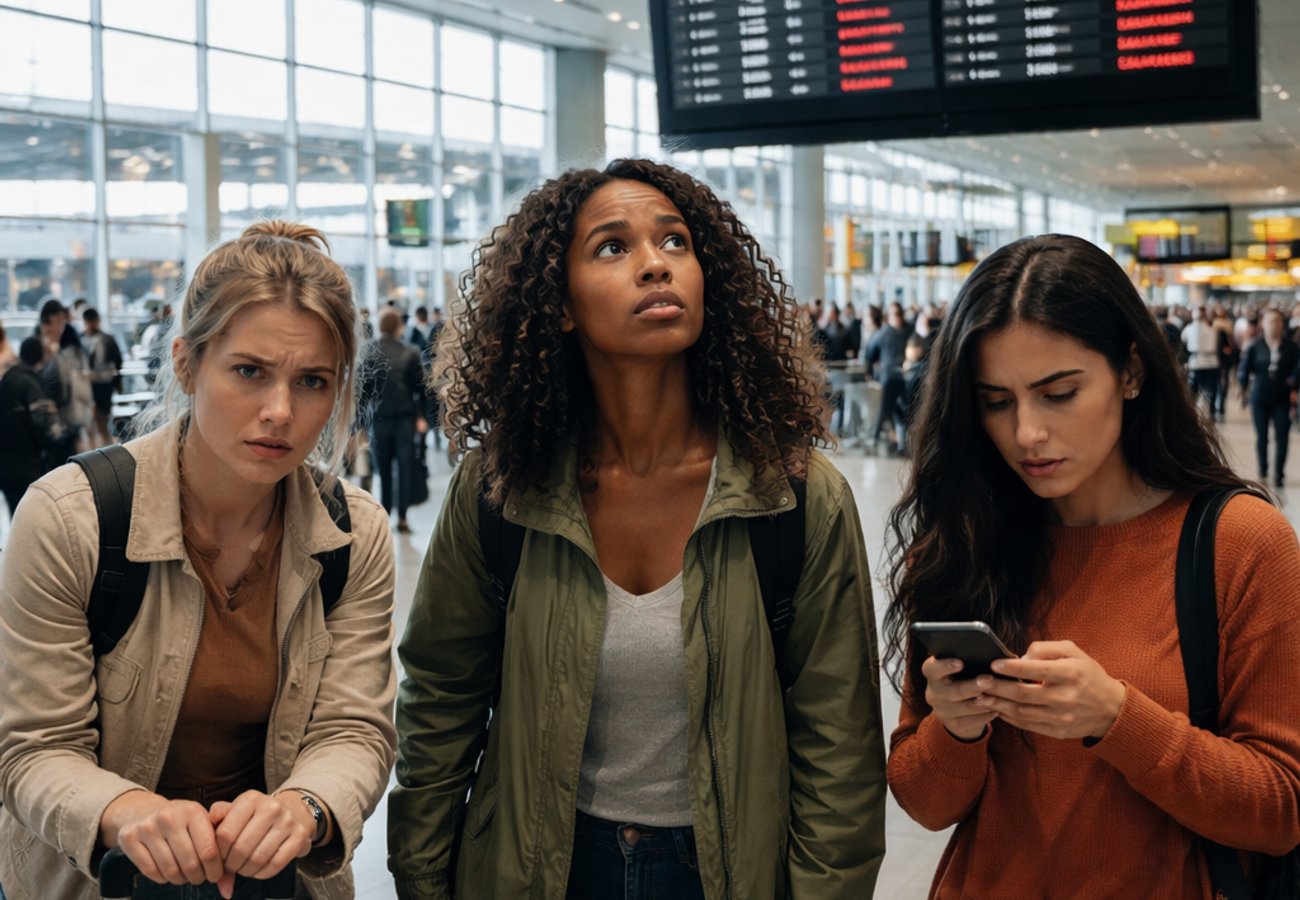
Image generated by AI
LaGuardia Grinds to a Halt: 112 Delays and 7 Cancellations Paralyze East Coast Travel
LaGuardia Airport descended into complete operational chaos on June 9, 2026, as 112 delayed flights and 7 cancellations rippled across North America's most critical aviation corridor. The disruption ensnared passengers from New York, Dallas, Chicago, Boston, Miami, Toronto, and Montreal, leaving thousands scrambling to salvage their travel plans.
Major carriers absorbed the brunt of the impact. Endeavor Air reported the heaviest losses with 30 delayed flights and 5 cancellations. Southwest Airlines followed closely with 19 delays, while Delta Air Lines logged 11 delays and 1 cancellation. United Airlines, American Airlines, Jazz Airlines, Air Canada, and JetBlue all faced significant operational headwinds.
Reddit: "Stuck at LaGuardia for 6 hours. No updates, no meal vouchers. This is beyond acceptable for a major hub." — r/travel
The Perfect Storm: What Triggered This Disaster
The breakdown wasn't a single failure—it was cascading operational failure. Heavy air traffic congestion collided with scheduling overlaps, aircraft arriving late, and unpredictable weather variations that no airline could anticipate.
The ripple effect proved devastating. A delay at Toronto Pearson International (YYZ) spawned four delayed flights (16% of operations) and one cancellation. Dallas Love Field (DAL) saw three delays representing 60% of its LaGuardia-bound traffic. Dallas-Fort Worth International (DFW) contributed three additional delays, with Memphis International (MEM) adding two more.
Regional airports bore disproportionate pain. Patrick Leahy Burlington (BTV) suffered a staggering 50% cancellation rate, while Worcester Regional (ORH) saw 100% of its LaGuardia flights terminated. These smaller hubs lacked the redundancy and operational flexibility of major carriers.
Destination Chaos Spreads Across North America
The bleeding didn't stop at LaGuardia's gates. Outbound destinations experienced equally severe disruptions. Montreal-Trudeau (YUL) absorbed three delays (27% of traffic) and one cancellation. Toronto Pearson (YYZ) recorded four additional delays, creating a dual-hub crisis spanning the Canada-U.S. border.
American destinations faced equal strain. Chicago Midway (MDW), Louis Armstrong New Orleans (MSY), Dallas Love Field (DAL), and Dallas-Fort Worth (DFW) all reported cascading delays from LaGuardia's operational collapse.
The geographic footprint was undeniable: Atlanta, Nashville, Philadelphia, Houston, Fort Lauderdale, Washington D.C.—every major U.S. city connected to LaGuardia felt the shockwave. For international travelers, the cross-border implications were particularly severe, with Toronto, Montreal, and Halifax absorbing refugee passengers from overbooked connections.
What Passengers Face Right Now
If you're stuck in this nightmare, your options are limited but real:
Monitor Real-Time Updates: Open the mobile apps for Delta, United, Southwest, and American Airlines immediately. FlightAware provides independent, often more transparent data than airline systems.
Aggressive Rebooking: Call airline customer service—not the automated line. Demand rebooking on competing carriers if available. Airlines often honor this during major disruptions to avoid regulatory scrutiny.
Document Everything: Photograph your boarding pass, departure board showing delays, and gate assignments. Airline compensation laws vary by jurisdiction, but records prove everything.
Leverage Your Ticket: If rebooking extends your journey by more than 3 hours, you're entitled to meal vouchers and accommodation under U.S. Department of Transportation regulations for domestic flights. International flights on U.S. carriers follow similar but slightly different DOT rules.
Consider Alternatives: For east-coast connections, explore Newark (EWR) and JFK as escape routes. For western-bound traffic, Boston Logan (BOS) and Philadelphia (PHL) offered relative stability.
The Airline Response: Too Little, Too Late
All major carriers deployed crisis management protocols. Delta, United, Southwest, and American Airlines activated extended customer service lines and deployed standby crews. Air Canada and Jazz Airlines coordinated with U.S. partners to reroute Canadian passengers.
But response speed matters less than transparency. Passengers reported minimal gate agent communication, contradictory information across different airline channels, and hour-long waits for rebooking assistance.
Reddit: "Three different gate agents gave me three different flight options. This is what happens when nobody talks to each other." — r/flying
Why Major Hubs Remain Vulnerable
LaGuardia's collapse exposes a systemic weakness in North American aviation infrastructure. The airport handles over 30 million passengers annually, operating near theoretical maximum capacity. When operational efficiency drops even 5%, the network cannibalize itself.
Weather delays, mechanical issues, or crew scheduling problems that would be absorbed in off-peak hours trigger domino collapses during peak operations. The June 9 disruption wasn't a freak incident—it's inevitable infrastructure stress.
Airlines like United and American have invested heavily in predictive analytics, but human judgment, weather unpredictability, and the sheer volume of moving parts create irreducible risk.
What Passengers Should Know About Compensation
Under U.S. Department of Transportation regulations, you're entitled to compensation if:
- Your flight was delayed more than 3 hours (domestic)
- The airline caused the delay (weather exceptions often apply)
- You were on a U.S. carrier or foreign carrier operating U.S. flights
Compensation ranges from $250 to $1,350 depending on delay length and ticket price. However, proving causation is difficult. Airlines routinely claim "weather events" or "air traffic control delays" to avoid liability.
Document everything: delay announcements, gate changes, customer service interactions. File complaints with the DOT within 2 years.
The Real Takeaway for Travelers
LaGuardia's June 9 meltdown wasn't an outlier—it was a warning. Major U.S. airports are approaching operational saturation. Summer 2026 promises similar chaos at Atlanta (ATL), Dallas-Fort Worth (DFW), Chicago O'Hare (ORD), and Denver (DEN).
If you're booking flights through major hubs, build in buffer time. Avoid tight connections under 90 minutes. Consider flying early morning departures when delays haven't yet cascaded. And always—always—travel with flexibility.
The alternative is becoming another frustrated passenger photographing a "CANCELLED" sign on LaGuardia's departure board.
The skies are more crowded than ever—travel smarter, not faster.
Related Travel Guides
Disclaimer
This article is for informational and educational purposes only. It does not constitute legal, financial, or professional advice. While we strive to provide accurate and up-to-date information, travel policies, regulations, and conditions change rapidly. Always verify information with official sources before making travel decisions. Nomad Lawyer makes no representations about the accuracy, reliability, completeness, or suitability of the information provided. Readers should consult qualified professionals for advice specific to their circumstances. The views expressed in this article are those of the author and do not necessarily reflect the views of Nomad Lawyer.
Kunal K Choudhary
Co-Founder & Contributor
A passionate traveller and tech enthusiast. Kunal contributes to the vision and growth of Nomad Lawyer, bringing fresh perspectives and driving the community forward.
Learn more about our team →