
Breaking Airline News: Korean Air Deploys Massive Sapporo-Seoul Flight Expansion to Shield Passengers from Summer Travel Chaos
Breaking airline news: Amidst a terrifying era of severe East Asian hub congestion, Korean Air aggressively surges its summer capacity between Sapporo and Seoul, violently shielding travelers from extreme travel chaos.

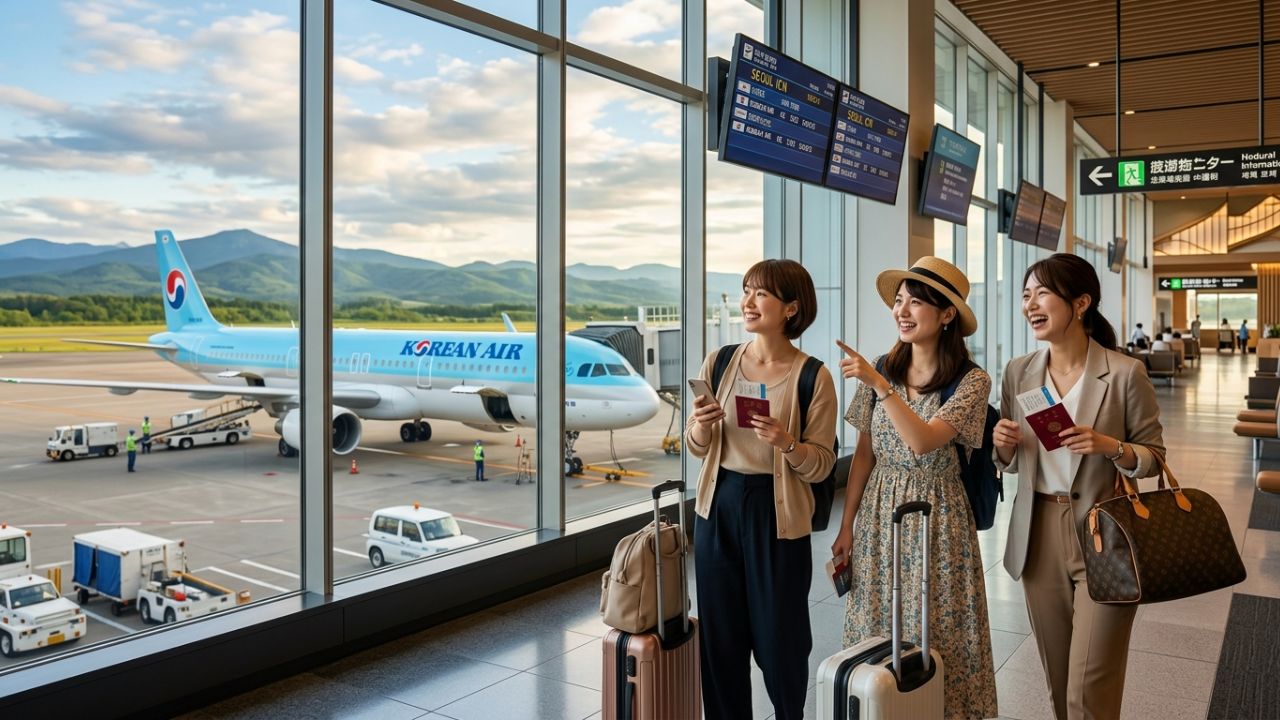
Image representing the intense strategic battle as global aviation authorities desperately deploy tactical frequency surges to combat severe transit friction and bypass paralyzing flight cancellations in congested East Asian mega-hubs.
Breaking Airline News: Korean Air Deploys Massive Sapporo-Seoul Flight Expansion to Shield Passengers from Summer Travel Chaos
As paralyzing terminal congestion, terrifying overbooking scenarios, and severe operational fragility violently threaten to completely choke highly complex East Asian transit networks during the peak summer season, Korean Air has executed a brilliant high-stakes logistical maneuver. In a desperate bid to physically and psychologically rescue international travelers from the terrifying threat of extreme travel chaos triggered by catastrophic flight cancellations, the South Korean flag carrier has aggressively launched a massive capacity surge. Officially confirming a massive expansion of direct flights between Sapporo’s New Chitose Airport and Seoul’s Incheon International Airport, Korean Air is forcefully mitigating the intense pressure on summer routing. By eliminating the severe logistical nightmares traditionally associated with massively overbooked peak-season flights, this aggressive Airbus A321neo deployment allows furious corporate travelers and desperate tourists to completely bypass the threat of terminal strandings. This operational paradigm shift is transforming modern regional logistics, proving that actively surging flight frequencies to absorb extreme demand is the absolute ultimate defense against the agonizing misery historically defining major airport bottlenecks.
In a harrowing display of modern aviation vulnerability, the sheer logistical nightmare of attempting to navigate essential corridors between Japan and South Korea during peak summer travel has historically forced passengers into terrifying transit scenarios. For years, enduring a summer getaway meant risking it all on violently overloaded networks—staring at departure boards in congested hubs with intense anxiety as rolling delays and severe overbooking virtually guaranteed a catastrophic denial of boarding. However, Korean Air is aggressively fighting back against this structural paralysis. Recognizing that forcing millions of tourists through a rigidly limited flight schedule creates a massive, highly stressed captive audience, the airline is introducing a highly resilient, heavily fortified alternative. By rapidly deploying additional high-capacity flights out of its major hubs, travelers now possess the absolute freedom to physically shield themselves from the devastating effects of paralyzed transport networks, ensuring their critical business and leisure itineraries are executed without the threat of last-minute cancellations.
Expanded Overview: The Massive Scale of the Transit Shield
The terrifying crisis of overwhelming passenger stress currently gripping complex intercontinental itineraries brutally exposes the severe limitations of flying heavily restricted schedules during seasonal demand spikes. Recognizing that aggressively forcing travelers onto a handful of daily flights leads directly to severe psychological friction and immense crowding, Korean Air has fundamentally rewritten its summer capacity strategy. The sheer scale of this tactical realignment is immense. Rather than buckling under the surging demand for Hokkaido tourism and Seoul business connections, the airline is violently expanding operations. From July 1 to August 31, 2026, additional services will forcefully operate on Mondays, Wednesdays, Fridays, and Saturdays. This tactical insertion of capacity acts as a massive pressure release valve for the entire East Asian aviation grid.
Section-Wise Breakdown: The Operational Realignment
Breaking the Overbooking Gridlock: The Summer Surge
To survive the terrifying surge in global travel demand without triggering immediate terminal meltdowns at primary hubs, Korean Air anchored its defense through sheer operational volume. Under standard, highly vulnerable schedules, the carrier operates just two daily flights between Sapporo and Seoul. The massive summer intervention violently injects four additional weekly round trips directly into the network. This aggressive maneuver brings the total absolute capacity to an impressive 18 weekly flights for the peak period. This brute-force expansion ensures that if a massive weather disruption temporarily grounds operations, the airline possesses the physical seating capacity required to rapidly clear the backlog of stranded passengers.
Shattering Schedule Bottlenecks: The Evening Defense
Looking beyond pure frequency, the program executes a massive logistical defense strategy through tactical flight timing. The new schedule explicitly targets the evening corridor, catering to travelers desperate to maximize their vacation days while completely bypassing the agonizing midday travel chaos that defines crowded mega-hubs. Flight KE771 operates a precise extraction, departing Seoul/Incheon at 17:05 and securely arriving at New Chitose at 19:50. The reciprocal Flight KE772 executes a late-night extraction, departing New Chitose at 20:50 and safely touching down at Seoul/Incheon just before midnight (23:55). These highly tactical evening flights allow passengers to enjoy a full day of sightseeing while minimizing their exposure to peak terminal congestion.
Deploying the Airbus A321neo Shield
To execute these rapid regional jumps, Korean Air is deploying the highly advanced Airbus A321neo aircraft. Accommodating approximately 182 passengers, this aircraft provides the exact operational agility required for this high-frequency mission. The flight time is a highly efficient 3 hours 5 minutes from Sapporo to Seoul, and an even faster 2 hours 45 minutes on the return leg. Crucially, the aircraft is fortified with modern amenities, including USB charging and, most importantly, massive overhead storage designed to accommodate the heavy gear often carried by seasonal tourists, eliminating the boarding chaos caused by lack of cabin space.
Korean Air Operational Matrix
To fully comprehend the massive logistical and strategic fallout of this terrifyingly efficient network execution, corporate travel managers and affected tourists must review the exact operational metrics defining the Korean Air expansion. The following matrix provides a granular breakdown of the specific, officially verified strategic data driving this massive disruption mitigation effort.
| Operational Network Adjustment | Verified Flight Execution Data |
|---|---|
| Operating Carrier | Korean Air |
| Aircraft Deployed | Airbus A321neo (182 Passengers) |
| Strategic Direct Route | Sapporo (New Chitose) to Seoul (Incheon) |
| Peak Operational Window | July 1, 2026 – August 31, 2026 |
| Frequency Expansion | Added Flights on Mon, Wed, Fri, Sat (Total 18 Weekly) |
| Flight KE771 Schedule | Departs Seoul/Incheon at 17:05, Arrives New Chitose at 19:50 |
| Flight KE772 Schedule | Departs New Chitose at 20:50, Arrives Seoul/Incheon at 23:55 |
| Approximate Flight Times | Sapporo to Seoul (3h 5m) / Seoul to Sapporo (2h 45m) |
Passenger Impact: Surviving the Regional Jump
For the thousands of global tourists attempting to navigate the rapidly expanding transit corridors across Japan and South Korea, this massive direct flight deployment represents a highly anticipated lifeline against severe delays. The brutal reality of enduring a terrifyingly sudden cancellation due to massive summer storms inflicts intense psychological stress—leaving the passenger entirely responsible for securing a new ticket on sold-out flights. By aggressively booking these new evening frequencies, passengers drastically reduce their exposure to these terrifying environments, securing a highly reliable connection that bypasses the domino effect of national travel chaos.
Survival Guide for Transit Travelers
Travelers desperately preparing to navigate the modernized East Asian network must immediately execute the following survival protocols:
- Leverage the Evening Extraction: Tourists must aggressively target Flights KE771 and KE772. The late departure times allow you to completely avoid the massive morning security lines that typically paralyze New Chitose and Incheon airports during the summer peak.
- Acknowledge Severe Weather Risks: Travelers must monitor weather conditions religiously. Summer in Hokkaido can bring intense seasonal rain and occasional storms. Even with 18 weekly flights, a severe weather grounding will instantly create massive rebooking chaos.
- Arrive Early Despite Evening Flights: Even with the added capacity, Korean Air strictly mandates arriving 2-3 hours before departure. The sheer volume of tourists moving between these two nations requires aggressive time management to survive the check-in process.
Industry Analysis: The Economics of Tactical Frequency Surges
From a strategic aviation perspective, the travel turmoil currently threatening global hubs highlights the terrifying vulnerability of airlines operating rigidly fixed schedules. Industry analysts confirm that expanding direct international frequencies on highly popular seasonal routes is a highly aggressive, tactical response to traveler demand and overbooking risks. By injecting these four additional weekly round trips, Korean Air completely avoids the massive financial bleeding associated with heavily compensating bumped passengers from oversold flights, effectively shielding the carrier from the operational meltdowns that paralyze legacy airlines refusing to adapt their capacity.
Conclusion: A Strategic Retreat to Ensure Aviation Survival
As the extremely critical summer travel season accelerates, the massive route adjustments executed by Korean Air represent a massive warning to competing carriers attempting to force passengers onto unreliable, heavily congested connection schedules. The aggressive maneuvering proves that capturing market dominance requires terrifyingly swift and highly optimized capacity deployments, utilizing advanced Airbus A321neo aircraft to connect passengers safely across the region while shielding them from the brutal reality of terminal unreliability. For the modern tourist booking their tickets, utilizing this tactically adjusted routing offers an incredibly secure, highly insulated way to execute flight discovery. By acting aggressively to secure these new flights, travelers can successfully survive intense travel surges and completely avoid the paralyzing threat of overbooking-induced travel chaos.
Key Takeaways
- Massive Tactical Bypass: Korean Air has aggressively launched an expansion of flights between Sapporo (New Chitose) and Seoul (Incheon) to protect passengers from summer travel chaos.
- Crushing the Capacity Bottleneck: From July 1 to August 31, 2026, the airline adds four weekly round trips (Mon, Wed, Fri, Sat), bringing the peak total to 18 weekly flights.
- Strategic Route Execution: The newly deployed Flights KE771 and KE772 operate in the evening, providing vital flexibility and keeping tourists out of mid-day terminal congestion.
- Advanced Aircraft Deployment: The routes will be heavily fortified by Airbus A321neo aircraft, offering massive overhead storage to rapidly process heavy summer tourist baggage.
- Traveler Advisory: Passengers must aggressively verify entry requirements and monitor seasonal weather patterns, as sudden storms in Hokkaido can still trigger massive localized flight cancellations despite the added capacity.
Related Travel Guides
- How Airline Consolidations Are Sparking Major Travel Chaos Across the Globe
- Navigating Severe Flight Cancellations: A Passenger's Guide to Surviving Airport Disruptions
- The Ultimate Guide to Beating Airport Congestion During the 2026 Summer Surge
Disclaimer: The flight schedules, route frequencies, and aircraft deployments presented in this article are based on official scheduling data from Korean Air available as of June 11, 2026. Route operations, specific departure times, and aircraft types are highly dynamic and subject to immediate change based on international aviation regulations and severe seasonal weather protocols. Passengers are strongly advised to verify their specific flight status and international visa requirements directly with Korean Air before arriving at the airport.
Kunal K Choudhary
Co-Founder & Contributor
A passionate traveller and tech enthusiast. Kunal contributes to the vision and growth of Nomad Lawyer, bringing fresh perspectives and driving the community forward.
Learn more about our team →